
What Is the Difference Between SEO and Local SEO?
The difference between SEO and local SEO is which results you are competing for. General SEO works to rank a website in the ordinary organic results for searches where the searcher’s location barely matters, such as “how to fix a running toilet” or “best running shoes”. Local SEO works to rank a business in the map results and the “near me” style results for one area, such as “plumber Calgary”, where Google weighs how close the business is to the searcher alongside how relevant and well known it is. The two share a foundation (a fast, crawlable site and useful content), but local SEO adds a Google Business Profile, consistent business listings, reviews and location pages on top of it.
Which one you need depends less on the size of your business than on where your customers are and how they buy. A dental clinic in Bridgeland and a Canada-wide online retailer are both doing SEO, but they are playing on different parts of the results page, and the work that moves one does not always move the other.
Two kinds of results on the same page

Search “furnace repair Calgary” and you will usually see two separate blocks, apart from any ads. Near the top is a map with a short list of businesses, often called the local 3-pack, which comes from Google Business Profiles. Below it are the familiar blue links to web pages, which are ranked by Google’s general search systems. A business can appear in one block and not the other, and plenty do.
That is the part most explanations skip. Local SEO is not a separate search engine; it is the work aimed at the map block and at local intent, while the organic links underneath are still won with ordinary SEO. A Calgary furnace company that ignores its website and only works on its profile leaves the organic half of the page to competitors, and one that only works on its website may never appear on the map at all.
How general SEO works
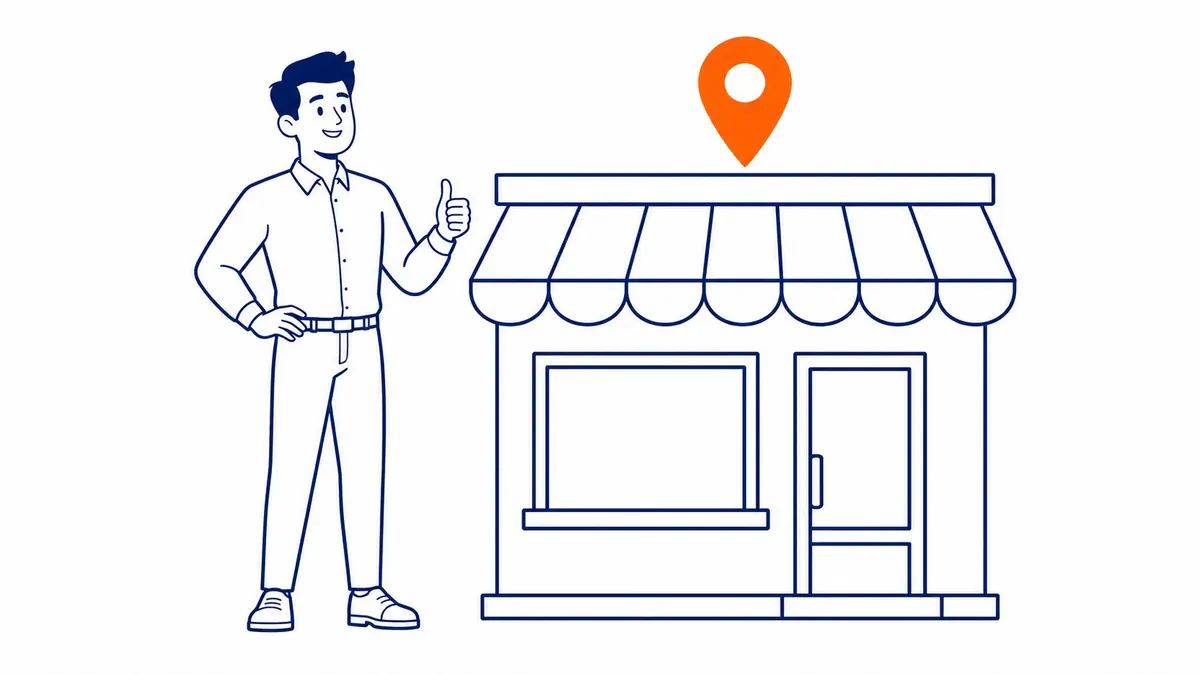
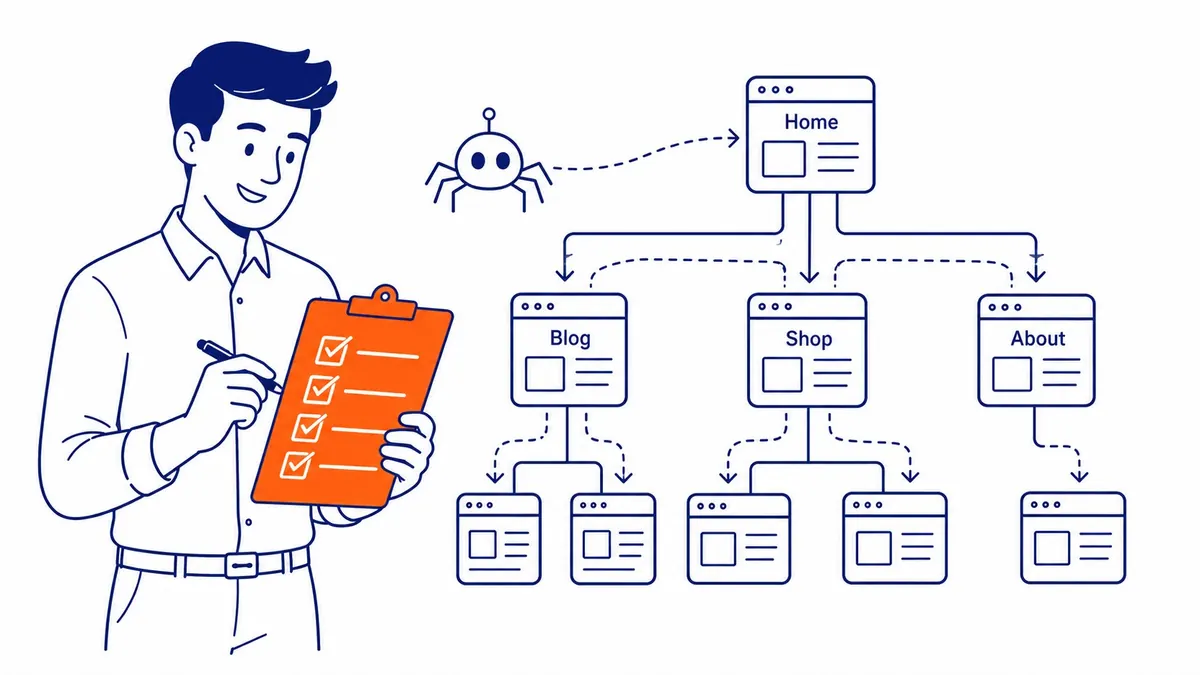
General SEO, sometimes called organic, traditional or national SEO, is about making pages that Google can crawl and understand and that answer the search better than the alternatives. The work is on the website itself: technical health, page structure, content that covers the topic properly, and links from other sites that show the pages are worth citing. For an online store that ships across Canada, a software company, or a publisher, this is the whole job, because the customer could be anywhere and Google is not choosing between businesses by distance.
Because the results are not limited to one area, the competition is everyone in the country, or the world, who targets the same query. A page trying to rank for “how to choose a furnace filter” is up against manufacturers, retailers and national publishers. That is why national SEO usually depends more on content depth and on earning links from well-known sites, and why it tends to take longer to show results.
What local SEO adds on top

Google documents what it looks at for local results. Its Business Profile help page says that local results are “mainly based on relevance, distance, and popularity”. Relevance is how well a profile matches the search, distance is how far the business is from the searcher (or from the location Google infers for them), and the section Google titles “Prominence” covers how well known a business is, including how many websites link to it and how many reviews it has. Google also says plainly that “there’s no way to request or pay for a better local ranking”.
Distance is the factor a business cannot change, which is why local SEO concentrates on the other two. In practice that means a complete Google Business Profile with the right primary category, accurate hours, services and photos; a website with a clear page for each service and area; and a steady flow of genuine customer reviews, answered by the owner. None of this replaces the website work, but a strong website with a thin or inaccurate profile tends to struggle in the map results.
Local SEO also cares about details general SEO rarely touches. Your business name, address and phone number should match across your website, your profile and the directories and industry listings that mention you, which is the reason citations and NAP consistency come up in every local SEO plan. Links matter in both, but a local business usually earns its most useful ones from local sources, such as a business association, a community sponsorship or a local news story, rather than from national industry publications.
SEO and local SEO side by side

| General (national) SEO | Local SEO | |
|---|---|---|
| Results it targets | Organic web results | Map pack and local organic results for one area |
| Typical query | “how to choose a furnace filter”, “buy hiking boots online” | “furnace repair Calgary”, “dentist near me” |
| Main assets | Website pages and content | Google Business Profile plus location and service pages |
| Ranking inputs Google describes | Relevance and usefulness of the page, links, technical quality | Relevance, distance and prominence (including reviews and links) |
| Who you compete with | Everyone targeting the query, anywhere | Businesses Google considers near the searcher, plus directories |
| Keywords | Topic and product terms, usually without a place name | Service terms with a city, neighbourhood or “near me” intent |
| Reviews | Indirect at most | Part of prominence, by Google’s own description |
Keyword research follows the same split. National work goes after topic and product terms with larger search volume, while local work looks at how people in one market phrase the service, which is often the same core term with a city or neighbourhood attached. Local terms usually have lower volume, but how competitive they are depends on the market: “lawyer Calgary” is usually a much harder fight than “bookkeeper Okotoks”, even though both are local.
Which one your business needs
The simplest test is Google’s own eligibility rules. A Business Profile, and therefore the map results, is available to businesses that serve customers in person, either at a staffed location or by travelling to them. Google’s guidelines say a virtual office or a remote mailbox does not qualify, that a service-area business (a plumber or a mobile groomer, for example) should hide its address and set a service area, and that the service area should not normally extend beyond about two hours of driving time from where the business is based. If your business has no location and no service area of that kind, local SEO in the map sense is not open to you, and general SEO is the work.
| Business type | What it mostly needs |
|---|---|
| Storefront or office serving local customers (clinic, restaurant, shop) | Local SEO first, with general SEO for the service pages |
| Service-area business (plumber, roofer, cleaner) | Local SEO with a hidden address and service area, plus service and area pages |
| Online-only business selling across Canada | General SEO; a Business Profile is rarely relevant |
| Several locations in Alberta or BC | Local SEO for each staffed location, plus general SEO for the brand and shared content |
Most local businesses end up needing both, because the organic links under the map are still on the same page and still compete for the same customer. The order matters, though. A Calgary service company usually gets more from fixing its profile, categories and service pages first, and then building content that can rank in the organic results, than the other way round. A company with branches in Calgary, Edmonton and Vancouver needs a separate page and profile for each location that is staffed, rather than one profile trying to cover three cities.
Paid results follow different rules
Neither kind of SEO can be bought, and Google says so directly for local rankings. The paid route to appearing in one area is advertising, which sits in its own ad positions and does not change where your profile or pages rank organically. For a local business that needs calls while the SEO work builds, this is often the practical bridge.
If you run Google Ads with location targeting, check the location option as carefully as the keywords. Google’s recommended option, “Presence or Interest”, can show ads to people who have shown interest in your area as well as to people who are in it or regularly in it, while “Presence” limits ads to people in or regularly in the area. For a service business that only works within Calgary, the narrower setting is usually the safer starting point, because someone in another province researching Calgary is rarely a customer for a local furnace repair.
Where to start
If you are not sure which side of the page your business should be competing on, search your three most important services the way a customer would, from where your customers are, and note whether a map appears and who is in it. That one check tells you whether local SEO is part of the job. SEO Company To-The-TOP! has worked on search for Calgary businesses since 2007, as a solo practitioner who does the client work directly.
Whichever side matters more for you, expect months rather than weeks before the rankings settle, because both depend on Google re-crawling and re-evaluating your site and profile over time. If you would like a second opinion on where to focus, the SEO services page explains how the work is set up, or you can call (403) 308-5949 to talk it through.
Contact Calgary SEO Company To-The-TOP!
Questions about anything in this article, or about your own rankings? Talk to a Calgary SEO specialist directly.
Phone: (403) 308-5949
Address: 1509 14 Ave SW, Calgary, AB T3C 0W4
Hours:
Monday to Friday: 10:00 am – 7:00 pm
Saturday: 12:00 pm – 4:00 pm
Sunday: closed