
How to Improve Local SEO
Four signals drive local search rankings: Google Business Profile completeness, citation consistency, review volume, and local backlinks. Get all four working and visibility in the map pack follows. Miss one and the others compensate less than most business owners expect. The question that comes up constantly: which one do we fix first? Start with the profile. Everything downstream depends on it.
What follows is the sequence we use for local SEO programs. Each section covers one lever. Order reflects impact, not alphabetical convenience.

Optimize Your Google Business Profile
Google Business Profile is the strongest single signal Google has for local rankings. An incomplete listing, an unverified profile, or a mismatched primary category all suppress local search visibility before any backlink or content work can help. Start here.

Category selection is where most profiles fall short. Google Business Profile categories tell the algorithm which queries the business should appear for. A plumbing company listed under “Contractor” is invisible for “emergency plumber near me.” Pick the most specific primary category the business qualifies for, then add secondary categories for adjacent services.
Photos and regular posts signal an active listing. Profiles with recent uploads appear more prominently in local search results than identical businesses with stale imagery. Upload photos from actual jobs rather than stock. Google’s image engagement signals reflect this: verified photos from real locations produce longer dwell on the listing than generic content.
Responding to reviews also factors into how Google treats the Google Business Profile. Businesses that reply to every review, including negative ones, maintain higher prominence scores over time. The content of the response does not directly change rankings; the activity signal does. A business sitting at 60 reviews with no responses is losing the signal a competitor with 40 reviews and active management is capturing.
Citations Across Directories: NAP: Name, Address, Phone. Illustration for local SEO improvement in Calgary.” src=”/wp-content/images/Build-Consistent-Citations-Across-Directories.jpg” style=”max-width:100%;height:auto;display:block;margin:1.5em 0;” width=”600″/>
Build Consistent Citations Across Directories
NAP: Name, Address, Phone. All three need to appear identically across Google Business Profile, Bing Places, Apple Maps, and every directory relevant to the vertical. Any mismatch weakens the local ranking signal. Suite vs Ste. “Ltd” versus “Ltd.” These discrepancies count more than most people assume.
The primary citation aggregators for Canadian markets are Foursquare, Acxiom, and Factual. Correct the listing with those three and most downstream directories inherit the right data. Yelp and Yellow Pages usually require manual updates. Industry-specific directories relevant to the vertical deserve their own audit pass; citations there carry additional topical relevance.
Citations carry less weight than five years ago but still function as trust signals. Missing or inconsistent citations in a competitive market let competitors hold positions they should not. For businesses expanding into new cities, local search visibility in those markets takes 90 days to build after citations are submitted; local SEO in Airdrie or Grande Prairie requires a full citation build for each market, not just the home city profile.

Generate and Manage Customer Reviews
Reviews sit among the strongest local ranking signals Google uses. Volume matters. Recency matters more. Ten reviews from three years ago carry less weight than three reviews from last month. The map pack rewards businesses that show consistent, ongoing review activity rather than a burst that stopped when someone lost interest.
The ask is where most businesses underperform. Waiting for satisfied customers to leave reviews voluntarily produces a fraction of the result. Build the ask into every job close: a direct link to the Google Business Profile review page, sent by text or email within 24 hours of completing the work. Conversion rates on direct asks are substantially higher than passive methods or third-party review platforms.
Negative reviews do not improve by being ignored. A business with 50 positive reviews and three unanswered negative reviews loses the engagement signal Google rewards for responses. Reply within 48 hours. Keep replies factual, not defensive. Other potential customers reading the exchange are the real audience; Google takes the engagement signal either way.
Target Local Keywords and Create Local Content
Local keywords differ from general SEO keywords in one important way: search intent is already filtered by geography. Someone typing “roofing contractor Spruce Grove” is not browsing. Keywords with explicit location modifiers, or terms Google auto-associates with local intent, deserve dedicated page-level treatment, not a mention in the footer.
Location-specific landing pages serve this intent better than a single service page with a city name dropped in once. A Surrey business getting clients across Metro Vancouver needs a separate page for each target area with genuinely distinct content, not the same copy with the city name swapped in. Google’s duplicate-content detection is good enough to recognize the difference.
Local content also means producing material that makes the site relevant to a specific geography: service area posts, posts about local industry patterns, or articles about conditions specific to that market. Thin pages that mention the city name but offer nothing location-specific do not rank and waste crawl budget. The content has to earn the local visibility, not just claim it. Earning it is what ranking for near me keywords means in practice.
Earn Local Backlinks
Backlinks from local sources carry a relevance signal generic links do not. A link from a chamber of commerce to a local accounting firm tells Google this business is embedded in that geography. Same domain authority as a national directory link but higher local relevance weight in the ranking calculation.
Local backlinks come from repeatable sources: local media coverage, event sponsorships, business association memberships, and vendor or supplier directory listings. The supplier-directory angle is the most overlooked. If your clients include businesses that list their vendors publicly, ask whether they will add a link. Most will.
Broken link building also applies here. Local media and business association sites frequently maintain resource pages with dead links. Producing content relevant to those resources and requesting link replacements earns higher conversion rates than cold outreach because the editor already decided the topic deserves a link somewhere on that page.
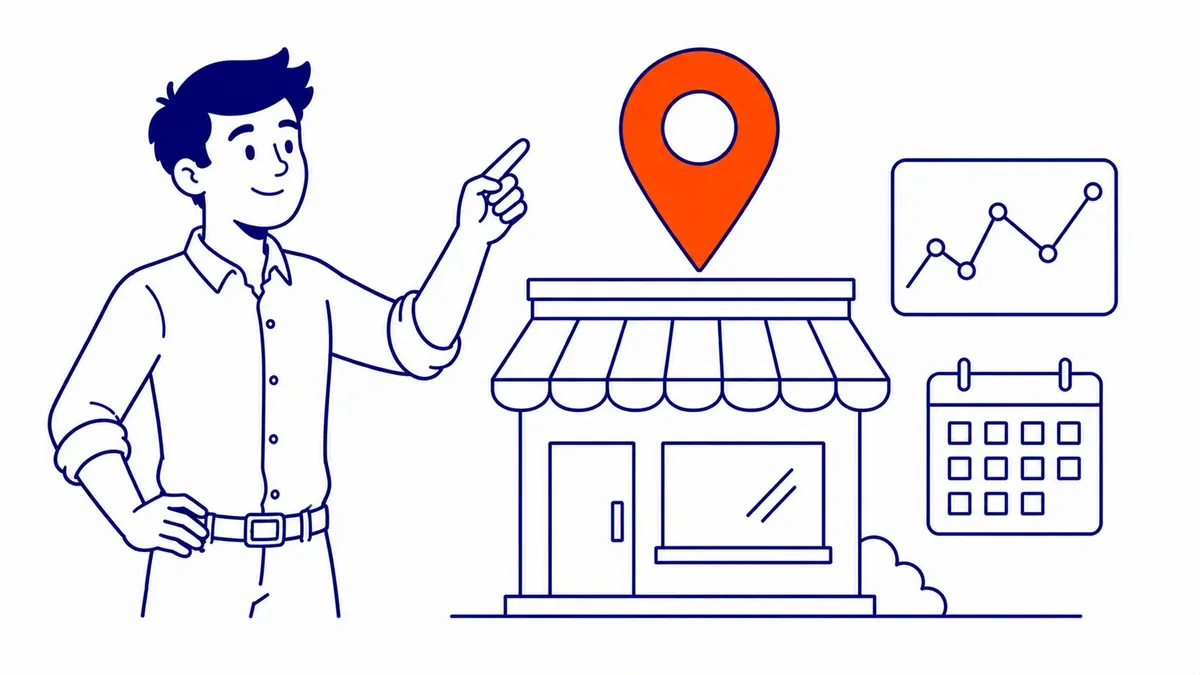
Track and Maintain Local SEO Rankings
Local SEO rankings shift on a monthly basis in competitive verticals. Algorithm updates, new competitors optimizing their Google Business Profile, and seasonal search volume changes all move the map pack. Checking visibility quarterly is not frequent enough. Monthly position reports catch drops before they compound into traffic losses.
Google Search Console shows organic search performance but nothing about local pack rankings specifically. Third-party rank-tracking tools, or regular manual checks from within the service area, are the only way to track actual local search position. For businesses running local SEO across multiple cities simultaneously, each market needs separate tracking; rankings in one city say nothing about visibility in another.
As a Calgary SEO company, To-The-TOP! has run local SEO programs since 2007. The pattern repeats: businesses that treat local SEO as a one-time setup are outranked within twelve months by competitors who maintain it. Monthly audits, review management, and citation updates hold positions. The initial build is not enough on its own. For owners weighing the ongoing spend, whether SEO is worth it for a local business is its own separate discussion.
Paid search through our Google Ads management fills visibility gaps while local pack positions build. Both channels share keyword data in useful ways: search terms that convert in paid campaigns identify which local keywords deserve the most investment in organic optimization. Local SEO and paid search work better together than either one does in isolation. For a full program built around both, our SEO services cover the organic side. Owners new to this usually start by asking why local SEO matters at all.
Frequently Asked Questions
How to boost your local SEO?
Google Business Profile first. Complete the profile, select the correct primary category, and generate recent reviews on a consistent basis. Build NAP citations with identical business information across the main directories. Create location-specific content pages for each area served. Earn backlinks from local sources: media, associations, partner directories. That sequence, executed in order, is what moves local search rankings.
What is the 80 20 rule of SEO?
In practice: 80% of ranking results come from 20% of the work. For local SEO, that 20% is Google Business Profile optimization and consistent review management. Businesses that execute those two things well routinely outrank competitors who spread effort across a dozen tactics with lower impact. Content, backlinks, and technical fixes fill in the remaining gap from there.
Is SEO dead or evolving in 2026?
Still producing returns, but the channel is harder than it was. AI Overviews affect visibility for some informational queries. Map pack results are not being displaced by AI summaries at any meaningful rate; most local searches still surface them prominently. Local SEO investment holds up well for service businesses specifically. The zero-click concern applies much more to generic informational content than to local commercial searches with purchase intent.
What are the 3 C’s of SEO?
Different frameworks exist. A useful version for local SEO: Content, Citations, and Credibility. Content builds topical relevance for the keywords the business needs to rank for. Citations establish the NAP consistency Google needs to trust the local ranking signal. Credibility comes from backlinks, reviews, and how long the business has maintained an active, accurate online presence. All three work together; optimizing only one produces partial results.
Contact Calgary SEO Company To-The-TOP!
Questions about anything in this article, or about your own rankings? Talk to a Calgary SEO specialist directly.
Phone: (403) 308-5949
Address: 1509 14 Ave SW, Calgary, AB T3C 0W4
Hours:
Monday to Friday: 10:00 am – 7:00 pm
Saturday: 12:00 pm – 4:00 pm
Sunday: closed