
How to Rank for Near Me Keywords
To rank for near me keywords, you have to work on two separate sets of results, because a “plumber near me” search usually shows a map pack of local businesses and, below it, ordinary organic links. The map pack is decided mainly by what Google calls relevance, distance and popularity, so the work there happens in your Google Business Profile, your reviews and the links and mentions that make a business well known. The organic links behave more like normal search, and there the wording on your page can help, including the phrase “near you” in titles and headings. Because results also change with where the searcher stands, you need to check rankings from more than one spot before you judge them.
Most advice on this topic picks one side. One camp says Google detects location automatically, so the words “near me” are pointless, and the other treats the phrase like any other keyword to repeat. Both are partly right, and which one applies depends on the result type you are looking at. The sections below take each type in turn and then cover service-area businesses, tracking, and how long the work takes. If you are new to the wider subject, the basics of local SEO are a useful companion to this page.
A near me search returns two different result types
When someone in Calgary types “dentist near me” on a phone, Google normally shows a map with a short list of businesses, often called the local 3-pack, followed by the organic results: dentist websites, directories and sometimes articles. These two blocks are ranked by different systems. A business can sit first in the pack and nowhere in the organic links, or the reverse, and the fixes for each are not the same.
| Map pack (local results) | Organic results | |
|---|---|---|
| What decides ranking | Relevance, distance and popularity (prominence), according to Google’s Business Profile Help | Google’s normal ranking systems for web pages |
| Where you do the work | Your Google Business Profile, reviews, mentions and links | Your service pages, location pages and their wording |
| Does “near me” or “near you” wording help? | Sterling Sky saw no effect in its tests | Sterling Sky saw ranking gains in client tests |
| Main thing you cannot change | How far the searcher is from your address or service area | The authority of very large sites such as directories |
The rest of this guide follows that split, because a business that only works on one block usually wonders why the other one does not move.
Ranking in the map pack starts with your Google Business Profile
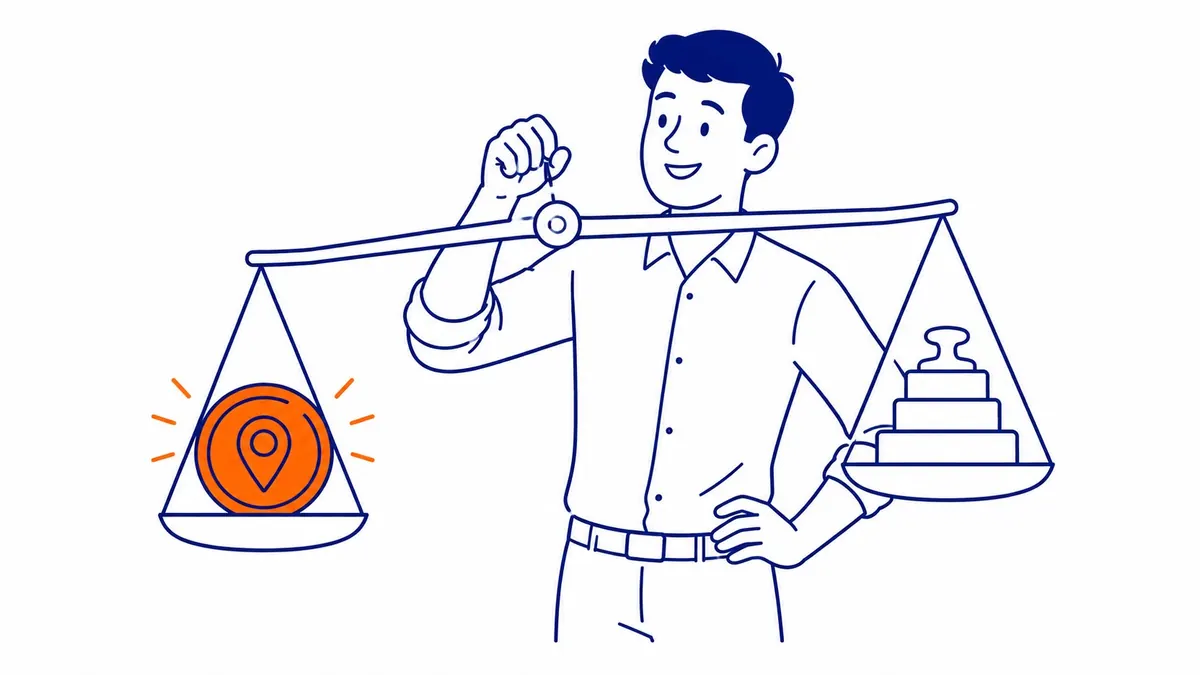
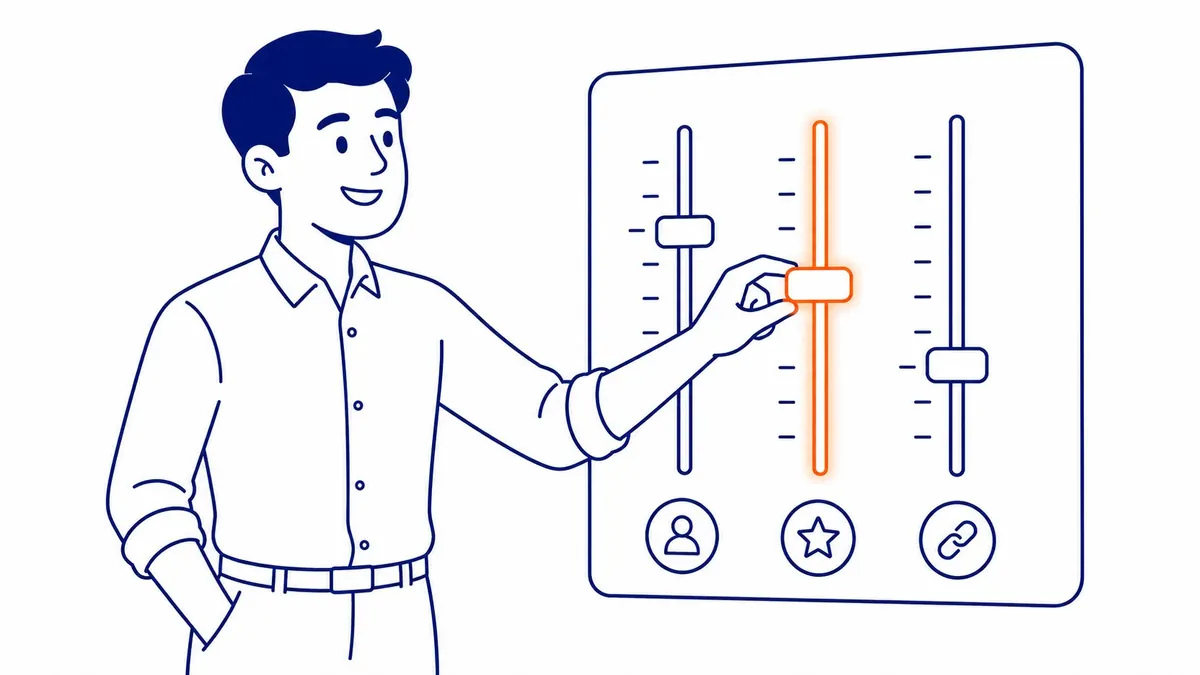
Google’s help page on local ranking says local results are “mainly based on relevance, distance, and popularity”, and its section on prominence describes how well known a business is, including “how many websites link to your business and how many reviews you have”. Relevance is how well your profile matches the search, so the profile needs complete and detailed information. Distance is how far you are from the searcher, or from where Google thinks they are if they do not share a location. Google also states plainly that there is no way to request or pay for a better local ranking.
The practical steps follow from that page. Verify the profile, keep the hours and address accurate, and choose the most specific primary category that describes your core business, so a plumbing company picks “Plumber” rather than a broad category such as home services. Google’s guidelines ask for the fewest categories it takes to describe the business and say categories should not be used as keywords. Add real photos of your work, your team and your premises, and reply to reviews, which Google says shows that you value the feedback.
One tempting shortcut is to put “near me” or a service keyword into the business name, such as “Smith Plumbing Near Me Calgary”. Google’s guidelines for representing your business say the name should match the real-world name on your signage and website, and that including unnecessary information in the name “isn’t permitted, and could result in the suspension of your Business Profile”. A suspended profile can drop out of Maps and Search, so this is the one place where the phrase does real harm.
Distance deserves a realistic view as well. You cannot move closer to every searcher, and a business a few blocks away will often outrank you for someone standing next to it. Proximity is still one factor among three, though, which is why a business with a complete profile and a long record of reviews can appear for searchers who are closer to a weaker competitor.
Ranking in the organic results is where the wording helps
The organic links under the map are where on-page work matters most, and this is also where the common advice goes wrong. Joy Hawkins of Sterling Sky, a local SEO agency that works in Canada and the United States, published a post in January 2025 describing client tests in which adding “near me” or “near you” to titles, headers and URLs improved organic rankings for near me searches, with examples from a dentist and a lawyer. The same post says the agency saw the tactic affect organic rankings only, “not the Google Maps or local pack rankings”, and that “near you” works as well as “near me” while reading more naturally.
That is one agency’s client evidence rather than Google documentation, and Google has published nothing that confirms it. It is still the most direct published test, and the tactic costs little to try on pages where the wording reads naturally. A sensible decision rule follows from it. Use “near you” where a person would naturally read it, such as a service page heading like “Furnace repair near you in northeast Calgary” or a title that pairs the service with the city. Keep it off informational blog posts, where it reads oddly and matches the wrong intent, and do not build a separate thin page for every “near me” variant, since a reply under the same post advised adding the wording to existing service and location pages instead.
The rest of the organic work is ordinary local on-page SEO, and it is covered in more depth in the on-site side of local SEO. Put the business name, address and phone number on the site as text rather than inside an image, and make them match the Business Profile. Build a page for each main service, and where you genuinely serve distinct areas, a location page with content specific to that area, such as the neighbourhoods covered, the type of homes or buildings involved and how quickly you can attend. LocalBusiness structured data can state the address and phone number in a machine-readable format, which gives Google the details in an unambiguous form, although structured data on its own does not guarantee better rankings.

Reviews and citations: what is documented and what is theory
Reviews are the one prominence signal Google names directly. Its help page says the number of reviews counts and that “more reviews and positive ratings can help your business’s local ranking”. A steady flow of genuine reviews, and a reply to each one, is therefore worth building into the way you finish every job, and there is more detail on how to collect and answer customer reviews in a separate guide.

Two popular beliefs go further than Google does, so treat them as practitioner theory. Many local SEOs believe that reviews mentioning a service and a neighbourhood, such as “fixed our furnace in Bridgeland”, help a profile rank for those terms, and that recent reviews count for more than old ones. Google has not documented either, so it makes sense to ask customers to describe the job in their own words without scripting keywords for them, which is useful to the next reader whether or not it affects ranking.
Citations, meaning listings of your business name, address and phone number on directories such as Bing Places, Apple Business Connect, Yelp and industry sites, sit in a similar place. Google’s help page mentions links to your business as part of prominence but does not name directory consistency as a factor. Most local practitioners still consider consistent listings basic hygiene, because conflicting phone numbers or an old address can confuse customers and the services that share business data. Fixing citations and NAP consistency is low risk and worth doing, but it is rarely the reason a business is missing from the pack on its own.
Service-area businesses in Calgary play by different rules
Many Calgary trades, such as plumbers, electricians, cleaners and mobile mechanics, work from home and travel to customers. Google’s guidelines say a service-area business that does not serve customers at its address should hide that address, so a plumber running the business from a house in Bridgeland would clear the address from the profile and set a service area instead. The guidelines also say the overall service area should not extend farther than about two hours of driving time from where the business is based, which from Calgary already reaches well past the city limits.
Hiding the address does not remove distance from the equation. Google still knows where the business is verified, and practitioners commonly observe that a service-area business shows in the map pack most often near that point and less often toward the edges of its service area. This is an observation from the field rather than a documented rule, but it explains a familiar frustration for a company in the northeast that wants calls from the deep south of the city. For those businesses, organic service and location pages often carry more of the load, because they can rank across the whole city where the map pack may not.
How to check where you actually rank for near me searches
Near me results change with the searcher’s location, so a check from your own office tells you very little. As an illustrative example, a plumber based in Bridgeland might appear first in the map pack for “plumber near me” when the search is made a few blocks away, lower down for a searcher in Kensington on the other side of downtown, and not at all for someone in Mahogany in the far southeast. Each of those results is accurate for that location, and none of them is “your ranking” in general.
This is why grid-based rank trackers exist. They run the same search from a pattern of points across a map and show where you appear in the pack at each point, which turns a vague sense that the profile ranks well into a picture of where the profile is strong and where it fades. For the organic results, Google Search Console shows the queries your pages already appear for, including near me variants, with their average positions, which is a better starting point than a few manual searches. Whichever method you use, compare like with like over time, because a single check on a single day can swing for reasons that have nothing to do with your work.
How long it takes, and where Google Ads fits
Local rankings improve over months rather than weeks, and how long depends on the starting point and on the category. A business with a verified, complete profile and a good review history that only needs better service pages can see organic movement sooner than one starting with no profile, few reviews and conflicting listings across the web. Competitive categories in a city the size of Calgary, such as dentists, lawyers and roofers, take longer, because the businesses already in the pack have usually been building these signals for years.
Paid search can cover the gap while that work builds. Google Ads lets you target people in, or regularly in, the locations you serve, so well-run Google Ads campaigns can put a business in front of nearby searchers as soon as the ads are approved and running. Ads do not change organic or map rankings, in either direction, so treat them as a separate channel rather than a shortcut to the pack.
SEO Company To-The-TOP! has worked on SEO in Calgary since 2007, and as a solo practice the person who reviews your profile and pages is the person who does the work. If you would like a second opinion on why your business is missing from near me searches, call (403) 308-5949.
Contact Calgary SEO Company To-The-TOP!
Questions about anything in this article, or about your own rankings? Talk to a Calgary SEO specialist directly.
Phone: (403) 308-5949
Address: 1509 14 Ave SW, Calgary, AB T3C 0W4
Hours:
Monday to Friday: 10:00 am – 7:00 pm
Saturday: 12:00 pm – 4:00 pm
Sunday: closed