
What Is Franchise SEO? A Plain Guide for Franchisors and Franchisees
Franchise SEO is search engine optimization for a business that operates under one brand at many locations, so that each location shows up when people nearby search for what it sells, while the brand’s website and reputation are managed as a whole. It covers the shared website, a page for every location, a Google Business Profile for every location, consistent business details across the web, reviews, local links and reporting by location. The hard part is rarely the techniques, which are the same as ordinary local SEO, but deciding who owns and pays for each piece when a franchisor and its franchisees all have a stake in the result.
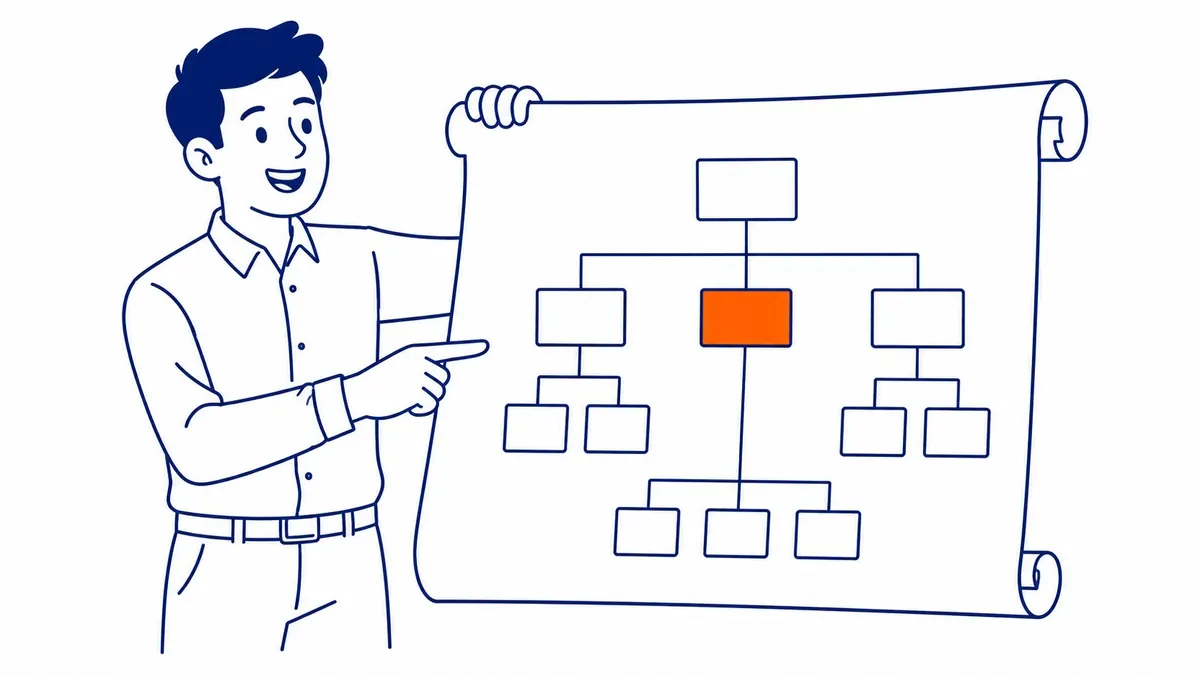
The term is used in a second sense as well. Some people say franchise SEO when they mean marketing the franchise opportunity itself, which is search work aimed at recruiting new franchisees through pages about investment, territories and the application process. That is a different audience with different keywords, and it usually sits in its own section of the brand’s site. This guide is about the first meaning, which is getting customers to the right location, though a brand that is still growing will need both.
Franchise SEO versus local SEO
In local results, each franchise location competes much as an independent business on the same street would. Google’s Business Profile Help states that “Local results are mainly based on relevance, distance, and popularity,” and it explains prominence partly through how many websites link to a business and how many reviews it has. A searcher in Okotoks is shown the profiles near them that best match the search, each with its own address, hours and reviews, so most of the work for that result happens at the location itself, although a well-known brand and a well-linked website can still lend it some prominence.
What changes with a franchise is scale and ownership. The same job repeats across many locations under one name, with a shared website and shared brand demand already in place, and with a contract deciding who is allowed to edit what. A franchisor can fix a problem once for every location, but can also break every location at once, which is why governance matters more here than in single-site work. The day-to-day mechanics of running local SEO across several locations are covered in a separate guide; this one stays on what franchise SEO is and how the responsibilities divide.
What franchise SEO involves
The work falls into six parts. Head office normally leads the site structure, the shared template and the reporting, while Business Profiles, reviews and local links only succeed when the person running each location takes part.
Site structure and location pages
Most franchise sites work best with one domain and one page per location, in a predictable folder such as /locations/calgary-south/. Each page should carry the location’s own address, phone number, hours, services, staff or service area, directions and reviews, so that it answers a local searcher better than the home page could. A page that swaps the city name into the same paragraphs is the weak point here, because Google’s spam policies list “Creating substantially similar pages that are closer to search results than a clearly defined, browseable hierarchy” as doorway abuse, and also name “multiple domain names or pages targeted at specific regions or cities that funnel users to one page.”

Business Profiles, names and citations
Each location that customers can visit should have its own verified Google Business Profile, while a virtual office, meaning a rented address the business does not actually operate from, is not eligible for one. Service-area franchises that travel to their customers follow slightly different rules, covered in the questions at the end. Google’s guidelines are strict about chains as well. They say to “Maintain consistent names and categories across all of your business locations,” that “All business locations within the same country must have the same name,” with two exceptions the page lists (distinct sub-brands or types of operation, and locations that consistently use a different name on their storefront, website or stationery), and that locations providing the same service should share a category. The same page also says not to create more than one profile for each location, which matters when a franchisee and head office have each set one up on their own.
Brands with 10 or more storefront locations can verify their profiles in bulk through Business Profile Manager, but Google’s bulk verification page limits that to a spreadsheet of “10 or more profiles from the same business,” adds that “Agencies with more than one business in one account can’t bulk verify,” and leaves service-area businesses out. Duplicate, suspended or disabled profiles do not count toward that minimum of 10, so stray duplicates should be found before a network plans on bulk verification. Once the profiles exist, the location’s name, address and phone number should match everywhere else they appear online, from directories to the location page itself. Keeping those consistent citations tidy across a network is unglamorous work that pays off on every location at once.
Reviews
Reviews attach to one profile, and they are written by people who dealt with one location. Head office can set the policy (when to ask, how to respond, what never to say in a reply) and supply the tools, such as the review link or QR code that Google’s help page suggests putting on receipts and in thank-you emails, while staff at each location are best placed to ask at the right moment. Google’s review policy sets limits that apply across the whole network: reviews must reflect a genuine experience, incentives such as discounts or free goods are prohibited, and a business may not ask only its happy customers, pressure people to leave a review while on the premises or give staff a target number of reviews to collect. A practical rule is that every location answers its own reviews within the brand’s guidelines, while head office watches for problems that could spill over onto brand searches.

Local links and community activity
Links and mentions from local sources, such as a community association newsletter, a minor hockey sponsorship page, a chamber of commerce listing or a story in a local paper, can help the location they point to. Sponsorships and local events boost franchise SEO in this specific way: they give a location a reason to be mentioned on local sites, and the organizer can be asked to link to that location’s own page, since that is the page a local reader needs. That is why the location page should exist before the sponsorship starts, so there is somewhere sensible for the link to go.

Structured data and technical health of the shared site
Each location page can carry LocalBusiness structured data with its own address, phone number, hours and URL, which Google’s Search Central documentation supports as a way to tell Google about a business’s hours, departments and other details. Head office should build it into the page template once, so that every franchisee’s page gets it automatically and nobody has to hand-edit code. Site speed, mobile layout, crawlability and the template itself are shared by every location, so this is where head office spending has the widest effect. A technical fix on the template improves all the location pages at once, and a technical mistake hurts all of them at once too.
Reporting by location
A single national traffic figure hides which locations are winning and which are invisible. A useful monthly report for each location shows Business Profile calls, direction requests and website clicks; the location’s map-pack position for its main services, checked from several points across its trade area rather than only from the store; reviews gained and the average rating; and organic visits to its location page. SEO Company To-The-TOP! reports positions monthly, and the same principle applies location by location.
Should franchise locations have separate URLs?
Every location should have its own URL, but that does not mean its own website. Google’s guidelines do not prescribe one structure, so the choice is a practical one: which setup keeps the content unique, the details consistent and the brand in control. The table below is a practitioner’s decision rule, not a Google requirement.
| Structure | Example | When it fits | Main risk |
|---|---|---|---|
| Subfolder on the brand domain | brand.ca/locations/airdrie/ | Most franchise systems; head office controls the template and every page benefits from the domain’s existing links | Thin, copied pages if franchisees are not asked for local content |
| Subdomain | airdrie.brand.ca | Locations that need a separate system, such as their own booking engine | More setup and maintenance for the same result |
| Separate franchisee website | airdriebrandname.ca | Rarely; sometimes required by an older agreement | Splits links and authority, invites duplicate content and name inconsistency, and can drift off-brand |
An illustrative example: a home services brand with locations in Calgary, Airdrie and Okotoks would usually be best served by three pages under one folder on the brand’s domain, each with that location’s address, its own Business Profile linked to it, local photos, the communities it covers and its own reviews. If the Airdrie franchisee had built a separate site years ago, the usual fix is to move its useful content onto the new location page and redirect the old domain there, with the agreement checked first to confirm who owns that domain.
Who controls what in a franchise system
The franchise agreement is where control is set, so it should be read before any SEO work begins. This table shows the usual split and the questions to ask when the agreement is silent.
| Asset | Usually controlled by | Question to settle in writing |
|---|---|---|
| Brand domain and website template | Franchisor | Can a franchisee add content to its own location page? |
| Location page content | Shared | Who writes the local content, and who approves it? |
| Google Business Profile | Either party | Who is the primary owner, and who is a manager? |
| Reviews and replies | Franchisee, within brand rules | Who replies, and how fast? |
| Local links and sponsorships | Franchisee | Does head office need to approve a sponsorship? |
| Marketing fund spending | Franchisor | How much of the fund goes to local search for each location? |
| Profile, page and phone number when a unit is sold or closes | Set by the agreement | Do they transfer to the buyer, stay with the brand, or close? |
Google’s Business Profile roles make the profile question concrete. A profile can have several owners but only one primary owner, and owners can add and remove users and delete the profile, while managers can edit most information and reply to reviews but cannot add or remove users or remove the profile. Google also advises that each person uses their own Google Account so passwords are never shared. A common arrangement is for head office to hold primary ownership of every profile and add each franchisee as a manager rather than an owner, which protects the brand when a unit changes hands, although it should be agreed openly rather than discovered later.

What head office can do once for everyone
Some franchise SEO work only needs doing once. An established, well-linked domain tends to give a new location page a head start, because crawlers already visit the site and can find the new page through its existing links, which a page on a brand-new site cannot count on. A clean template, structured data and fast pages improve every location at the same time. Brand demand is shared as well, since people searching the brand name are looking for the nearest location, which is one reason location pages need clear links from the store locator. This is where a network gets its real economy of scale, and it is where a franchisor’s marketing fund has the most reach.
What head office cannot do is move a location closer to a searcher. Distance is one of the three factors Google names, so a location’s visibility will usually be strongest near its own address and weaker across the city. Reviews, local mentions and community links cannot be shipped from head office either, because they come from customers and neighbours of one particular location.

Where franchise SEO budgets go wrong
The most common mistake is funding only what head office can see. A network pays for a redesign and a national blog while each franchisee is told that local search is their own problem, on a budget of almost nothing, so the shared site improves while the location profiles and pages stand still. The reverse also happens, when franchisees fund everything themselves and nobody maintains the shared template, so a technical problem lands on every location in the same month.
A better split follows the asset. Shared money goes to the things that travel: the template, the structured data, the location page system and the brand’s reputation. Local money, or a local share of the marketing fund, goes to the things that cannot travel: reviews, local links, sponsorships and the location’s own content. When it is time to choose an SEO company for the network, ask how the provider would divide that work and how it would report on each location, and the guide to what to look for in a franchise SEO agency covers the selection questions in more detail.
How long franchise SEO takes
SEO takes months, and in a franchise network it moves unevenly. A location with years of reviews and a verified profile already has more of the prominence Google describes, so it often moves first, while a location that opened last month starts with little local history, whatever the domain carries. Results vary from one trade area to the next, too. Planning for location-by-location progress, rather than one network-wide date, avoids disappointment.
Where a new location needs customers before its organic visibility builds, paid search can cover the gap in one trade area at a time. Google Ads management can target a radius around a location, so a new location can compete for ad impressions from searches in its own area while the location page and profile earn their place. Google describes location targeting as its best effort, based on signals such as users’ settings and devices, so the boundary is approximate rather than exact.

To-The-TOP! has offered SEO in Calgary since 2007 as a solo practice, so the person who plans the work is the person who does it, and progress is reported monthly by position. A public portfolio of ranked keywords is on the site for anyone who wants to check the work. To talk through a franchise network or a single location, call (403) 308-5949.
Common questions about franchise SEO
How do you jumpstart local SEO for a new franchise location?
Create the location’s Business Profile before it opens, using the name the location will actually show on its storefront and website and the same category as comparable locations in the network, and add the future opening date. Google lets an opening date be set up to a year ahead, and once the profile is verified it shows on Google 90 days before that date, which leaves time for posts and photos, although customers cannot leave reviews until the business is open. Publish the location page with the local address and phone number at the same time, link the two, and list the location with the same details in the main directories the network already uses. Google’s guidelines also expect a business that shows its address on Google to keep permanent signage with its name at that address.
Does a service-area franchise get a Business Profile for each territory?
Google allows one profile for each location of a service business when each location has separate service areas and separate staff, and it says the overall service area should not extend farther than about two hours of driving from where the business is based, although larger areas may suit some businesses. A service-area business that does not serve customers at its own address should hide that address, and it cannot list a virtual office unless that office is staffed during business hours. Service-area businesses are also left out of bulk verification, so each profile in a mobile franchise network has to be verified individually.
Can one poor location hurt the whole brand in search?
Mostly it affects its own results, because reviews and map rankings attach to one profile and one address. The brand name is shared, though, so a problem serious enough to appear in news results or in brand searches can reach every location. That is the main reason head office keeps an eye on reviews network-wide even when each location replies to its own.
Contact Calgary SEO Company To-The-TOP!
Questions about anything in this article, or about your own rankings? Talk to a Calgary SEO specialist directly.
Phone: (403) 308-5949
Address: 1509 14 Ave SW, Calgary, AB T3C 0W4
Hours:
Monday to Friday: 10:00 am – 7:00 pm
Saturday: 12:00 pm – 4:00 pm
Sunday: closed