When SEO Started and How It Evolved Into What It Is Today
SEO started around 1997, roughly. Right after search engines got commercially useful enough to matter. Webmasters noticed something simple back then. Rank higher, get more visitors. The practice of deliberately shaping a page to rank better followed almost immediately.
No single founding moment exists. A gradual response, more than anything, to how early search engines actually worked.

The Earliest Search Engines and Why SEO Became Necessary
Archie came first, in 1990. Indexing FTP file names, not web pages. Not search as anyone recognizes it today. Excite and Lycos brought real web search to the mid-1990s. AltaVista joined the field not long after that.
Early ranking algorithms leaned almost entirely on keyword matching. Stuff a page with a target term enough times, and rankings climbed. Simple to game. Webmasters figured that out fast. Keyword stuffing became the first real SEO tactic, crude as it was.
Meta keyword tags mattered a lot in this era too. Add a keyword to that hidden tag. Search engines factored it in without a single visible word changing on the page. Eventually, once the tag got too abused to trust, meta keywords got dropped from ranking entirely.
Google’s Arrival Changed Everything
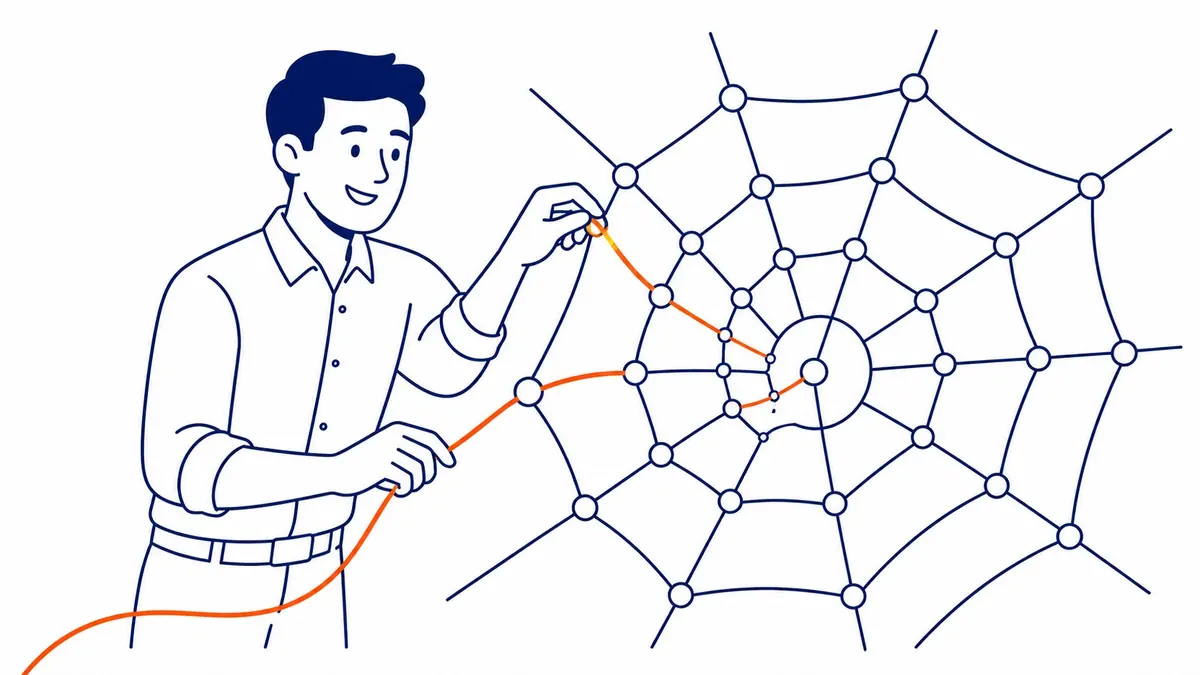
1998. Google launched, built around PageRank, a genuinely different approach. Links from other sites counted as votes of confidence now, not just keyword density. Fewer keyword mentions, more quality backlinks. That combination could now outrank a keyword-stuffed competitor entirely.
That shift moved the whole practice from on-page tricks toward link building. Almost overnight, backlinks became the new currency. Link farms sprang up fast. Reciprocal schemes, paid link networks, all chasing that new signal within a couple of years.
Around 1997, “search engine optimization” itself entered common use as a phrase. Some credit early web consultant John Audette, though the exact origin stays debated. Multiple people landed on similar practices around the same time, working independently of each other. The keywords tag was already dying by then, and the full picture on meta keywords explains why.

The Early 2000s Wild West Era
Google’s algorithm stayed relatively simple through the early 2000s. Exploited hard, as a result. Hidden text. Cloaking. Doorway pages. Link farms running at massive scale. Tactics that would trigger an instant penalty today worked reliably for years back then.
Google fought back with algorithm updates, though nowhere near today’s frequency or sophistication. Early updates targeted the obvious spam first. Subtler manipulation kept working for a surprisingly long stretch after that.
The industry professionalized fast during this period. Dedicated SEO agencies emerged. So did conferences and forums built around the practice. A genuine industry with real budgets behind it is what a webmaster hobby turned into, within just a few years.

Panda, Penguin, and the Shift Toward Quality Signals
2011 brought Panda. Thin, low-quality content was the direct target of this major update. Sites built purely to rank rather than genuinely help visitors got hit hard. Many lost most of their traffic overnight.
Penguin followed in 2012, aimed squarely at manipulative link schemes. Link-buying and link-farm tactics that worked fine through the 2000s suddenly turned into liabilities instead of assets. Plenty of sites needed a full disavow-and-rebuild just to recover.
Those two updates marked the real turning point. Gaming an algorithm gave way to genuinely satisfying searcher intent. Specific tactics keep changing underneath it, but that core shift still defines the practice today.

Yahoo, Bing, and the Multi-Engine Era
Google wasn’t the only search engine competing for share in the early 2000s. For years, Yahoo ran its own directory-based system before switching over to a crawler-based search engine of its own. Microsoft’s search engine, later rebranded Bing, entered the race too. Each carried different ranking signals SEO practitioners had to track separately.
Optimizing for multiple search engines at once created real friction for webmasters. A tactic working well on Google sometimes hurt rankings on Yahoo’s engine, and the reverse held true too. Over time, Google’s market share grew so dominant that SEO practice narrowed almost entirely toward its specific algorithm and guidelines.
Still true today. Google’s search engine handles the overwhelming majority of search queries globally. Nearly all modern SEO strategy centers on Google’s ranking signals specifically because of that. Other engines still exist, still carry some traffic, regardless. A few relics from that era survive too, including the reality of meta keywords on Bing.

SEO in the Modern Era
Mobile-first indexing reshaped SEO further, just within the past decade. Core Web Vitals added another layer. So did E-E-A-T and the rise of AI-generated search results. The core principle underneath all of it hasn’t changed much, though. Satisfy what the searcher actually needs. Rankings tend to follow.
A Calgary SEO campaign today looks almost nothing like SEO from 2005, tactically speaking. Content depth matters now in ways keyword density alone never did back then. Technical performance and genuine expertise carry weight too. Connecting the right page to the right searcher is still the fundamental goal, though. Nothing about that part has shifted. Worth tracing how the field of SEO evolved over time to see which parts never moved.
Frequently Asked Questions
Who invented SEO?
No single inventor. Gradual emergence is closer to the truth. Webmasters in the mid-1990s noticed that page content and structure affected search rankings. Early web consultants and marketers developed techniques independently around the same period, refining them as search engines themselves evolved.
What was the first SEO tactic ever used?
Keyword stuffing was likely first, exploiting how early search engines weighted keyword frequency heavily. Meta keyword tag manipulation followed close behind, since search engines initially trusted that tag’s content without much verification at all.
How has SEO changed since it started?
Dramatically, in both sophistication and focus. Simple keyword-based algorithms defined early SEO manipulation. Technical performance and content quality define it now. User experience signals too, along with how AI-driven search results interpret and cite a page’s information. See the SEO blog for more on how the practice keeps evolving today.
Contact Calgary SEO Company To-The-TOP!
Questions about anything in this article, or about your own rankings? Talk to a Calgary SEO specialist directly.
Phone: (403) 308-5949
Address: 1509 14 Ave SW, Calgary, AB T3C 0W4
Hours:
Monday to Friday: 10:00 am – 7:00 pm
Saturday: 12:00 pm – 4:00 pm
Sunday: closed
