How to Choose Keywords
Whether you have your keywords researched professionally or handle the job yourself, the most consequential decision is not which tool to use. Which phrases to target in the first place is what matters. How to choose keywords well separates sites that gain traffic from ones that stay invisible.

What to Look for in a Keyword
Three signals. Search volume. Keyword difficulty. Search intent. Miss any one of them and the keyword is not as strong as it appears on paper.
Search volume is the monthly count of how many times a term gets searched. Sounds like the right place to start. But volume alone means nothing without the other two signals. Ten thousand monthly searches with a KD of 75 is not a realistic target for a new site.
KD runs from 0 to 100. Higher numbers mean a term is harder to rank for. Under 30 is accessible territory for most sites. Above 50, meaningful link building and domain authority come before rankings appear.
Search intent is what the searcher actually wants. Even a keyword with low competition and decent volume fails if the page does not match what people expect. A product page targeting an informational query rarely ranks, because the results are filled with guides.
All three need to line up before a keyword earns a place in the strategy. Lining them up is most of what keyword research actually is.
How to Find Keyword Ideas
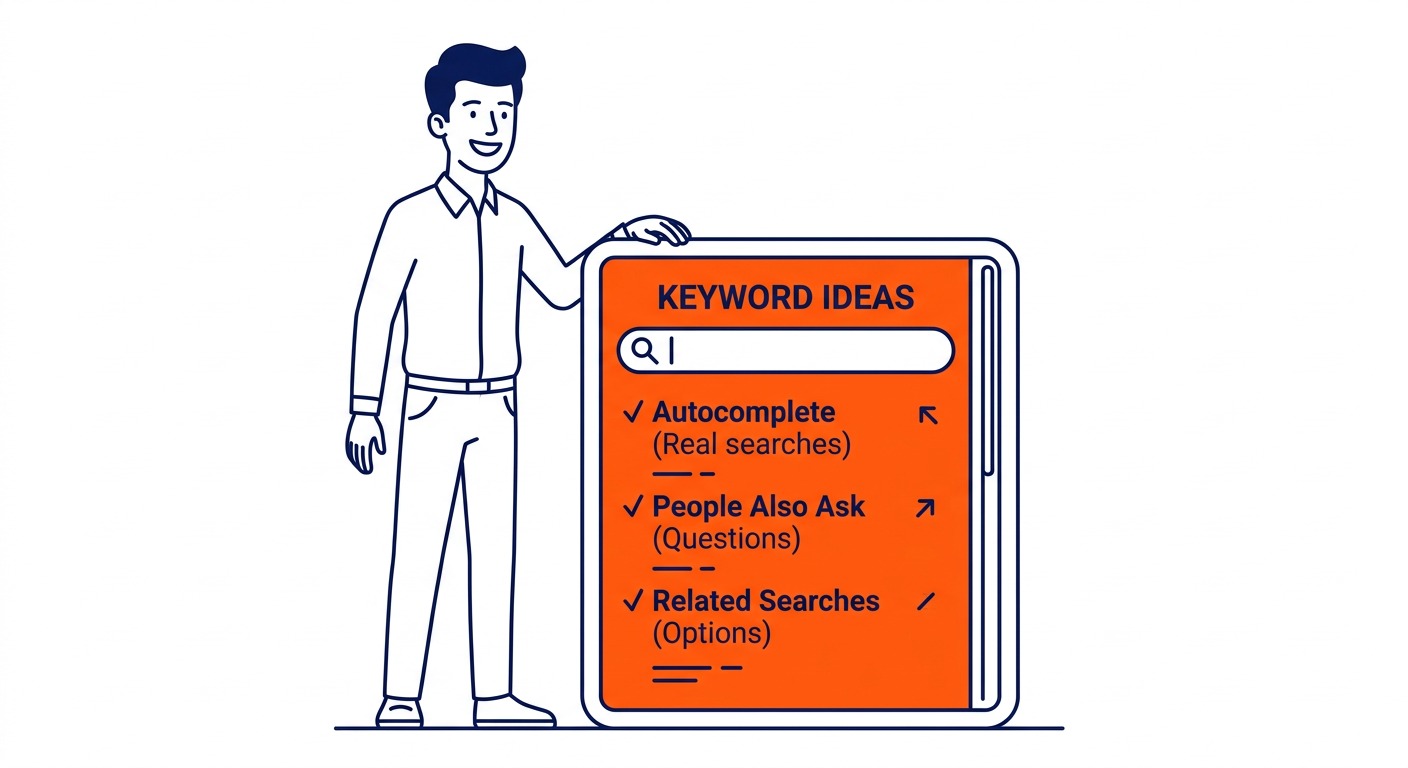
Google itself surfaces the best free keyword ideas. Autocomplete shows what real searchers type. People Also Ask reveals the questions behind those searches. Related searches at the bottom of results pages add more options. Together, these three sources require no tools and produce a solid starting list.
When Google Ads management services run alongside SEO, Google Keyword Planner adds search volume data to the mix. Built for paid search, but works equally well for organic keyword research.
Google Search Console shows what a site already ranks for, often at positions that most traffic bypasses. Queries stuck between positions 8 and 15 are worth targeting. Small ranking gains on underperforming pages produce results faster than starting entirely new ones.
Competitor analysis handles the rest. Ahrefs and Semrush show which keywords a competitor ranks for that your site does not. When a competitor already ranks for something, the demand is confirmed. Worth examining.
Search Volume, Intent, and Keyword Difficulty
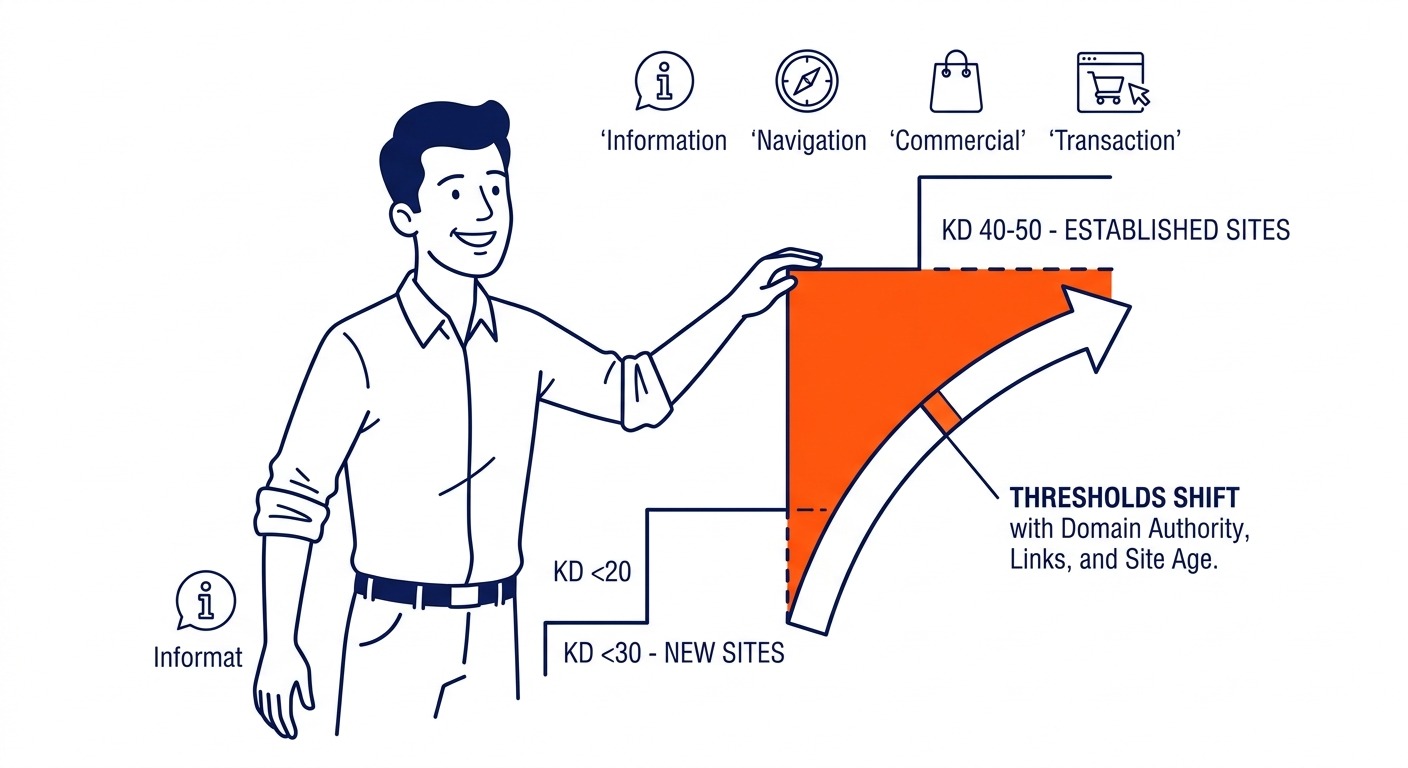
Thresholds shift depending on the site. New sites without strong domain authority need low competition terms, specifically those with KD scores under 20 or 30. Once a site has a year or more of history and inbound links, scores up to 40 or 50 become workable.
Intent divides into four types. Informational queries want answers. Navigational queries look for a specific site. Commercial queries compare options before buying. Transactional queries are ready to act. Matching the page to the intent is not optional. Misaligned content does not rank even with a low KD score.
The SERP check is the last step before committing. Look at the actual search results for a target term. If the top five results are authoritative sites with deep content, the KD score may be understating the real competition. Small sites with thin pages ranking in the top five is a genuine signal the gap is real.
Intent tells you whether ranking for that term will produce the results you actually want. Volume and KD scores tell you whether ranking is realistic. Both matter.
How to Select Keywords for Your Website
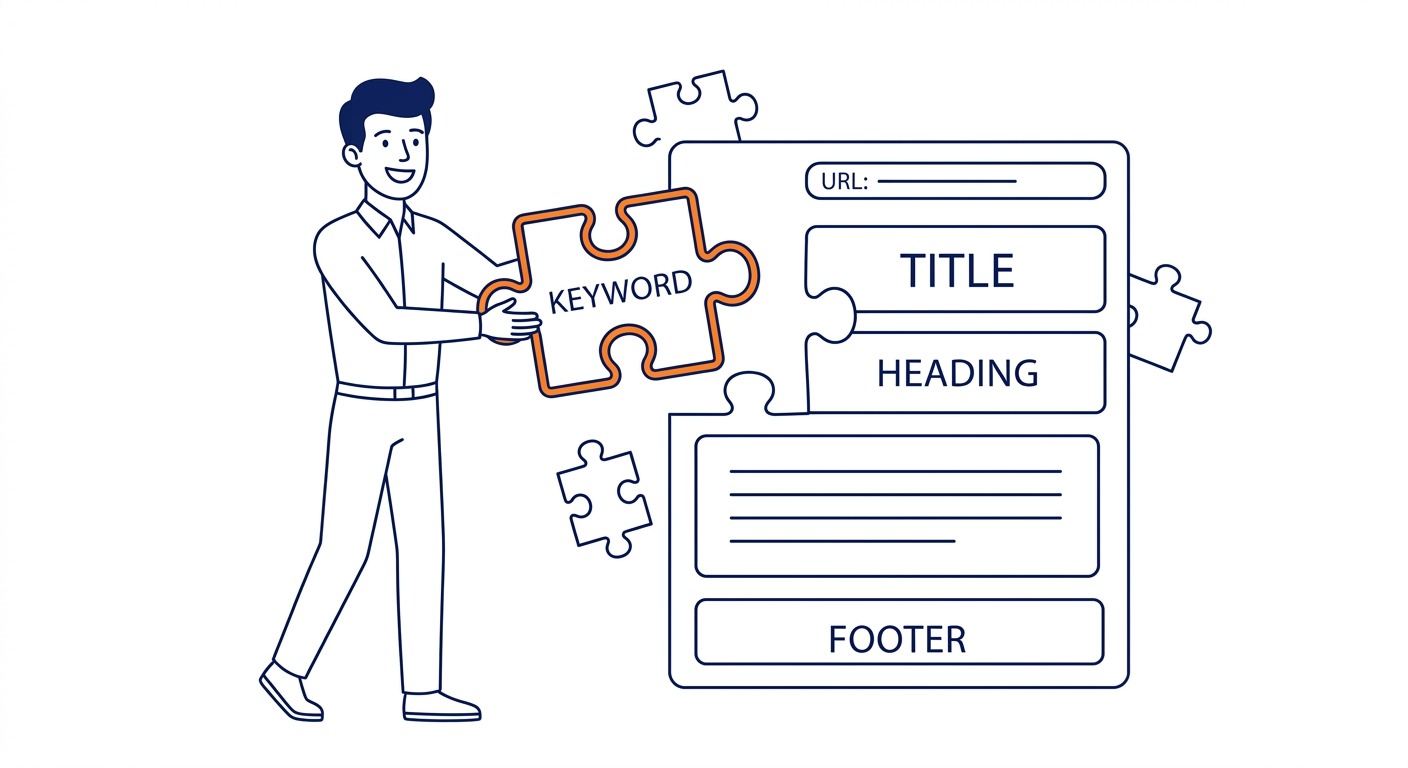
One primary keyword per page. Belongs in the title, heading, meta description, URL, and the opening paragraph. Secondary keywords reinforce the main topic rather than splitting the page’s focus.
Stuffing a keyword fifty times into a short page reads as low quality to search engines. Write for the reader. The keywords land naturally when the content actually answers the query.
Long-tail terms get underestimated. Three or more words, more specific, lower competition. Long-tail keywords rank faster too, since the searcher typing a longer query is already further into the decision.
Putting the same primary keyword on multiple pages splits the signal. Your own pages compete with each other for the same query and neither ranks well.
Google My Business Keywords
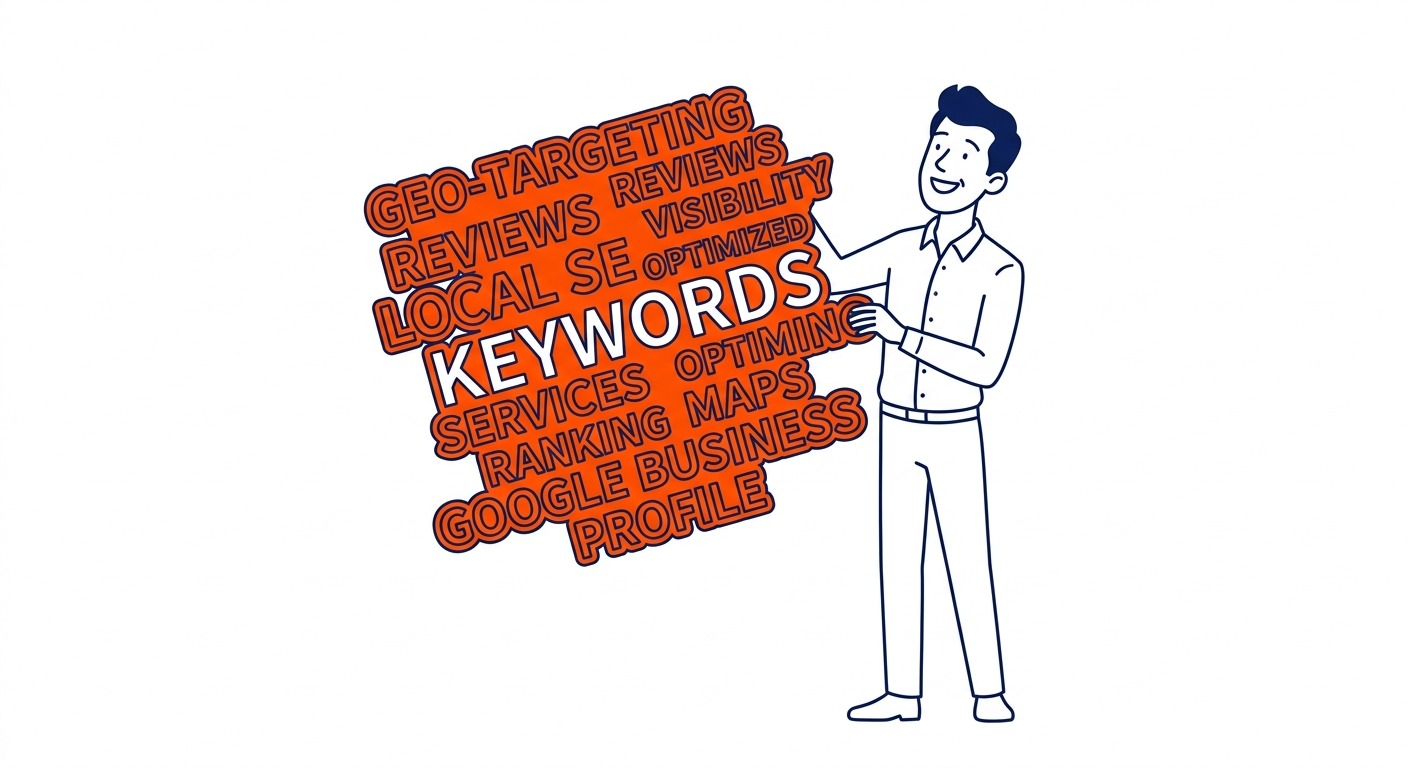
Google Business Profile has no dedicated keyword field. But keywords still work their way into the listing. Business description, services, products, posts, and Q&A responses all appear in Google’s index and contribute to how the listing surfaces in local search.
Any SEO company Calgary businesses hire will prioritize location-modified keywords. “Plumber Calgary northwest” over “plumber.” City and neighbourhood modifiers narrow the competition pool significantly. A local business competing against a handful of local competitors is in a different position than one competing against the full web.
The business category matters too. Google matches the category to local search queries. A category that closely matches the actual service helps the listing appear in the right searches. None of that is complicated once you have read SEO keywords in plain terms. Local modifiers are only one route to finding low competition keywords worth the effort.
FAQ
What keywords should I use for SEO?
Volume from your actual audience. A KD score the site can beat. Intent that fits what the page delivers. Low competition keywords are the right starting point for most sites still building their presence.
How many keywords should I choose?
One primary keyword per page. A handful of secondary keywords to reinforce the topic, not expand it. Cover the keyword areas that matter to your audience over time. Most engagements with an SEO services agency in Calgary start with an audit of which terms are realistic given the site’s current domain authority.
What is a focus keyword?
The single term a page is most optimized for. Title, heading, meta description, opening paragraph. Those are the standard placements. It is the primary signal you give search engines about what the page covers.
How do I find low competition keywords?
In Ahrefs or Semrush, sort by KD score and filter below 20. Check the actual search results before committing. Google Search Console shows which terms already rank at low positions. Easier to push those higher than chase new targets from scratch.
How does Google use keywords?
Pages that actually cover a topic rank better than thin pages that repeat the keyword. Google measures how well content serves the search, not how many times the keyword appears. Keyword stuffing triggers penalties. Write for the reader, with keywords placed where they belong.
Contact Calgary SEO Company To-The-TOP!
Questions about anything in this article, or about your own rankings? Talk to a Calgary SEO specialist directly.
Phone: (403) 308-5949
Address: 1509 14 Ave SW, Calgary, AB T3C 0W4
Hours:
Monday to Friday: 10:00 am – 7:00 pm
Saturday: 12:00 pm – 4:00 pm
Sunday: closed
