
How to Find Search Volume for Keywords
How many times does someone search that phrase in a given month? That one number changes how you approach a page, a campaign, or a content calendar. Before anything else, check that number.
This is keyword search volume: source, meaning, and the ways it misleads.

What Is Keyword Search Volume
Average monthly searches for a keyword in a specific location. That is what search volume measures. Not unique searchers. One hundred monthly searches might be 100 unique users. Could just as easily be 10 people who each searched 10 times. Total queries, not total humans.
Data comes from search engines. GKP draws from Google’s own index. Ahrefs and SEMrush build estimates from clickstream data, Search Console aggregates, and historical records combined. No source is perfectly accurate. But the directional signals are reliable enough for keyword research decisions.
Most tools pair search volume with supporting metrics: keyword difficulty scores, search intent signals, cost-per-click estimates. Monthly search volume on its own is a starting point. The other data turns it into a decision. So which one is the best keyword research tool for the decision you are actually making?
How to Find Search Volume for Keywords
A few different paths work. Budget, query volume, and precision requirements point to different tools.
Start with Google Keyword Planner. Free. Runs inside Google Ads. Data pulls from Google directly. Trade-off is precision: without active ad spend on the account, you see ranges rather than exact numbers.
Ahrefs Free Keyword Generator and SEMrush Keyword Overview both cap free usage at a few lookups a day. Five per day for most free tiers. More exact-looking figures than GKP ranges. Useful for spot-checking a short list. Not practical for bulk research.
Google Trends skips absolute monthly searches entirely and shows relative interest instead. Trending up or fading out. Trends shows which. Side-by-side comparisons between two similar terms work well here too.
Ahrefs, SEMrush, Moz, SE Ranking: the paid tier. All give exact volume data, keyword difficulty scores, and databases many times larger than the free versions. Ongoing keyword research across multiple clients makes the investment pay off quickly.
Google Keyword Planner combined with one paid tool covers most needs.
How to Use Google Keyword Planner to Check Search Volume
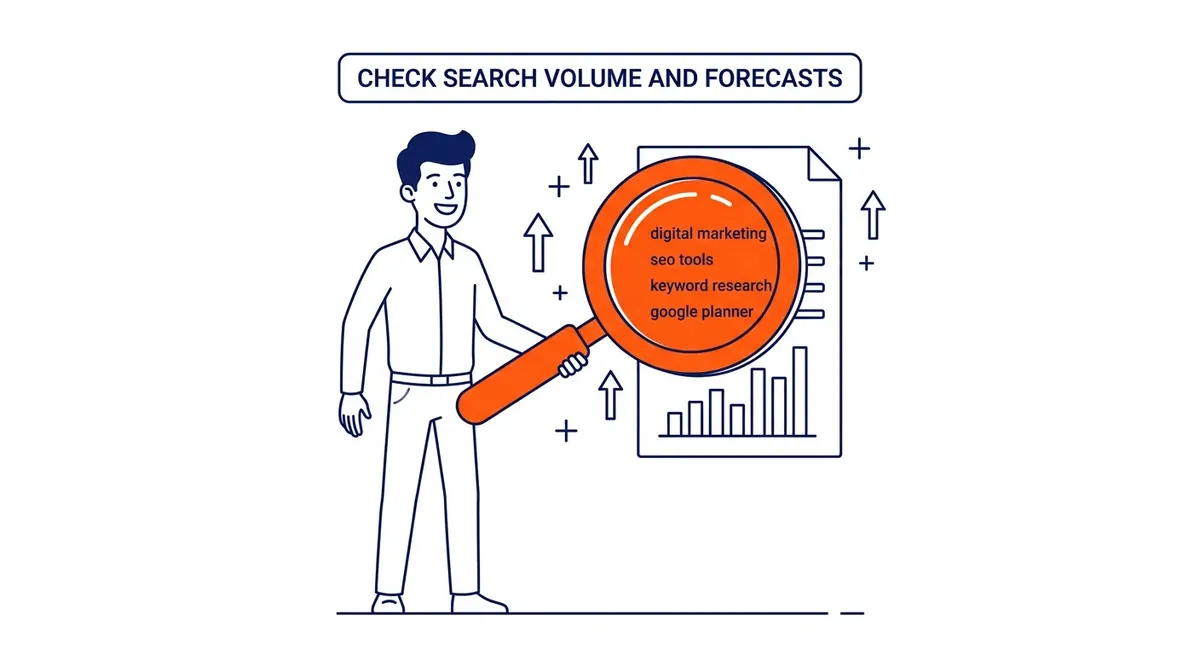
Two functions inside Google Keyword Planner. Discover New Keywords generates ideas from seed terms or URLs. Get Search Volume and Forecasts handles lookups on lists you already have.
For checking volume on existing keywords: go to Google Ads, open the planner, click Get Search Volume and Forecasts, paste your list or upload a CSV. The planner returns average monthly searches, competition level, and top-of-page bid ranges for each term.
Volume shows as ranges for most accounts. A bracket that wide is nearly useless for prioritization. Want to choose between two similar terms from that 1,000-to-10,000 range? Not possible without more precision. Getting actual numbers requires ad spend on the account, the kind that comes with ongoing Google Ads campaign management. Active campaign history narrows the range.
Filters worth using: set location to a specific city, province, or country to get local search volume rather than national. Set the date range back 12 months to see seasonal monthly searches patterns. Google only on the search network gives cleaner data for organic research.
This is where keyword research and Google Ads management overlap. The same volume data informs which pages to build and which campaigns to fund. Seasonality is the gap in that data, and using Google Trends fills it for free.

Alternatives to Google Keyword Planner
Not everyone starts with a paid tool. Free options cover a lot of ground.
Drop a seed keyword into Ahrefs Free Keyword Generator and it returns up to 100 related keywords with search volume and keyword difficulty scores. Five daily searches on the free tier. Enough for validating a short list or researching a handful of topics.
SEMrush Keyword Overview: five free daily lookups. Returns exact search volume, keyword difficulty, and cost-per-click data. One of the cleaner interfaces for quick volume checks.
Google Trends does not give raw monthly searches but the relative interest chart has real uses. Comparing two keywords side by side shows which one is growing. Seasonal keyword patterns are visible over time. A keyword trending upward in Trends is worth targeting before competition catches on.
Searchvolume.io handles bulk input. Up to 800 keywords at once. Returns search volume data for each one. No difficulty scores, no cost data. Useful when you need to validate a large list quickly and do not need anything beyond the volume number.
Free tool limits: daily caps make bulk research slow. For anything beyond a few dozen keywords, a paid tool is more practical.
How to Interpret Search Volume Data
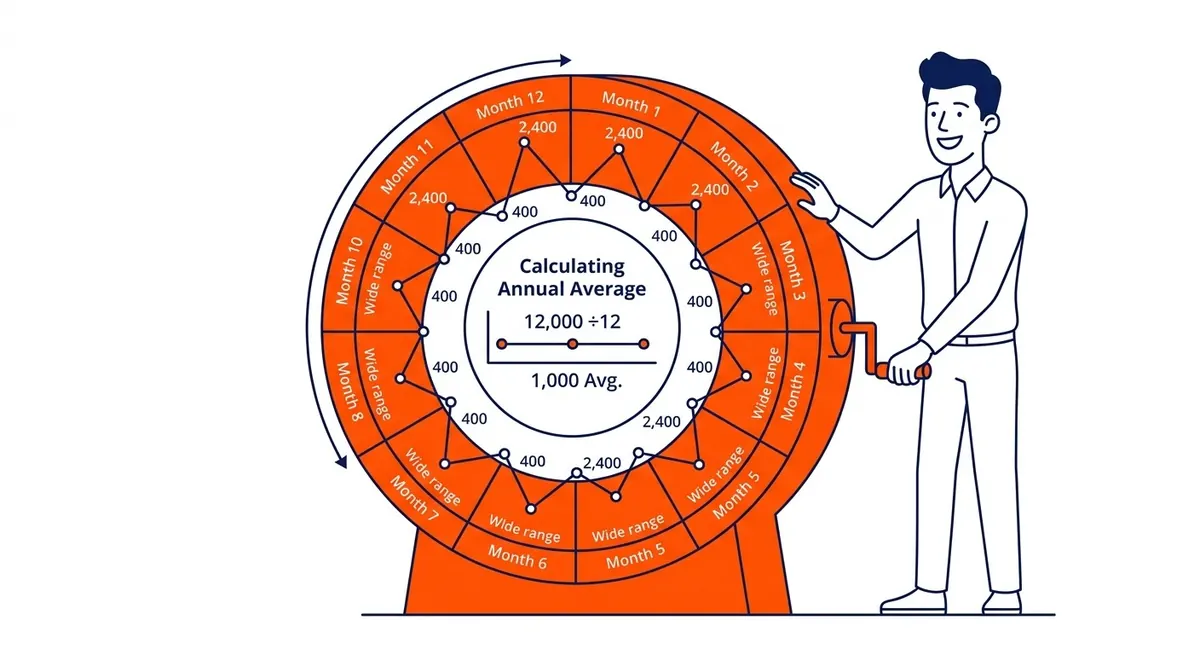
Annual averages. That is what search volume figures actually represent. A keyword showing 1,000 monthly searches ran 12,000 total queries last year, then got divided by 12. Any given month could be 400. Could be 2,400. Twelve months of averaging flattens those swings.
Volume ranges appear in Google Keyword Planner for accounts without sufficient spend history. Those brackets are wide. The band is too wide for fine-grained decisions. Two terms in the 1,000-to-10,000 range could have a 5x difference in actual traffic. Active ad spend on the account, or switching to a paid third-party tool, gives tighter estimates.
Accuracy issues exist across all sources. One analysis compared Keyword Planner figures against Search Console impressions and found agreement in about 45 percent of cases. The planner groups similar queries together, blending volume from multiple keyword variations into a single figure. That 5,000 figure could be three different phrases pooled together, not one clean term.
Timing matters too. Content targeting a seasonal keyword needs to publish weeks before the peak in monthly searches, not during it. The date range view in Google Keyword Planner shows 12 months of historical search volume data. Use it.
For Calgary and across Canada, seasonal patterns in certain service industries are sharp. A keyword that peaks in March and flatlines in November needs a content calendar built around that curve.

Search Volume vs Keyword Difficulty
Both are core SEO metrics. Keyword search volume tells you demand. Difficulty scores one thing: how hard ranking on page one would be. Use only one and you are guessing at half the picture.
When volume is high and difficulty matches it, established sites own the first page. Heavy competition, strong backlink profiles. Getting there takes significant time and link-building investment.
Low volume, low difficulty: that is often the smarter starting point. Three hundred monthly searches at difficulty 20 beats chasing 5,000 searches at difficulty 75 when your site lacks the authority to compete.
In To-The-TOP! client work, local keywords typically show lower search volume than national terms, but also lower keyword difficulty. A term with 4,000 monthly searches nationally might show 150 in Calgary. The local version is far easier to rank for and directly relevant to businesses serving that market.
Sweet spot: moderate average monthly searches, low to medium keyword difficulty, clear commercial intent. Those pages rank and convert.

What the Monthly Count Does Not Tell You
Two-thirds of Google searches produce no click. Snippets, knowledge panels, AI-generated answers. Google handles those queries right on the results page. Ten thousand monthly searches does not mean ten thousand visitors. Far from it.
Paid ads reduce organic clicks further. Up to four paid listings sit above organic results. On commercial queries, ads take most of the visible screen before organic results appear. Even a position-one organic ranking on a heavily advertised term produces fewer clicks than the search volume would suggest.
Search intent matters as much as volume. Two thousand monthly searches with clear transactional intent beats ten thousand informational queries where nobody is ready to buy. Match content to what the searcher actually wants.
Traffic potential is a more useful indicator than raw keyword search volume for pages you already have. A page ranking for one keyword also ranks for hundreds of related variations. Total organic search traffic from all those variations combined is a better picture of value than any single term’s monthly count.
Good Calgary SEO services account for all of this. Search volume is where you start, not where you stop.
FAQ
How do I find keyword search volume for free?
Google Keyword Planner is still the strongest free option going. It runs inside Google Ads. A free account is all you need. Open the Get Search Volume and Forecasts tab, paste in your keywords, and check the average monthly searches column. No active ad spend means results come back as ranges. Also worth knowing: Ahrefs Free Keyword Generator gives 5 daily lookups, SEMrush Keyword Overview gives 5, and Google Trends shows relative direction rather than raw numbers.
What counts as a good keyword search volume?
No fixed answer. Authority level, keyword difficulty, and goals all factor in. For new sites, 50 to 200 monthly searches at low difficulty is the right starting range. Chasing high-volume keywords before you have the authority to rank for them wastes time. An established site can realistically target 1,000 to 5,000 monthly searches at moderate difficulty. City-level searches at 100 to 500 per month often hit the sweet spot for local businesses.
Can you trust Google Keyword Planner volume numbers?
Directionally yes, precisely no. Cross-referencing Keyword Planner against Search Console impressions, researchers found a match in about 45 percent of cases. Keyword variations get pooled in the planner without being separated. That pooling inflates the figure shown for any individual term. For exact data, a paid tool using clickstream data alongside Google data returns more reliable estimates.
What is the difference between search volume and search traffic?
How many times a keyword gets searched each month. That is search volume. Traffic measures actual visitors a page receives from organic search. The two rarely match. Not every search produces a click. Any page ranks for dozens or hundreds of keyword variations at once. Combined traffic from all those variations usually exceeds what a single term’s volume implies. Search volume is a planning metric. Traffic is the outcome.
How do I check local keyword search volume?
Pull up the location filter in Google Keyword Planner and set your city or province before running the search. The planner returns average monthly searches for that area. Eight thousand national monthly searches might be 300 once you filter to Calgary. SEMrush and Ahrefs both have location filters for the same purpose. Run both Calgary SEO and national figures side by side. That comparison shows what the actual traffic opportunity looks like.
Contact Calgary SEO Company To-The-TOP!
Questions about anything in this article, or about your own rankings? Talk to a Calgary SEO specialist directly.
Phone: (403) 308-5949
Address: 1509 14 Ave SW, Calgary, AB T3C 0W4
Hours:
Monday to Friday: 10:00 am – 7:00 pm
Saturday: 12:00 pm – 4:00 pm
Sunday: closed