
Can I Use Competitor Brand Keywords in Google Ads?
Yes, you can use competitor brand keywords in Google Ads. Google’s Trademarks policy states plainly that it will not restrict “using trademarks as keywords”, so bidding on competitor names as keywords is allowed and your ad can show when someone searches for it. The limit sits in the ad itself: if the trademark owner complains, Google can restrict a direct competitor from using that trademark in the ad text. Whether bidding on a rival’s name is worth the money is a separate question, and the answer depends on what a click on a rival’s name earns you, and when it is worth testing, it belongs in a small, separately budgeted campaign.
What Google allows and what it restricts

The policy separates two things that people often blur together, which is why the rules seem stricter than they are. The keyword is the term you bid on, and it never appears to the searcher. The ad text is the headline, description and display path the searcher reads, and that is where trademark rules apply. Google says the trademark “must be used in the ad, not only on the ad’s landing page” before it will consider restricting anything, and it does not restrict a trademark in the second-level domain of your display URL.
Here is how the policy reads as of October 2026:
| Use of a rival’s trademark | What Google’s policy says |
|---|---|
| As a keyword you bid on | Not restricted |
| In the ad text, by a direct competitor | Restricted once the owner has complained and Google has reviewed it |
| In the ad text, used in a confusing, deceptive or misleading way | Restricted |
| By a reseller whose landing page clearly sells that brand, with prices and a way to buy | Not restricted, as long as the ad and page make clear the advertiser is a reseller |
| By an informational page about the brand’s products | Not restricted |
| In its ordinary descriptive meaning | Not restricted |
Two details matter in practice. Enforcement is complaint-driven, so an ad that names a rival may run for a while and then be restricted once the owner files and Google reviews the complaint. Google also accepts complaints only “within the countries and industries in which trademark owners have demonstrated trademark rights”, and once it restricts a trademark, the restriction generally applies on an ongoing basis to ads that use the same second-level domain in their final URL. In other words, once a restriction is in place it generally carries over to future ads for that site that use the trademark.
What happens after a trademark complaint
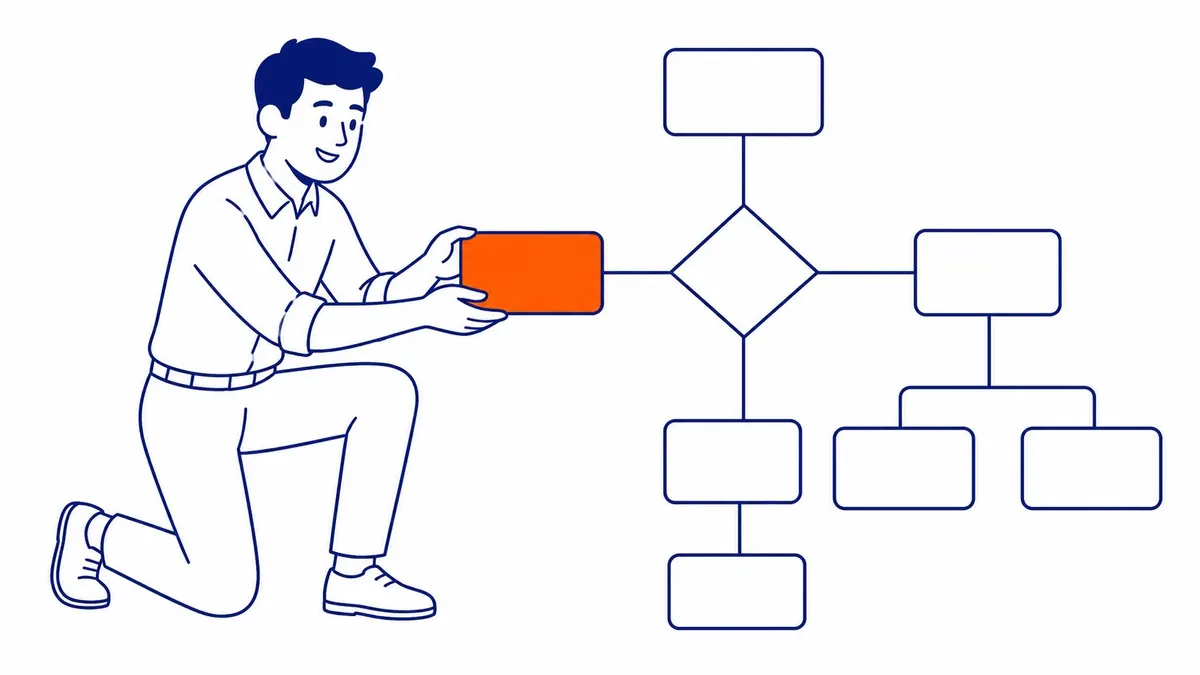
The owner files through Google’s report form and Google reviews the ads against the criteria above. If it decides the use breaks the policy, the affected ads are restricted from using the trademark. The policy is clear that a violation “won’t lead to immediate account suspension without prior warning” and that Google gives at least 7 days’ notice before suspending an account. If you think a restriction is wrong, the notification on the restricted ads includes the appeal route, and Google warns that new ads that break the policy after an appeal will generally keep the restriction in place.
One easy way for a careful advertiser to end up in this position by accident is keyword insertion. That feature swaps the ad group keyword that triggered the ad into your headline, so in an ad group whose keywords are a rival’s name it can print that name in your ad, which is the use the policy can restrict once the owner complains. Turn keyword insertion off in any ad group that contains competitor terms, and check broad match campaigns too, because a broad keyword can match a brand search even when you never added the brand.
Canadian law is a separate question
Google’s policy is not the law, and staying within it does not settle whether an ad is lawful in Canada. The case Canadian practitioners point to is Vancouver Community College v. Vancouver Career College (Burnaby) Inc., 2017 BCCA 41. The career college bid on “VCC” and “Vancouver Community College” as keywords and ran ads under the domain VCCollege.ca. The BC Court of Appeal agreed with the trial judge that “merely bidding on words, by itself, is not delivery of a message”, but it found the career college liable for passing off because of how the ads presented it, noting that “there is nothing about the domain name ‘VCCollege.ca’ that distinguishes the owner of that name.”
The court also held that confusion is judged when the searcher first sees the results, not later when they land on the website, so a clear landing page does not repair a misleading ad. The Supreme Court of Canada denied leave to appeal on January 18, 2018, according to a summary by the law firm Deeth Williams Wall. The practical reading of this case is that the keyword on its own was not the problem, while an ad or display domain that could make the searcher think you are the other business was. Other facts and marks can lead to different results. This is general information rather than legal advice, so if a rival’s mark is central to your plan, talk to a trademark lawyer first.
What it costs and why it often disappoints

Someone who types a company’s name usually has that company in mind, so your ad arrives as an interruption rather than an answer. That often means a lower click-through rate and fewer conversions per click than on searches for the service itself, although your own account data is the only reliable test. Quality Score rates your expected click-through rate, ad relevance and landing page experience against other advertisers who showed for the same searches over the last 90 days, and an ad that does not mention the brand searched for, leading to a page about a different business, is unlikely to score well on relevance. It is worth keeping Quality Score in perspective here, though: Google states that “Quality Score is not an input in the ad auction“. It is a diagnostic, and the auction weighs your bid against real-time measures of the same qualities, so the low score is a symptom of the mismatch rather than the cause of a higher price.
The cleaner test is break-even cost per click. As a simple illustration with assumed numbers, suppose a typical job is worth $600 in gross profit and you win one in four leads, so a lead is worth about $150 to you. If your usual service ads turn 5% of clicks into leads, you can pay up to $7.50 a click and break even. If clicks on a rival’s name convert at 2%, the same lead value only supports $3.00 a click, and if the auction on that name costs more than that, the campaign loses money however good the ads look. Run the numbers on your own conversion data before you decide, because the conversion rate on competitor searches is the figure that usually breaks the plan.
When bidding on a rival’s name makes sense

There are situations where the economics can work. If the rival does not bid on its own name, your ad may be one of the few above its organic listing, and clicks can be cheaper than you expect. Searches that pair a brand with words such as “reviews”, “alternative”, “vs” or “prices” come from people who are still comparing, which is a much better audience than someone looking for the rival’s phone number. A clear, provable difference also helps, such as same-week availability, a service area the rival does not cover, or a product it does not sell, because that gives the searcher a reason to look at you instead. A competitor keyword gap analysis is a better place to start for most accounts, since it finds the service terms rivals win that you are missing, which are often a better use of the same budget than their brand names.
If you do test it, set it up so it cannot hurt the rest of the account. Put competitor terms in their own campaign with its own budget, use exact or phrase match, and write the ads around your own offer without the rival’s name. Any comparison you make must also be accurate, because Canada’s Competition Act prohibits representations that are false or misleading in a material respect, and the Competition Bureau notes that courts look at the “general impression” an ad conveys as well as its literal meaning. Judge the campaign on cost per conversion after enough clicks to mean something, and switch it off if it does not pay, because there is no prize for being present on a rival’s name at a loss.
Keep rival-brand traffic out of your other campaigns

Even if you decide not to bid on competitors, broad match can still show your generic ads on their brand searches, which mixes competitor-brand clicks into your generic results and muddies the numbers you use to judge everything else. Check the search terms report for rival names and add them to shared negative keyword lists for your generic campaigns. Search campaigns can also use brand exclusions, which stop your ads showing on queries that contain the brands you select; for a Search campaign that does not already use them, Google now puts the setting behind AI Max, so check whether that fits the campaign before relying on it instead of negative lists. Either way, keeping competitor traffic in one campaign or out entirely is what lets you read the results of your core campaigns with confidence.
Defend your own brand first

The same rules let rivals bid on your name, so before spending on theirs, look at who shows up when someone searches for your business. A search ad on your own name is often cheaper than generic terms because the term, the ad and the landing page all match, and it puts your offer above anyone trying to intercept the search. If a rival names your business in its ad text, the complaint route described above is open to you as the trademark owner, provided you can show rights in the country and industry concerned. It is also worth taking a few minutes to estimate what a rival spends before you start a bidding war over a brand name, since a contest over brand names can raise costs on both sides.
SEO Company To-The-TOP! has worked in Calgary search since 2007 as a solo, Google Ads certified practice, so the person who reviews your account is the person who sets it up. If you would like a second opinion on whether competitor terms belong in your account, or on Google Ads management more generally, call (403) 308-5949 or start at the SEO Company To-The-TOP! home page.
Contact Calgary SEO Company To-The-TOP!
Questions about anything in this article, or about your own rankings? Talk to a Calgary SEO specialist directly.
Phone: (403) 308-5949
Address: 1509 14 Ave SW, Calgary, AB T3C 0W4
Hours:
Monday to Friday: 10:00 am – 7:00 pm
Saturday: 12:00 pm – 4:00 pm
Sunday: closed