How Content Marketing Helps SEO
Content marketing and SEO run in separate budget lines at most businesses. Sometimes separate agencies, separate teams, separate planning cycles. To-The-TOP! has been doing the SEO Calgary businesses rely on since 2007, and this split-resource problem still comes up regularly: one team producing material, another team chasing rankings, neither delivering results the other can use.
The reason they underperform in isolation is straightforward. SEO without content has no material to rank. Content without SEO has no signal structure telling search engines what it covers or why it should be trusted. Both strategies need the other to function.

The Short Answer
Content marketing and SEO share the same goal: put the right page in front of the right audience at the right moment. One side produces the material. Search engine optimization tells search engines the material exists, where it fits in the topic landscape, and why it should be trusted. Separating them produces two half-strategies, and neither one compounds without the other.

Organic search still drives over a third of all web traffic. Each page on a site is a ranking opportunity in Google’s index, or a missed one. The direction that opportunity takes depends on whether the content was built for the right audience with search intent in mind, whether the page carries structured signals, and whether other authoritative sources have linked to it. Running content marketing and SEO together drives all three of those outcomes.

What SEO Needs That Content Provides
Fast pages, clean architecture, correct crawling, schema in place: technical SEO can be in excellent condition and still produce no ranking movement on a site with no pages worth indexing. The technical foundation is the prerequisite. Content is what gets ranked.
Keyword research maps which queries a target audience is actually using. A content programme takes that map and produces pages that match those queries with genuine answers. One blog post targets one keyword cluster. A topic cluster, a hub post surrounded by supporting spoke posts, targets an entire subject area. Search engines reward topical depth. A site covering a subject from multiple angles signals authority in that subject more clearly than a site with four posts and thin coverage of the rest. That compounding is the plainest case for how blogging helps SEO. Each post is one more indexed answer earning its keep.
This is where cluster architecture matters. Individual posts answer individual questions. The cluster structure tells search engines the site understands the subject, not just the query. That topical signal produces the sustained ranking movement practitioners see in months seven through twelve. Early months build technical health and initial coverage. Later months compound as topic authority accumulates. The SEO blog exists to build that kind of compounding structure over time.
How Content Builds Backlinks
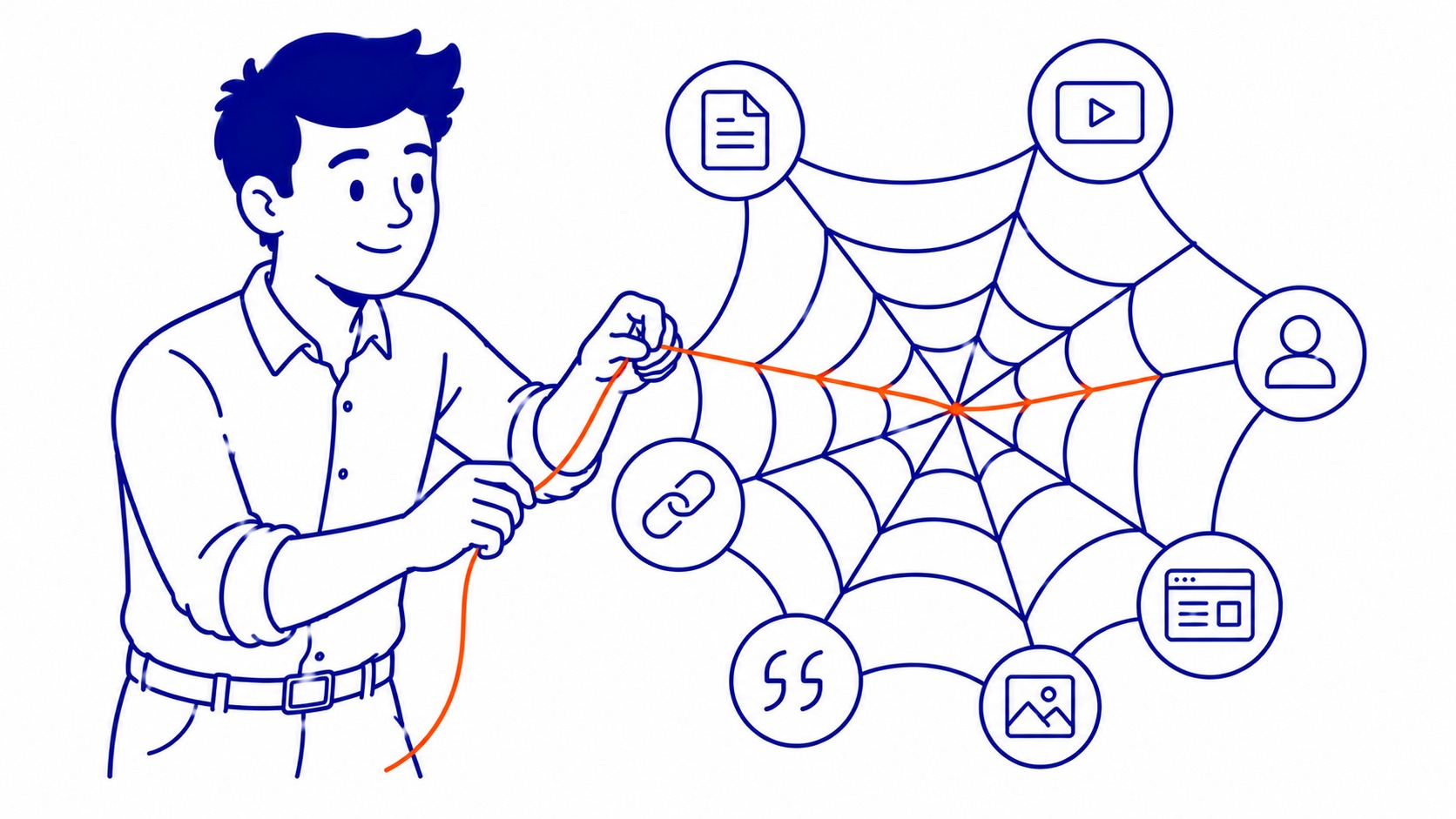
Backlinks remain one of the strongest ranking signals in organic search. Search engines treat a link from an authoritative source as a vote of confidence in the linked page. The question is what earns those votes.
Generic explainer material does not earn them. AI-generated summaries of publicly available information do not earn them either. Original research, documented client results, opinionated takes based on real campaign data, first-person observations that cannot be replicated from other sources: these earn citations from other sites. Other publications link to pages that add something they cannot produce themselves.
Nineteen years of campaign work produces the specific observational record worth citing. Which types of posts earn links in competitive categories. What link velocity for a new site looks like in the first six months compared to months 13 through 24. That material has genuine citation potential. A summary of publicly known facts has none. SEO writing built around first-person expertise earns both rankings and the links that reinforce them.
Keyword Coverage and Search Intent
Each new post is one more query cluster either captured or left to a competitor. Content marketing expands the queries a site can rank for and the audience it can reach with each new piece. SEO structures that expansion so each page targets a distinct intent rather than cannibalizing the same query across multiple URLs.
Search intent alignment matters more than query alignment. A searcher using “how content marketing helps SEO” as the query wants the relationship explained, not a definition of either term separately. Someone searching “SEO content writing service” wants to evaluate providers. Same broad subject area. Entirely different intent. Pages built around the right intent convert at higher rates than pages that merely contain the right queries. The terms themselves still anchor all of it. That is the real reason keywords still matter in an intent-driven model.
Long-tail keywords are where most of this plays out. High-volume head terms are contested. Long-tail queries targeting specific questions, comparisons, or how-to angles attract more qualified traffic with lower competition. Keyword research designed for content marketing maps those long-tail opportunities before any writing starts. That mapping work is what turns a content calendar into a compounding traffic asset rather than a series of isolated posts.
E-E-A-T: Why Experience Shows in the Writing
Google formalised E-E-A-T (Experience, Expertise, Authoritativeness, Trustworthiness) as AI-generated material flooded indexed pages with polished but hollow prose. The framework distinguishes pages that build audience trust through genuine real-world observation from pages assembled from other people’s summaries.
Experience shows in the specifics. Campaign data from actual accounts. Client results with real numbers. Observations that require having done the work, not just having read about it. That kind of material is what AI retrieval systems cite when they surface answers. Ahrefs research found that only 38 percent of AI-cited pages rank in the Google top ten. The pages that make both lists carry structured data, genuine topical authority, and content a generative model cannot replicate from public training data alone.
The authority a content programme builds also carries into paid search, so it makes sense to have us manage your Google Ads alongside the organic campaign. Higher domain trust correlates with better Quality Scores on branded and category terms. The SEO investment compounds into the paid channel, not just organic traffic.

Running Content Marketing and SEO Together
Keyword research runs first. That map identifies which queries exist, which intent types they carry, and which clusters can be grouped into hub-and-spoke structures. A content strategy without that map hits some targets by accident and misses most by design.
Publishing consistency matters more than publishing frequency. Twelve well-researched posts per year compound better than forty thin ones. Search engines reward depth and accuracy. A post updated annually with fresh data performs better over time than a static page written once and left. Content audits, checking which pages have dropped in ranking, which get impressions but no clicks, which are cannibalizing each other, are the maintenance work that keeps the asset compounding rather than decaying.
The timeline is realistic and consistent. Meaningful SEO movement from a content programme starts around three to six months for well-optimized posts on competitive subjects. Running our website audit at the start identifies technical blockers that would slow that timeline. Technical health first, content second, link acquisition third: in that order, the investment compounds. Reversed, resources get consumed without the foundation to hold the gains. Rebuilding the site midway adds another risk, since the SEO cost of switching sites lands on content first. None of that ordering changes much just because AI is changing SEO at the edges.
Frequently Asked Questions
How does content marketing help with SEO?
Keyword coverage, backlinks, and topical authority: content marketing drives all three. Each post targets a topic cluster search engines can index and rank. Original research and specific observations earn citations from other sites. Consistent publishing around a subject signals topical depth to search engines. None of those outcomes happen without content. SEO structures the material so search engines understand what it covers and why it should be trusted.
What is the 3 3 3 rule in marketing?
Three audiences, three messages, three channels: the 3-3-3 framework pushes marketers to segment before broadcasting. That framework translates differently into SEO content marketing. Three content types per topic cluster, a hub post, two to three spoke posts, and a comparison or FAQ page, tend to produce more durable topical authority than a single long post trying to cover everything. Intent-segmented material matches what the audience is actually searching for.
Is SEO dead or evolving in 2026?
Evolving, not dead. AI Overviews and conversational platforms shifted where some query volume lands. Underlying demand for information, products, and services is unchanged. Pages with structured data, genuine expertise, and strong authority are being cited by AI systems now in addition to ranking organically. Organic traffic still drives over a third of all web traffic. The channel grew harder to game, not harder to benefit from.
What is the 80/20 rule for SEO?
Roughly 20 percent of pages drive 80 percent of organic traffic on most sites. Identify those pages first. Strengthen internal linking into them. Build supporting spoke content around the same topic clusters. Invest in technical health for those specific URLs. The content marketing time and budget that goes into the high-leverage 20 percent compounds at a higher rate than spreading the same resources evenly across the whole site.
Contact Calgary SEO Company To-The-TOP!
Questions about anything in this article, or about your own rankings? Talk to a Calgary SEO specialist directly.
Phone: (403) 308-5949
Address: 1509 14 Ave SW, Calgary, AB T3C 0W4
Hours:
Monday to Friday: 10:00 am – 7:00 pm
Saturday: 12:00 pm – 4:00 pm
Sunday: closed
