How Long Does Local SEO Take?
A client asked how long does local seo take two days after signing. She wanted a number, not a lecture. Three to six months before real movement shows up, typically. SEO Company To-The-TOP! gives that range to almost every new client. The market decides where in that range a given business lands.
Nobody controls how fast Google moves. Running Calgary accounts for nineteen years taught the value of patience over panic. A business chasing rankings in week three usually panics for nothing. Real results take longer than that.

The Quick Answer: Three to Six Months Before Real Movement
Map pack visibility can appear within two to four weeks. A cleaned-up Google Business Profile and a batch of fresh reviews move that fast sometimes. Organic rankings on competitive terms move slower. Three to six months is the range for most local businesses. Twelve months is common in crowded markets. Results compound after that initial window, not before it. Nobody promises a faster number than that and means it. Visibility in the map pack often outruns organic visibility during those first few weeks. The underlying reasons are structural, which is why SEO takes so long in the first place.

Month by Month: What Actually Happens
The First Month: Foundational Work, No Visible Movement
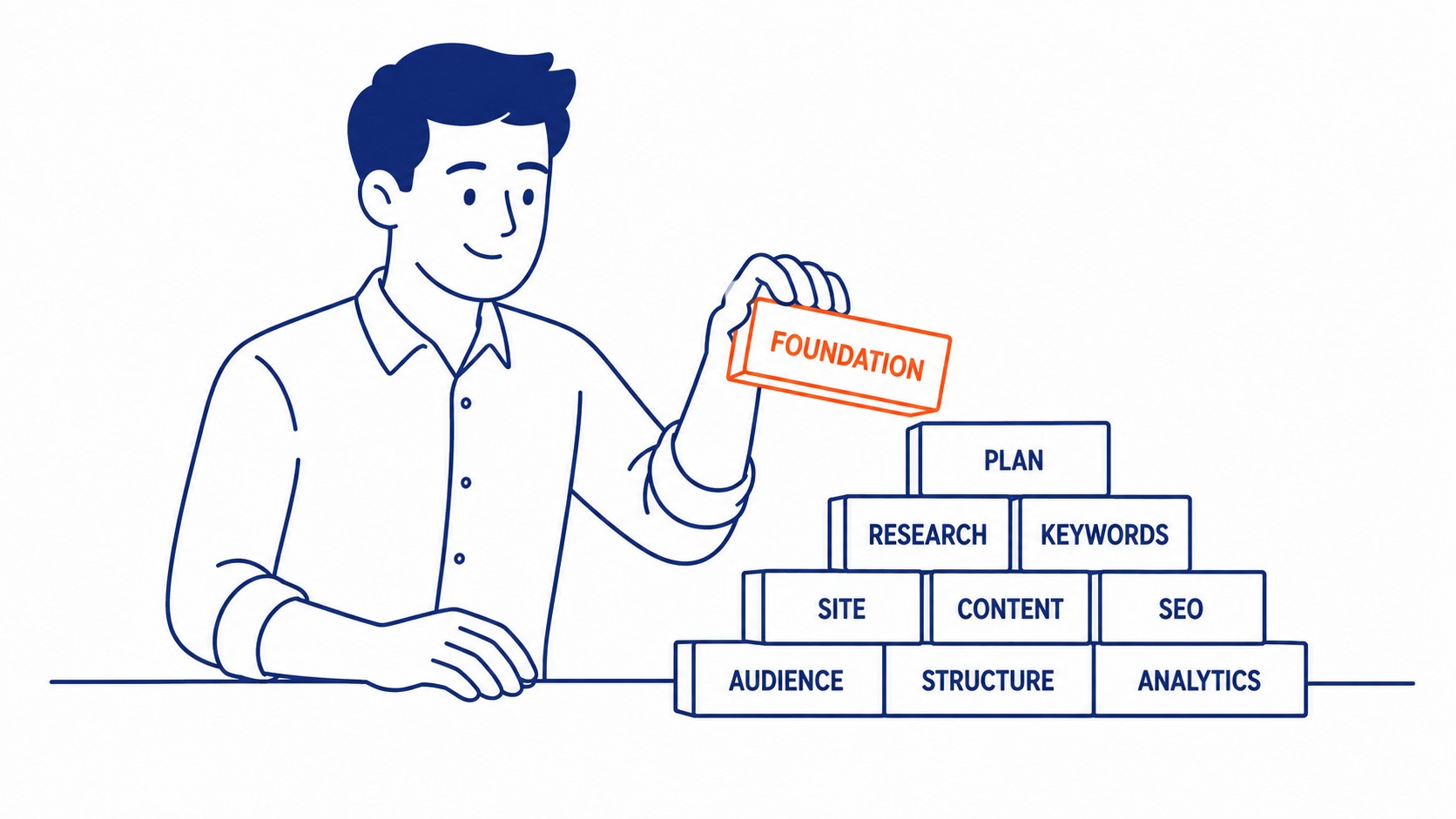
Nothing ranks in month one. That surprises new clients every time. An audit runs first. Broken pages, thin content, missing citations, a Google Business Profile nobody claimed properly. Next comes keyword research, matched to what customers actually type into Google. Google needs time to even find the changes, let alone rank them. A crawler has to visit the site again before any of the fixes register. That delay alone accounts for most of the quiet in month one. Clients who expect a dashboard full of green arrows by week two are the ones most likely to cancel early. That happens right before the work starts paying off.

Months Two and Three: Early Signals
Search Console starts showing impressions for terms that never appeared before. Rankings sit on page three or four. Reviews start trickling in if the request process works. None of that reads as exciting from the outside. Search Console data at month two is the clearest early signal a plan is working. A handful of new citations post live on directories that actually carry weight. Content published in week one starts earning its first few clicks, usually from long-tail phrases nobody targeted directly. Small movements, but real ones. This stretch is where trust in the process either builds or breaks down.

Months Three to Six: Rankings Start Moving
This is where most clients start believing the plan again. Terms move from page three to page one. Map pack spots stabilize instead of flickering in and out. Phone calls start referencing the website by name. Competitive niches still lag behind that window. A dental practice in a saturated market waits longer than a niche trade contractor with almost no local competition.

Months Six to Twelve: Authority Compounds
Rankings that survived month six tend to hold. Local backlinks start accumulating on their own once content earns attention. That same slow build applies to domain authority. It arrives late and holds once it does. Traffic climbs without new spending every week. That compounding effect is the actual payoff for waiting. Turn off the ad budget and paid clicks stop that same afternoon. Organic rankings built this way keep working quietly in the background. Results from this stage rarely need a second push.

What Speeds a Local SEO Timeline Up
Real time gets shaved off the front end when reviews and a claimed Google Business Profile already exist. Almost no local competition means faster movement. A saturated niche is the opposite story. Most business owners underestimate how much technical health matters. Google hesitates less on a fast, clean site with no crawl errors. Good keyword research targets realistic terms instead of impossible ones. That single decision shortens the whole timeline. A business with five years of consistent Google Business Profile posts already has a head start. Most competitors never bother building one. Measurable results by month two often come from technical SEO fixed in week one. Almost nothing else on this list moves that fast. Timelines make more sense once the idea behind local SEO is clear.

What Slows It Down
A brand-new domain with zero history starts from nothing. Thin, generic content wastes months before anyone notices it isn’t working. Confused ranking signals come from business listings scattered inconsistently across directories. Well-funded competition in the same city stretches every stage of the timeline. That shows up in nearly every large market. Stopping the work at month three resets progress more than any of those factors combined. That is exactly when signals start compounding. One afternoon undoes two months of gains, if a mid-campaign redesign skips the redirect plan. Rushing rarely helps either. Keyword stuffing risks a penalty. So does a batch of bargain-priced links bought overnight. Either one can erase progress already made.

Local SEO Timeline vs. National SEO Timeline
A national campaign competes against every business in the country chasing the same term. Local search narrows that field to a single city or region. Fewer serious competitors usually means faster movement for city-specific terms. A plumber ranking for “plumber Calgary” competes with maybe thirty real contenders. Compare that to a national ecommerce brand chasing a broad term. Thousands compete for that same spot. That narrower field is the whole reason local timelines move faster than national ones. Multi-location businesses feel this split directly. The Calgary location climbs steadily while a newer Edmonton listing sits flat for months, same company, same budget, different competitive field entirely. Timelines are the part SEO marketing plans tend to gloss over.

What To-The-TOP! Watches Every Month
Rankings get checked monthly, not guessed at. So does organic traffic. Actual phone calls and form submissions tied back to specific pages get logged too. A website audit runs again every few months to catch new technical problems before they compound. Clients running Google Ads alongside organic work often see their timeline shorten. Paid data shows which terms convert right now, and that data feeds straight into what organic content gets written next. One solo practitioner handles every Calgary SEO account here. Nobody hands the file to a junior technician partway through.
Frequently Asked Questions
How long does local SEO take to show results?
Three to six months for most local businesses, sometimes twelve in crowded markets. Map pack changes can appear within weeks. Organic rankings on competitive terms take longer to settle.
Can local SEO work faster in a low-competition market?
Often, yes. Fewer serious competitors means Google has less to weigh before a page earns a spot. A niche trade business in a smaller city sometimes sees movement inside two months. That same speed almost never shows up in a crowded downtown market with a dozen agencies chasing the same phrase.
Do Google Business Profile changes show up right away?
Some do. A corrected phone number or new photos can reflect within days. Ranking improvements from profile changes still take weeks to show up in the map pack.
Is local SEO ever a one-time project?
No. Rankings held without ongoing work tend to slip. Competitors keep publishing new content and building links in the meantime. Monthly tracking and steady content production protect the position already earned.
Contact Calgary SEO Company To-The-TOP!
Questions about anything in this article, or about your own rankings? Talk to a Calgary SEO specialist directly.
Phone: (403) 308-5949
Address: 1509 14 Ave SW, Calgary, AB T3C 0W4
Hours:
Monday to Friday: 10:00 am – 7:00 pm
Saturday: 12:00 pm – 4:00 pm
Sunday: closed
