
How Long Does It Take for SEO to Take Effect? The Three-Stage Timeline
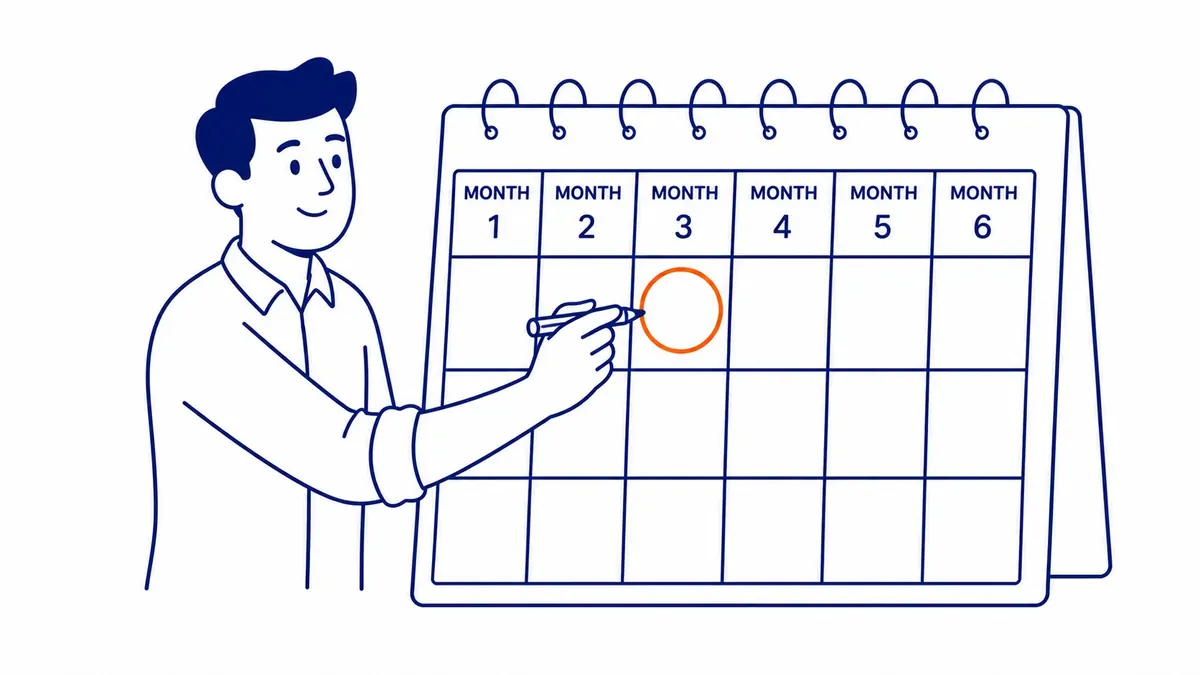
How long does it take for SEO to take effect? It happens in three stages, and each one runs on its own clock. Google says some changes take effect in a few hours while others take several months, and it suggests waiting a few weeks before you judge whether a change helped. Business results come later and are harder to pin down. Ahrefs and Shopify both put measurable SEO results at roughly three to six months, although neither treats that as a guarantee, and competitive searches, such as the main service terms in a large city like Calgary, can take longer than that. This guide explains each stage, what to check in Search Console along the way, and what slows the timeline down.
The three stages at a glance
The reason answers to “how long does SEO take” vary so much is that people are usually describing different things. A developer means the time until Google picks up a change, a marketer means the time until rankings move, and an owner means the time until the phone rings. The table separates them, and it shows where each timing comes from.
| Stage | What happens | Typical timing | Where the timing comes from |
|---|---|---|---|
| 1. Google sees the change | Pages are recrawled and the new version is indexed | A few days to a few weeks for crawling; a few hours to several months for a change to take effect | Google Search Central |
| 2. Early signals | Impressions may rise on long, specific searches and average positions may start to shift | No fixed timing; Google suggests waiting a few weeks before judging whether a change helped | Google Search Central |
| 3. Clicks and possible enquiries | Clicks from organic search, and the calls and form leads that may follow | Roughly three to six months for measurable results, as a broad estimate; no published source gives a timeline for leads | Ahrefs and Shopify, for measurable results only |
Stage one: Google has to see the change
Nothing you change on a website can affect rankings until Google has crawled the new version of the page. Google’s page on asking for a recrawl says that “crawling can take anywhere from a few days to a few weeks,” and it recommends watching progress in the URL Inspection tool or the Page indexing report in Search Console. Its SEO Starter Guide goes a step further: “Some changes might take effect in a few hours, others could take several months. In general, you likely want to wait a few weeks to assess whether your work had beneficial effects in Google Search results.”

That means the first few weeks after a change are mostly about confirmation rather than results. You can request indexing for an updated page in Search Console, although Google is clear that a request does not guarantee indexing or a change in position. The useful check at this stage is to open URL Inspection for the pages you changed and confirm that the last crawl date falls after the change. If Google has not recrawled a page yet, it has probably not processed that page’s update, so judging the work on rankings would be premature. For a large set of changed URLs, Google recommends a sitemap rather than one request at a time, and checking a representative sample in URL Inspection is more practical than going through every page.
In practice, a large structural change such as new navigation, merged pages or a redesign can make positions move around for a while as Google reprocesses the site. That movement is common and often settles, so it is worth waiting before you undo anything. A small edit to a single page, on the other hand, rarely causes visible turbulence.
Stage two: impressions move before clicks
Once Google has processed the changes, the first signs usually appear in the Performance report in Search Console rather than in your traffic. One pattern worth watching, although it is not universal, is that impressions rise first as a page starts appearing for long, specific searches on page two or three, where few people click, then average position on those queries improves, and clicks follow once the page reaches the positions people actually look at. Impressions can also change for reasons that have nothing to do with the work, such as seasonal demand or a shift in the queries a page shows up for, so it helps to compare like with like before reading much into a rise or a dip.
This is why an owner who only watches Google Analytics often concludes that nothing is happening during the early stages. The work may be showing up clearly in impressions while traffic stays flat. Watching the right report in the right order removes most of the anxiety from the waiting period, and it tells you early if a page is not being picked up at all, which is a different problem from a page that is slowly climbing.
Stage three: when SEO starts producing leads
Ahrefs puts the typical answer at three to six months, based on 3,680 people who responded to its polls on LinkedIn and X, and it adds that there is no definitive answer. Shopify’s SEO Lead, Arthur Camberlein, gives the same range: “Most sites can expect to see measurable results from their SEO efforts within three to six months.” Both are describing measurable movement, which is not the same as a steady flow of enquiries.
For a service business, the question that matters is when organic search produces calls and form submissions, and that depends on how competitive the searches are and whether the pages convert the visitors they get. Long, specific service searches usually face less competition than the main “service plus city” terms, so they are often where enquiries appear first, while the broad terms in a market like Calgary can take a good deal longer. No published source puts a reliable number on either, which is why it makes more sense to track the stages above than to wait for a date on the calendar. If you want to understand why SEO takes this long in the first place, or when the investment pays back, those are separate questions with their own answers.
Google no longer gives a four-months-to-a-year timeline
For years, Google’s page “Do you need an SEO?” told readers that it would take time to see results, “typically from four months to a year from the time you begin making changes until you start to see the benefits.” That sentence is in the Wayback Machine capture of the page from 2026-04-15. By the capture of 2026-08-02 it is gone, and the current page, last updated on 2026-06-05, gives no timeline at all. Google still says how long a change can take to be processed, as the SEO Starter Guide quote above shows, but it no longer puts a number on when a business should expect results.
What the page now suggests instead is a question to ask any SEO you are considering: “What kind of results do you expect to see, and in what timeframe?” Several well-known guides, including Orbit Media’s, still quote the four-to-twelve-month figure as Google’s guidance. It may still be a reasonable range, but it is no longer something Google says, so treat any article that presents it as current Google advice with some care.
A stage-by-stage checklist for Search Console
The table below is a working guide to what to check, in the order the signals usually become visible. It is To-The-TOP!’s working order for an established small-business site, not a schedule from Google, and a new site will usually take longer to show each sign. If Search Console shows a manual action or a security issue, resolve that first, because the checklist does not apply until it is.
| When to look | What to check | Where | What a good sign looks like |
|---|---|---|---|
| A few days to a few weeks after the change (Google’s crawling estimate) | Have the changed pages been recrawled? | URL Inspection for a sample of pages, Page indexing report | Last crawl date after the change; page indexed |
| Once the changed pages are recrawled and indexed | Are impressions rising on new, specific queries? | Performance report, Queries tab | More queries listed, more impressions, even with few clicks |
| Once impressions are building on those queries | Is average position improving on those queries? | Performance report, filtered to the pages you changed | Positions moving from the 20s and 30s toward page one |
| Once positions reach page one or close to it | Are clicks reaching service pages, and do they convert? | Search Console clicks, plus calls and form key events in GA4 | Steady organic clicks and enquiries you can trace to search |
If a stage stalls, look for the cause before you add more content. A page that is not indexed may be blocked, redirected, treated as a duplicate of another URL that Google chose as the canonical, not yet discovered, or simply not chosen for indexing, and the Page indexing report gives a reason for each group of URLs. A page with plenty of impressions but few clicks may just be ranking too low to be seen, or sitting below ads and other result features, so check its position for each query before you rewrite its title or rethink how well it matches what the searcher wanted.
Three situations, three timelines
The same work takes effect at different speeds depending on where the site starts. The descriptions below are illustrative, and the main thing that slows each one down matters more than the exact number of months.
A brand-new website starts with no history in Google, no links and no queries it already ranks for, so it runs the slowest. Ahrefs cites Google’s John Mueller as saying it could take up to a year for Google to figure out where to rank a new site. That is a remark reported by a third party rather than a formal waiting period, and Google does not publish one, but it is a fair reminder that a new domain has more groundwork to do before it can compete for the harder terms.
An established site with problems, such as crawl errors, duplicate pages, slow templates or a messy past migration, usually needs those fixed before new content can perform. The fixes themselves have to pass through stage one, since Google must recrawl and reprocess the affected pages before any change can show. Whether performance then improves depends on whether the problem was actually holding those pages back, because a page that also lacks relevance or links will not climb simply because a technical fault is gone.
A healthy established site that already ranks for related searches moves fastest. A new page on a topic the site already covers well can show impressions within weeks, because Google already understands what the site is about, and that is why it pays to build outward from the topics a site is already known for.
Competition sets the clock, not the city
Consider an illustrative example of two roofing contractors with similar websites, one in Calgary and one in a smaller Alberta market. The Calgary contractor is likely to find more established roofers, directories and lead-generation sites competing for “roofing Calgary” than the smaller-market contractor finds for its own town, although the only way to know is to look at each results page. Where there is less in front of a business, the same work can take effect sooner, because of the competition rather than because Google treats smaller cities differently.
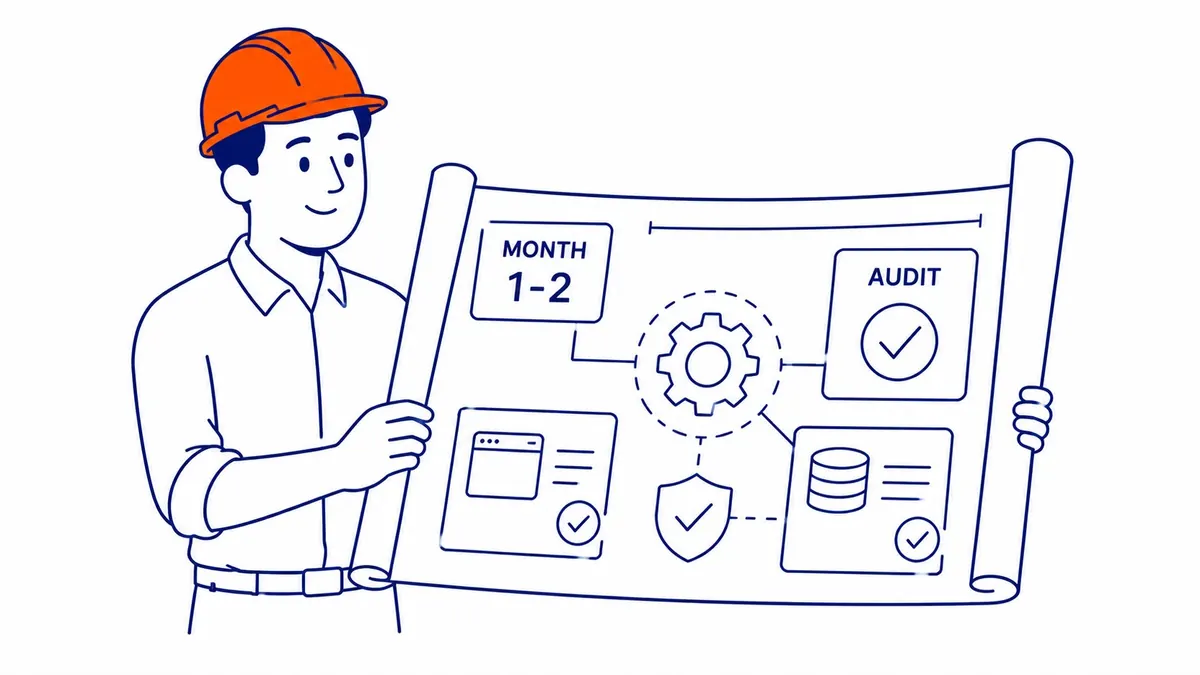
That is also why a Calgary business can sometimes get earlier evidence by choosing its first targets carefully. A specific service in a specific area, such as one type of repair in a group of neighbourhoods, often faces less competition than the broad service plus city term, so it can be a useful early test of whether the work is taking effect. Link related pages to each other where it helps the reader, but do not count on them lifting the broader term, and avoid near-identical pages for each neighbourhood, which can drift into what Google’s spam policies call doorway abuse. For businesses that depend on the map results, local SEO runs on its own clock, driven by the Google Business Profile as much as the website.
What does not make SEO take effect faster
Paying for ads does not help organic rankings. Google’s “Do you need an SEO?” page states that advertising with Google “won’t have any effect on your site’s presence” in its search results, and it says Google never accepts money to include or rank sites. What advertising can do is bring in enquiries while organic search builds, which is the reason to run a Google Ads campaign alongside SEO, not a shortcut around it.
Publishing more pages for the sake of volume does not help either. Google’s spam policies describe scaled content abuse as creating many pages “for the primary purpose of manipulating search rankings and not helping users,” and its guidance on helpful content says plainly that Google has no preferred word count. Volume on its own does not move rankings, and the policy problem starts when pages are produced at scale mainly to rank while offering readers little of value, so a smaller number of pages that answer real customer questions is the better use of the time.
Finally, nobody can make SEO take effect on a promised date. Google’s own hiring advice warns against any SEO that claims to guarantee rankings, and the more useful question to ask a provider is the one Google suggests: what results they expect, in what timeframe, and how they will measure them.
Planning around the timeline
The practical way to live with an SEO timeline is to decide in advance what you will check at each stage and what would count as progress. If the changed pages are recrawled and indexed, impressions are building on specific searches and positions on those searches are improving, the work is taking effect even before the leads arrive. If one of those stages stalls, it is time to find out why rather than to wait longer.
SEO Company To-The-TOP! has worked on SEO for Calgary businesses since 2007, and one specialist does the work from start to finish. If you would like a second opinion on where your site sits in these three stages, a site audit is a sensible place to start, and you can also read more about SEO for Calgary businesses. To talk it through, call (403) 308-5949.
Contact Calgary SEO Company To-The-TOP!
Questions about anything in this article, or about your own rankings? Talk to a Calgary SEO specialist directly.
Phone: (403) 308-5949
Address: 1509 14 Ave SW, Calgary, AB T3C 0W4
Hours:
Monday to Friday: 10:00 am – 7:00 pm
Saturday: 12:00 pm – 4:00 pm
Sunday: closed