
How to Integrate an External SEO Consultant With Your Internal Team
An external SEO consultant lands in the middle of a team that already has habits. A developer with a full sprint. One content writer who already owns the blog calendar. Another marketing manager who reports to the owner every Friday. Drop a consultant into that without a plan, and recommendations pile up in an inbox nobody checks.
Integration is not a kickoff call and a shared folder. It is deciding, in writing, who does what once the consultant finds something that needs fixing.
Start With Who Owns What Decision
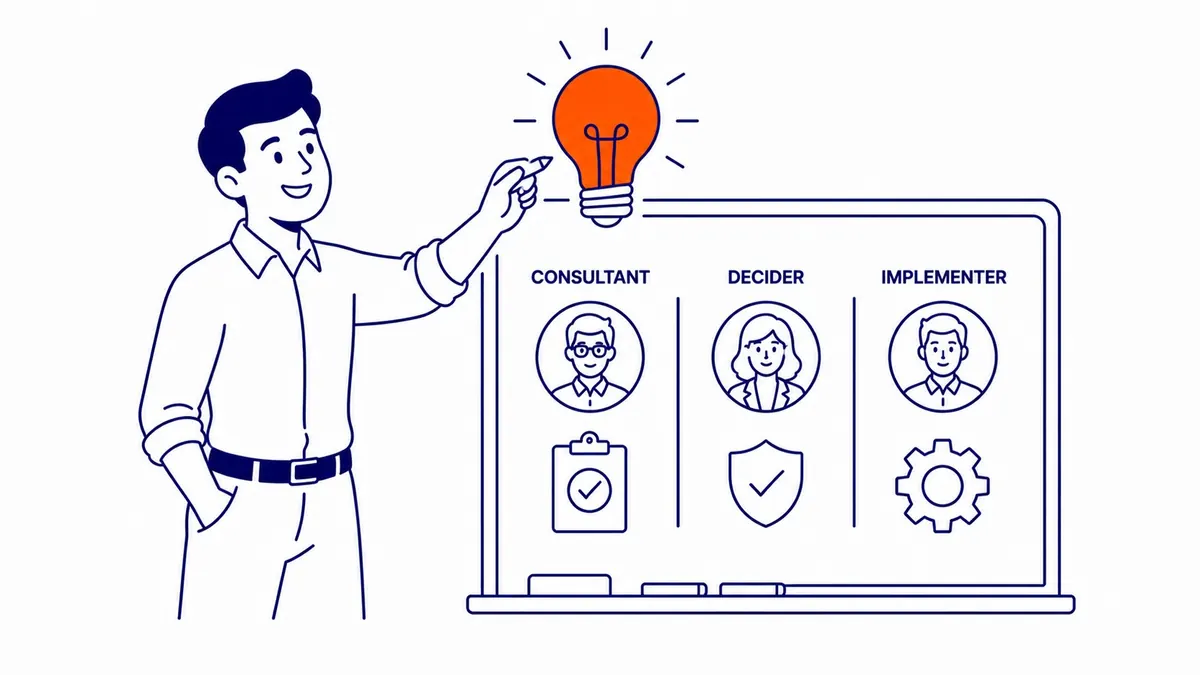
Three roles touch every SEO recommendation. The consultant diagnoses. Someone internal approves. Then either that same internal owner or the consultant, if scoped that way, implements.
Write that down before work starts. Not after the first disagreement.
A consultant who also implements changes needs CMS access and a green light on scope. One who only advises needs a named internal owner who actually reads the reports and pushes work into a queue. Skip this step, and every recommendation becomes a debate about whose job it was.
Small businesses often blur this on purpose. The owner approves everything personally. That works fine under ten pages a month. It stalls fast past that volume, because one person becomes the bottleneck for every fix. Every internal team runs this handoff a little differently. The ownership question stays the same regardless of size, and settling it early keeps the SEO consultant from becoming that bottleneck later.
Handing Over Access Without Creating Chaos
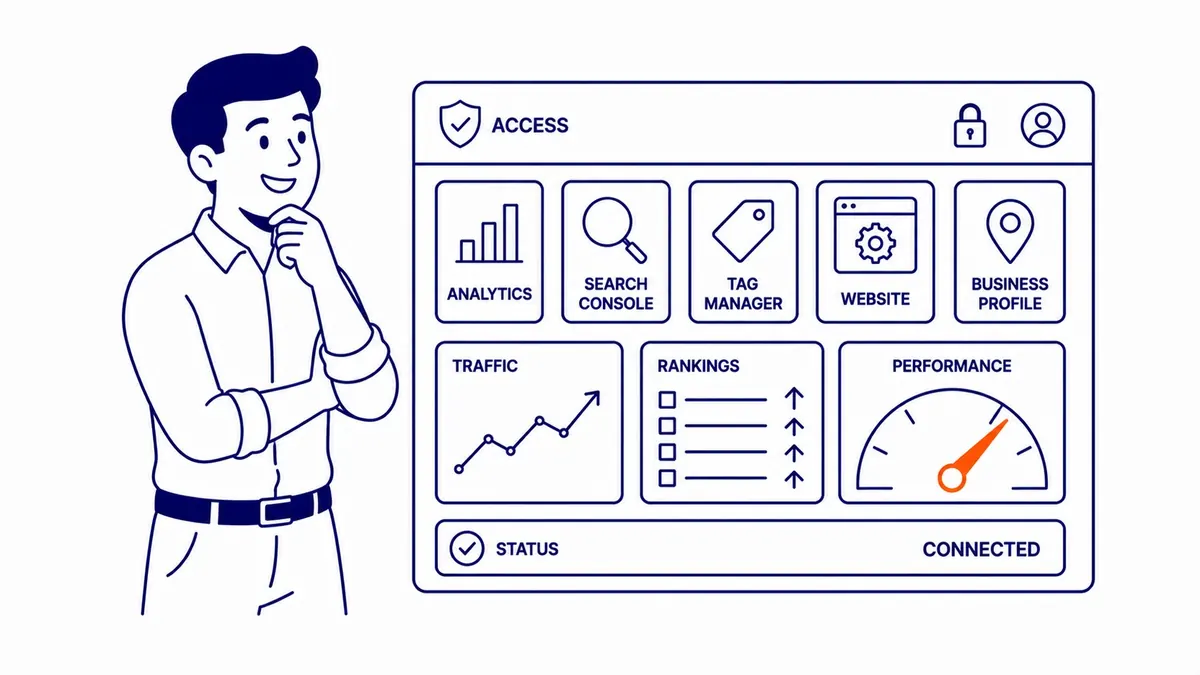
Give the consultant everything on day one. Not in pieces over three weeks.
Google Search Console. Analytics. CMS login with editor-level permissions. A staging environment if the dev team uses one. Handing these over piecemeal means the first month gets spent chasing credentials instead of finding problems.
Set access levels once, revisit them never (unless the scope changes). A consultant who needs to request a new login every time they want to check a page is not integrated. They are locked out with extra steps.
The developer environment deserves its own conversation. Read-only access to staging catches most technical issues without touching production. Full deploy access is rarely necessary and rarely wanted by the dev team anyway. That handoff often exposes gaps in the internal team’s existing workflow. The access-request loop back through IT is the usual culprit.
Getting Technical Fixes Into the Developer Backlog
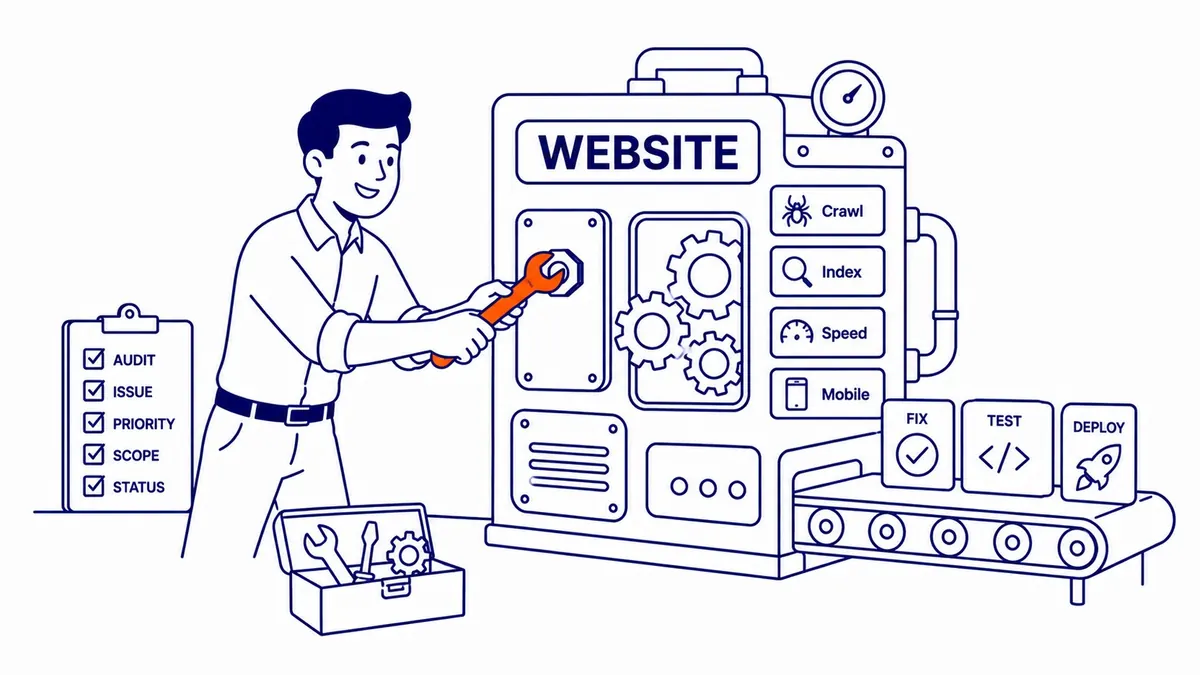
This is where most integrations break down. Not at the diagnosis. At the handoff.
A consultant flags a canonical tag issue. That flag sits in a report PDF nobody on the dev team opens. Three months pass. The issue is still live.
SEO tickets go into the same backlog tool the dev team already uses. That is the fix. Jira, Linear, a shared spreadsheet, whatever exists. Not a separate SEO-only tracker that requires someone to check two systems. One ticket, one priority level, one place developers already look every morning. That single workflow keeps the developer backlog from splitting into two competing lists.
Priority matters as much as placement. A website audit can surface forty issues. Rank them. Server response time and broken redirects belong ahead of a missing alt tag on a low-traffic page. A dev team drowning in undifferentiated tickets will quietly deprioritize all of them.
Keeping the Content Team in the Loop, Not Sidelined

An in-house writer who has owned the blog for two years does not want a consultant rewriting their calendar. Not without a conversation first.
Frame keyword research as input the writer uses, not a replacement for their judgment. The consultant identifies gaps and search intent. Voice remains the writer’s call. Structure too. Topic fit stays theirs as well. That split keeps the relationship collaborative instead of adversarial.
Share the research directly with the writer, not through three layers of management. A shorter path means faster content. It also means the writer feels like a partner in the strategy, not someone executing someone else’s list. The content team benefits just as much from that clarity as the developer side does.
A Communication Rhythm With Your Internal Team That Holds
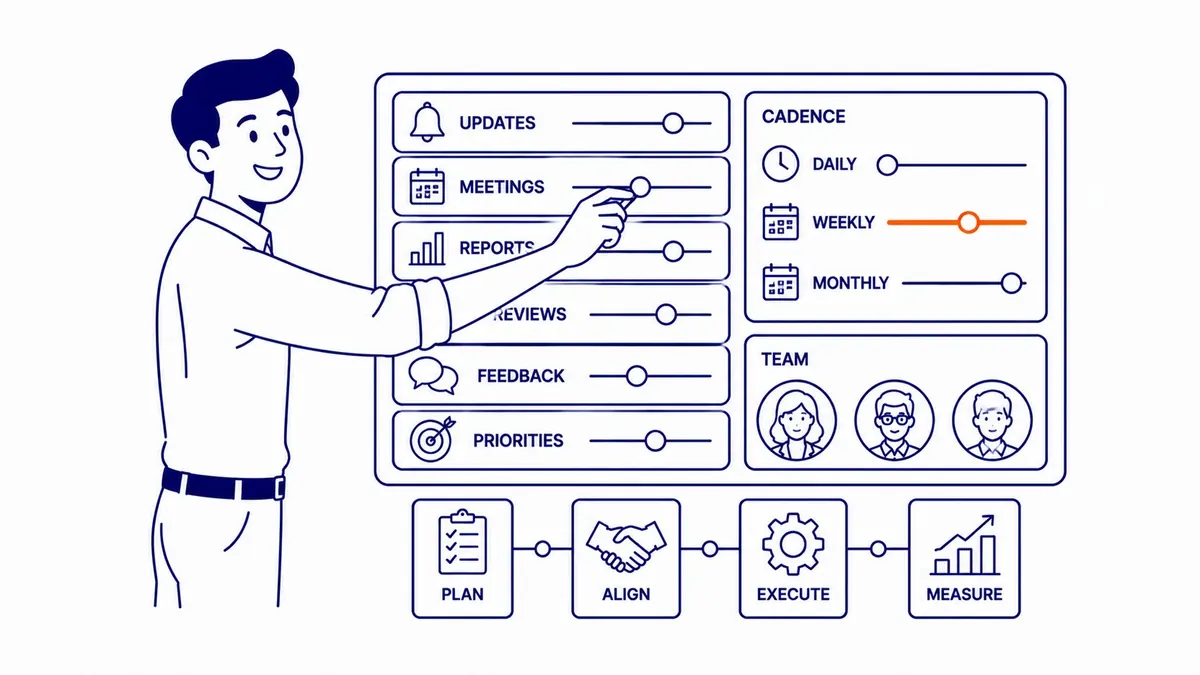
Skip the daily Slack pings. Skip the once-a-quarter check-in too.
Monthly works for most setups. A report goes out. Then a short call follows. What moved gets covered first, then what stalled, then what changes going forward. Between those calls, async updates in whatever tool the team already uses (email, Slack, a shared doc) handle anything urgent.
Consistency beats frequency here. A team that knows exactly when the next update lands stops pinging the consultant out of anxiety between cycles. Clear, scheduled communication beats constant ad hoc messages every time.
Common Friction Points and How to Head Them Off

Every internal team eventually hits at least one of these three friction points. The developer team deprioritizes SEO tickets behind feature work, every single sprint. Fix this by getting a standing agreement on ticket volume per sprint, not by escalating after the fact.
Marketing feels bypassed when a consultant reports straight to the owner. Fix this by including the marketing lead on every call, even when the owner makes final calls.
The content writer resents keyword suggestions that ignore brand voice. Fix this by treating research as raw material, never a finished draft.
None of these are consultant problems or team problems specifically. They are integration problems, and they show up whether the consultant is excellent or mediocre.
A Worked Example
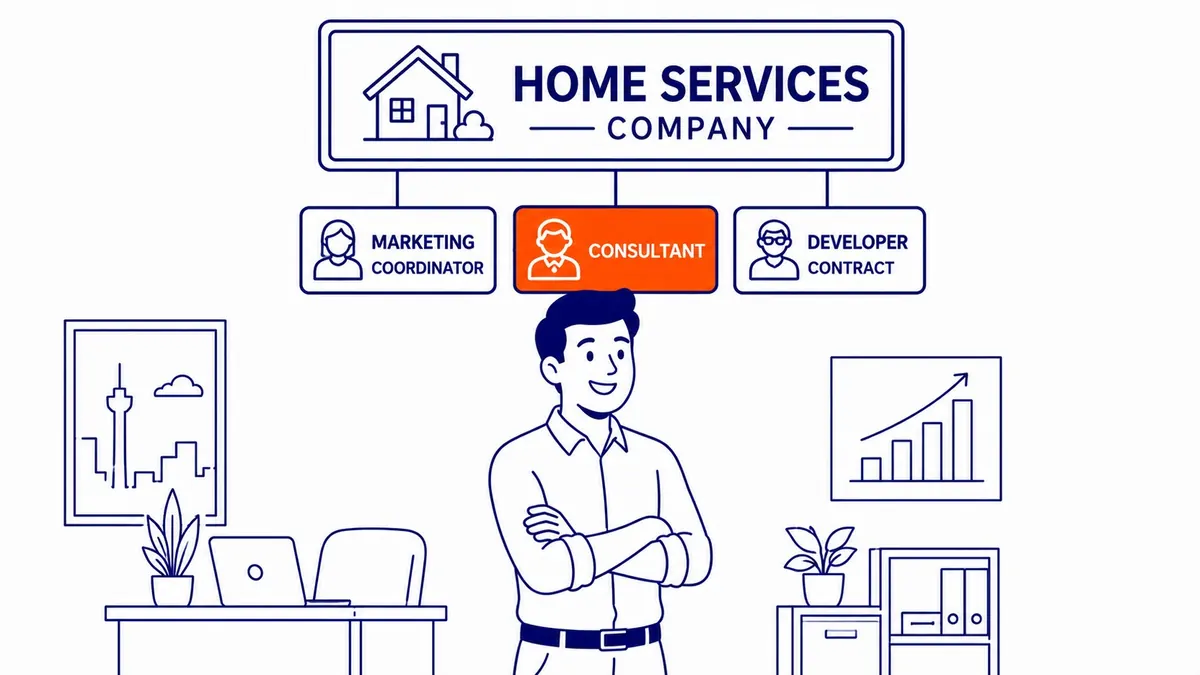
A Calgary home services company brought in an outside consultant while keeping an in-house marketing coordinator and a part-time contract developer.
The coordinator became the single point of contact. Every recommendation routed through her, into a shared Trello board the developer already checked daily. Technical fixes got a two-week turnaround because they landed where the contractor already worked. Content ideas went to the coordinator, who then briefed an in-house writer with the brand context the consultant did not have. The outside SEO consultant flagged priorities weekly, but only through the coordinator, never straight to the developer or the writer.
Three months in, rankings moved on eleven target pages. Nobody argued about whose job a broken redirect was. The board already said so.
How To-The-TOP! Plugs Into Your Internal Team

Nineteen years of doing this solo means one person handles diagnosis. The same person handles strategy. Reporting too. No account manager translating between a client and a hidden team of specialists.
That solo structure actually simplifies integration. One point of contact. A single voice on the monthly call. No hierarchy inside the SEO services engagement to navigate before a recommendation reaches the person who can act on it.
Clients running Google Ads alongside Calgary SEO work get the same treatment. One consultant, tracking both channels, reporting on a fixed monthly schedule with no guaranteed-ranking promises attached. Meaningful movement takes three to six months on most sites. Integration done right does not shorten that timeline. It just stops the timeline from stalling on a ticket nobody picked up.
Frequently Asked Questions
Should the SEO consultant report to marketing or to the owner directly?
Either works, as long as marketing stays in the loop. A consultant reporting only to the owner while marketing finds out secondhand breeds resentment fast, even when the work itself is solid.
How much access does an external SEO consultant actually need?
Search Console at minimum. Analytics too. CMS access as well. Staging access if a developer is involved. Full production deploy access is rarely necessary for a consultant who is not also the implementer.
What if the developer team keeps deprioritizing SEO tickets?
Set a standing ticket allowance per sprint before the problem starts, not after three months of silence. A vague verbal agreement gets deprioritized. That rarely happens to a number on a sprint board.
Can a solo consultant work alongside an in-house marketing team?
Yes, and it often works better than a large agency. Fewer layers between diagnosis and the person who can act on it means faster handoffs, not slower ones.
Contact Calgary SEO Company To-The-TOP!
Questions about anything in this article, or about your own rankings? Talk to a Calgary SEO specialist directly.
Phone: (403) 308-5949
Address: 1509 14 Ave SW, Calgary, AB T3C 0W4
Hours:
Monday to Friday: 10:00 am – 7:00 pm
Saturday: 12:00 pm – 4:00 pm
Sunday: closed