
How to Recover SEO Rankings
To recover SEO rankings, work out what caused the drop before you change anything, because each cause has its own fix and its own waiting time. A technical fault such as a stray noindex tag or a broken redirect is fixed on the site and then waits for Google to recrawl it. A manual action needs every affected page cleaned up and a reconsideration request. A drop after a core update or a competitor’s improvement is recovered the same way a ranking is earned in the first place, by making the page and the site more useful than the results now above them, and Google says that can take several months.
Confirm what actually dropped
Start in Google Search Console rather than a rank tracker, since the Performance report shows clicks, impressions and average position from Google’s own data. Google’s guide to debugging traffic drops recommends setting the date range to the last 16 months, which shows at once whether the same dip happened at the same time last year. It also suggests comparing the drop period with the previous period or the same months a year earlier, and then checking the Queries, Pages, Countries, Devices and Search appearance tabs to see whether the loss is concentrated somewhere.
The size of the drop matters as much as the cause. Google separates a small drop, using the example of a page moving from position 2 to 4, from a large one, such as moving from position 4 to 29. Small movements happen all the time and can reverse without anyone doing anything, and Google recommends avoiding radical changes to a page that is already performing well. A large, sustained drop across many queries is the case that calls for real work.
Two other checks save wasted effort. If impressions held steady while clicks fell, the page may still rank but attract fewer clicks, so the title, the snippet or a new rich result from a competitor is the likelier problem. And if the fall came from a third-party tool, confirm it in Search Console before acting, because a tracker checks from one set location while the local results a Calgary searcher sees can vary with where they are searching from. The separate question of whether the drop is real or simply measured against an unusually good month has its own page.
Match the drop to its cause
The shape of the drop in Search Console usually points to the cause. This table pairs the common patterns with where to look and what Google says about the wait.
| What you see | Likely cause | Where to check | How to recover | What Google says about timing |
|---|---|---|---|---|
| A page or section disappears or falls steadily | Technical fault (noindex, robots.txt, server errors, removed pages) | Page indexing report, Crawl stats, URL Inspection | Fix the fault, then request indexing for key URLs | Depends on recrawling; a request does not guarantee indexing |
| A sharp fall with a message in Search Console | Manual action | Manual Actions report | Fix every affected page, then request review | Reviews take several days or weeks; link-related ones can take longer |
| Browser warnings or a sudden traffic fall | Security issue (malware, phishing, hacked content) | Security Issues report | Clean the site, then request review | Not stated as a fixed period |
| A fall right after new URLs, a redesign or a domain change | Site move or migration | Old URLs and where they redirect | Repair redirects, update internal links and sitemaps | A few weeks for small to medium sites; keep redirects at least a year |
| A fall that lines up with an announced core update | Core update | Search Status Dashboard, then compare weeks | Improve the content and the site as a whole | Days to several months, possibly the next core update |
| A slip of a few positions | Normal movement or a competitor | Performance report over a longer range | Usually nothing yet | Positions are not fixed; small shifts can reverse |
| The same dip as last year | Seasonality or changing interest | 16-month view, Google Trends | Nothing to recover | Demand returns with the season |
| Organic rankings steady, map pack visibility gone | Business Profile change or suspension | Business Profile status and edit history | Correct the profile or appeal | Not stated |
Technical faults: fix these first
Technical faults are worth ruling out before anything else, because they are the one kind of drop where the cause is usually on your own site and the fix is clear once found. The common ones are a noindex tag left in place after a redesign, a robots.txt rule that blocks a section, pages that now return errors, a canonical tag pointing to the wrong URL, and a server that times out when Google tries to crawl. Search Console’s Page indexing report and Crawl stats report will usually show a jump in issues around the date the drop began, and URL Inspection shows how Google sees a single page.
Google notes that some of these drops arrive slowly. A misplaced noindex only takes effect as Google recrawls each page, so traffic falls over days or weeks rather than overnight, which can make the cause easy to miss. Recovery runs the same way in reverse. Once the fault is fixed, the pages return as Google recrawls them, and you can ask for key URLs to be recrawled with the request indexing button in URL Inspection, although Google is clear that a request does not guarantee indexing.
If the site has more than a handful of pages, a crawl tool will find these faults faster than checking pages one by one, and a technical SEO audit goes further by ranking what it finds by how much each problem matters.

Manual actions and security issues
A manual action is one of the few kinds of ranking loss that Google tells you about directly. It appears in the Manual Actions report in Search Console with the type of issue, the pages affected and a link to Google’s instructions for fixing it. Common types include unnatural links to or from the site, thin content with little or no added value, user-generated spam, and cloaking or sneaky redirects.
Google’s instructions are strict about scope. You have to fix the issue on all affected pages, because fixing only some of them will not earn a partial return to search results, and if there is more than one manual action, all of them need fixing. You then select Request Review, and Google says a good request explains the exact issue, describes the steps taken to fix it and documents the outcome. Google says most reconsideration reviews take several days or weeks, link-related ones can take longer, and you should not resubmit while a request is still pending. For unnatural links, Google expects a good-faith effort to have links removed first, and it says that blindly adding every backlink to a disavow file is not enough.
Security issues work in a similar way through the Security Issues report: clean the site, close the hole that let the problem in, and request a review. Most ranking drops are not penalties at all, so it is worth knowing what a Google penalty is and is not before assuming one.
After a site move or redesign
A redesign or new website can cost rankings, often because old URLs were changed without redirects or were all redirected to the home page. Google’s site move guidance says to expect some temporary fluctuation, and that a small to medium site can take a few weeks for most pages to move in the index, with larger sites taking longer. If the drop is not recovering after that, Google points to the troubleshooting section of its site move guide, which lists the common mistakes, such as a leftover noindex or robots.txt block, that stop a new site being indexed completely.
The repair starts with a list of the old URLs that used to bring traffic, which you can export from the Pages tab in Search Console for a date range before the move. Each one should return a permanent redirect to the single most equivalent new page, internal links should point straight at the new URLs, and the new sitemap should list only new URLs. Google recommends keeping redirects in place for as long as possible, generally at least a year. If the move has not happened yet, planning an SEO migration before launch is far cheaper than recovering from one afterwards.
After a core update, or when a competitor moves ahead
Several times a year Google makes broad changes to its ranking systems, which it calls core updates and announces on its list of ranking updates, with start and end dates on the Search Status Dashboard. Google’s guidance is that a page that loses ground in one has not necessarily done anything wrong, since the update reassesses all content and other pages may now be judged more helpful. To measure the effect, Google suggests waiting at least a full week after the update finishes rolling out and then comparing that week with the week before it started.
For a large drop, Google points to its self-assessment questions on helpful, reliable, people-first content and asks you to look at the site as a whole, not only the pages that fell. In practice, the most useful exercise is to search the query yourself and read the pages that now rank above yours, asking what a searcher gets from them that your page does not give. The gap is often a missing answer, out-of-date information, thin detail on the part of the topic people care about most, or a page that serves a different intent from the one searchers have.
Google also warns against “quick fix” changes, such as removing a page element because you heard it was bad for SEO, and describes deleting content as a last resort for material that cannot be salvaged. The improvements that work are the ones that make sense for readers, and Google says they can take effect in a few days or take several months, sometimes not until the next core update. It also says there is no guarantee that any change will produce a noticeable result. Losing ground to a competitor that improved its page follows the same logic without an update involved: the way back is a better page, often with more sites that have a reason to link to it.

Recovering rankings in the Calgary map pack
For a local business, the map results and the organic results are separate, and a business can drop out of one while holding its place in the other. Google’s Business Profile help says local results are based mainly on relevance, distance and popularity. Distance means that a search from Sage Hill and a search from Mahogany can show different businesses for the same query, so a rank check from a single location in Calgary does not tell you what customers across the city see.
When map visibility falls while organic rankings hold, check the Business Profile first. Look at whether the profile is still verified and live, whether the primary category, business name, address or service area was changed recently by you or by a suggested edit, and whether reviews have stopped coming in while competitors gained them. If the profile was suspended, Google provides an appeal tool where you can attach evidence, and its help page recommends that any documents show a business name and address that match the profile under appeal. Google also warns that an appeal can be submitted only once and that you should not create a new profile for the same business, so gather the evidence before you send it.
Decide whether the position is worth recovering
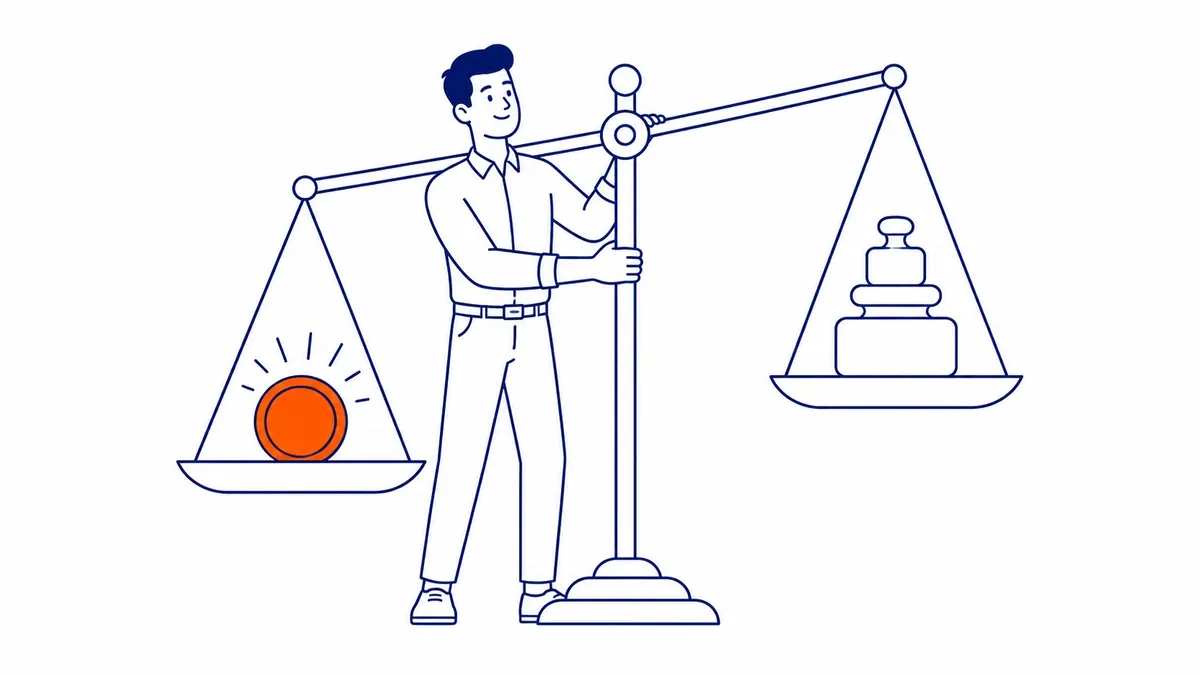
Once a technical fault or a manual action is ruled out, recovery is ordinary SEO work, and that is a reason to decide how much the lost position is worth before spending on it. A drop feels urgent because it is a loss, but the value of the position is what it brought in while you held it, and that figure sits in your own analytics. Look at the clicks the page received in Search Console for the months before the drop, then at the enquiries, calls or sales those visits produced.
As an illustrative example, suppose a Calgary renovation company slipped from third to eleventh for a query that had sent about 40 visits a month, and those visits produced roughly one enquiry every two months. The question is not how quickly the ranking can be won back but whether one enquiry every two months justifies months of content and link work, compared with the other keywords the business could chase. Sometimes the answer is yes and the work starts at once. Sometimes the dropped query was never bringing customers, and the budget does more good on a query that would.
If the lost position was producing leads, the gap does not have to stay empty while the organic work takes effect. A Google Ads campaign can put the business back in front of those searchers as soon as its ads are approved, and it can be scaled back as the organic ranking returns.
Getting help with a ranking drop
Most drops can be diagnosed with Search Console and the checks above, and the fix follows from the cause. Where the cause is unclear, or the site lost visibility after a redesign or across many pages at once, a second pair of eyes on the data is usually quicker than guessing. SEO Company To-The-TOP! has worked on search rankings for Calgary businesses since 2007 as a solo practice, so the person who reviews the drop is the person who does the work, and clients receive monthly position reporting. It works White Hat only, which matters most when a recovery is tempting you toward shortcuts that could cause the next drop.
Contact Calgary SEO Company To-The-TOP!
Questions about anything in this article, or about your own rankings? Talk to a Calgary SEO specialist directly.
Phone: (403) 308-5949
Address: 1509 14 Ave SW, Calgary, AB T3C 0W4
Hours:
Monday to Friday: 10:00 am – 7:00 pm
Saturday: 12:00 pm – 4:00 pm
Sunday: closed