
What Is a Google Penalty in SEO?
A Google penalty is what happens when Google decides your website broke its rules and marks it down for it. That is the definition, and the last one this page will hand you. What triggers a penalty. How the manual kind differs from the algorithmic kind. Cleaning up afterward. Writing a reconsideration request. All of it sits elsewhere on this site, covered properly. So none of it gets repeated here.
Instead, one fact about the word itself.
Two very different things get called a Google penalty. Only one of them ever speaks to you.

One of Them Arrives as a Message
A manual action is a real event. Somebody at Google looked at your website. A person, reading pages. They decided something on it broke a guideline. Then a message appeared in your Search Console account.
That message is a remarkable object. Almost nobody stops to notice why.
It names the problem. Often it points at the pages. There is a date on it. And there is a way to write back, once you have cleaned up whatever it named. Fix the thing. Ask for another look. Wait. Then, if the fix holds, a second message lands saying the action has been revoked.
Now hold that against the other kind.
The other kind is an update. Or a re-evaluation. Google reads your site again and thinks less of it than it used to. Your rankings fall.
Nothing else happens at all.
No message. Nothing dated. No pages named. And nobody to write back to.
The Only Penalty That Explains Itself
Read the two side by side and something turns over.
The manual action is the one everybody dreads. It is the story people tell each other. Somebody at Google, reading your website, deciding against you.
Yet it is the only version of this that tells you anything.
A named reason. Dated. A route back, with a person at the end of it. Nothing else that goes wrong in SEO ever gives you that much. Traffic falls and nobody explains why. A ranking slips and no one writes to say so. So the thing you were most afraid of turns out to be bad news delivered properly. Which is more than the web hands out on an ordinary day.
Plenty of websites never see one. That part is true. Still, it is a strange sort of luck. Somebody has to report black-hat SEO before that message ever gets written.

Nothing Gets Lifted, Because Nothing Was Set Down
Here is what the silence costs you.
A manual action ends. Somebody issued it. So somebody can revoke it, and the revoking arrives with a message of its own.
The quiet kind never ends, because it never began. Something inside Google’s systems may well read your site more coldly than it did two years ago. Fair enough. Only nothing was ever sent to you, so nothing can be sent back.
So there is nothing to appeal. Nothing to be lifted. And nothing waiting to be forgiven, because nothing was ever laid down.
You are not serving anything. Rather, you are being read.
Nobody Is Holding a File on You
Which sounds bleak, then turns into the best news on this page.
Nothing was set down. So nothing has to be served out afterward. Clean up the pages and the reason for the drop goes with them. Nothing is left over. No stretch of time to sit through while somebody decides you have suffered enough.
Whatever your website is today is what gets read today. Last year’s version does not get a say.
Both facts are one fact, read from opposite ends. No pardon is coming. Then again, nothing is being served.

The Word Sends Your Hands to the Wrong Job
Now the part that costs money.
A penalty is a punishment. Punishments follow from something you did. So the moment you believe you were penalized, you go looking for the crime. What did I break. Which page. What do I take down.
For a manual action, that instinct is exactly right. Something got named. Go and remove it.
For the quiet kind, it is often wrong. Frequently nothing was done wrong at all. The pages that passed you did not report you to anybody. They were better. Newer perhaps. More complete. Then the reading moved to match them. So there is nothing on your site to delete. A month spent hunting for it is a month spent hunting nothing.
The fix in that case is not subtraction. It is addition. Some content has to get written. A question answered. Or a page made worth reading at all.
That is an entirely different job, and the word penalty will never once point you toward it. A website audit will tell you what sits on your pages. Whether they are worth wanting is a separate question, and a harder one.

Where the Google Penalty Argument Stops
None of this says nothing is ever your fault.
Bought links exist. Stuffed pages exist. Somebody publishes a scraped section. Another hides text behind a pile of keyword-stuffed pages. Google does eventually stop counting much of it. Removal is the right answer there. So nobody should read this page as permission.
A manual action is no gift, either. It hurts, and badly. The only claim here is about what it tells you, measured against the silence.
Read Your Own Search Console
One screen settles which one you are in.
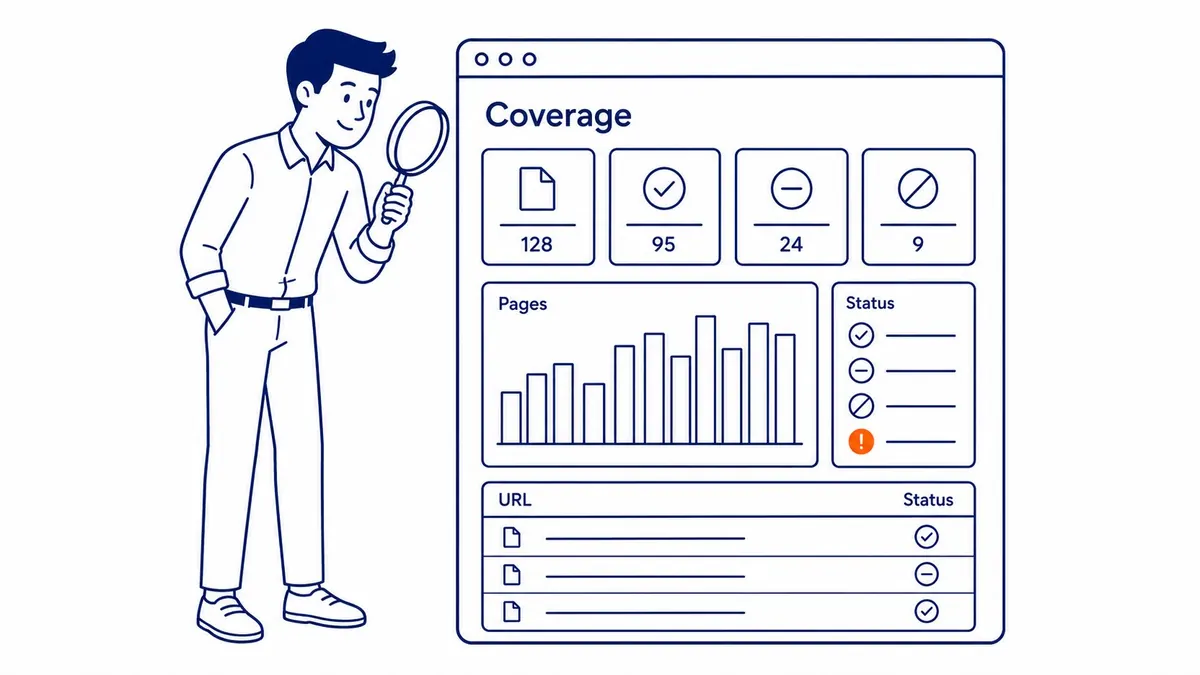
Open Search Console. Find the manual actions report. Read what it says.
Probably it says no issues detected. Then you know something. Nobody issued anything. So nothing is going to be lifted. No message is coming to tell you the trouble has passed. Stop waiting for a verdict. Go and look at the page instead.
Or there is a message sitting there. In which case you have been handed something almost nobody gets. A named reason. Dated. Then a way back. Read it literally, fix precisely what it names, then ask for the second look.
No statistic about other people’s websites tells you which of those you are in. Yours is one screen away.
Working With SEO Company To-The-TOP!
Plenty of businesses across Calgary arrive convinced they have been penalized. Most have not. What they have is a website that used to be enough and quietly stopped being enough. A slower problem, and a fixable one. To-The-TOP! has been doing search engine optimization since 2007. White Hat SEO only, so nothing we build is the kind of thing that earns a message in the first place.
To-The-TOP! starts by reading the site, then reading whatever stands above it. Our portfolio shows the keywords this work has reached. Sometimes organic results run too slowly for a business that needs customers this quarter. Then a Google Ads campaign can carry the gap. No guarantees. Three to six months before anything meaningful moves, and we say so before anybody signs anything. Most of what it takes to recover SEO rankings is unglamorous repair work. A disavow file comes up early in those conversations, usually too early.
Frequently Asked Questions About a Google Penalty
What is a Google penalty in SEO?
Strictly, a manual action. A person at Google reviewed your site. They decided something broke a guideline. Then a message went to Search Console naming it. Most of the ranking drops people call a Google penalty are not that at all. They are re-evaluations, and nobody issued them.
How do I know if I have a Google penalty?
Search Console carries a manual actions report. Anything genuinely issued shows up there with a reason attached. An empty report means nothing was issued, whatever your traffic happens to be doing.
How long does a Google penalty last?
A manual action lasts until you fix what it named and ask for a review. Meanwhile a quiet ranking drop has no length, since it never started. It holds until the site gives Google a reason to read it differently.
Can you recover from a Google penalty?
Yes. Recovery from a manual action is a defined process, handled elsewhere on this site. The quiet kind has no process at all. It is ordinary SEO work, done for as long as that takes.
Does a Google penalty ever go away on its own?
A manual action does not. Somebody has to revoke it. The quiet kind can lift on its own. Your site gets read fresh every time, while everything around it keeps shifting.
Contact Calgary SEO Company To-The-TOP!
Questions about anything in this article, or about your own rankings? Talk to a Calgary SEO specialist directly.
Phone: (403) 308-5949
Address: 1509 14 Ave SW, Calgary, AB T3C 0W4
Hours:
Monday to Friday: 10:00 am – 7:00 pm
Saturday: 12:00 pm – 4:00 pm
Sunday: closed