How to Show Up in AI Overviews: What Google Says Works
To show up in AI Overviews, a page has to be indexed by Google and eligible to appear in search results with a snippet, and Google says there are no additional technical requirements and no special optimizations beyond normal SEO. That makes the SEO work for AI Overviews the same work that earns ordinary rankings: a page Google can crawl and index, content that answers the question better than the pages it competes with, and a site with enough authority to be trusted as a source. Google cannot be made to cite a page, but the steps below improve the odds and remove the problems that quietly rule a site out.
The rest of this guide follows Google’s own documentation, mainly its page on AI features and the guide to optimizing for generative AI features it added in May 2026, and labels clearly where a point is practitioner experience rather than something Google has said.
How AI Overviews choose the pages they link to
An AI Overview is the generated summary that appears at the top of some Google results, with links to the web pages that support it. Google describes the process in its guide to generative AI features as retrieval-augmented generation: its core ranking systems retrieve relevant pages from the Search index, and the model writes a response grounded in what those pages say. That is why SEO still matters here, since the pages an AI Overview can cite come from the same index and the same ranking systems as the blue links below it.
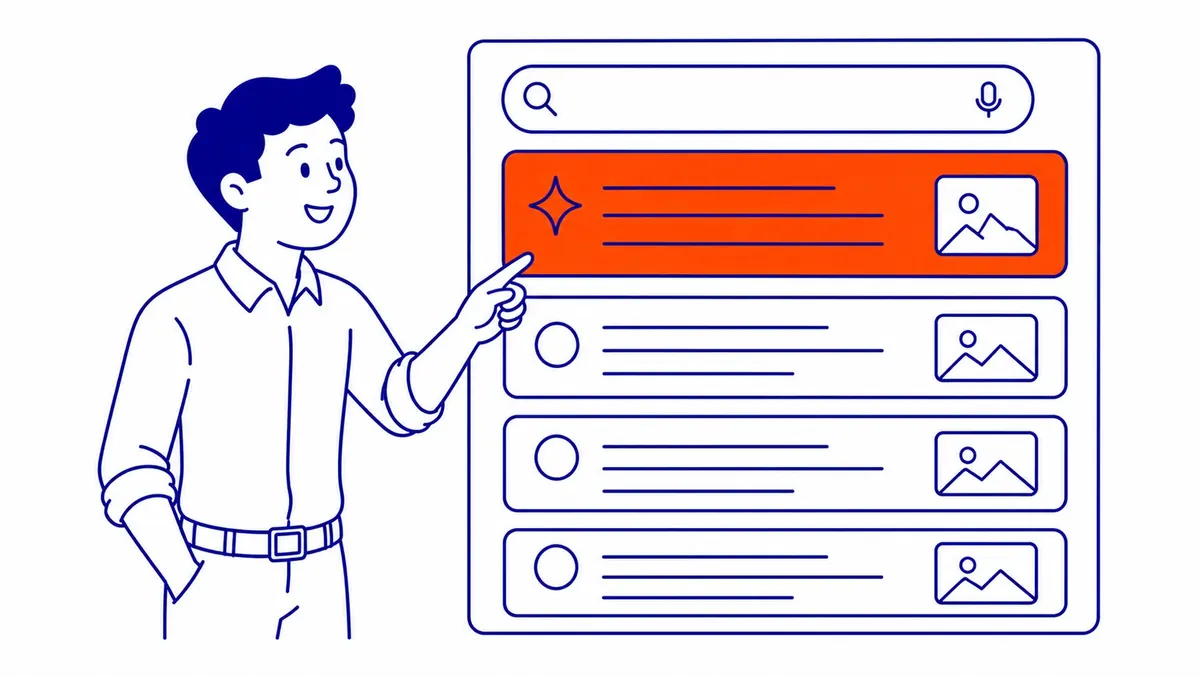
The second idea worth understanding is query fan-out. Google says AI Overviews and AI Mode may issue several related searches behind the scenes and draw links from all of them. As an illustrative example, someone in Calgary asking how to protect a sprinkler system before winter might trigger related searches about blowing out the lines, the right month to do it and whether a professional is needed. A page that covers those related questions well can be cited even when it does not rank first for the original search, which is one reason a thorough page has more chances than a thin one.
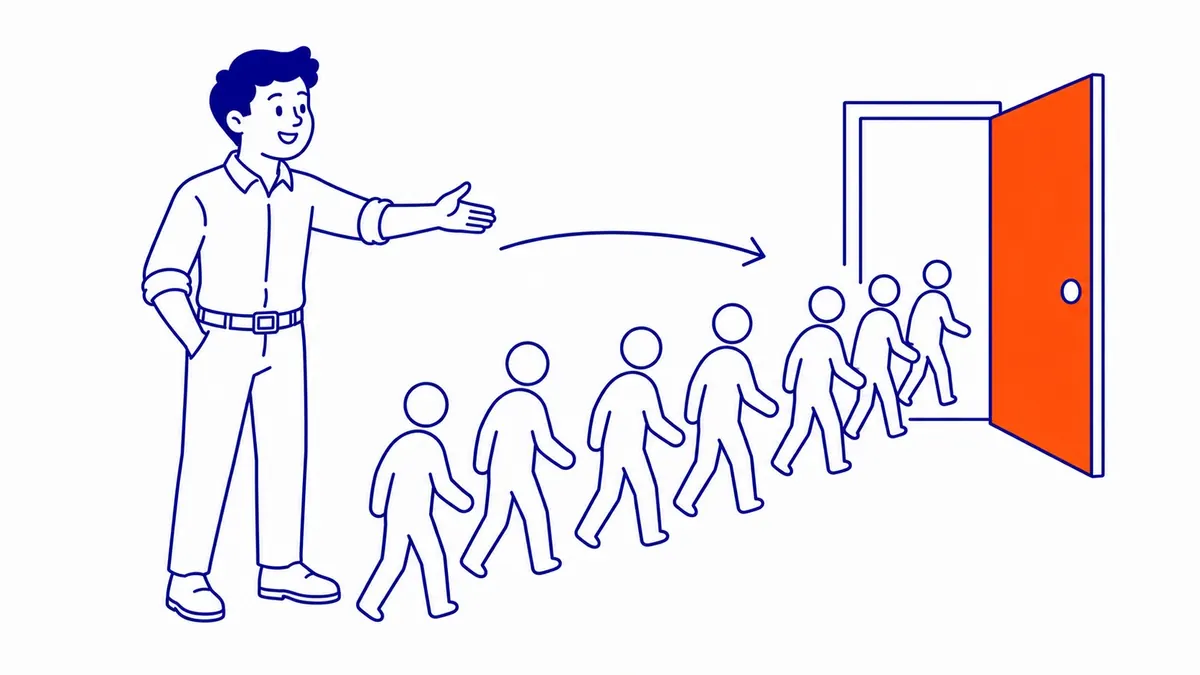
Not every search gets an AI Overview. Google says they are shown only when its systems judge them to be additive to classic search results, and that they often do not trigger. A Calgary-localized results check run for this article on 7 November 2026 did return an AI Overview for the question “how to show up in AI Overviews SEO”, followed by the usual mix of SEO software blogs, Google’s own documentation and a Reddit thread. Questions that need explaining or comparing tend to attract them, while a search for a business name or a specific product page often does not.
What Google requires before a page can be cited
Google’s AI features documentation is short on this point. To be eligible as a supporting link, a page must be indexed and eligible to be shown in Google Search with a snippet, and it must meet the normal Search technical requirements. Google adds the usual caveat that meeting every requirement does not guarantee that a page will be crawled, indexed or shown.
In practice, four things quietly break that eligibility. A noindex tag removes the page from Search entirely. The nosnippet, data-nosnippet and max-snippet controls limit what Google may show from a page, and Google lists them as the way to limit content in AI features. A page-wide nosnippet added by a theme or plugin can keep the page out, while a strict max-snippet value or a stray data-nosnippet attribute can hide the very passage that would have been cited. A robots.txt rule, a firewall or a CDN setting that blocks Googlebot stops the page from being crawled at all. The fourth is newer: by 31 August 2026 every Search Console property had a Search generative AI control, found under Settings, which decides whether the site’s links and content can appear in AI Overviews, AI Mode and generative AI features in Discover. Including the site is the default, but it is worth confirming that nobody switched it to exclude.
The order of work that improves your chances
Once eligibility is settled, the work is ordinary SEO done carefully. The sequence below is the order a practitioner would normally follow, because each step depends on the one before it.
Start with the pages that already appear for the questions you care about. Search Console’s Performance report shows which queries each page is seen for and at what average position, and a page that already sits on page one or two has the shortest path, because Google already considers it relevant. SEO software companies that track citations commonly report that cited pages usually rank well in the regular results too, but that is a pattern they have measured, not a rule Google has published. Because of query fan-out, a page can also be cited when it ranks for one of the related searches rather than the main one.
Next, make the page worth citing. Google’s 2026 guide puts most of its weight on what it calls non-commodity content: a first-hand view, real experience and detail that goes beyond what anyone could summarize from other websites. It contrasts a generic “7 Tips for First-Time Homebuyers” piece with an article built on a specific experience, and says that kind of content will likely influence a site’s presence in generative AI search more than any other suggestion in the guide. For a Calgary contractor, that might mean explaining how a job changes in a chinook winter or what the city’s permit process actually involves, rather than repeating national advice.
Answer the main question early and clearly, because readers want that, and then cover the related questions on the same page. Google warns against the opposite approach. Creating a separate page for every variation of a search, or for every fan-out query, mainly to influence AI responses, falls under its scaled content abuse spam policy, and it calls that an ineffective long-term strategy as well.

Then build the trust signals that take longest: links and mentions from relevant, established sites, earned because the content or the business deserves them. Google’s guide notes that its AI features can reflect what is said about a business across blogs, videos and forums, but that chasing inauthentic mentions is not as helpful as it might seem, because its spam systems sit underneath the AI features too. If you serve customers locally, keep your Google Business Profile current, since Google lists up-to-date Business Profile and Merchant Center information among the fundamentals for AI features. SEO takes months, and this step usually takes the longest of all.
What you can safely ignore
A lot of advice sold as answer engine optimization or generative engine optimization adds work without helping in Google. Google’s guide says plainly that, from its point of view, optimizing for generative AI search is still SEO, and its mythbusting section lists several things you can ignore for Google Search.
There is no need to create an llms.txt file or any other AI text file for Google, since Google Search ignores them, although keeping one for other services does no harm. There is no need to break content into tiny chunks, because Google says its systems can understand several topics on one page and show the relevant part, and that there is no ideal page length. Rewriting a page in a special style for AI is unnecessary too, since the systems understand synonyms and meaning, so you do not have to capture every phrasing of a question.
Structured data is the area where old advice causes the most confusion. Google says it is not required for generative AI search and that there is no special schema.org markup to add, although it is still worth using for the rich results it supports, as long as the markup matches what is visible on the page. Many guides still recommend FAQPage and HowTo markup for AI visibility. HowTo rich results were retired in 2023, and Google stopped showing the FAQ rich result in Search on 7 May 2026 and later removed its documentation. An FAQ section is worth keeping only if readers find it useful.
Why your page is not showing up
When a page that seems strong never appears in an AI Overview, work through the causes in order, from the quickest to check to the slowest to fix. First, search the question yourself and see whether an AI Overview appears at all, because many searches never trigger one. Second, open the Search generative AI control in Search Console and confirm the site is included. Third, use the URL Inspection tool to confirm the page is indexed and that Googlebot sees no noindex or snippet restriction.
If all three are fine, the problem is usually competition rather than a setting. AI Overviews tend to link to several pages at once, and Pew Research Center found that 88% of the AI summaries in its March 2025 sample cited three or more sources, so a page is competing for one of a handful of places. Compare your page with the ones that are cited. If they are more specific, more current, written from real experience or backed by more authority, that gap is the work. A site audit can sort the technical causes from the content and authority ones before you spend time on the wrong fix.
Measure what the citations are worth
Search Console counts AI Overview traffic inside the normal Performance report, under the Web search type. Google’s help page explains that an AI Overview occupies a single position in the results and every link in it is assigned that same position, and a click on a link inside it counts as a click. Since its worldwide rollout, completed by 31 August 2026, Search Console also has a Generative AI performance report that shows impressions from AI Overviews and AI Mode, grouped by page, country, date and device. Its help page lists no query dimension, so finding out which searches cite a page still means checking the results yourself or using a third-party tracking tool, and Google cautions that no third-party tool has access to its internal ranking or AI systems.
Judge the work on business results rather than visibility alone. In a Pew Research Center analysis published in July 2025, based on the March 2025 browsing of 900 US adults, people who saw an AI summary clicked a traditional search result in 8% of visits, compared with 15% when no summary appeared, and clicked a link inside the summary in only 1% of visits. Pew’s sample covers US adults only, but the direction is a fair warning: a citation can raise your visibility without sending many visitors. Track calls, form submissions and quote requests from organic search alongside impressions. Organic citations cannot be bought, but where the lead value is high and the organic results sit far below the AI Overview, a Google Ads campaign is worth testing next to the SEO work.
Where to start
For most sites the first job is a quick eligibility check (indexing, snippet controls, crawler access and the Search generative AI control), followed by a look at the Search Console data to see which pages already rank for the questions that matter. Strengthening those pages usually returns more than writing new ones. If you would rather have a specialist do that work, the SEO services page explains how it is handled.
SEO Company To-The-TOP! has worked on search for Calgary businesses since 2007, White Hat only, and at To-The-TOP! one expert does all the client work, with monthly position reporting. If you would like a second opinion on why your pages are or are not being cited in AI Overviews, call (403) 308-5949.
Contact Calgary SEO Company To-The-TOP!
Questions about anything in this article, or about your own rankings? Talk to a Calgary SEO specialist directly.
Phone: (403) 308-5949
Address: 1509 14 Ave SW, Calgary, AB T3C 0W4
Hours:
Monday to Friday: 10:00 am – 7:00 pm
Saturday: 12:00 pm – 4:00 pm
Sunday: closed