
Is Wix Good for SEO?
Good enough. That is the short answer. The “Wix kills your SEO” narrative dates from 2015. Flash rendering. Broken URL structures. No alt text control. Wix fixed all of that in 2016 and kept improving. Google confirmed it. John Mueller said directly that Wix works fine in search.
The platform today covers the fundamentals. Custom meta tags. 301 redirects. SSL on every site. GSC integration. Auto-generated sitemaps. Not the same depth as WordPress. For a local service business, the gap rarely matters. Platform choice is not the same as an SEO penalty.
Wix SEO Features That Work
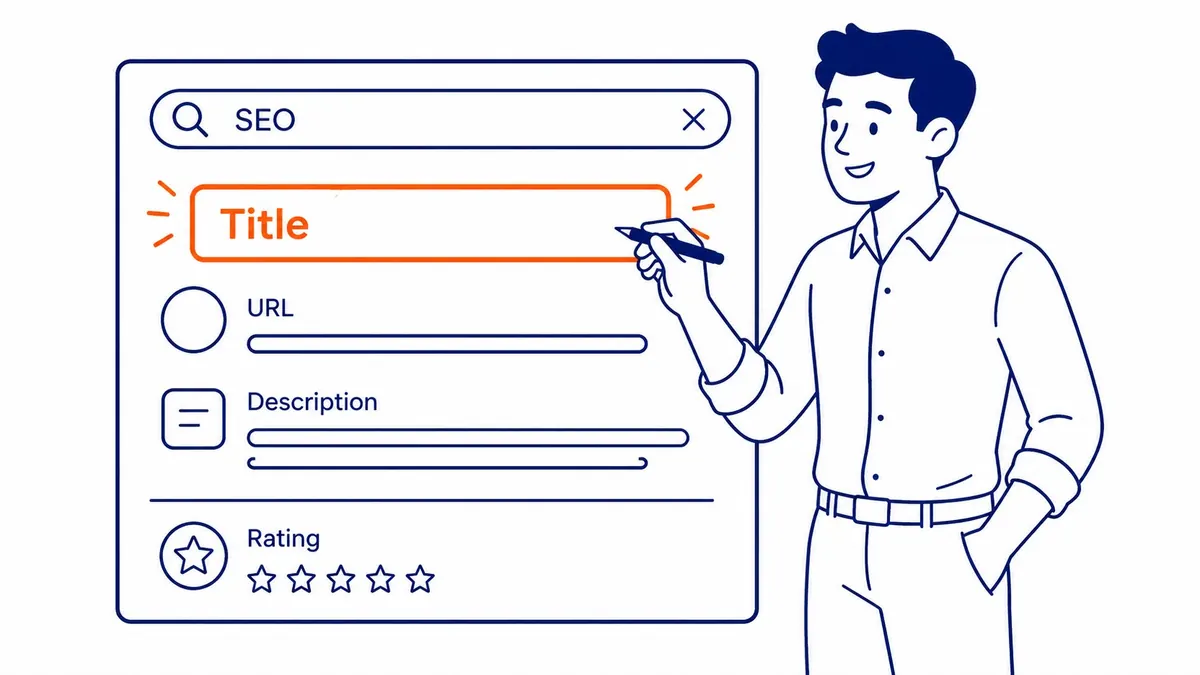
The core Wix SEO signals are all there. Editable title tags. Custom meta descriptions. URL slugs. Heading fields for H1 through H6. Image alt text on every image. None of these require a developer. Edit each one directly inside the Wix editor, field by field. That accessibility also matters more than most people expect. It means the optimisation actually gets done, rather than deferred until someone technical can help.
SSL is standard on every Wix site at no extra cost. Built-in canonical tags round out the technical baseline. Screen sizes render differently. The mobile editor shows how the layout sits on a phone before publishing. Google crawls the mobile version first. That has been its default since 2019. Poor mobile rendering costs rankings. A clean desktop version does not offset it.
The GSC integration works through the Wix dashboard without touching any code. Submit the sitemap from within the platform settings. Pull the Coverage report. See what Google is actually indexing versus what it is ignoring. Two minutes of setup. For a first website, that data catches most technical issues before they cost rankings.
Automatic sitemaps are a genuine operational advantage. Every Wix site generates one at yourdomain.com/sitemap.xml. The file updates on its own as pages are added or removed. No plugin required. Nothing to regenerate manually. Self-hosted WordPress installs miss this step regularly. On Wix, there is no step to miss.
Setup also comes with a built-in SEO checklist. Runs through the initial steps in about five minutes. The checklist takes business type and location as inputs, then suggests target keywords for the plan. Not a substitute for proper keyword research done with real volume data. A reasonable foundation for a first build, though. Wix is not the only option with a checklist, as a builder-by-builder SEO comparison makes clear.

Where Wix SEO Falls Short
Speed is the main issue. Every Wix site lives on the same shared server environment. Core Web Vitals scores still run higher on a dedicated managed WordPress host. So for competitive industries where LCP scores affect rankings, that gap shows up in position data. Not catastrophic for most businesses. Real enough to matter in tightly contested searches.
Image filenames are a persistent minor problem. Upload an image to Wix and it saves with an auto-generated character string rather than a descriptive name. Descriptive filenames contribute to Google Images visibility. Renaming still requires going into the media manager individually for each image. Worth doing for primary service and product images. Easy to skip, and most sites do skip it.
Sitemap control is limited. Wix generates and updates the XML sitemap without any input. For most small sites, that is enough. The sitemap includes everything it generates. No way to exclude paginated sections or staging pages. WordPress, however, handles this far more granularly with a dedicated SEO plugin.
Schema markup has gaps. Wix auto-codes schema for product pages and blog posts. Anything beyond those two categories, however, needs manual handling. Local business schema on a standard service site requires the custom code block. FAQ schema on a non-blog page is the same. Both are achievable, though. Neither arrives automatically the way a WordPress plugin delivers them across every page type.
Advanced technical adjustments are limited or unavailable. Custom server-level caching requires workarounds on Wix. Full robots.txt editing also requires workarounds. Rendering configurations fall into the same category. For most small business sites, those adjustments are not needed. High-volume content sites and competitive e-commerce are also where the absence creates real ceilings.

Wix SEO vs WordPress
Not the same comparison. WordPress is software you download and self-host on a server you manage. Wix is a hosted builder. One is a CMS. The other is a product-as-a-service. Different trade-offs from the start.
WordPress offers deep technical control. Direct server access. Thousands of plugins for every possible function. Full theme file editing. Custom caching configurations. That control, however, comes with full responsibility. Hosting costs. Security updates. Plugin conflicts. Speed optimization. Every one of those tasks falls on the site owner or whoever they hire.
Wix handles all of that automatically. Updates run in the background. Security sits at the platform level. Infrastructure scales without any action from the business owner. Yet what you give up is the lower-layer access that advanced Wix SEO workarounds cannot fully replace.
For a service business, Wix handles the requirements. Rankings come from domain authority. Content quality. Solid keyword research. None of those depend on the platform. But technical differences between Wix and WordPress become relevant mostly at scale. Large e-commerce catalogues. High-volume content sites. Domains requiring custom server configurations.
So the question most service businesses are actually asking is not which platform has more features. It is which one they will actually maintain and update over the next three years. A Wix site updated regularly still beats a neglected WordPress build on most local queries. Maintenance, then, is really the answer on WordPress SEO too.

How to Improve Wix SEO
Start with a paid plan. The free Wix subdomain signals nothing useful to search engines. A free website on a shared subdomain carries no authority to pass along. yourbusiness.wixsite.com/site carries no domain authority. A custom domain is the first step for any site planning to rank. Search engines index and rank the domain, not the subdomain. The domain accumulates the authority. A subdomain does not transfer it.
Connect GSC before writing any content. The Coverage report shows what Google is indexing and what it is treating as excluded. Performance data shows which queries already drive impressions and clicks. That baseline then shapes where to spend writing effort. Going in blind means building content around guesses instead of signals.
Write real service pages. The most common reason Wix sites rank poorly is thin content. A homepage with three paragraphs and a contact form will not rank regardless of which builder generated it. Detailed service descriptions. Location-specific pages. A blog covering real customer questions. Those are what rankings require, since the platform does not change that equation.
Fill in every alt text field manually. The auto-generated filenames are a Wix problem, but alt text is entirely within your control. Every image in the editor also has an alt text field. Descriptive text with the relevant topic also improves image search visibility and accessibility signals. Thirty seconds per image. Worth doing before the content push, not after.
Build links off-platform. A Wix site with twenty strong referring domains, however, outranks a WordPress site with none. Business directory listings. Local citations. Industry association links. Guest posts in relevant publications. Still, the authority of sites pointing at yours matters more than which builder generated your site.
Get an SEO audit before scaling content. Know which pages Google is indexing. Find the keywords already pulling traction. Then build from what is working rather than guessing from scratch. A site with four strong service pages and solid backlinks still outperforms one with forty thin pages and no links, every time.
At SEO Company To-The-TOP!, Calgary SEO clients on Wix regularly outrank competitors on WordPress. The platform question comes up in every new evaluation. It is not the constraint. Content depth and backlink quality are. The same verdict lands on Squarespace as an SEO platform.
Frequently Asked Questions
Is Wix bad for SEO?
Not anymore. The platform had genuine technical problems before 2016. Flash rendering. Broken URL structures. No alt text fields. Wix fixed those and kept improving. Today it supports custom meta tags and 301 redirects. SSL is standard. GSC integration is built in. Every indexable page can carry a canonical tag. Sites on Wix rank well when the content and backlink work is done properly.
Can a Wix website rank on Google?
Yes. Google also does not penalise sites based on platform. John Mueller confirmed this directly. Content relevance drives rankings. So does domain authority. Technical health is the third factor. Real content and quality backlinks on Wix outperform a neglected WordPress build on most queries. Platform selection is a secondary factor at best.
Is Wix better than WordPress for SEO?
For technical control, WordPress wins. For ease of management without developer involvement, Wix wins. Most small businesses also do not need the technical depth that gives WordPress an edge. Large e-commerce operations and high-volume publishers, however, are the exception. For them, WordPress is still the better fit. Platform choice should follow available resources and site scale, not SEO mythology from either direction.
Does Wix hurt my Google rankings?
Only at the margins. Server speed still runs slightly slower on Wix shared infrastructure than on a dedicated managed host. That affects Core Web Vitals scores, which are a confirmed ranking factor. For most small business sites, the platform is not what limits rankings. Content depth matters. But backlink quality matters too. What moves rankings is the SEO services strategy running behind the site. Builder choice is not what limits results.
How do I know if my Wix SEO is working?
Connect Google Search Console. Pull the Performance report. Track impressions and average position on your target keywords over time. A positive trend across three to six months is the clearest signal of progress. Position tracking tools like Semrush add further granularity. Sites running Google Ads management alongside organic SEO benefit from comparing paid and organic data together. Where each channel is pulling its weight becomes visible quickly.
Contact Calgary SEO Company To-The-TOP!
Questions about anything in this article, or about your own rankings? Talk to a Calgary SEO specialist directly.
Phone: (403) 308-5949
Address: 1509 14 Ave SW, Calgary, AB T3C 0W4
Hours:
Monday to Friday: 10:00 am – 7:00 pm
Saturday: 12:00 pm – 4:00 pm
Sunday: closed