
What Is a Brand Mention for SEO?
A brand mention is any place your business name appears on a website or platform you do not run: a news story, a supplier’s partner page, a directory listing, a review, a forum thread or a social post. When the mention includes a link to your site it is also a backlink, and links are something Google openly uses in ranking. When it has no link, it still helps people find and trust you. Google says one of its quality factors is whether other prominent websites “link or refer to” the content, but it has never said whether, or how much, a plain mention of a business name counts. That gap is where most of the confusion about brand mentions comes from.
Brand mentions are one part of off-page SEO, the work that happens on other people’s websites rather than your own. This article covers what counts as a mention, what Google has actually documented about them, where a Calgary business tends to get mentioned, and how to find, earn and use mentions without crossing any of Google’s lines.
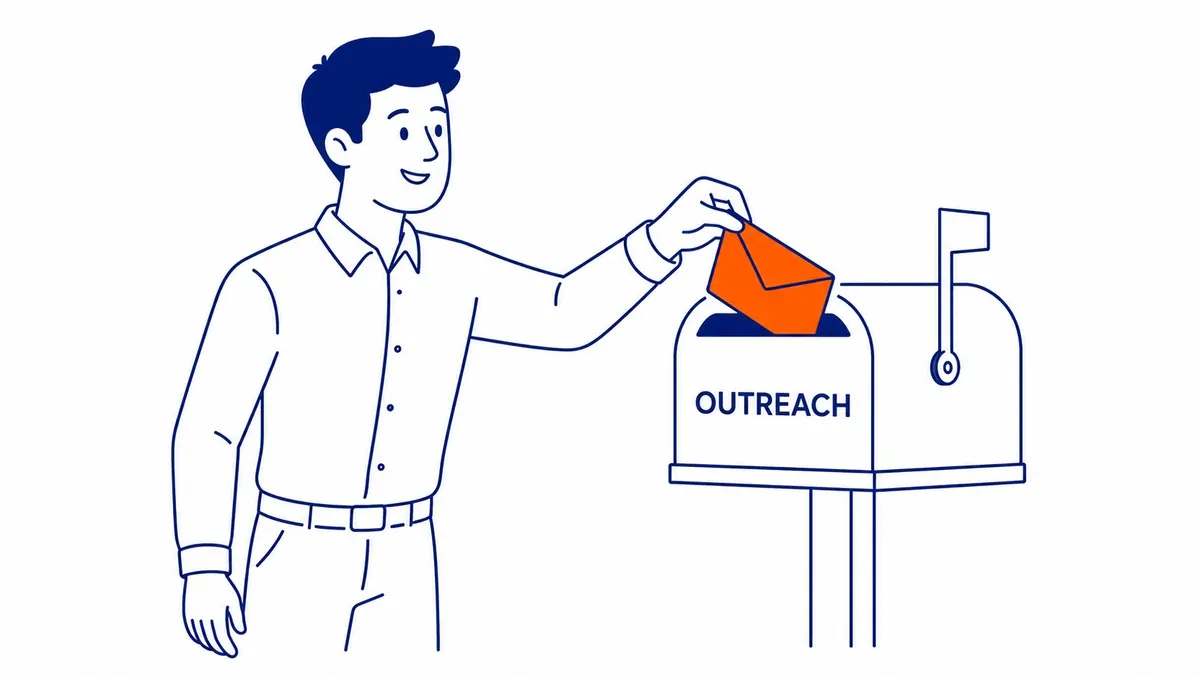
Linked and unlinked mentions
The useful distinction is between mentions that link to you and mentions that do not. A linked mention does two jobs at once: a reader can click through, and the link becomes part of how Google discovers and evaluates your site. An unlinked mention does only the first half of that job, because a reader has to search separately to reach your website, and whether Google gives it any ranking weight is not documented. There is also a third kind worth separating out, which is a mention on a profile or review platform that you or your customers created, such as a Google Business Profile review.
| Type | Example | What it does for you |
|---|---|---|
| Linked mention | A local news story names the business and links to its website | Referral visits, recognition, and a link Google can use in ranking |
| Unlinked mention | An industry association newsletter names the business without a link | Recognition with that audience; any ranking effect is undocumented |
| Review or profile mention | A customer review on the Business Profile names the service they bought | Adds to the review count and rating, which Google says can help local ranking; the wording of the review is not documented as a factor |
Most SEO writing treats unlinked mentions as “implied links” that Google quietly counts. That may be partly true, but it is a theory, and the evidence behind it is thinner than most articles suggest. The next section sorts out what is documented.
What Google has said, and what is only theory
Google has published a small number of statements that bear on brand mentions, and they are worth reading in Google’s own words before believing anyone’s summary of them, including this one. The table separates what Google documents from what appears only in a patent and from what is industry theory.
| Claim | Status | Source |
|---|---|---|
| Google looks at whether other prominent sites link to or refer to content when judging quality | Documented | How Search Works, “Ranking results”: “one of the factors used to determine quality is understanding if other prominent websites link or refer to the content.” |
| Being well known helps local ranking | Documented | Business Profile Help: prominence “means how well-known a business is” and is “based on info like how many websites link to your business and how many reviews you have.” |
| Google’s quality raters look at what others say about a business | Documented, but not a ranking input | Search Quality Rater Guidelines, section 3.3.1; Google states that ratings do not directly change how a page ranks |
| Unlinked mentions are counted as “implied links” | In a Google patent, not confirmed as used | US patent 8682892, granted 2014 |
| Mentions in forums, on social media or in AI answers raise rankings | Theory | No Google documentation |
| Positive or negative sentiment around a mention changes rankings | Theory | No Google documentation |
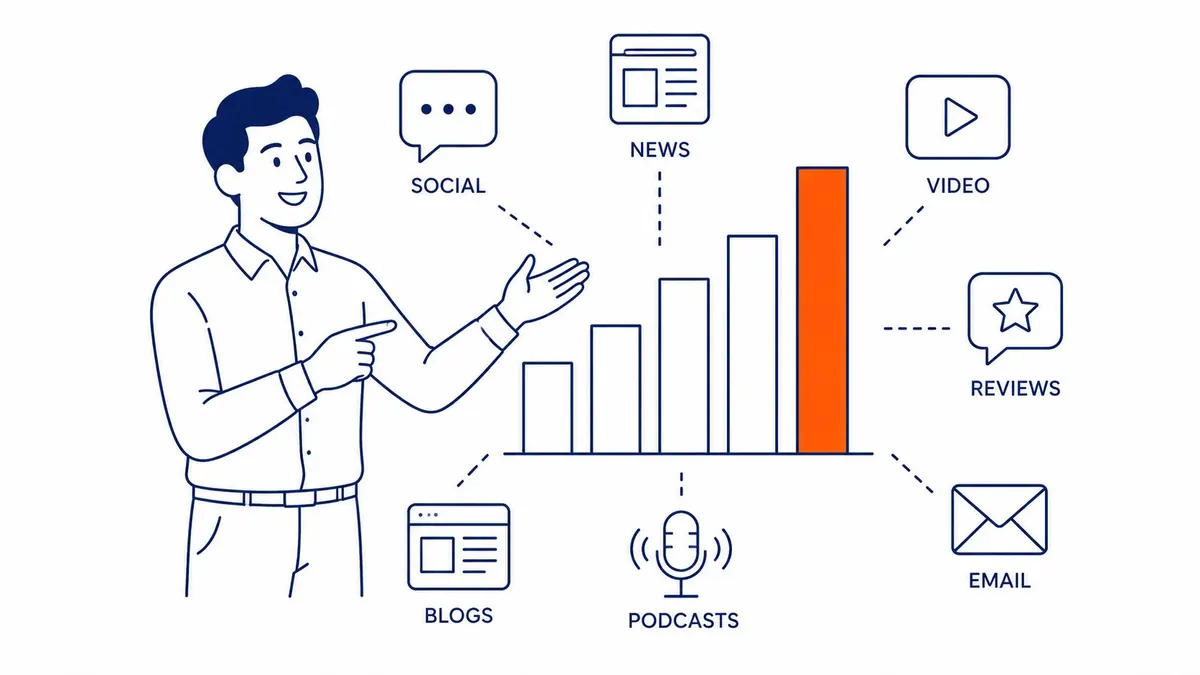
The rater guidelines are the clearest statement of how Google thinks about reputation. Raters are told to look for “independent reviews, references, recommendations by experts, news articles, and other sources of credible information about the website,” that “news articles, Wikipedia articles, blog posts, magazine articles, forum discussions, and ratings from independent organizations can all be great sources of reputation information,” and that when a site and reputable independent sources disagree, they should “trust the independent sources.” Raters do not set rankings, though. Google’s overview of the guidelines says no single rating or rater “directly impacts how a given page or site ranks in Search,” and that the ratings are used to check whether ranking changes are working. Reputation in the eyes of independent sources is clearly what Google wants its systems to reward, but the guidelines do not tell you how any particular mention is scored.
The “implied link” idea has a specific origin. Google patent US8682892B1, “Ranking search results”, filed in 2012 and granted on 25 March 2014, describes an implied link as “a reference to a target resource, e.g., a citation to the target resource, which is included in a source resource but is not an express link.” Google Patents now lists that patent as expired. A patent shows what Google’s engineers once designed, not what runs today, so it supports the theory without proving it. The live version of this page credited the idea to Google’s “Reasonable Surfer” material, which is a common mix-up: Reasonable Surfer is a separate patent about weighting links by how likely a reader is to click them, not about mentions without links.
Where a Calgary business gets mentioned
National articles on brand mentions tend to talk about press coverage and influencer campaigns. For most local businesses the realistic sources are closer to home, and many of them come with a link if you ask. Trade and industry associations list their members. Suppliers and manufacturers often keep a dealer or installer page. Community events, sports teams and charities thank their sponsors online. Local news covers businesses that open, expand, win an award or do something newsworthy. Chambers of commerce and business improvement areas publish member directories.
Directories deserve a separate note. A listing that shows the business name, address and phone number is called a citation, and local citations matter mainly because they need to match the details on your website and Business Profile. A directory listing is a brand mention in the plain sense, but it is not the kind of independent reference that the rater guidelines describe, since the business usually wrote it.
As an illustrative example, picture a hypothetical Calgary roofing company. Its realistic mentions might be the shingle manufacturer’s certified-installer page, a home builders’ association member list, a community league that thanks it for sponsoring a summer event, a neighbourhood Facebook group where a homeowner recommends it after a hailstorm, and its Business Profile reviews. Only some of these will link, and the Facebook post probably will not be indexed at all, but every one of them is a place where a future customer could meet the name.
Negative mentions and reviews
A mention is not always good news. Complaints on review sites, forum threads and news stories are mentions too, and they shape what people decide when they search your name. Google has not documented that negative sentiment lowers rankings, and claims that it does are theory. What Google does document is that its raters are told to look for independent evidence about a business’s reputation, which shows what Google wants its results to reflect, though it does not say how its systems measure it. Managing your online reputation is therefore worth doing for customers first and search second.

Reviews are the mention type a local business has most influence over. Google’s Business Profile help ties prominence partly to “how many reviews you have” and says “more reviews and positive ratings can help your business’s local ranking.” Ask every customer, reply to reviews, good and bad, and fix the problems the bad ones point to. Google’s Maps content policy allows businesses to ask for genuine reviews, but it does not allow incentives “such as payment, discounts, free goods and/or services” in exchange for a review, and it does not allow selectively asking only happy customers.
How to find your brand mentions
Finding mentions is a short routine, and the free tools cover most small businesses. Google Alerts sends an email when new results match a topic you choose, and Google’s own help page gives “mentions of your name” as an example use. Set alerts for the business name, its common misspellings and the owner’s name if the owner is publicly associated with the business. Alerts catch only part of what is published, so add a manual check every month or two by searching for the business name in quotation marks with your own domain excluded, for example “Example Roofing” -site:exampleroofing.ca.
For linked mentions, Search Console’s Links report shows the top linking sites and the pages they link to. It only lists links, so it will never show an unlinked mention, and it is a sample rather than a complete list. Paid SEO tools such as Semrush and Ahrefs offer broader mention and backlink monitoring, which becomes useful once a business is mentioned often enough that manual checks miss things.
When you find an unlinked mention on a relevant, reputable site, it is reasonable to send a short, polite note thanking the author and asking whether a link to the page they mention would help their readers. Only ask where a link would genuinely help a reader, and accept a no gracefully. Never offer money, products or a link swap in return, for the reasons below.
How to earn more mentions without breaking Google’s rules
The reliable way to earn mentions is to give people a reason to talk about the business: good work that customers describe in reviews, sponsorships and memberships that are real, useful local information that other sites want to cite, and news that a reporter would actually cover. Google’s spam policies draw a clear line around shortcuts. Its examples of link spam include “exchanging money for links, or posts that contain links,” “exchanging goods or services for links,” sending someone a product in exchange for writing about it with a link, and “links with optimized anchor text in articles, guest posts, or press releases distributed on other sites.” A paid placement is allowed when the link carries a nofollow or sponsored attribute, but it is advertising, not an earned mention.
AI answers have added a new reason to care about mentions, since tools like AI Overviews and chatbots name businesses in their responses. Google’s guidance on AI features says “there are no additional requirements to appear in AI Overviews or AI Mode, nor other special optimizations necessary,” and that the same SEO fundamentals apply. Claims that a particular number or kind of mention will get a business named in AI answers are theory, so treat AI visibility as a side effect of a good reputation rather than a separate project.
Mentions build slowly, because they depend on other people choosing to write about you. They also work best alongside the rest of the marketing: a business that is building brand awareness gets more people searching its name, and a business that needs leads this month can run Google Ads while the organic side grows. Buying ads does not improve organic rankings, so the two are separate budgets with separate goals.
SEO Company To-The-TOP! has worked on SEO and Google Ads for Calgary businesses since 2007, as a solo practice where the person who plans the work also does it, using White Hat methods only. If you want a second opinion on where your business is mentioned and which of those mentions are worth turning into links, call (403) 308-5949.
Contact Calgary SEO Company To-The-TOP!
Questions about anything in this article, or about your own rankings? Talk to a Calgary SEO specialist directly.
Phone: (403) 308-5949
Address: 1509 14 Ave SW, Calgary, AB T3C 0W4
Hours:
Monday to Friday: 10:00 am – 7:00 pm
Saturday: 12:00 pm – 4:00 pm
Sunday: closed