What Is Amazon PPC? | Calgary | SEO Company To-The-TOP!
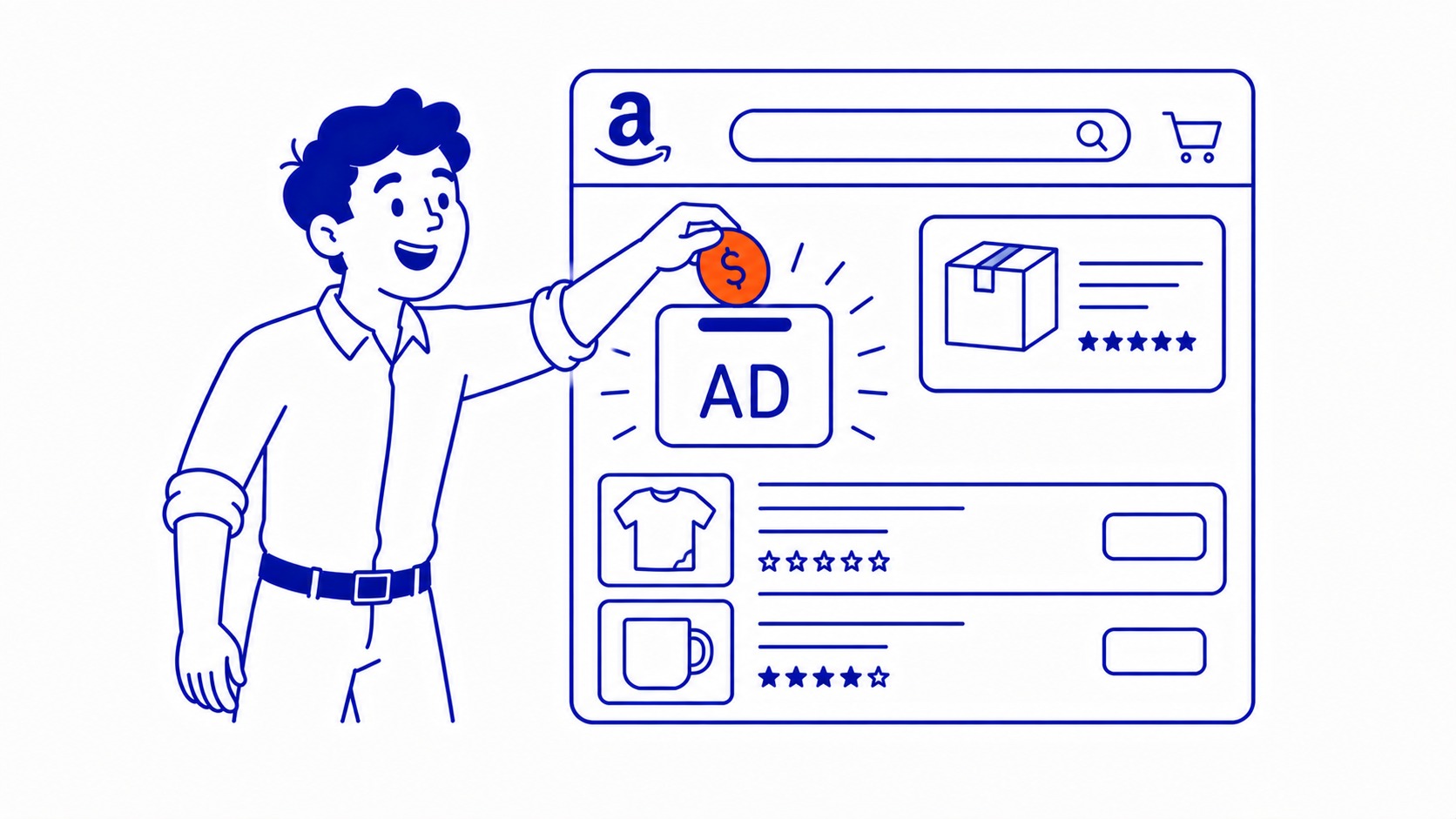
Sell anything on Amazon and you run into it fast. The organic results push your product down, and paid placements sit right at the top of the page. What is Amazon PPC, then? It is Amazon’s pay-per-click advertising system, the auction that decides which sponsored products show up when a shopper types a query into the search bar.
PPC stands for pay-per-click. You only pay when someone taps your ad, not when it shows. Sellers bid on keywords, Amazon runs the auction in milliseconds, and the winning ads appear in results and on product pages across the marketplace. Simple in theory. Expensive when the targeting gets set without a plan.
SEO Company To-The-TOP! runs Google Ads, not Amazon Seller campaigns. But the auction logic behind both platforms is close enough that the mechanics are worth explaining straight.
What Amazon PPC Actually Is
Amazon PPC advertising is an auction system. Sellers compete for ad slots tied to specific queries and products. Win the auction, your sponsored listing appears. A shopper clicks, you pay the cost per click. No interest, no charge.
The point is visibility you cannot buy organically overnight. New products carry no sales history, no reviews, no ranking. Amazon ads put them in front of buyers anyway. That early traffic, if it converts, feeds back into organic rank. Ads and organic sales push each other up. Each marketplace ranks listings its own way, which is why what Etsy SEO is looks nothing like Amazon’s.
Three things drive every Amazon PPC campaign: the terms you target, the price you set, and how well your product page converts the visit into a sale. Get one wrong and ad spend leaks. The platform changes, though what PPC means stays the same everywhere.
How Amazon PPC Works
The auction is the engine. When a shopper searches, Amazon pulls every eligible ad tied to that query and ranks them. Your bid matters. So does relevance, and your conversion history on that query. The top offer does not always win the best slot. A lower one with a stronger product page can beat it.
Cost per click is what you pay when the ad earns a visit. You set a maximum bid, the most you are willing to spend per visit, and the actual CPC usually lands below it. Amazon charges just enough to edge out the next seller in line, so your real CPC reflects competition rather than your ceiling.
Two approaches exist. Manual PPC campaigns let you pick the exact terms and price each one yourself. Automatic campaigns hand selection to Amazon’s algorithm, which matches your ad to queries it judges relevant. Most advertisers start automatic to gather data, then move the winners into manual campaigns for tighter control. Enhanced cost per click and automated pricing rules sit on top of both, letting Amazon nudge prices up or down based on conversion likelihood.
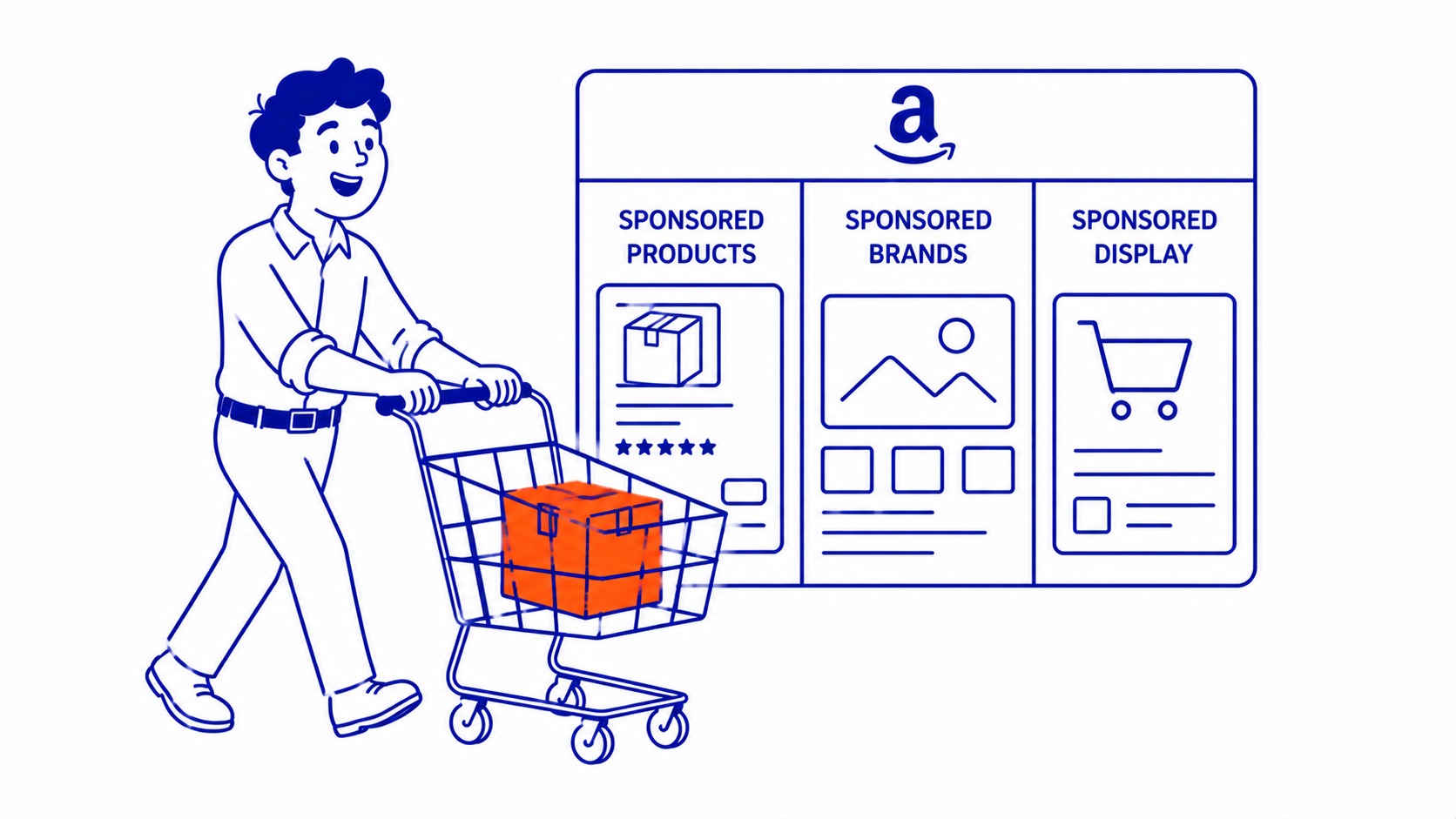
The Three Amazon PPC Ad Types
Sponsored Products are the workhorse. These ads appear inside search results and on product pages, and they look almost identical to organic listings. Most ad spend on the platform runs through them.
Sponsored Brands sit at the top of search, usually a banner with your logo and a few products. These ads build brand recognition rather than pushing a single item. You need a registered brand to run them.
Sponsored Display ads reach beyond Amazon search. They retarget shoppers who viewed your product, or appear on competitor product pages and across partner sites. Useful for staying in front of buyers who did not convert the first time. Three ad types, one shared budget: every campaign has to decide where the spend does the most work.
What Amazon PPC Costs
There is no flat fee. You set the budget. Cost per click on Amazon ranges widely, often somewhere between fifty cents and a few dollars, depending on the category and how many sellers bid on the same keywords. Crowded categories cost more. A niche product with little competition costs less.
ACoS is the number sellers watch. Advertising cost of sales, the percentage of ad-driven revenue you spend on ads. Spend ten dollars on ads to generate fifty in sales and your ACoS is twenty percent. Lower is usually better, though a higher ACoS can make sense while you are launching a product and buying early momentum.
Return on ad spend tells the same story from the other direction. Revenue divided by ad spend. Those two numbers, ACoS and return on ad spend, are how you judge whether a campaign earns its keep.
Keywords, Targeting, and Negative Keywords
Keywords are the backbone of Amazon PPC. You bid on the phrases buyers actually type, and your ads appear against those queries. Broad, phrase, and exact match control how loosely Amazon ties an ad to a shopper’s query.
Search term reports show the real queries that triggered your ads. This is where the money gets found or lost. Comb through the report and you spot phrases draining spend without converting. Those become negative keywords, terms you tell Amazon to stop matching. Cutting the dead weight keeps a profitable campaign profitable. Skip the step and you pay for visits that never had a chance of selling.

Amazon PPC vs Google Ads
Same model, different marketplace. Both charge per click, both run on auctions, both reward relevance over raw bid size. The difference is intent. A shopper on Amazon is ready to buy. Over on Google, that same person might be researching, comparing, or just curious. The intent changes how you write ads and which terms pay off. If you want the fundamentals first, our broader PPC overview covers the model before the platform.
If your business sells through your own website rather than Amazon, Google Ads is usually the platform that matters. The principles carry over. Bid management, negative keywords, conversion tracking, and a landing page that turns clicks into customers. All of it runs on exactly the discipline behind our Google Ads management and the local SEO Calgary businesses hire us for. The same care that builds a clean Amazon campaign builds a clean Google one, which is why understanding how Google Ads works matters as much as the bid itself. A little competitor ad research tells you which of those pieces rivals have already figured out.
Frequently Asked Questions
How does PPC work on Amazon?
Sellers compete for the phrases shoppers type. When someone searches a term you target, Amazon runs an auction and shows the winning sponsored products. You pay only when a shopper clicks. Bid, relevance, and your product page’s conversion rate decide where the ad lands.
How much does Amazon PPC cost?
You control the budget, so there is no set price. Cost per click commonly runs from around fifty cents to several dollars based on category competition. Most sellers measure spend through ACoS rather than a fixed monthly figure.
Which is better, PPC or SEO?
Neither replaces the other. PPC buys visibility today, organic ranking builds it over months and holds it cheaply once earned. Strong sellers run both, using ad data to sharpen their keyword analysis for SEO and their organic listing optimization.
What does an Amazon PPC specialist do?
They structure Amazon PPC campaigns, research the right terms, set and adjust bids, mine the query reports for negative keywords, and watch ACoS daily. The job is steady management, not a one-time setup. Markets shift and prices drift, so campaigns need ongoing attention.
PPC, on Amazon or anywhere, rewards the seller who reads the data and adjusts. The auction never really sits still.
Contact Calgary SEO Company To-The-TOP!
Questions about anything in this article, or about your own rankings? Talk to a Calgary SEO specialist directly.
Phone: (403) 308-5949
Address: 1509 14 Ave SW, Calgary, AB T3C 0W4
Hours:
Monday to Friday: 10:00 am – 7:00 pm
Saturday: 12:00 pm – 4:00 pm
Sunday: closed
