
What Is Content SEO?
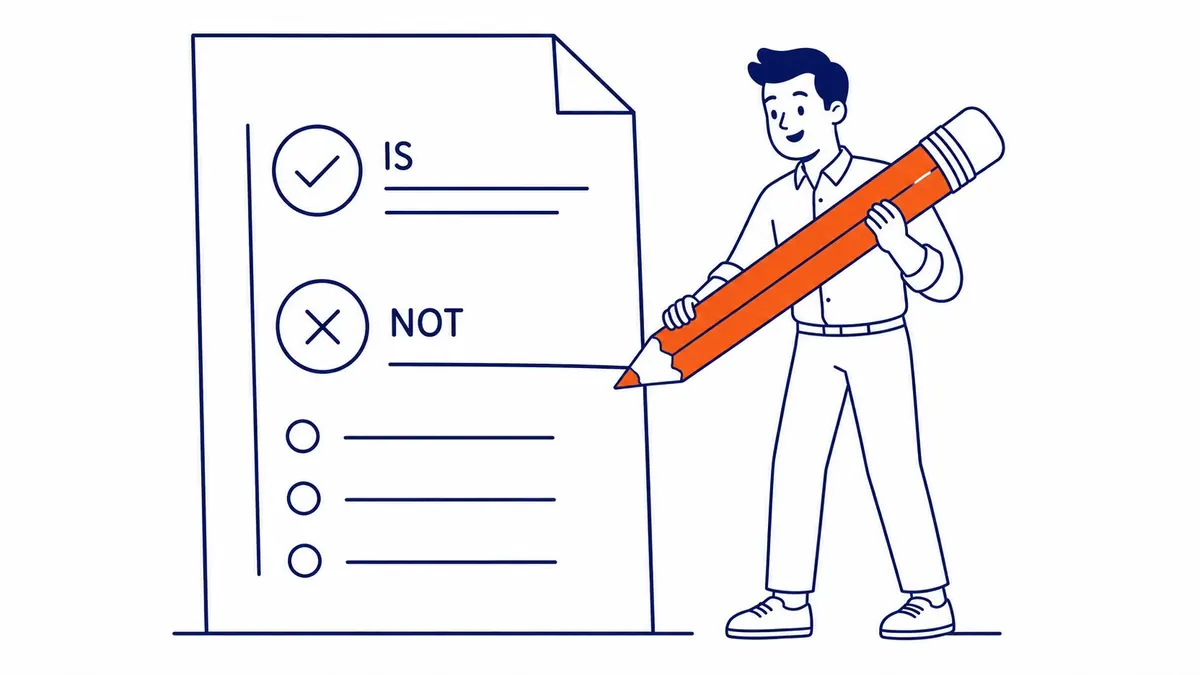
Content SEO is the part of search engine optimization that deals with what is on your pages, mainly the words but also titles, headings and images: choosing topics people actually search for, writing pages that answer those searches better than the alternatives, and organizing those pages so search engines and readers can find and understand them. SEO content is what that work produces, meaning the service pages, guides, product descriptions and answers that are written with a real search in mind. So content SEO is the discipline and SEO content is the result, and most people use the two terms loosely for the same idea.
It helps to be clear about what content SEO is not. It is not repeating a keyword until a page reads oddly, and it is not a separate type of writing that lives on a blog. A well-written service page is SEO content, and so is a homepage, a location page or a frequently asked questions page, because search engines read all of them. The label only means the page was planned around a query from the start rather than optimized as an afterthought. Below is what the work involves, in roughly the order a practitioner does it, and what Google’s own documentation says along the way.
Why content is the part of SEO that keeps working

Google’s SEO Starter Guide puts it plainly: creating content people find compelling and useful will likely influence your site’s presence in search results more than any other suggestion in the guide. Technical fixes and links matter, but they mostly help good pages get found and trusted. Without pages that answer something, there is little for either to support.
Content also behaves differently from paid traffic. A Google Ads campaign brings visitors for as long as the budget runs, and the clicks stop when it does. A page that earns a ranking can keep drawing visitors for a long time after it is written, although it needs upkeep and usually takes a while to settle. That is why many businesses run ads for the leads they need now while they build content that will carry more of the load later. The two are not rivals, and the right mix depends on how soon the business needs results and how much time it can put into writing.
The other reason content compounds is that pages support each other. A site with a handful of thorough, connected pages on one subject gives search engines and readers a clearer picture of what it knows than a site with one page on the subject and dozens on unrelated topics.
Content, technical and off-page SEO

SEO is usually split into three areas, and mixing them up leads to money spent in the wrong place. Content SEO is one of them, and the table shows where it sits next to the other two.
| Area | What it covers | Who usually does it |
|---|---|---|
| Content SEO | Topics, keywords, search intent, the writing itself, headings, titles, internal links between related pages | Writers, owners, SEO practitioners |
| Technical SEO | Whether Google can crawl, render and index the site; speed; mobile layout; redirects; structured data | Developers, technical SEO specialists |
| Off-page SEO | Links from other sites, mentions, reviews and reputation | Earned over time, partly as a result of good content |
The three areas overlap, because content gives the technical work something worth indexing, and it is what other sites link to, because few people link to a thin page. On-page SEO, which covers the elements of a single page such as the title and headings, sits mostly inside content SEO; the article on on-page and off-page SEO covers that boundary in more detail. One caution applies to the order of work. If the site cannot be crawled or indexed, new content will not fix that, so a broken technical foundation comes first. On many small business sites, though, the technical side is workable and the pages simply say too little about what customers search for.
Search intent decides the format

Search intent is the reason behind a search, and it is where most content goes wrong. Two people can type similar words and want very different things. Someone searching “furnace repair Calgary” probably wants a technician tonight, while someone searching “how does a furnace work” wants an explanation and is not ready to buy anything. A page written for one of those searchers will struggle to rank for the other.
The usual way to describe intent is in four groups. Informational searches want to learn something, navigational searches want a particular site, commercial searches compare options before buying, and transactional searches are ready to act. The groups are a convenient shorthand rather than something Google publishes, but they help you decide what kind of page a query needs.
The reliable test is to search the query yourself and look at what already ranks, because the results are the best available evidence of what Google’s systems treat as a good answer for that query, even though they vary by location, device and time. This page’s own query is a good example. On November 8, 2026, the Calgary results for “what is content seo” opened with a Reddit discussion, followed by long guides from SEO software companies such as Yoast and Semrush, a glossary entry and a course provider’s article. There was no service page and no Calgary business in the top results, which tells you the searcher wants a clear explanation rather than a sales pitch. If the first page for your query is all product listings, a long article is unlikely to break in, however good it is. Intent can also change over time, so it is worth rechecking the results for your most important queries once in a while.
Keyword research in the customer’s words
Keyword research is the process of finding the words your customers type, which are often not the words your business uses internally. A roofer may call the work “membrane systems” while homeowners search “flat roof leak repair”, and a page written in the trade’s language can miss the people it was meant for. Google makes the same point in its SEO Starter Guide with a simple example: some people search for “charcuterie” while others search for “cheese board”, and anticipating those differences can help your pages perform.
Google also says not to worry about catching every variation, because its language matching systems can relate a page to many queries even when the exact words are absent. In practice that means you write for the customer’s main phrasing and cover the topic naturally, rather than forcing each variant into a sentence.
For each candidate keyword, weigh three things together: how many people search it, how hard it would be to rank given who already ranks, and whether the intent fits a page you can write well. Longer, specific phrases usually suit a small business better than short, broad ones, because the competition is lighter and the intent is clearer. Free sources are a good start, including Google’s autocomplete suggestions, the “People also ask” questions, the related searches at the bottom of the results, and the questions customers ask on the phone. Paid tools add volume estimates and show what competitors rank for, which is useful once you are planning more than a few pages.
Choosing topics worth writing

Topic choice is where business interests and search demand often pull apart. A page about the company’s history may matter to the owner, but few people search for it, while the questions buyers type into Google may have no page on the site at all. Content SEO topics come from the keyword research, not from a meeting about what the business would like to say.
Before committing to a topic, ask whether you can add something the current top results lack. Google’s helpful content guidance asks a series of questions in this spirit, including whether the content provides original information, reporting, research or analysis, and whether it provides substantial value compared with other pages in the search results. For a local business, that added value often comes from local detail, first-hand knowledge of the work, a clearer explanation, or a worked example. If you cannot add anything, a narrower angle or a different topic is usually the better choice.
Grouping related pages into a cluster also helps. One broad page on a subject, supported by narrower pages that each answer a specific question and link to one another, makes the site’s coverage of that subject easy for readers and search engines to follow. Before writing a new page, check that another page on the site does not already target the same query. Two pages chasing the same search tend to compete with each other, a problem usually called cannibalization, and improving or combining the existing page is often the better move.
What goes on a well-built content page

A page that ranks is mostly a page that answers the query clearly, but a few elements help search engines and readers understand it.
Google builds the title link in search results from a few sources, including the page’s title element and its headings. Google’s starter guide says a good title is unique to the page, clear and concise, and accurately describes the contents. A homepage titled “Home” wastes that space.
The meta description is a short summary of the page. Google says snippets are created primarily from the page content itself, and that it sometimes uses the meta description when that gives searchers a more accurate description of the page. It is still worth writing one for each important page, because it can influence whether people click.
Headings break the page into sections that a reader on a phone can scan. Google notes that heading order does not matter for Search, although a logical order helps screen readers, so write headings for people. The body should cover the topic completely enough that the reader does not need to search again. Google is explicit that there is no ideal word count, so length should follow the question. Images need alt text that describes what they show, which helps image search and people using screen readers. Finally, each page should make the next step obvious, whether that is a related guide or a way to get in touch.
Internal links and site structure

Internal links do two jobs. They help visitors move to related pages, and they help search engines discover pages and understand how they relate. Google’s starter guide describes anchor text, the visible words of a link, as telling users and Google something about the page you are linking to. “See the keyword research guide” says far more than “click here”.
A simple structure works for most small business sites. The homepage links to the main service pages, those link to the more specific pages beneath them, and related pages link across to each other. Your most important pages should receive links from the pages that support them, not sit three clicks deep with one link pointing in. Pages with no internal links at all, often called orphan pages, are hard for visitors and search engines to reach, so either link to them or ask whether they still need to exist.
When the same information lives at several URLs, Google suggests redirecting to the one URL that best represents it, or using a canonical link element where a redirect is not possible. It also says not to worry too much about this, because search engines can usually work it out on their own.
The content types that suit a local business

Different intents need different formats, and a local service business usually needs several of them. The examples below are illustrative.
| Content type | Intent it serves | Illustrative Calgary query |
|---|---|---|
| Service page | Commercial and transactional | “drain cleaning Calgary” |
| Location page | Transactional, local | “plumber Airdrie” |
| Guide or blog post | Informational | “why is my furnace short cycling” |
| FAQ page or section | Informational, often specific | “do I need a permit to finish a basement in Calgary” |
| Comparison page | Commercial | “tankless vs tank water heater” |
| Product page | Transactional | “20×25 furnace filter” |
Service pages tend to be the most valuable pages on a local site because they meet searchers closest to a decision, and they are often the thinnest. Fixing them usually comes before adding blog posts. Location pages need real local detail. Google’s spam policies treat blocks of text listing the cities a page wants to rank for as keyword stuffing, and near-identical pages aimed at different cities as doorway abuse, so swapping the city name across copies of one page is a poor plan. Guides and FAQs bring in people earlier in their research and can send them on to the service pages through internal links. Comparison pages earn trust only when they are fair about the trade-offs.
When not to publish

Sometimes the right content decision is to write nothing new. Google’s helpful content page lists warning signs of “search engine-first” content, and they make a useful test before you publish anything. Ask yourself these questions about the page you have in mind:
- Is the page mainly meant to attract search visits?
- Are you producing lots of content on many topics in the hope that some of it performs?
- Are you mostly summarizing what others have said?
- Are you writing to a particular word count?
- Are you entering a topic without real expertise because it looked like easy traffic?
A yes to any of these is a reason to rethink the page.
Several common situations call for restraint. If an existing page already targets the query, improve it instead of starting a new URL, which would compete with the old one and start without its history. If a topic is dominated by government sites, encyclopedias or national brands, a narrower angle is usually more winnable. If a content calendar demands a post every week whether or not there is something worth saying, the calendar is the problem, because a site full of thin posts is weaker for it. And if a page already ranks and brings in enquiries, leave it alone unless something in it is out of date.
Measuring and refreshing what you have

Google Search Console is free and shows which queries bring impressions and clicks to each page, and an analytics tool shows what visitors do once they arrive. Together they answer the useful questions: which pages are found, for what searches, and whether those visits turn into calls or sales. A single keyword’s position moves around by day, device and location, so trends across a page’s queries tell you more than one number on one day.
Published pages also age, as facts go out of date, competitors publish better answers, and the intent behind a query can shift. Google’s starter guide recommends checking previously published content, updating it as needed, or deleting it if it is no longer relevant. A content audit does this systematically, deciding for each page whether to keep it, improve it, combine it with another page or remove it. On an established site, that list often holds more opportunity than a list of new topics. One caution comes straight from Google: changing a page’s date to make it look fresh, when the content has not substantially changed, is listed among the warning signs, so update the substance rather than the timestamp.
Links, promotion and authority

Links from other sites remain part of how search engines judge a page, although Google’s starter guide notes that PageRank, its link-based algorithm, is one of many ranking signals. A few links from respected, relevant sites usually count for more than many from directories nobody reads.
Buying links is a different matter. Google’s spam policies describe link spam as creating links primarily to manipulate rankings, and buying or selling links for ranking purposes is the first example listed. Offers of hundreds of links for a flat fee fall into that category. The durable way to earn links is to publish something worth citing, such as original data, a useful tool or the clearest explanation of a topic, and then make sure the people who would care about it see it. Google’s starter guide lists social media, community engagement, advertising and word of mouth as ways to promote new content, along with newsletters to people who have agreed to receive them, while warning that overdoing promotion can tire people and may look like manipulation.
Content SEO myths Google has answered

A lot of content advice was true once, or never was. Google has addressed several of the most common beliefs directly, which saves arguing about them.
| Belief | What Google’s documentation says | Source |
|---|---|---|
| Longer pages rank better | Content length alone does not matter for ranking, and there is no magic word count, minimum or maximum | SEO Starter Guide (updated 2025-12-10); helpful content page (updated 2026-10-05) |
| Fill in the keywords meta tag | Google Search does not use the keywords meta tag | SEO Starter Guide |
| Repeat the keyword often | Excessively repeating the same words is keyword stuffing and is against the spam policies | SEO Starter Guide; spam policies (updated 2026-08-28) |
| E-E-A-T is a ranking factor to optimize | E-E-A-T is not a ranking factor in itself; Google uses a mix of factors that can identify content with good E-E-A-T | SEO Starter Guide; helpful content page |
| Duplicate content brings a penalty | The same content at several URLs on your own site is inefficient but will not cause a manual action; copying other sites’ content is different | SEO Starter Guide |
| Headings must follow a strict order | Heading order does not matter for Google Search, though semantic order helps screen readers | SEO Starter Guide |
| A new date makes a page fresh | Changing dates without substantially changing the content is a warning sign, and adding or removing content to seem fresh will not help rankings | Helpful content page |
AI-written content raises the same question in a new form. Google’s guidance on generative AI says the tools can help with research and structure, but generating many pages without adding value may violate its policy on scaled content abuse. That policy concerns large amounts of unoriginal content made mainly to manipulate rankings, however it was produced. Google also asks that AI-assisted content, including titles, meta descriptions and image alt text, be fact-checked before publishing, because generative models can produce inaccurate statements.
Content SEO and AI search

AI Overviews and AI Mode have changed how some results look, and many owners ask whether content SEO needs a new playbook. Google’s documentation on AI features says there are no additional requirements to appear in AI Overviews or AI Mode, and no special optimizations needed, and that the existing SEO fundamentals still apply: pages Google can crawl and index, content that follows its policies, and the same people-first writing described above. Some searches now end without a click, which matters for traffic, but the page that gets shown or cited still has to be a clear, accurate answer.
That leaves the practical question of who does the work. The principles in this guide are learnable, and an owner with time can do much of it, especially on a small site. What a specialist adds is judgment: which pages to fix first, which topics are winnable, and what to ignore. SEO Company To-The-TOP! is a Calgary practice founded in 2007, where one expert does all the client work, uses White Hat methods only and reports positions monthly. Its public portfolio of ranked keywords shows the kind of results the work aims for. To-The-TOP! is a solo practice, so the person who prices the work is the person who does it. To ask what your content project would cost, call (403) 308-5949, or start with the To-The-TOP! home page.
Contact Calgary SEO Company To-The-TOP!
Questions about anything in this article, or about your own rankings? Talk to a Calgary SEO specialist directly.
Phone: (403) 308-5949
Address: 1509 14 Ave SW, Calgary, AB T3C 0W4
Hours:
Monday to Friday: 10:00 am – 7:00 pm
Saturday: 12:00 pm – 4:00 pm
Sunday: closed