
What Is DR in SEO?
In SEO, DR stands for Domain Rating, a score from 0 to 100 that the SEO software company Ahrefs gives every website in its link index. It measures how strong a site’s backlink profile is compared with all the other sites Ahrefs has crawled, so a higher number means more and stronger links pointing at the domain. DR is not a Google metric: Google does not publish it, and it plays no part in Google’s documented ranking systems. It is a third-party estimate that people use mainly to compare sites and to judge where a link might be worth having.

How Ahrefs calculates Domain Rating
Ahrefs describes the method as similar in spirit to Google’s original PageRank, except that it works between whole websites rather than between pages. It finds every domain with at least one followed link to the site, then passes a share of each linking domain’s own rating across. That share is roughly the linking domain’s DR divided by the number of unique domains it links to, which is why a modest site that links to a handful of others can move a DR more than a famous site that links to a hundred thousand. The raw result is then scaled into the 0 to 100 range.
A few details from Ahrefs’ own documentation explain most of the confusion people run into. Nofollow links do not count, only the first link from any one domain counts, and a link from a homepage counts the same as a link from a deep page. The scale is logarithmic, so moving from DR 70 to 71 takes far more than moving from 20 to 21. Because the scale is relative, a site’s DR can also fall without losing a single link, simply because other sites gained links faster. Finally, Ahrefs says DR is purely link-based: it ignores traffic, domain age and brand, and it does not filter out spam, so large numbers of low-quality links can push it up.

DR, UR, DA and Authority Score
Every major SEO tool has its own version of this idea, and they are often mixed up in conversation. Ahrefs pairs DR with URL Rating (UR), which applies the same link logic to a single page, and Ahrefs notes that UR tracks Google rankings more closely than DR does. Moz’s Domain Authority predicts how likely a domain is to rank using a machine-learning model built mostly on link data. Semrush’s Authority Score blends link power with estimated organic traffic and a set of spam checks.
| Metric | Tool | Scale | Based on | What it describes |
|---|---|---|---|---|
| Domain Rating (DR) | Ahrefs | 0 to 100, logarithmic | Followed links from unique domains | Strength of a whole site’s backlink profile |
| URL Rating (UR) | Ahrefs | 0 to 100 | Links to one page | Strength of a single page’s backlinks |
| Domain Authority (DA) | Moz | 1 to 100 | Machine-learning model, mainly link data | Predicted ability of a domain to rank |
| Authority Score | Semrush | 1 to 100 | Link power, organic traffic, spam indicators | Overall quality of a domain or page |
The numbers are not interchangeable. A site can show DR 45 in Ahrefs and a quite different DA in Moz, because each tool crawls a different slice of the web and weighs it differently, and none of them sees Google’s own link data.

Does Google use Domain Rating?
No. Domain Rating is Ahrefs’ own calculation, built from Ahrefs’ crawl of the web, and it does not appear anywhere in Google’s documentation of how it ranks results; Moz says the same of its Domain Authority. What Google does document is that it has link analysis systems that look at how pages link to each other, and that PageRank, one of its original ranking systems, still forms part of its core systems in a much evolved form. Google also says its systems are designed to rank individual pages, with site-wide signals contributing to its understanding of those pages, and it does not publish a link score for any site.
That is why DR correlates with search traffic without causing it. Sites that have earned many good links tend to rank well and also tend to have a high DR, because both follow from the same links. Ahrefs makes a similar point in its own guide, advising site owners not to chase DR itself but to earn good links to the content they want to rank, with DR rising as a by-product. If the mechanics are new to you, it helps to understand how backlinks help a page rank before worrying about any tool’s domain score.
What is a good DR?
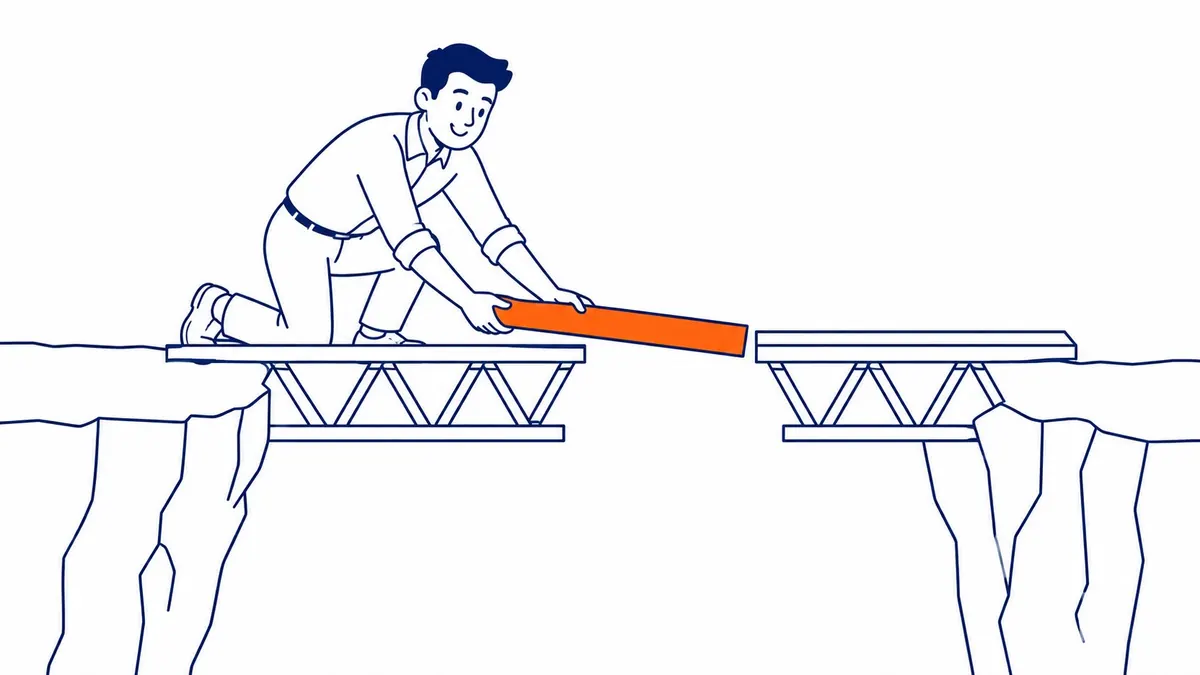
Many explainers answer with fixed bands, such as 50 to 60 being average and anything under 30 being poor. Ahrefs itself disagrees. Its Help page says it is not possible to call a DR of 30, 50, 60 or 70 good in absolute terms, and that a site’s DR is good when it is higher than or comparable to similar sites. A local accountant and a national news site are not playing the same game, so comparing either one with the other tells you very little.
The practical way to use that advice is to compare against the sites you actually compete with. Search your main service and city, note the pages that rank on page one, and look up both their DR and the UR of the ranking page. As an illustrative case, if a Calgary roofing contractor finds the local page-one results mostly sitting between DR 10 and DR 25, a DR of 18 is probably not the main obstacle, and the content, the Google Business Profile and the links to the service page usually deserve the attention first. If the page is full of national directories and big media sites, the gap is real, and a narrower or more local keyword is usually the better target.

Where DR helps and where it misleads
DR earns its place as a quick sorting number. Ahrefs recommends it for choosing which sites to seek links from and for gauging whether a competitor’s keywords are within reach, and it works well when someone has to screen a long list of prospects for link outreach in an afternoon. It means the same thing on every site Ahrefs measures, which is all a first filter needs to do.
It misleads most when it shows up in a sales message. Guest-post and link offers often lead with a DR because the number is easy to show and easy to raise, and Ahrefs openly says DR does not account for spam. Google’s spam policies class buying or selling links for ranking purposes as link spam, unless the link is marked with rel=”sponsored” or rel=”nofollow”, which tells Google not to count it as a ranking vote. Before trusting any high DR, run through the checks Ahrefs itself lists: whether the site gets real organic traffic, how many other sites it links out to, whether its content is any good, and whether it is relevant to your business.

How to check and raise your DR
Ahrefs offers a free Website Authority Checker that shows the DR of any domain, so there is no need for a paid account just to look up a number. Checking it now and then is reasonable, especially before you compare yourself with a competitor or respond to someone who quotes it at you. Watching it weekly is not, because it can move for reasons that have nothing to do with your site.
DR tends to rise when more distinct sites link to yours with followed links, although, because the scale is relative, no single new link is guaranteed to move it. In practice those links come from things worth linking to: a useful guide, original data, a local resource that other Calgary businesses or associations want to cite, supplier and partner listings, and coverage in local media. Buying links to lift the score works against you on two fronts, since it can breach Google’s link spam policy and it raises a number that Google does not use. Earning relevant links to the pages that matter is a better goal than raising DR for its own sake, and DR tends to rise as a side effect.

What to watch instead
For a business site, the numbers that pay the bills come from Google and from your own records. Search Console shows the queries your pages appear for, their average positions and the clicks they earn, and your phone log and contact form show which of those visits became enquiries. The same rule holds for paid search, where Google Ads management is judged by the leads an account brings in rather than by any authority score.
DR still has a place in a fuller review of a site, as one piece of context among many. In a site audit, it can help explain why a competitor outranks you, alongside the technical health of the site, the quality of the content and the links pointing at the specific pages that rank. Read on its own, though, it describes how the link market sees your domain rather than how well the site serves the people who find it.
Since 2007, SEO Company To-The-TOP! has worked on Calgary SEO and reports client keyword positions monthly. If someone has quoted your DR at you, or a competitor’s, and you would like a second opinion on what it means for your site, call (403) 308-5949.
Contact Calgary SEO Company To-The-TOP!
Questions about anything in this article, or about your own rankings? Talk to a Calgary SEO specialist directly.
Phone: (403) 308-5949
Address: 1509 14 Ave SW, Calgary, AB T3C 0W4
Hours:
Monday to Friday: 10:00 am – 7:00 pm
Saturday: 12:00 pm – 4:00 pm
Sunday: closed