What Is Domain Authority in SEO and Why Google Doesn’t Actually Use It
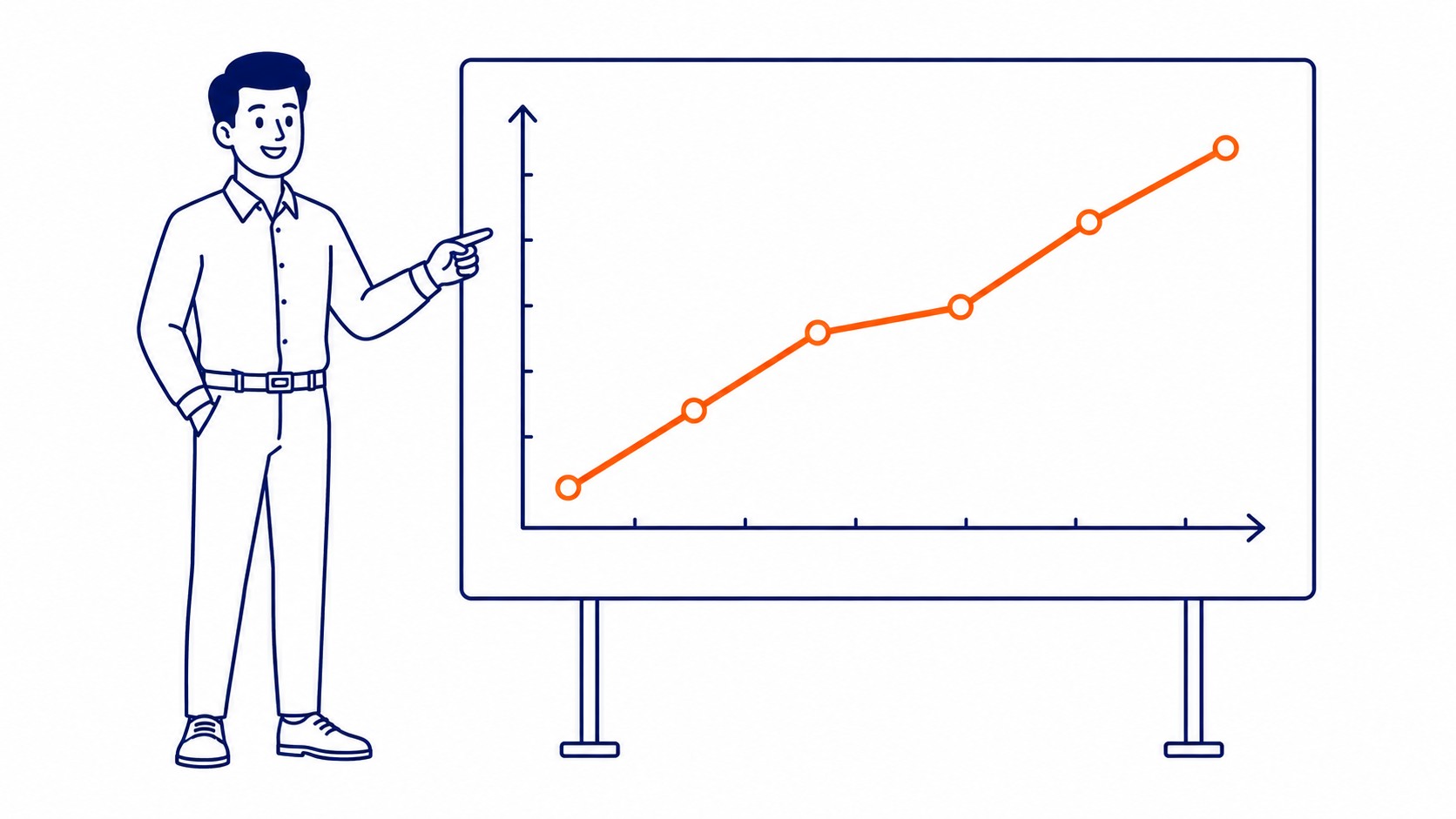
Domain Authority predicts how likely a site is to rank well, on a scale from one to a hundred. Built by Moz, not Google. That distinction confuses more people than any other detail about the metric.
Higher score, generally better ranking potential across the board. Not a guarantee of anything specific. A useful comparison tool for relative authority, nothing more than that.
Where Domain Authority Actually Comes From
Moz built the scoring model using its own backlink index and a machine learning algorithm trained on real search results. Millions of other link profiles already indexed provide the comparison point for that score.
Link quantity matters in the calculation. Link quality matters more. Far less gets contributed by a hundred spammy links than by ten links from genuinely authoritative, relevant sites in the same space.
The scale runs logarithmic, not linear. Meaningfully less work goes into climbing from twenty to thirty than from seventy to eighty. Each additional point higher up the scale gets harder to earn. Site-side structure helps as well, which is why the question of internal links per page comes up so often. Moving that number at all means working through the steps to build backlinks properly.

Why Google Doesn’t Use Domain Authority At All
Google has stated repeatedly that Domain Authority plays no role in its own ranking algorithm. Moz built the metric independently, as a third-party estimate, not as something Google feeds into search results.
Confusion happens constantly because Domain Authority correlates loosely with rankings. Sites with a higher DA often do rank better, but correlation isn’t causation. Both DA and rankings result from the same underlying factor. Strong backlinks and site quality.
Chasing Domain Authority directly, as a goal in itself, misses the point entirely. Focusing on genuine link quality and site authority raises DA as a natural side effect instead. That underlying quality is what our write-up on backlinks gets into.

How to Actually Use Domain Authority Usefully
Competitive benchmarking is where DA earns its keep. Comparing a site’s score against direct competitors gives a rough sense of relative link authority within a specific niche or market.
Tracking DA over time shows whether a link-building campaign is actually working. Real backlink growth is what a steady climb suggests. Something worth investigating is what a flat or declining score signals during an active campaign.
Vetting potential link sources benefits from a quick DA check too. A guest post opportunity on a site with a healthy score generally carries more weight than one on a brand-new, unproven domain. Page authority runs on the same logic, and PA and DA in SEO usually get read together.

Common Mistakes People Make With Domain Authority
Treating DA as a direct ranking factor tops the list of mistakes. It isn’t one, and optimizing purely for the number wastes effort that could go toward content or genuine link building instead.
Comparing DA scores across completely different niches rarely means much. A DA of forty means something different in a low-competition local niche. Very different from that same forty in a hypercompetitive national market.
Buying links purely to inflate the score backfires badly. Manipulative link building risks a Google penalty entirely separate from whatever DA number results. Google’s penalty carries far more weight than Moz’s metric ever will.
Domain Authority vs Other Authority Metrics
Ahrefs runs its own Domain Rating, a similar but differently calculated metric using Ahrefs’ backlink index instead of Moz’s. Rarely do the two scores match exactly for the same domain. Different underlying data feeds each tool.
For a Calgary SEO campaign, tracking one metric consistently over time matters more than which specific tool gets chosen. Just muddying the trend line, without adding real insight, is what switching between DA and Domain Rating repeatedly accomplishes.
Frequently Asked Questions
Is a higher Domain Authority score always better?
Generally yes, though context matters enormously. Genuine, relevant backlinks behind a high DA reflect real authority. Real penalty risk comes with a high DA propped up by manipulative link schemes instead. Regardless of what number shows on the score.
How long does it take to increase Domain Authority?
Months, typically, rather than weeks. Moz recalculates scores periodically, and meaningful movement requires real backlink growth accumulating over that time rather than any quick technical fix.
Does Domain Authority affect my actual Google rankings?
Not directly. Google doesn’t use DA in its algorithm at all. Quality backlinks and overall site authority, the factors that actually raise DA, do affect rankings. That’s why the two often move together. See the SEO blog for more on what actually drives Google rankings.
Contact Calgary SEO Company To-The-TOP!
Questions about anything in this article, or about your own rankings? Talk to a Calgary SEO specialist directly.
Phone: (403) 308-5949
Address: 1509 14 Ave SW, Calgary, AB T3C 0W4
Hours:
Monday to Friday: 10:00 am – 7:00 pm
Saturday: 12:00 pm – 4:00 pm
Sunday: closed
