How Does Google Ads Work? The Auction, Quality Score, and Ad Rank
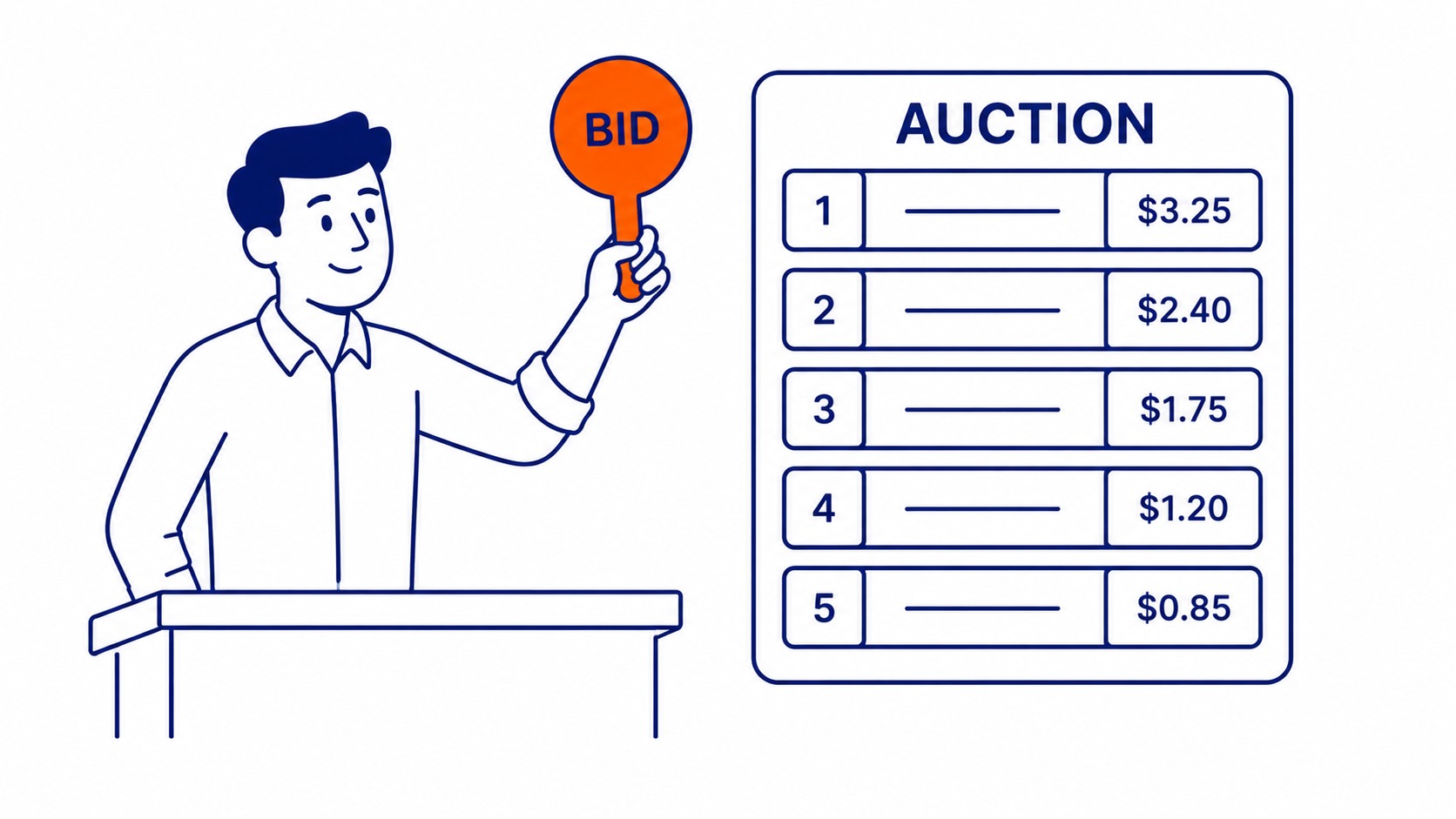
Google Ads is an auction. Every search on Google triggers an instant bidding process behind the results page. Advertisers who have entered keywords matching that query compete to have their ads shown. The winner is not the highest bidder. Position is determined by a combination of bid and quality; that distinction changes every campaign decision you make.
The auction runs in milliseconds. No human involvement. What you set in advance determines where you appear, whether you appear at all, and what you actually pay. Keywords, bids, ad copy quality, and landing page relevance are the levers. For search advertising in Calgary and every other market on Google, the same mechanics apply.
The Google Ads Auction Explained
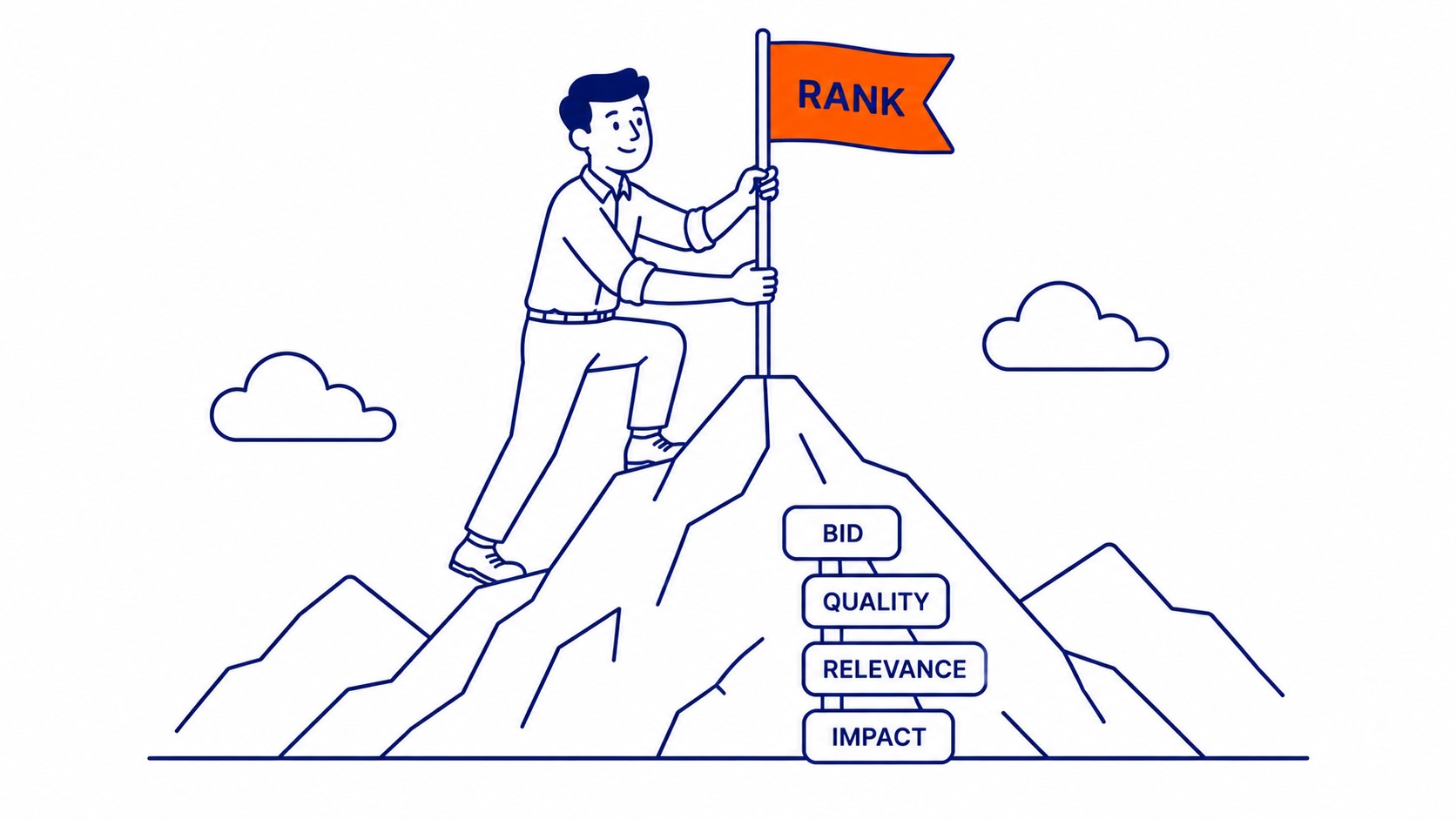
When a search happens, Google identifies every advertiser eligible to appear for that query. Each advertiser has set a maximum cost-per-click bid, meaning the most they are willing to pay per click. Google multiplies the max bid by the advertiser’s Quality Score to calculate Ad Rank. The advertiser with the highest Ad Rank wins the top position.
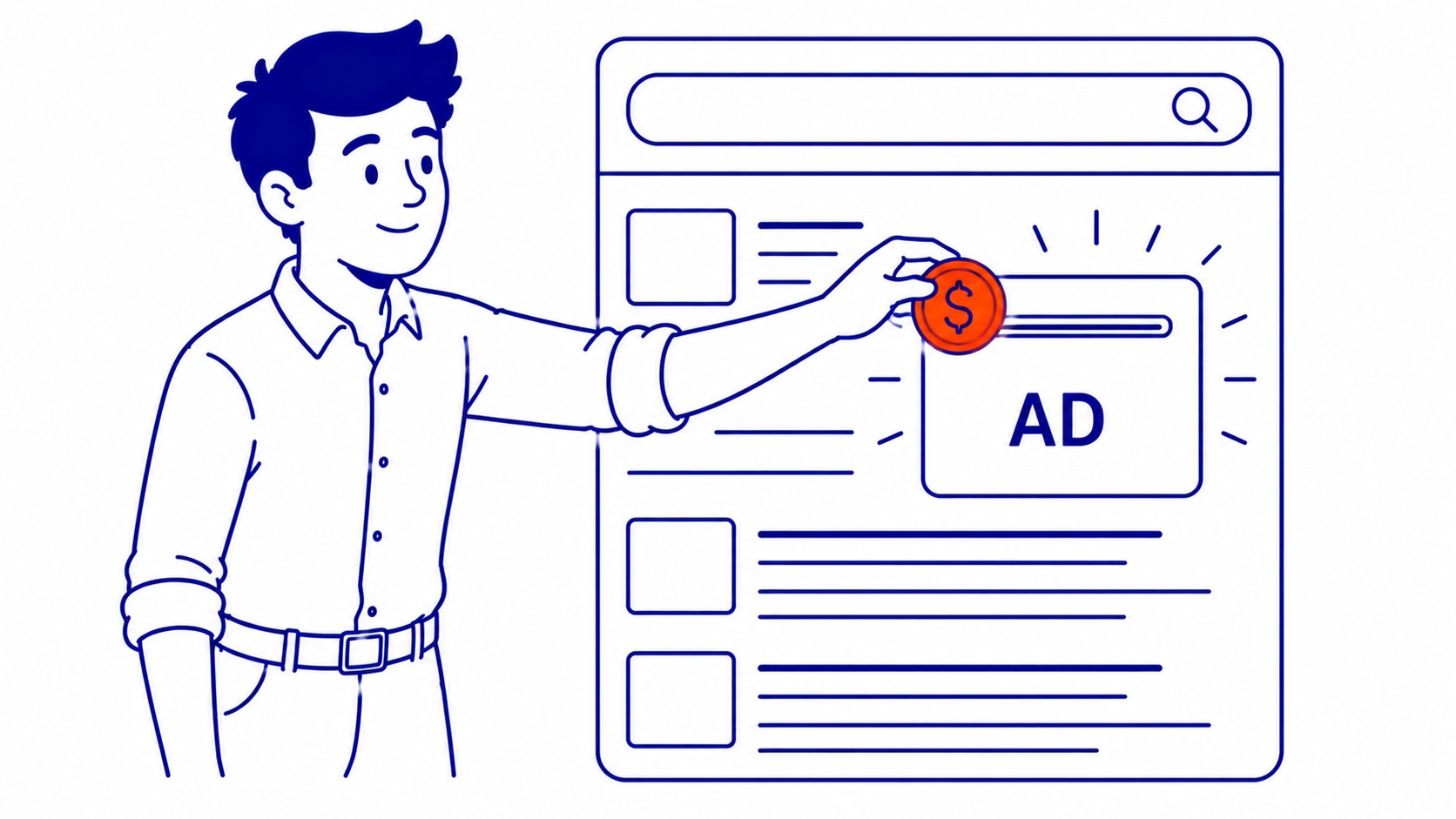
Quality Score is a 1 to 10 rating assigned to each keyword. Three components feed it: expected click-through rate (how likely the ad is to be clicked based on historical performance), ad relevance (how closely the ad text matches the search query), and landing page experience (how useful and relevant the destination page is after the click). High Quality Scores reduce cost-per-click and improve ad position simultaneously.
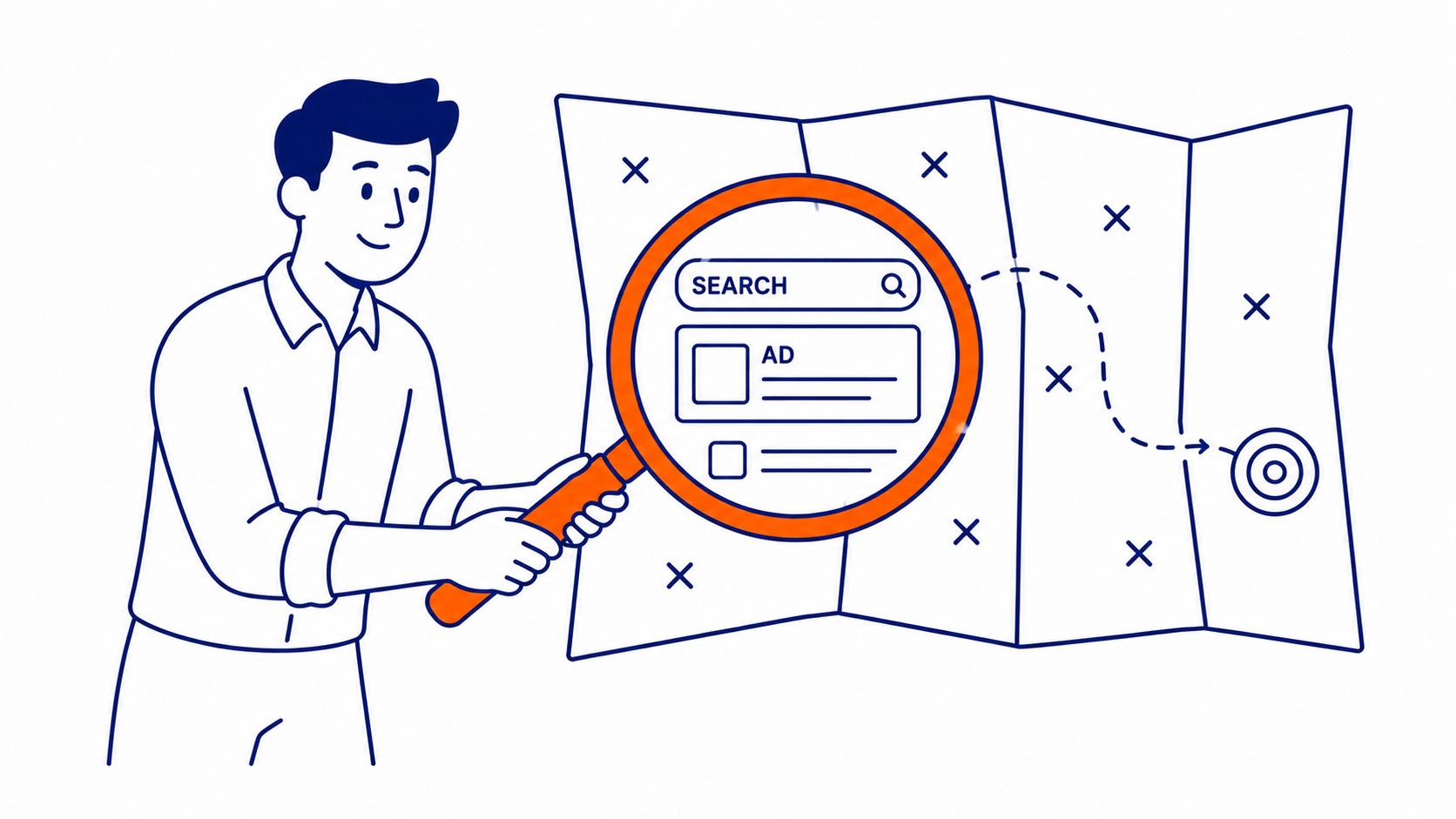
One counter-intuitive result of this system: an advertiser with a Quality Score of 8 and a lower max bid can outrank an advertiser with a Quality Score of 4 and a much higher max bid. Relevance beats spend, within limits. A Grande Prairie business running a tightly targeted campaign can compete effectively against larger advertisers bidding loosely on the same queries, because the Quality Score advantage more than compensates for a lower budget.
What you actually pay per click is not your max bid. The actual CPC is determined by the Ad Rank of the competitor below you divided by your Quality Score, plus one cent. In practice, actual CPCs often run below max bid in most auctions. The system rewards quality at the expense of brute-force spend. That is also why what it costs to buy keywords on Google has no single answer. The price is set fresh in each auction.
Google Ads Campaign Types
Search campaigns show text ads on Google search results pages when someone searches for your target keywords. Default starting point for service businesses and local advertisers. Intent is explicit; someone typed a query related to what you sell.
Display campaigns show banner and image ads across millions of third-party websites in Google’s Display Network. Better for brand awareness and retargeting than for direct-response conversion, especially for service businesses.
Shopping campaigns show product listing ads with image, price, and merchant name. Specific to e-commerce. Not relevant for service businesses.
Performance Max is Google’s automated multi-channel campaign type. Spans Search, Display, YouTube, Gmail, and Maps simultaneously. Requires significant conversion data before the automation optimizes effectively. Not the right starting point for a new account.
For most businesses starting with Google Ads, Search is the right choice first. Surrey businesses in competitive service sectors (legal, medical, home services) typically begin with branded and service-specific Search campaigns before expanding to other types as the account builds conversion history.
Keywords, Match Types, and Targeting
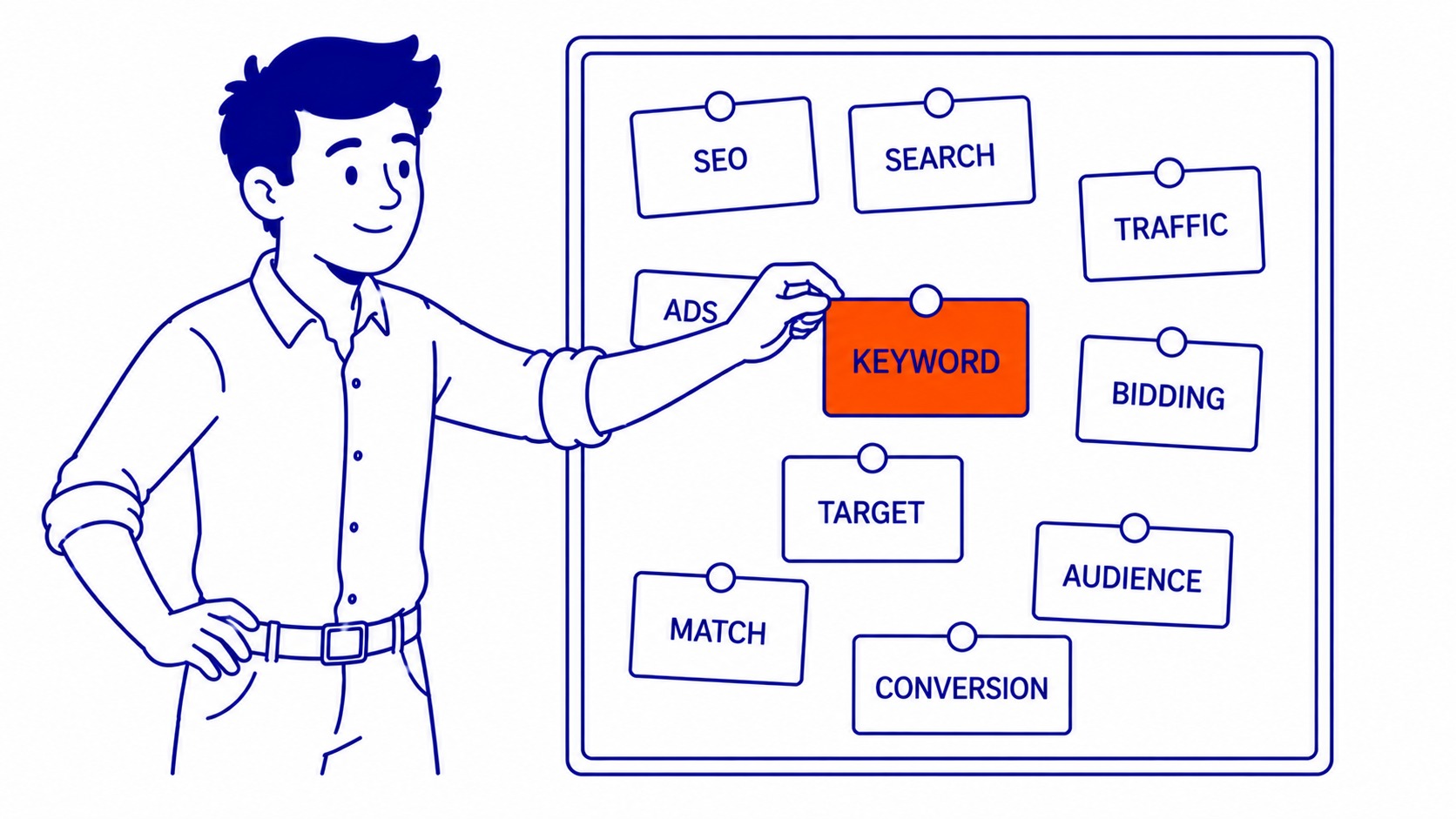
Keywords are what trigger your ads. Match types control how closely a search query must match your keyword before your ad enters the auction.
Broad match: your ad can appear for any query Google considers related to your keyword. Loosest match type. Generates significant irrelevant traffic on new accounts without aggressive negative keyword lists.
Phrase match: your ad appears when the query contains the meaning of your keyword. More controlled than broad. A practical default for most campaigns starting out.
Exact match: your ad appears only when the query closely matches your keyword. Highest intent per click, lowest volume. Good for protecting budget on specific high-value terms.
Negative keywords exclude irrelevant queries before they consume budget. In any new Google Ads account, the search terms report in the first few weeks is the most important document in the campaign. Every irrelevant trigger found there is money recovered when added as a negative keyword. For a PPC overview that covers bidding mechanics and budget management, that post goes deeper into the cost-side of paid search.
What Determines Where Your Ad Appears
Ad Rank. Quality Score. Max bid. All three together, calculated in real time at each auction. No static positioning. Every search resets the competition.
Ad extensions (now called assets by Google) also factor in. Sitelinks, call buttons, location information, and price extensions. Assets add extra information to the ad, improve click-through rates, and feed back into Quality Score over time. Running extensions is not optional in competitive markets; it is table stakes.
Auction-time signals further adjust position: device type, time of day, location, and past search behaviour all modify the effective bid. These signals can be targeted with bid adjustments or left to automated bidding strategies like Target CPA or Maximise Conversions once conversion data exists.
Managing all of this as a continuous process rather than a one-time setup is what professional Google Ads management handles. Bid adjustments, negative keyword expansion, Quality Score monitoring, ad copy testing: none of these are setup tasks. They are the ongoing work that separates a stagnant campaign from a profitable one.
Frequently Asked Questions
Is Google Ads the same as SEO?
No. Google Ads is paid traffic. SEO targets organic rankings. Paid ads appear above organic results with a “Sponsored” label. When an ad campaign is paused, traffic stops immediately. SEO rankings persist without ongoing ad spend once earned. Both channels target the same searchers, but through different mechanisms and at different cost structures. Running a full Google Ads campaign alongside organic SEO is the practical approach for businesses that need traffic while waiting for SEO to compound.
How much does Google Ads cost per click?
Depends on industry and competition. Legal, financial, and medical keywords in major Canadian cities can reach $15 to $50 per click or more. Local service trades (plumbing, HVAC, electricians) typically run $3 to $10 in lower-competition markets. There is no fixed price per click in Google Ads. The auction determines cost at the moment of each search, based on who else is bidding on that same query at that same moment.
Can small businesses compete in Google Ads?
Yes. Quality Score is the levelling mechanism. A small business running a tightly focused campaign with high keyword-to-ad-to-landing-page relevance can achieve lower CPCs and higher positions than large advertisers bidding broadly with low Quality Scores. The practical constraint for small businesses is budget: smaller budgets mean fewer clicks per day, slower learning, and slower optimization. Minimum effective starting budget for a local service business in most Canadian markets is $500 to $1,000 per month.
