Google Ads Setup and Strategy: How to Start Advertising
Short version: start a Search campaign, target the queries your customers actually use, write ads that match those queries closely, send traffic to a page that answers what the ad promised, and track which clicks become conversions. That is the whole system. Everything else is optimising within that frame.
Slightly longer version: Google Ads is an auction-based pay-per-click platform where every search triggers a real-time bid on who shows up and where. The ad you see at the top of a results page is not the highest bidder, it is the highest-ranked combination of bid and Quality Score. Quality Score rewards relevance between keyword, ad, and landing page. Understanding that one mechanic makes every other decision easier. For search marketing in Calgary and beyond, the businesses that get the most from Google Ads are not always the biggest spenders.
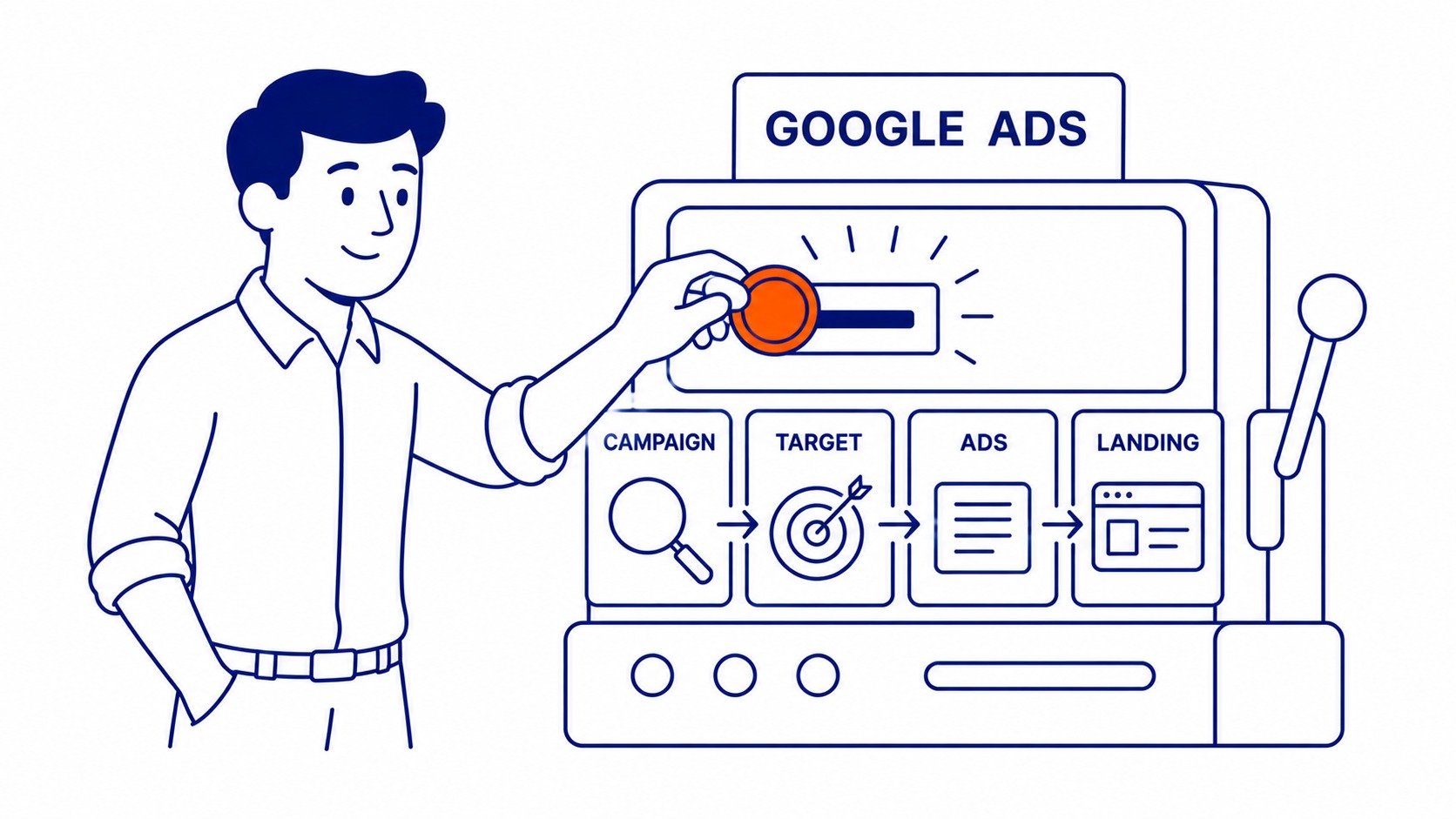
Setting Up a Google Ads Account
Account setup at ads.google.com. Create an account, link a billing method, and set the time zone and currency first, before anything else. Time zone cannot be changed after account creation and affects when day-parting rules apply.
Account structure: one account, multiple campaigns, each campaign containing one or more ad groups, each ad group containing tightly themed keywords and the ads written to match them. Keeping ad groups narrow (five to ten closely related keywords) makes writing highly relevant ads easier, which improves Quality Score and reduces cost per click. Managed Google Ads services handle this structure for you, though understanding it helps when reviewing performance reports.
Google Ads Campaign Types
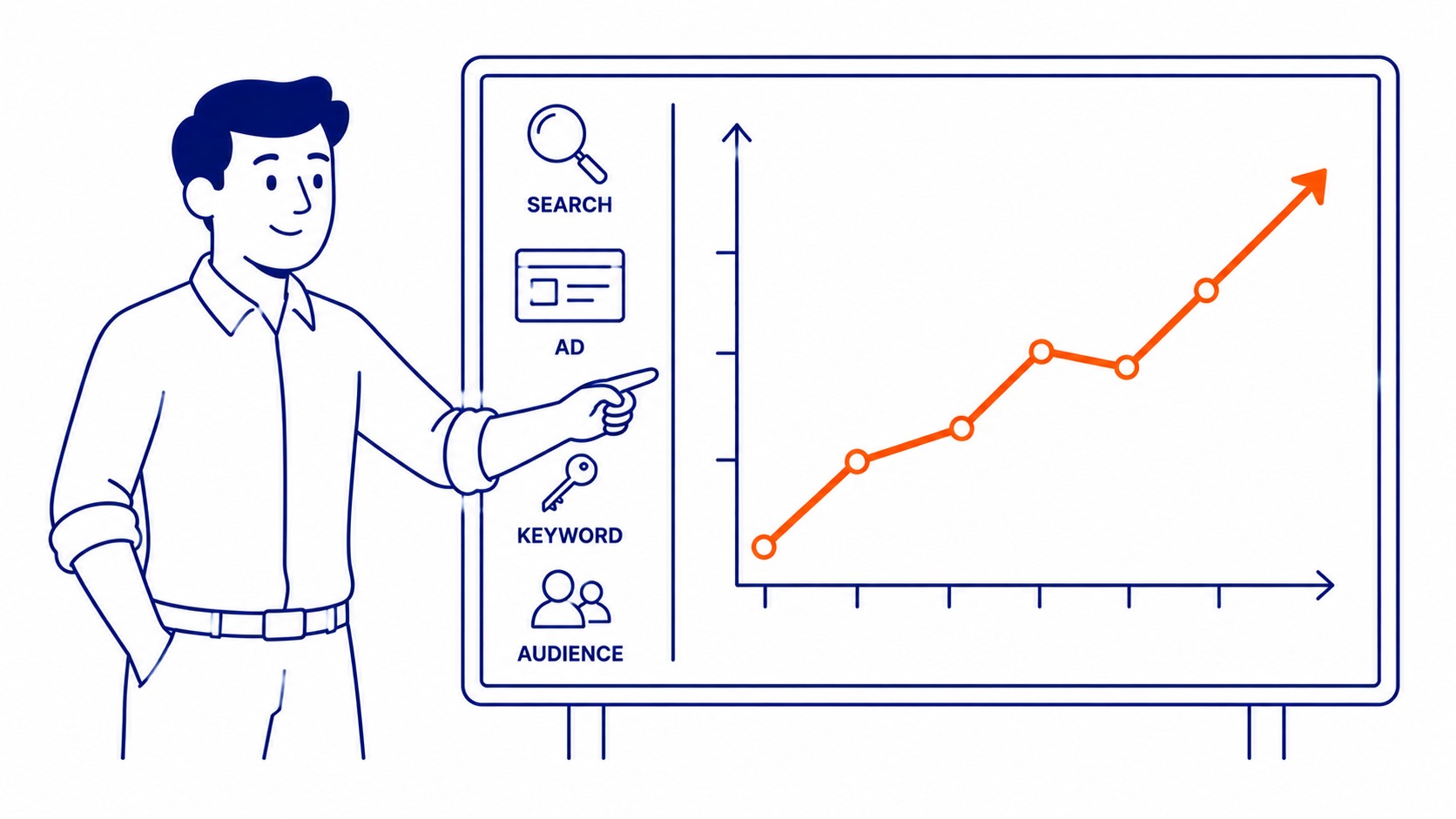
Search campaigns show text ads on Google search results pages when someone searches for your target keywords. For most local and service businesses, Search is the right starting point. Intent is high, because the person is actively searching for what you offer. Display campaigns show banner and image ads across millions of websites in Google’s Display Network. Useful for brand awareness, not conversion-focused for most service businesses. Shopping campaigns are for e-commerce products. Performance Max is Google’s automated campaign type that spans all channels. Not recommended as a first campaign because it requires significant conversion data to optimise effectively.
Start with Search. Once Search campaigns are profitable and generating conversion data, layer in other types as the account matures. Lethbridge businesses running their first Google Ads campaign almost always start with a Search campaign targeting the city plus the core service keywords. That is the model that generates the fastest learning with the least wasted spend.
Keywords and Match Types
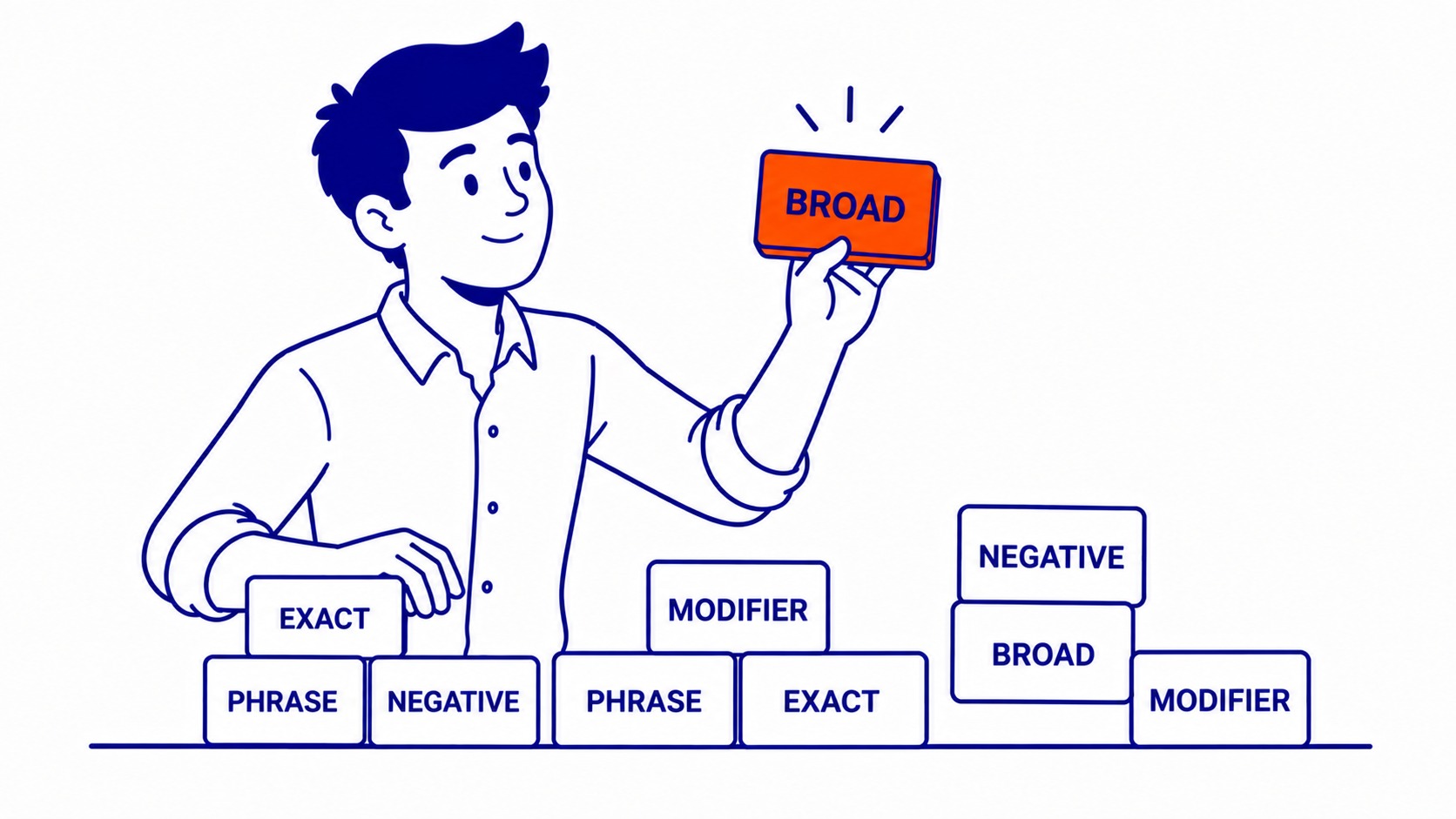
Keywords in Google Ads are not the same as keywords in SEO. Three match types control how closely a search query must match your keyword before your ad shows:
Broad match: your ad can show for any query Google considers related to your keyword. The loosest match type. Generates significant irrelevant traffic on new accounts without aggressive negative keyword lists.
Phrase match: your ad shows when the query contains the meaning of your keyword, in order. More controlled than broad. A good default for most campaigns.
Exact match: your ad shows only when the query matches your keyword closely. Lowest volume, highest intent. Good for protecting budget on high-value terms.
Negative keywords are as important as positive ones. Every irrelevant search your ad triggers costs money. Add negatives aggressively in the first month: “free”, “jobs”, “DIY”, “how to”, “reviews” for commercial service campaigns. Review the search terms report weekly in the early weeks to catch queries that are converting your budget into useless clicks. Keyword targeting research for paid campaigns follows the same intent logic as organic search, but the commercial threshold is higher. Seeing which terms rivals already bid on sharpens the list, which is why it pays to learn how to check competitors’ Google Ads before finalising keywords.
Writing Google Ads Copy That Converts
Responsive Search Ads (RSAs) are the current standard format: up to fifteen headlines (30 characters each) and four descriptions (90 characters each), which Google assembles into combinations automatically. Write headlines that mirror the search query, state the service clearly, and include a call to action. Google rewards ads where the headline matches the search term closely with a higher Quality Score.
Three things that consistently improve ad performance: matching the headline to the keyword (a plumbing campaign should have headlines with “plumbing” in them, not a generic company name), addressing an objection in the description (“licensed and insured”, “same-day service”), and directing to a specific landing page, not the home page. Sending Google Ads traffic to the home page typically converts at a fraction of the rate of a dedicated service page.
Budget, Bidding, and Conversion Tracking
Set a daily budget at the campaign level. Google may spend up to twice the daily budget on a given day but averages to the monthly total. Start with a budget that covers at least five to ten clicks per day at the estimated cost-per-click for your industry. Less than that and the account learns too slowly.
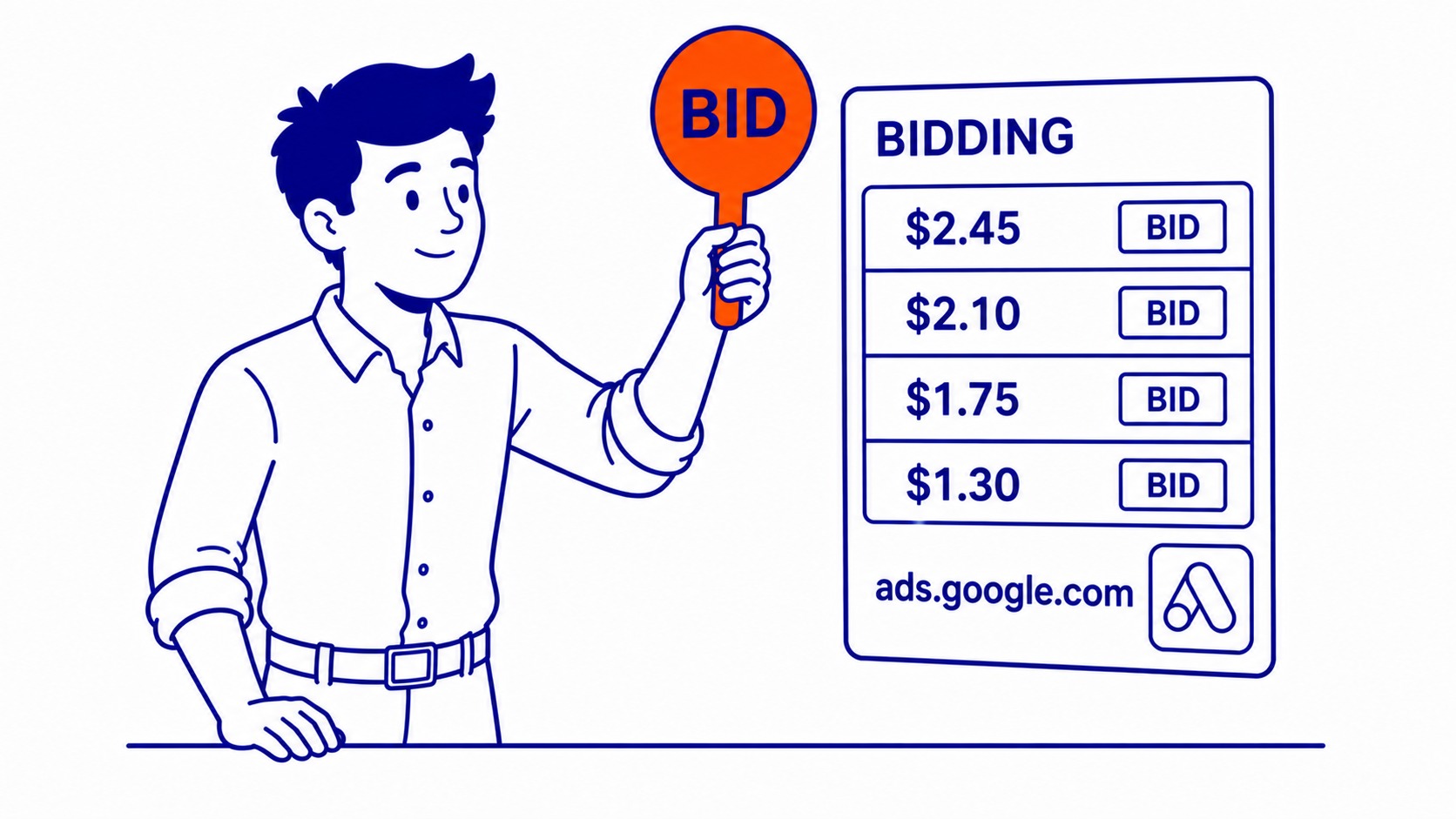
Bidding strategy options: manual CPC gives direct control over how much you bid per keyword. Maximise clicks is automated and useful for traffic-heavy campaigns with no conversion data. Target CPA and Maximise conversions require conversion tracking set up and sufficient data (typically 30 to 50 conversions per month) before they work reliably. Start with manual CPC or Maximise clicks until the account has conversion history, then test automated bidding.
Conversion tracking is non-negotiable. Without it, the account cannot distinguish between a click that generated a call or form submission and one that left immediately. Set up conversion tracking via Google Tag Manager or the Google Ads tag before the campaign goes live. PPC fundamentals explains the conversion tracking setup options in more detail. Vancouver businesses in competitive service markets often find that poor conversion tracking is the main reason their Google Ads campaigns underperform despite adequate budget.
Common Google Ads Mistakes
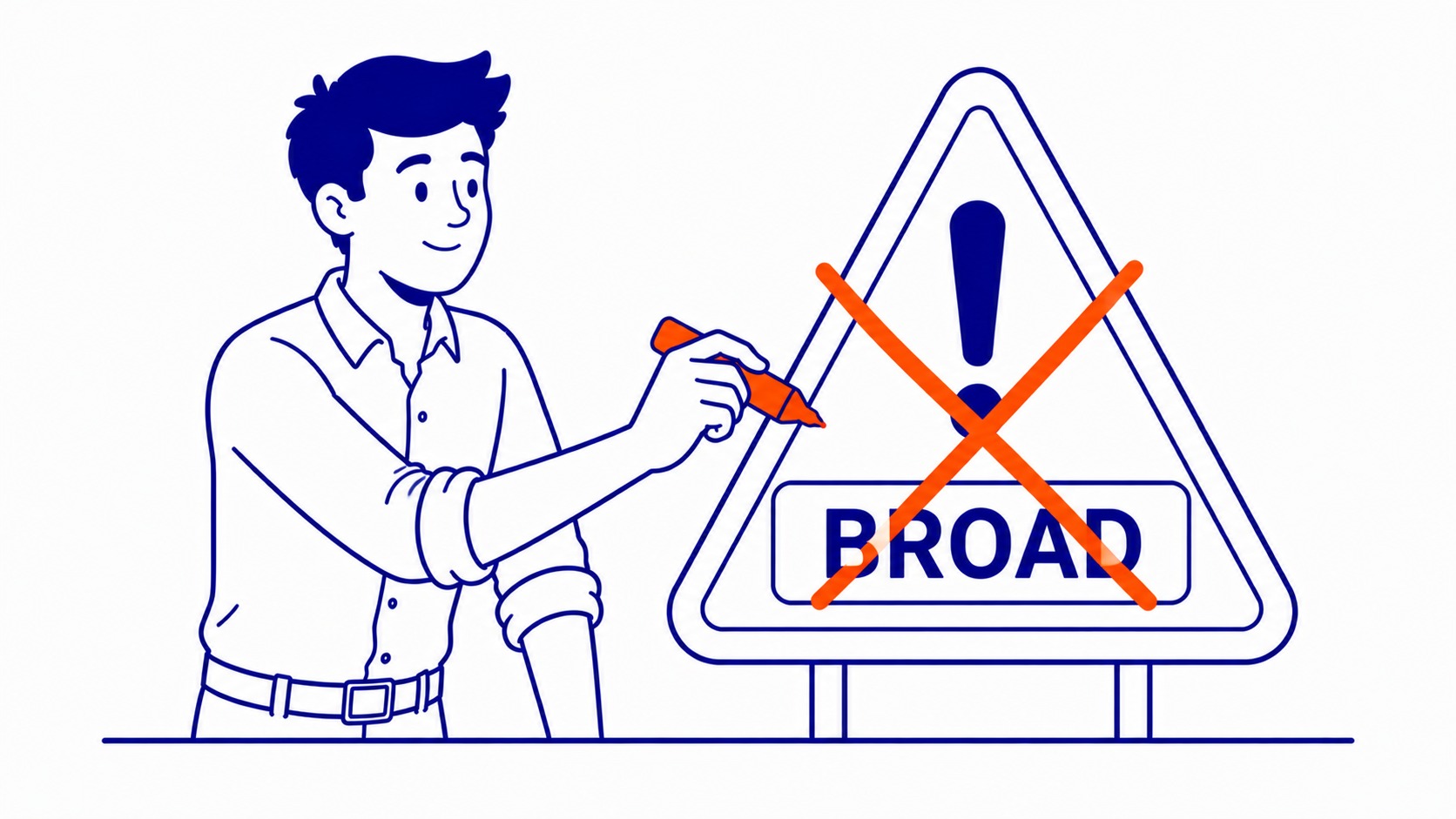
Running broad match keywords without negative keyword lists. Broad match on a new account sends budget to irrelevant queries almost immediately. The search terms report on a brand-new broad match campaign is usually alarming. Add phrase or exact match from the start and build toward broad once there is data to guide it.
Sending traffic to the home page. The home page talks about everything. A landing page for a Google Ads campaign should talk about exactly what the keyword and ad promised. Specific pages convert.
No conversion tracking. Running a campaign blind, without knowing which clicks turned into leads or sales, makes every optimization decision a guess. Set it up first.
Stopping campaigns too early. Google Ads Search campaigns typically need four to eight weeks and several hundred clicks before the account learns enough to optimise. Campaigns cancelled after a week have not had a fair test. If you do need to pull one, there is a clean way to do it without losing the account history: here is how to cancel a Google Ads campaign. Google Ads management services handle the ongoing optimization that turns a functional campaign into a high-ROI one. For Lethbridge advertising and other smaller Alberta markets, the learning phase often takes longer due to lower search volume.
Frequently Asked Questions
How much should I spend on Google Ads to start?
Enough to generate meaningful data, typically $500 to $1,500 per month as a starting range for local service businesses in most Canadian markets. Less than that and the account does not accumulate enough clicks to learn from. More competitive markets (legal, financial, medical) require higher starting budgets because cost-per-click in those sectors is significantly higher. The metric to track is not how much you spend but cost per conversion. Vancouver search advertising budgets run higher than most Alberta markets because of higher local competition for commercial keywords.
What is a good conversion rate for Google Ads?
Industry and offer dependent. Local service campaigns (HVAC, plumbing, legal, dental) typically see conversion rates between 5% and 15% from well-targeted search traffic on specific landing pages. National e-commerce typically sees 1% to 3%. Those ranges are averages. The right benchmark is your previous conversion rate, not an industry average. Track baseline first, then optimize from there.
How long before Google Ads generates leads?
Search campaigns can start generating clicks within hours of going live. First leads often arrive within days. But the first two to four weeks should be treated as a learning phase, not a final verdict. Budgets spend on irrelevant traffic, negative keyword lists are still being built, and ad copy has not been split-tested yet. Realistic expectation: a well-managed Google Ads campaign generates predictable leads by weeks six to eight. Campaigns that have been running for six months with regular optimization perform at a materially different level than new accounts.
Contact Calgary SEO Company To-The-TOP!
Questions about anything in this article, or about your own rankings? Talk to a Calgary SEO specialist directly.
Phone: (403) 308-5949
Address: 1509 14 Ave SW, Calgary, AB T3C 0W4
Hours:
Monday to Friday: 10:00 am – 7:00 pm
Saturday: 12:00 pm – 4:00 pm
Sunday: closed