How Much Does It Cost to Buy Keywords on Google?
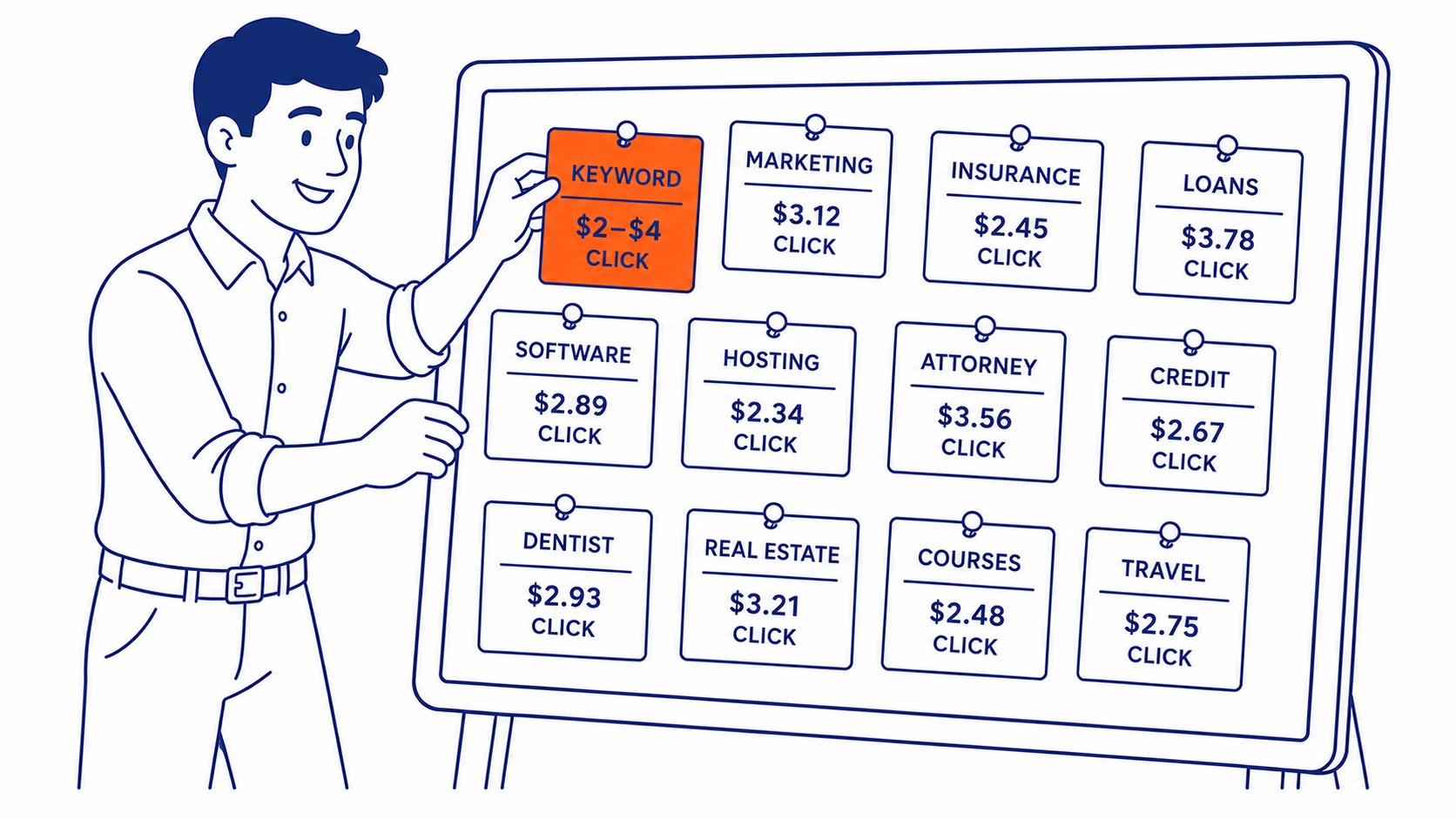
Two to four dollars a click for most keywords. Legal and insurance terms can run past fifty dollars a click, and sometimes well past it. That is the honest range for what it costs to buy keywords on google, though the phrase itself is a little misleading. Nobody hands Google a payment and walks away owning a word.
What you actually pay for is a click. Pay-per-click, in the shorthand everyone uses. Your ad shows when someone searches your term, and the charge only lands when that person clicks through to your site. No click, no cost. So the real question buried inside how much does it cost to buy keywords is less about a sticker price and more about an auction you enter every single time someone types that query. Worth a step back first on what SEO keywords actually are, since the same terms you bid on are the ones you can also rank for free.
Why You Cannot Just Buy Keywords on Google
Here is the part that trips up most first-time advertisers. Keywords are not for sale. They get bid on instead. Google Ads runs a live auction for every search, and you set the most you are willing to pay for a click on a given term. That number is your maximum bid. The actual cost per click usually comes in lower than the cap you set.
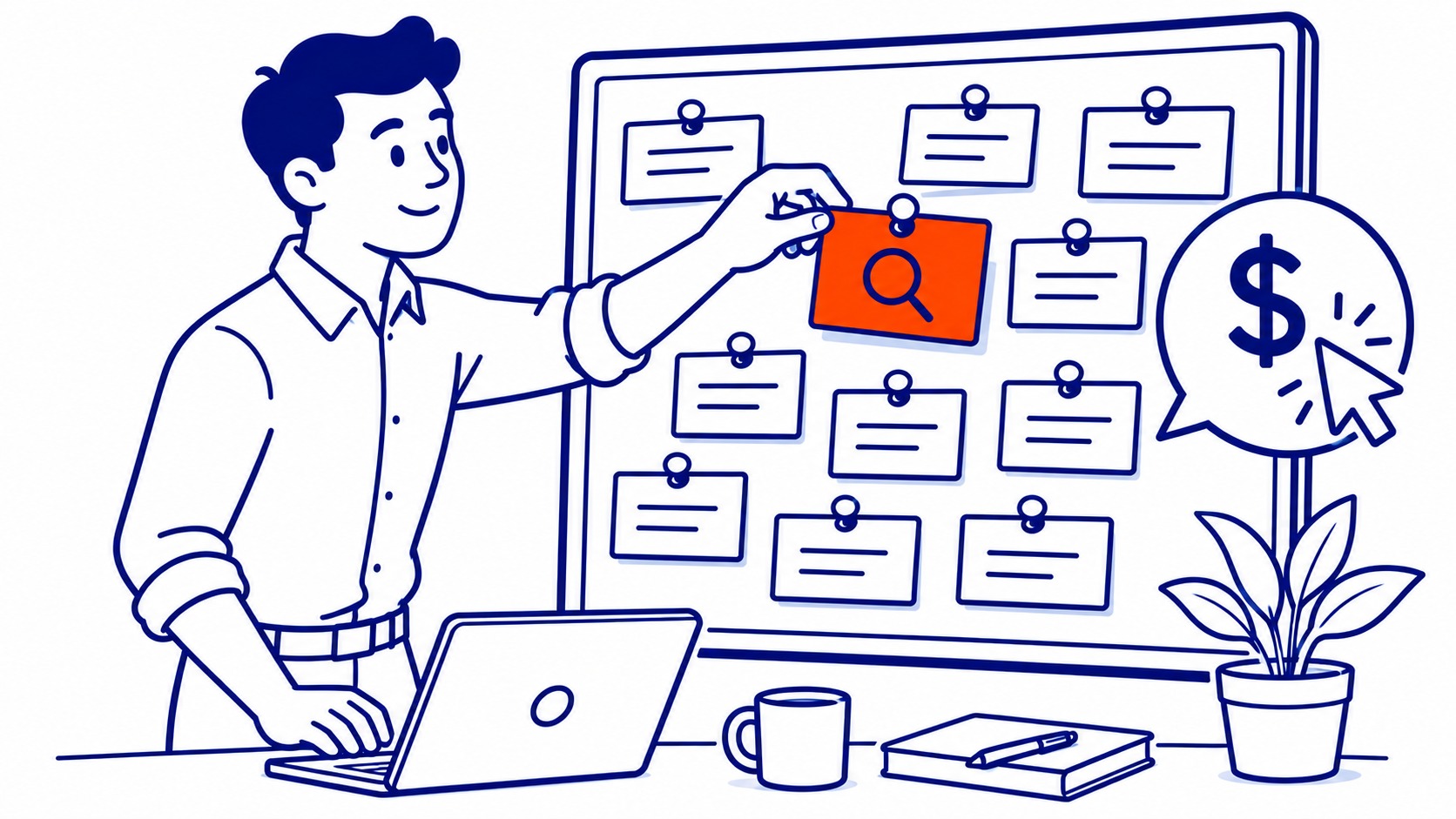
Each auction weighs more than the bid, however. Google scores your Quality Score too, a rating from one to ten built on expected click-through rate, ad relevance, and landing page experience. A competitor bidding less than you can still outrank you when their Quality Score is higher. Picture a two-dollar bid at a Quality Score of nine. It beats a five-dollar bid at a score of three, and it does so on most searches. Better ads beat bigger budgets, which catches people off guard the first time they see it happen.
Minimum bid on most terms sits around five cents, so the floor is genuinely low. The ceiling is where the money disappears, every time. That gap between five cents and fifty dollars is the whole story of why two advertisers in the same city can spend wildly different amounts on what looks like the same keyword.

What a Single Keyword Actually Costs
CPC swings hard by industry, and the spread is enormous. Retail and e-commerce keywords tend to land in the one to two dollar range. Local service terms, the plumbing and landscaping and roofing searches, sit closer to two to five dollars. Then come the regulated, high-value categories. Legal, insurance, accounting, finance. Those carry the most expensive keywords on the entire platform, and a single click can cost fifty dollars or more.
Why such a gap? A new customer in those fields is worth thousands, sometimes tens of thousands, across the life of the relationship. One law firm can pay sixty dollars for a click and still come out comfortably ahead if one in twenty visitors signs on. The expensive keywords are expensive because the customers behind them are valuable. WordStream’s running list of the priciest terms has been topped for years by phrases around insurance, loans, mortgages, and legal claims. None of that ranking is accidental.
Branded terms are the quiet exception. Bidding on your own business name usually costs pennies, because nobody competes harder for “your company name” than you do. Plenty of businesses run a small branded campaign purely to hold that top spot before a competitor parks an ad there. Buying keywords tied to your own brand is almost always the cheapest line on the account. Cheap partly because the Quality Score metric rewards ads that obviously match the query.
How to Find a Keyword’s Cost Before You Spend
You do not have to guess at any of this. Google’s Keyword Planner is free inside any Google Ads account, and it shows the average CPC and the search volume for any term you feed it. Type in a keyword, set your location, and it returns a low-to-high CPC estimate alongside how many people search that phrase each month. That is the first place to look before committing a dollar to anything.
Third-party tools go deeper still. Semrush, Ahrefs, and similar platforms estimate keyword cost next to competition scores and historical trend lines. They run on a monthly subscription, but they show you roughly what competitors are paying and which terms are quietly draining budgets across your industry. Search volume matters here as much as the CPC. A keyword that costs four dollars a click but only gets searched thirty times a month behaves very differently from one searched five thousand times. Those same tools are how you find a competitor’s keywords. That is often the fastest way to spot the terms quietly draining a budget.
For a business weighing a paid search push, a proper keyword research and selection pass maps out the real numbers before a campaign ever goes live. Knowing those CPC numbers ahead of time changes the entire conversation about budget. It is the difference between setting a number with data behind it and picking one out of the air.

What Pushes a Keyword’s Price Up
Competition is the biggest single lever. More advertisers chasing the same term drives the auction price up, plainly and predictably. A keyword with twenty active bidders costs far more than a near-identical one with three.
Search intent matters nearly as much. Commercial terms, the ones where someone is ready to buy or hire right now, command premium prices because they convert at higher rates. Informational searches stay cheaper because the person is reading, not buying. Match type plays its own part. Broad match casts a wide net across related searches and burns budget on queries that were never relevant, and those wasted clicks cost exactly the same as the good ones. Phrase and exact match look more expensive per click on paper, yet they usually spend smarter overall. This is exactly where negative keywords earn their keep, blocking the irrelevant searches before they ever cost you a click.
Quality Score works quietly in the other direction. A tightly built campaign with relevant ads and a fast, on-topic landing page earns a higher score, and a higher score pulls your real CPC down. Two businesses bidding on the identical keyword can therefore pay very different amounts. The one with the better-structured account pays less, every time. Geography, device, and time of day nudge the number too. Calgary auctions for competitive service terms look different from small-town auctions, and a campaign scoped tightly to one neighbourhood often pays less because fewer advertisers bother to compete at that level. Lower competition, lower price. The pattern holds almost everywhere you look.

Buy Keywords or Rank for Them: The SEO Trade-off
There is a second route onto the first page that never charges per click. Search engine optimization. Rank organically for a keyword and you pay nothing when someone clicks, no matter how many of them do.
The trade-off is time, and it is a real one. Paid search switches on the day you fund the account. SEO takes months, frequently three to six before meaningful movement appears, and longer than that in crowded markets. PPC buys immediate visibility that vanishes the moment the budget runs dry. Organic rankings build an asset that keeps returning traffic long after the work is finished. Most businesses that actually watch their numbers settle on running both. Paid search covers the terms worth buying today, and organic handles the long, compounding gain. Calgary SEO and a paid search budget pull in the same direction when they are planned together rather than treated as rivals. Splitting the keyword list between the two channels is where a real plan actually starts to take shape. Which keywords belong in which bucket is the genuine strategy question, and it deserves an answer before money moves in either direction.
Frequently Asked Questions
How much does it cost to buy keywords?
There is no fixed price to point at. You bid in an auction and pay per click, and for most keywords that click runs two to four dollars. Competitive industries like law and insurance push it well past fifty. Your total spend depends on the daily budget and how many people click, rather than on owning the keyword itself. The auction sets the price fresh every time.
Can you actually buy a keyword on Google?
Not in the way the phrase suggests. You cannot purchase exclusive rights to a word. Anyone is free to bid on any term, including your competitors and your own brand name. What you buy is placement in the results for that search, decided fresh by auction each time someone types it. The keyword itself stays available to everyone, always.
Why are some Google keywords so expensive?
High customer value, mostly. A click in finance, law, or insurance can cost fifty dollars or more because one converted customer is worth thousands over time. Heavy competition then stacks on top of that. When dozens of advertisers chase the same high-value term, the auction price climbs fast. The most expensive keywords are simply the ones where a single sale easily justifies the spend.
Is it cheaper to rank for keywords with SEO than to buy them?
Over the long run, usually yes. Organic rankings cost nothing per click once you hold the position, while paid clicks bill you every single time. The catch is the wait. SEO needs months of work before it ranks, whereas Google Ads delivers traffic the same afternoon you launch. Cheaper in the long run, slower to arrive. That is the honest comparison.
Spending on the wrong keywords is the fastest way to waste a Google Ads budget, and it usually happens before anyone stops to check the numbers. SEO Company To-The-TOP! has managed paid search since 2007, handling bid strategy, Quality Score, and match-type management as part of a full Google Ads management service. The work starts by sorting out which keywords are worth buying through PPC now and which are better earned through SEO over time. Worth settling all of it before the first click gets paid for.
Contact Calgary SEO Company To-The-TOP!
Questions about anything in this article, or about your own rankings? Talk to a Calgary SEO specialist directly.
Phone: (403) 308-5949
Address: 1509 14 Ave SW, Calgary, AB T3C 0W4
Hours:
Monday to Friday: 10:00 am – 7:00 pm
Saturday: 12:00 pm – 4:00 pm
Sunday: closed
