Is SEO Worth It?
Short answer: yes. Longer answer: yes, with a timeline that most agencies won’t volunteer upfront. Organic search traffic compounds, but stop paying for ads and the clicks stop too. That gap is real, and the businesses that figure it out early are the ones ahead in search rankings a year from now while competitors are still renting visibility one click at a time.
What actually determines whether SEO is worth the investment for a specific company comes down to three things: how competitive the keyword landscape is, how much patience the owner has, and whether the strategy is built to compound or just to check a box. This post walks through all three, plus what real costs look like and when the return becomes impossible to argue with.

The Honest Answer
53% of all website traffic comes from organic search. That number is not from a vendor selling SEO services; it comes from aggregate web analytics data across industries. Organic search is the single largest driver of web traffic, and it costs nothing per click once the position is established.

The honest comparison: a Google Ads budget of $2,000 a month buys $2,000 worth of traffic. Stop paying and the traffic stops too. An SEO investment that earns a first-page position for a target keyword keeps generating organic traffic after the campaign ends. Year two and three, the cost per acquisition drops significantly. The breakdown of what SEO costs matters here because the math only works if the investment is consistent over the right timeframe.
Clients who came in expecting results in six weeks and clients who understood the year-long reality had very different experiences. Same work, same effort. The difference was timeline expectation.
What It Actually Costs
Three price tiers cover most of the market:
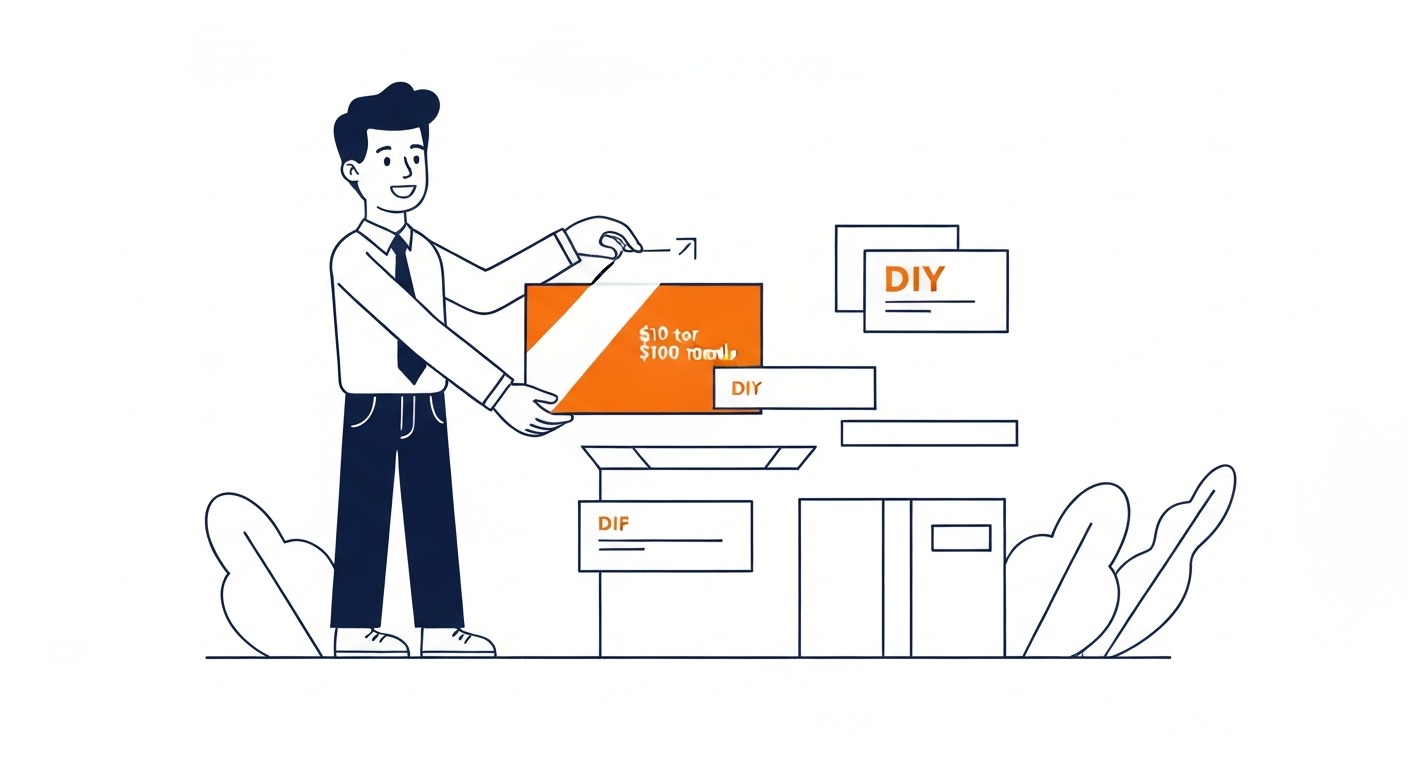
DIY ($0 to $100 per month for tools). Doable for patient owners with time to learn. Most results take the first year because the learning curve costs time. Technical errors early in the process can slow things down further.
Freelancer or consultant ($300 to $1,500 per month). Faster ramp because someone already knows what they are doing. Timeline compresses to four to nine months for initial movement. Lethbridge and smaller Alberta markets see faster timelines in this tier because competition is lighter. The Lethbridge SEO environment is a good example of where a focused freelancer-level campaign produces results quickly.
Agency ($1,000 to $5,000 or more per month). Full execution, no learning curve. Initial movement in the first two quarters. Higher cost, but the ongoing overhead covers strategy, execution, reporting, and ongoing adjustments. Calgary SEO at the agency level competes in one of the more active Alberta markets, so the resource commitment matches the competition level.
Worth asking any vendor: what does the first 90 days look like specifically? Vague answers are a signal.
How Long Before It Pays Off
Three to six months before meaningful search rankings appear. Six to twelve months before organic traffic becomes a consistent lead source. Year two is where the compounding becomes obvious and the cost-per-lead argument gets easy to make.
The mechanics: search engines index new content and backlinks gradually. Domain authority builds over time as other sites link back, as content earns engagement, as technical signals accumulate. Early on does not look like a year in. That is the honest timeline, and it applies regardless of who is running the campaign.
Local SEO tends to move faster than national campaigns. A Nanaimo company targeting “plumber Nanaimo” operates in a smaller competition pool than a national brand targeting “best plumber in Canada.” Smaller market, faster movement. The Nanaimo SEO environment is a good example: meaningful map pack positions achievable inside six months with a focused local strategy.
Operators who drop SEO in the first few months because they don’t see results are the ones that would have seen results half a year in. That pattern shows up consistently.
SEO Compared to Paid Advertising
These are not the same tool. Google Ads and social ads deliver immediate traffic for an immediate cost. The moment the budget stops, so does the traffic. No residual value, no compounding. Google Ads management makes sense for launches, promotions, and high-intent seasonal campaigns where speed matters more than cost efficiency.
SEO builds something the business owns. Organic search is an asset. It generates organic traffic without a per-click cost. The trade-off is time: paid ads work on day one, SEO works half a year later. Both have a place in a serious marketing budget.
Going ad-only is renting search rankings with no equity building. SEO alone means a slow stretch with no leads while rankings develop. A combination runs paid campaigns in the short term while SEO builds in the background. By year one, organic is carrying enough load that ad budgets can be reduced.
When SEO Delivers the Strongest ROI
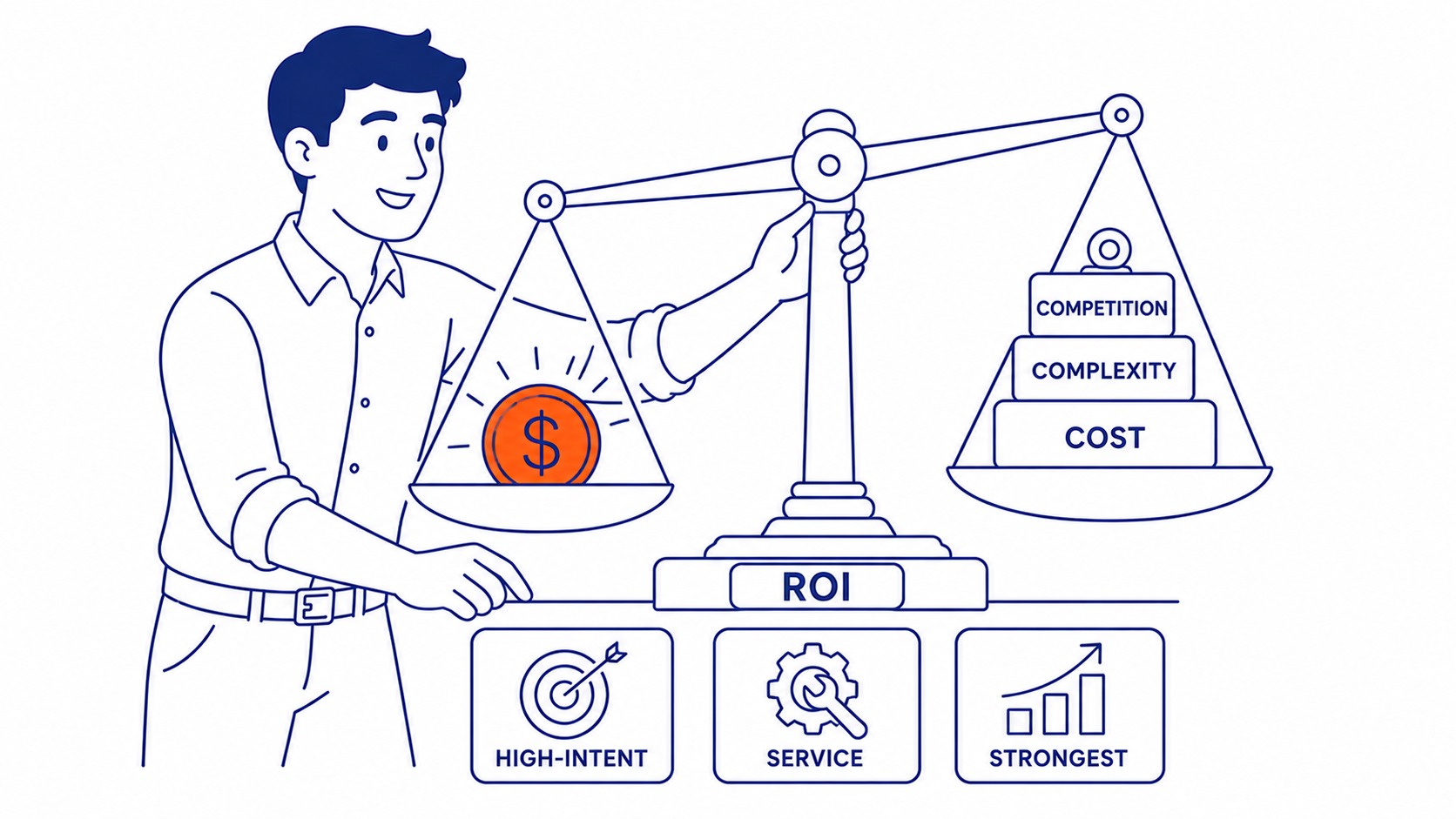
High-intent, service-based industries see the strongest return. Legal, dental, HVAC, accounting, landscaping, home services: these are categories where a first-page ranking for a specific local search query converts at rates paid alternatives rarely match. Someone searching “emergency plumber near them” is ready to call. That intent is worth capturing.
Competitive e-commerce and national brand keywords are harder and slower. A local service business targeting its own city with a specific service keyword sits in the best possible position for SEO ROI. The organic traffic is smaller in volume, but the conversion rate and the cost-per-acquisition make the math obvious.
An SEO audit surfaces where the fastest wins are. For most businesses, three to five specific high-intent local queries drive the majority of conversion-ready organic traffic. Those specific terms compound over time as authority builds. Chasing fifty generic terms first is slower and costs more.
Building a Strategy That Compounds
Four components build sustained search rankings:
Technical foundation: Site speed, mobile performance, crawlability, schema markup, internal linking architecture. Problems here put a ceiling on everything else.
Content: Pages targeting specific queries, written with actual depth and useful information. Thin content ranks lower, attracts fewer backlinks, and earns shorter visits. Useful content earns both.
Backlinks: Other sites linking back to the content. Authority builds as the link profile grows. This is the slowest component and the most durable. A link earned in 2023 is still working in 2026.
Local signals: Google Business Profile, consistent citations, reviews. For any business serving a specific geography, these are non-negotiable. Missing or inconsistent NAP data suppresses map pack rankings without any obvious signal that it is happening. Tightening those signals is the whole subject of how to improve local SEO.
Businesses that invest in all four consistently see compounding returns. Those that skip technical work or treat content as a one-time task tend to plateau. Consistency is the underrated part of what makes SEO worth the ongoing cost rather than a one-time project.
Frequently Asked Questions
Is SEO worth the money?
For most businesses, yes, especially in local and service-based markets. The return grows over time because organic search compounds. A first-page ranking generates organic traffic without a per-click cost, and the asset does not vanish when the budget runs out. The math gets easier the longer the investment runs.
Does a small business need SEO?
Any business that gets customers through search needs SEO. Full stop. Customers searching for a local service are almost always starting on Google. An operation not appearing in those results is handing those searches to a competitor. Whether the investment is DIY or agency-level depends on the competitive market and available budget.
Is SEO dead or evolving in 2026?
Evolving, not dead. AI search features changed how some results surface, but the underlying mechanism: Google ranking pages based on authority, relevance, and quality signals, did not change. Thin and generic content performs worse now than it did in 2023. Pages with depth and actual expertise rank better. That shift favours companies that invest in real content.
Will SEO be replaced by AI?
Unlikely to be replaced; more likely to shift. AI-generated answers in search results pull from high-authority pages, which means search visibility and citation signals still matter. Pages that rank are the pages that get cited in AI responses. The path has not shortened; the destination still requires the same work.
