What Are Citations in SEO? NAP Data and Local Rankings
Every citation audit we run starts the same way. Pull up the operation in a tracking tool, then check how the name, address, and phone number appear across the web. Most local operations have more citations than they expect. Many carry errors from a previous address, a number that changed two years ago, or a slightly different name format entered differently on three separate platforms.
A citation is an online mention of a company’s NAP data: name, address, and phone number. The mention can appear on a business directory, a review platform, a local news site, or a trade association page. No link back to the website is required. Data appearing together is what qualifies the entry as a citation for local SEO purposes.

The Name, Address, and Phone Standard
NAP stands for Name, Address, Phone number. Three data points. Matching name address and phone exactly wherever they appear is the standard. Name format matters: “Smith Plumbing Ltd.” and “Smith Plumbing” look similar to a human reader, but a data aggregator may treat them as separate operations. Street address format matters too. A suite number missing from one listing creates a conflicting signal. Phone number changes are among the most common sources of citation inconsistency, because a new number gets updated on the website while thirty platforms still carry the old one.

The citation does not need to include a website link to contribute as a ranking signal. Structured listing sources, industry databases, and review platforms all factor into the profile even without a backlink. Google reads NAP data across these sources to verify that an operation exists at a real, verifiable address. That verification process is a core input to off-page SEO fundamentals for any operation competing in local SEO.

How Citations Influence Local Rankings
Google’s local algorithm uses citation signals as a legitimacy check. Accurate NAP data across many sources tells the algorithm the operation is real, stable, and located where it claims to be. Competing for map pack positions requires both citation volume and citation accuracy. One without the other underperforms.
Volume is the first factor. More accurate listings across reputable sources confirm the operation exists in the local ecosystem. Accuracy is the second. Conflicting NAP data across sources creates ambiguous signals and suppresses local visibility. A single wrong address entry on a major data aggregator can drag local pack position down without the owner ever identifying the source.
For local companies working with local search specialists in Calgary on their map pack presence, citations are almost always addressed in the first 90 days of an engagement. Citation cleanup is methodical work with direct local SEO impact. It is one of several levers in how to improve local SEO. Most companies skip it because the return is not visible until rankings move, usually four to eight weeks after cleanup completes.
Structured vs. Unstructured Citations
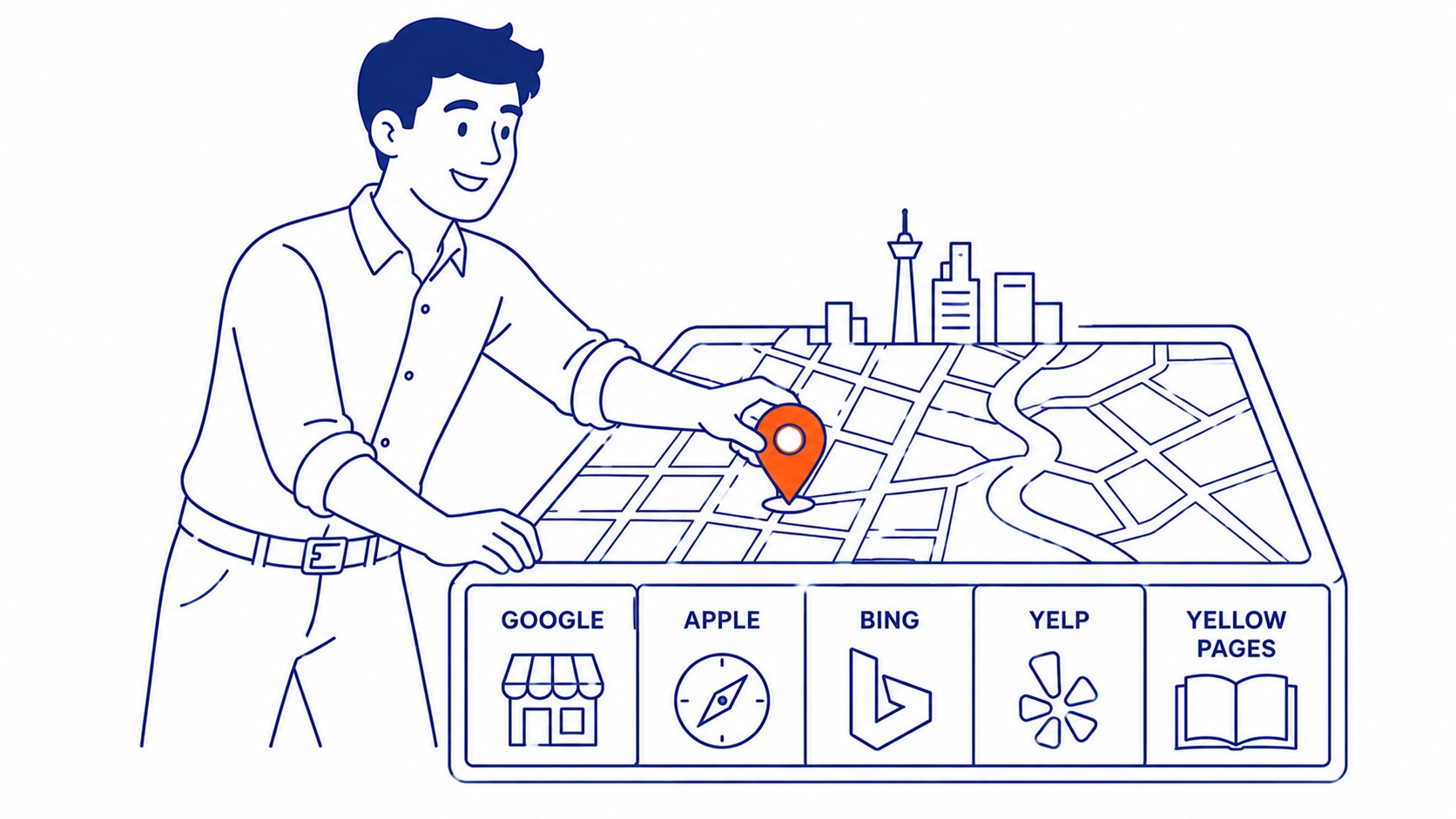
Structured citations are formal directory listings. Google Business Profile, Yelp, Apple Maps, Bing Places, and Yellow Pages are the most common. Each platform provides a standard form for entering name, address, and phone number. These carry the most direct local search weight because the data is formatted and machine-readable.
Unstructured mentions are editorial. A local news article naming a restaurant, a blog post recommending a contractor, a Chamber of Commerce spotlight where the address appears in body copy: all three qualify. NAP data in unstructured mentions often appears partially rather than in full. These still contribute to the profile even without a backlink, though with less direct ranking influence than a structured listing.
Both types matter. An operation with strong structured mentions but no unstructured coverage has a thinner profile than one appearing in both. Local press coverage and editorial mentions take time to accumulate, though they carry topical relevance beyond what a listing alone provides. As part of an off-page SEO program, this work covers both. Citations differ from earning links outright, and what link building in SEO involves is the more active side of the same effort.
Where to Build Citations
Tier-one sources first: Google Business Profile, Apple Maps, Bing Places, Yelp, and Yellow Pages. Every operation needs accurate, verified listings on all five before anything else. These platforms feed downstream channels and data aggregators, so errors here propagate widely.
Beyond the tier-one platforms, vertical-specific sources carry local weight depending on the category. HomeStars for trades, legal portals for legal professionals, healthcare databases for medical practices: each category has its own second-tier directories. Identifying which platforms the top-ranking competitors appear on is the fastest way to build a relevant list for a specific market.
Data aggregators are the second priority. Services like InfoUSA and Infogroup feed hundreds of secondary listings automatically. A correct entry at the aggregator level prevents bad data from spreading downstream and appearing in places that are harder to track and correct. That kind of local citation audit surfaces existing listings, errors, and gaps across all tiers in a single report. Most operations find a mix of all three when they run one for the first time.
NAP Consistency: Why Accuracy Matters
Inconsistency is the failure mode most local companies share. Common sources: a suite number present in some listings but missing in others, a company that relocated and left the old address active across thirty platforms, a phone number switch that got updated on the website but nowhere else. Each mismatch weakens the location verification signal Google builds from all those citations combined.
Conflicting signals from inconsistent citations suppress map pack rankings. Google is not certain where the operation is located. Lower certainty means lower visibility. The suppression shows up as stable organic rankings while local pack positions underperform on the same queries, which makes citation inconsistency easy to overlook as the cause.
Fixing inconsistencies requires auditing every active listing and correcting each one. Some platforms accept owner updates directly. Others require claiming the listing first. For Camrose businesses and Nanaimo businesses operating in competitive local categories, manual correction is typically more reliable than automated tools. The cleanup takes a few weeks. Ranking improvement follows within one to three months. In dense metro categories, Richmond-area businesses competing against many similar companies see especially clear lift, since inconsistency is common after operations have relocated or rebranded. Both paid search and organic depend on clean NAP data: Google Ads alongside local SEO addresses both channels, though the citation foundation needs to be solid first.
Frequently Asked Questions
What is a citation in SEO?
Online mention of a company’s name, address, and phone number: that is what a citation is. Name address and phone accuracy across many sources is what builds the local ranking signal. A backlink to the website is not required. The data appearing consistently across listing sources is what creates local search visibility.
What are examples of citations?
Google Business Profile is the most important one. Yelp, Apple Maps, Bing Places, and Yellow Pages are the core structured directory platforms. Industry sources follow: HomeStars for trades, legal portals for lawyers, healthcare databases for medical practices. Unstructured mentions include local news coverage, blog posts, and Chamber of Commerce content where the business name and address appear in editorial copy. Each one contributes to the profile that local search algorithms read.
Are citations good for SEO?
For local search, consistent citations are among the clearest signals available. They confirm the operation is at a physical address with a verifiable web presence across multiple sources. Volume matters, though only when accuracy is maintained. Ten inconsistent listings do more damage than none: conflicting data actively suppresses local visibility. The return comes from accurate, consistent sources relevant to the business category.
How many citations does a business need?
No fixed number applies across all markets. Competition in the specific category and geography sets the benchmark. A plumber targeting Calgary map pack rankings likely needs 60 to 100 citations across general and industry-specific sources. In less competitive markets, 30 to 50 may be enough. Fastest way to set a target: run an audit on the top-ranked competitors in the same category and area, then match or exceed what they carry. Citation volume alone does not guarantee position, but falling well below the competitive average is a consistent disadvantage.
