Can SEO and GEO Strategies Work Together for Better Results?
A client called last month with a question we had not heard much before 2024. They had ranked well in Google for years. Consistent traffic. Solid visibility. Then someone on their team noticed competitors showing up in ChatGPT answers. The strategy question shifted immediately. What is GEO, and does it mean starting over?
The short answer is no. Worth working through before anyone shifts budget around it.
The question is worth taking seriously, however. Search behaviour has shifted enough that AI-generated answers now appear above traditional results on a growing number of query types. Ignoring that shift is a mistake. So is abandoning SEO to chase GEO without understanding what connects them.
To-The-TOP! has been delivering the SEO Calgary businesses count on since 2007. That question is new. The underlying signals are not. Both channels matter now.

What GEO Actually Is
Not geographic targeting. Different concept entirely.
GEO stands for generative engine optimization. It is the practice of optimizing your content to earn citations in AI-generated responses. ChatGPT pulls from indexed sources when it answers a question. Perplexity does the same. Google AI Overviews pull citations from pages Google has already indexed and trusts. Gemini draws from sources with demonstrated authority on the topic.
GEO is the work of making sure your content is among the sources those tools cite.
Traditional SEO targets traditional search results. GEO targets AI-generated answers. Different outputs. Same source material, in most cases.
Search behaviour is shifting. More people now ask conversational questions directly to AI tools. Some of them never reach the search results page at all. Your content still needs to show up in those channels. GEO is how that happens.

Where SEO and GEO Already Overlap
More common ground than most people expect.
Strong SEO already does most of what GEO needs. Authoritative content earns traditional rankings. AI citations follow the same logic. Backlinks signal credibility to search engines; AI models treat them as a similar authority indicator. Structured data helps Google parse your pages; those same signals work for AI systems too.
A website properly optimised for traditional search is already positioned to earn GEO visibility. Positioned, not guaranteed. Those are different things.
Depth matters to both channels. A shallow page is unlikely to get cited by an AI model answering a genuine question. That same page struggles to rank in traditional search results. Same failure mode, both channels.
If you have your keywords researched properly, your content is already mapped to real search demand. That mapping often translates directly into the queries people ask AI tools. Same underlying intent. Different delivery channel.
One thing that consistently surfaces when you book a website audit is where authority is concentrated and where it is thin. That same insight informs both traditional SEO priorities and GEO readiness. The work is not duplicated. It is applied to two different outputs. Running SEO and GEO on one website is less work than most owners assume.
Where They Pull Apart
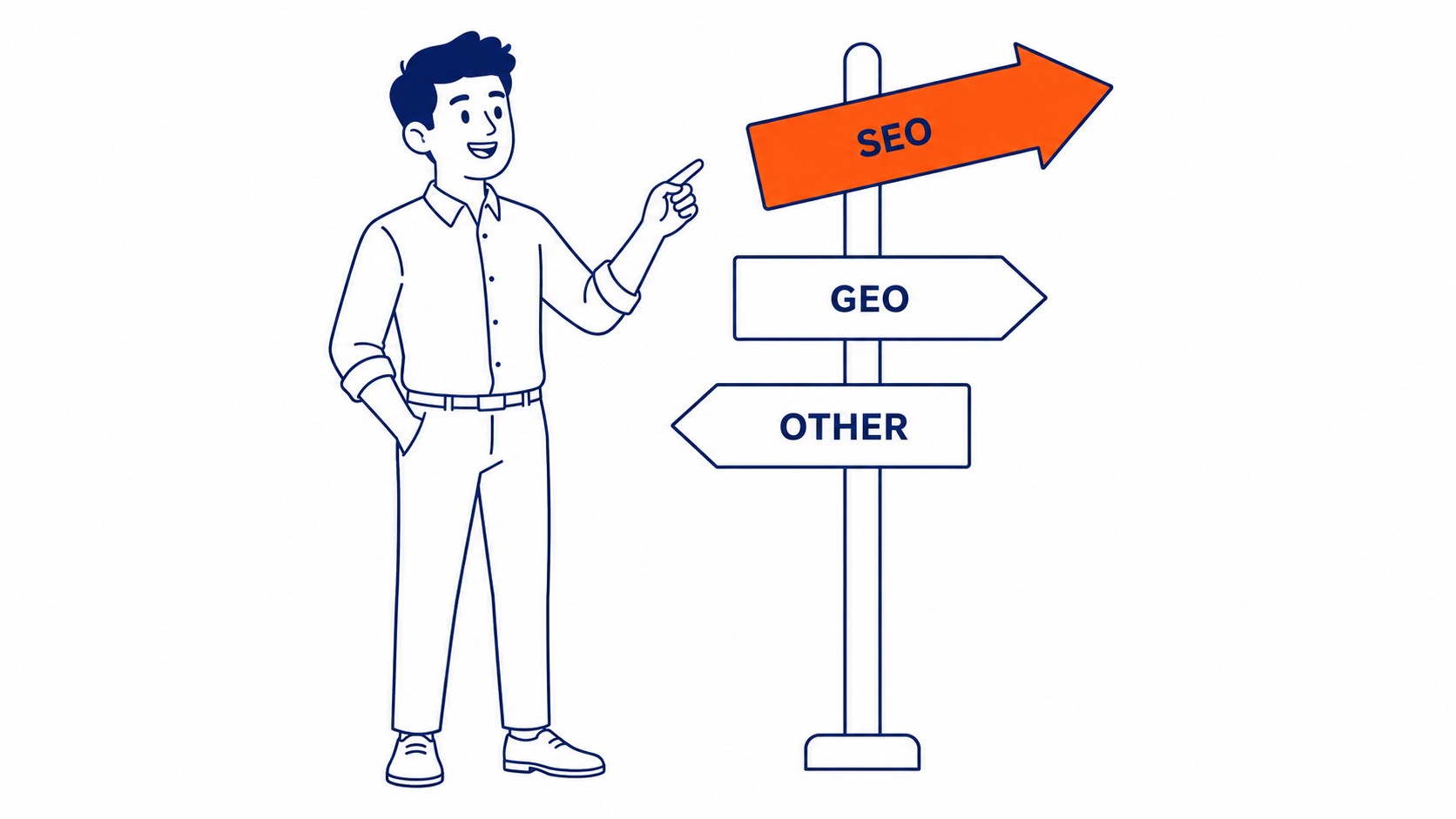
The overlap is real. So are the gaps.
Traditional SEO cares about technical infrastructure. Page speed. Crawlability. Mobile performance. Internal linking depth. GEO is largely indifferent to most of those. AI models do not crawl pages the same way search engines do. Technical SEO wins fewer points in a GEO context.
GEO rewards conversational clarity over keyword density. A page that answers a specific question directly earns more AI citations. One that buries the answer under optimised headings and filler paragraphs does not. Traditional rankings are more forgiving of that structure.
Entity recognition plays a larger role in GEO than in traditional SEO work. Pages that clearly establish the author’s expertise and the content’s scope earn AI citations more reliably. That aligns with E-E-A-T signals for traditional search. The expression, however, is different. AI models weight topic-level depth more heavily than keyword frequency.
Answer questions early. Burying the answer costs citations and organic placement alike.

What Optimizing for Both Actually Looks Like
Specifics matter more than strategy frameworks here.
Schema markup is where the work overlaps most cleanly. FAQ schema helps AI models find your Q&A content quickly. Article schema identifies the author and publication context. Both channels use this information when determining what to cite.
FAQ sections are worth the investment on most pages. ChatGPT pulls heavily from question-and-answer formatted content. So does Perplexity. Google AI Overviews also favour structured Q&A. The format is easier for AI models to parse and attribute correctly.
AI models cite sources that answer the main question and then keep going. A page that covers the main question and stops earns fewer AI citations. One that works through related angles and common objections does better. SEO rewards the same depth, for different reasons.
Heading structure matters for GEO more than most expect. An H2 written the way a real person asks a question earns more AI citations than one built for keyword density. The phrasing matters, not just the keyword.
Keyword research still applies to both. The terms that drive organic search volume often match the questions people ask AI tools. Knowing your target queries is the foundation either way.
The True Picture on Results
Hard to measure right now. Worth saying clearly.
AI citation tracking is still early. Tools exist. None of them provide the clean attribution data that Search Console provides for organic search. Knowing whether GEO efforts are working requires manual spot-checking. Open ChatGPT. Run target queries. See if your content appears. Do the same in Perplexity and Gemini. Not a dashboard you review over morning coffee.
Traditional SEO services in Calgary still drive the majority of organic traffic for most businesses. AI citations are growing. They are not yet replacing organic clicks in most industries. Many people who see an AI overview still click through to the cited source. The click-through behaviour is still being studied.
For clients asking whether the GEO investment is showing results yet, the measurement infrastructure is simply not there. That does not mean the work is without value. It means building for a channel where attribution lag is longer than Analytics suggests.

Should You Chase GEO Before SEO Is Working?
No. That is the short answer.
AI visibility does not compensate for weak traditional rankings. A site that cannot earn Google clicks is unlikely to earn AI citations either. The authority bar is essentially the same. Both channels draw from sources that have demonstrated credibility over time.
Fix the SEO foundation first. Start with a website audit to understand where visibility actually stands. Identifying technical gaps and content depth issues is where it starts. From there, the GEO work builds on something real.
There is no GEO shortcut that bypasses needing a well-built site. Both channels demand the same underlying quality, expressed differently.
Working SEO and GEO Together
Worth building toward. Not a one-month fix.
Calgary SEO is already competitive. Adding GEO to the strategy does not make it less so. What it does is expand where your content can show up. More queries answered in AI tools. Citations from authoritative sources. Another entry point before a prospect ever opens a traditional search results page.
Businesses that need visibility while organic and GEO channels develop often run Google Ads management alongside both. A measurable paid option that does not wait for organic authority to build.
To-The-TOP! builds both channels into its approach. Keyword research maps to conversational queries, not just traditional search volume. Schema markup is standard. FAQ sections are included where the topic warrants them.
Businesses building strong traditional rankings today are the ones that convert more naturally to GEO visibility as AI-driven search grows. Not because the strategies are identical. Because the content foundation is already there.
Worth asking what your current foundation looks like before deciding which channel to prioritise. Same question sits underneath what counts as AEO vs SEO. The AI side of that decision gets its own treatment in generative SEO explained.
Frequently Asked Questions
What is GEO in SEO?
GEO stands for generative engine optimization. Distinct from geographic targeting. It refers to optimizing your content to earn citations in AI-generated responses. Tools like ChatGPT and Perplexity pull from indexed sources when generating answers. Google AI Overviews and Gemini do the same. Traditional SEO targets search engine rankings. GEO targets AI-generated answers. Both rely on authoritative, indexed content.
Does GEO replace traditional SEO?
Not yet. The early evidence suggests it will not replace it entirely. Traditional search results still drive the majority of organic traffic for most businesses. GEO adds a second visibility channel. Running both together gives your content more surface area than either strategy provides alone.
How do AI citations work?
AI models like ChatGPT and Perplexity generate answers by pulling from indexed and authoritative sources. Which pages get cited depends primarily on content depth and authority signals. Structured data, including FAQ schema and Article schema, helps AI systems identify and attribute content correctly.
Should a small business invest in GEO now?
Only after SEO is already working. GEO visibility builds on the same foundation as traditional rankings. A site without solid content depth and demonstrated authority will not earn AI citations regardless of how the content is structured. Get the SEO foundation right. GEO follows from there.
Contact Calgary SEO Company To-The-TOP!
Questions about anything in this article, or about your own rankings? Talk to a Calgary SEO specialist directly.
Phone: (403) 308-5949
Address: 1509 14 Ave SW, Calgary, AB T3C 0W4
Hours:
Monday to Friday: 10:00 am – 7:00 pm
Saturday: 12:00 pm – 4:00 pm
Sunday: closed
