Should Your Company Name Be a Keyword for SEO?
The question comes up in nearly every intake call. A business owner rewrites their title tags and asks: should your business name rank as a search term on its own? Short answer: no. Worth taking a moment on the fuller explanation, though.
To-The-TOP! has been doing SEO in Calgary since 2007. Branded search confusion is one of the most common things new clients raise. Most of it comes from mixing two goals. Getting found by people who already know your business name is one goal. Reaching people who have never heard of you is the other.
What Branded Searches Actually Tell Google
Two signals. Not one.
People who already know your business name will find you. They type it directly. Google already connects that query to your domain. No extra targeting needed. Your site ranks for your company name without ever treating it as a search target. That is branded search. It mostly takes care of itself.

Non-branded traffic is different. Those searches come from prospects who have never heard of you. A Calgary business owner searching “why isn’t my website showing up on Google” has never heard of To-The-TOP! yet. That is the search worth owning. Such traffic does not arrive because your business name appears in a title tag. It arrives because your pages answer what those searchers actually typed.
Search engines reward relevance between query intent and page content. A page targeting your company name satisfies branded queries. For non-branded queries, it contributes almost nothing. Those pages need to be built around what the customer searched before they ever heard of you. Start from what counts as a keyword and the branded versus non-branded split gets obvious. Stuffing many meta keywords into the header never solved that problem either.

Where Your Brand Name Belongs
Title tags, yes. End position.
Your business name has a place in title tags, but at the close. “SEO Services Calgary | To-The-TOP!” is standard practice. Title tag budget runs roughly 50 to 60 characters. The search phrase leads. Your brand name closes. That structure satisfies search engines. It also reinforces recognition for anyone who sees your business name repeatedly in search results.
Putting your brand name at the start of every title tag wastes that budget. “To-The-TOP! | SEO Services Calgary” buries the intent phrase. Lead with what the searcher typed. Close with your name. That is branding and search strategy working together.
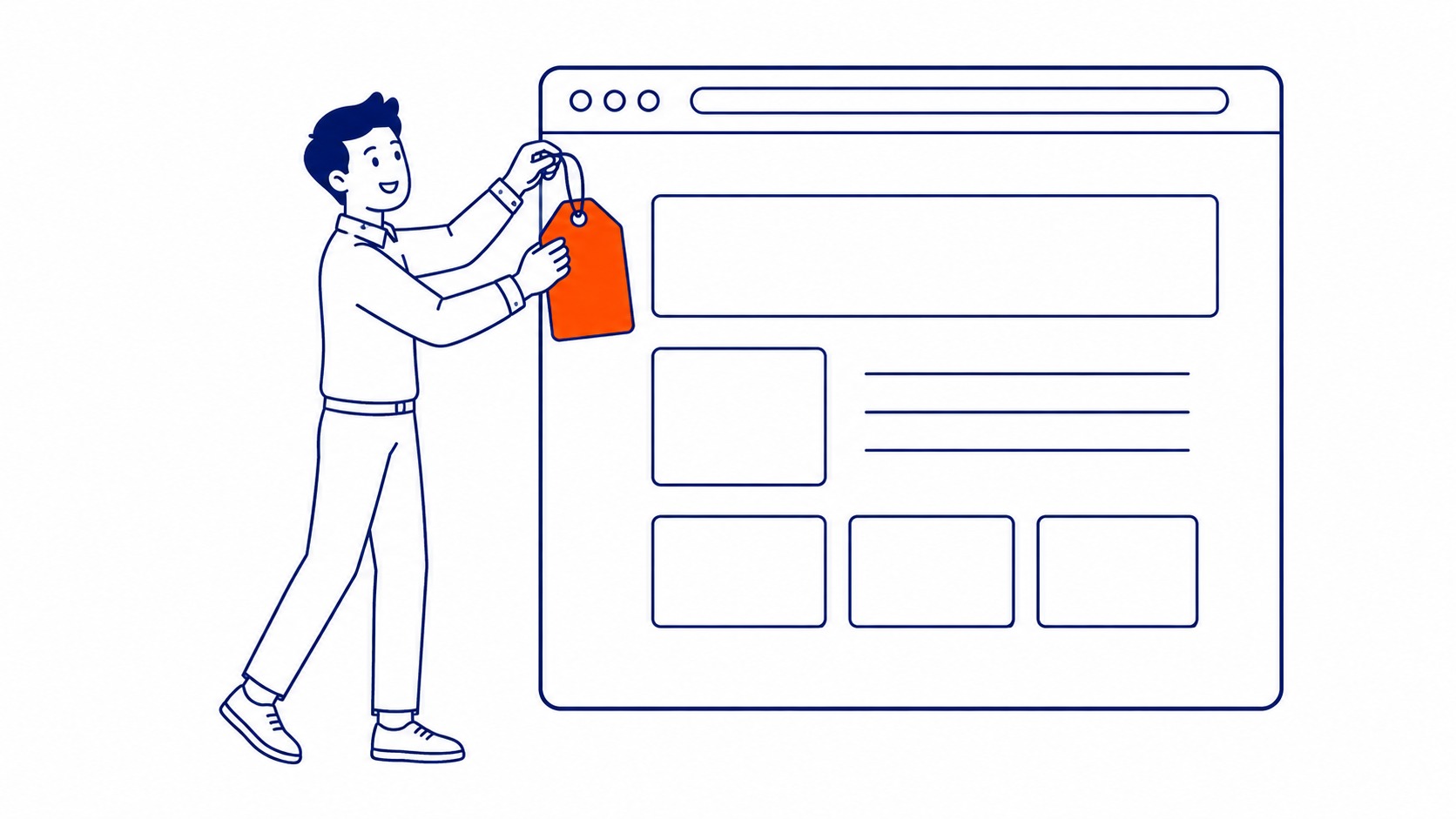
Domain names: a separate consideration
Exact-match domains had measurable ranking benefits around 2012. That advantage has since narrowed considerably. A branded domain builds long-term recognition and trust. Page quality and domain authority matter far more than the words in the domain name itself.
The homepage is the one exception
Homepage is where your brand name makes the most sense as a search anchor. It targets branded and non-branded queries at once. Branded authority concentrates on the homepage naturally. Every other page should lead with the non-branded search query specific to that page. Title tags alone will not build brand awareness, though they help the searches that already exist.
What to Optimise for Instead
Non-branded queries build new business.
The search terms worth targeting are the ones people use before they know you exist. Service terms. Location modifiers. Problem-based queries. That is the territory worth owning through solid competitor keyword research and copy built to match it. It also takes time. Three to six months before meaningful movement. That is the straight estimate.
Map each intent to its own page. A page promoting the SEO work we do needs copy built around the query it targets, not just your business name in a heading. Internal linking ties those pages together so authority flows across the whole site. That structure compounds in a way that brand name targeting alone never does.

One note on Google Ads management worth flagging here. Bidding on your own business name in paid search is a defensive tactic. It protects against competitors who run ads on your exact company name. That is a paid search decision. It is not part of the organic strategy, however, and comes from a different budget entirely.
A few questions come up regularly on this topic.

What is the 80/20 rule in search?
Around 20 percent of a site’s pages tend to drive 80 percent of the organic traffic. Those are usually the pages targeting high-volume non-branded queries with focused coverage. For most service businesses, though, two or three pages carry most of the ranking load. The rest of the site supports them through internal links and topical depth.
What are common mistakes to avoid with keywords?
Targeting only your business name as a search term is near the top of the list. Skipping keyword research is another. So is building a site without a clear internal linking plan. Burying your business name in title tags instead of search-intent phrases quietly limits how far your search results reach.
Is search optimisation evolving in 2026?
Still very much alive. Search behaviour is shifting toward AI-assisted results, but organic rankings still feed the underlying sources those tools cite. Topical depth, page authority, and technical health still matter as much now as five years ago. The fundamentals have not changed.
What keywords should my business target?
Start with what your customers search before they know your business name. Service terms. Location terms. Problem-based queries. Proper keyword research turns that into a priority list ranked by volume and competition. To-The-TOP! maps those terms to specific pages on your site so every page earns rankings on non-branded searches, not just your company name.
Contact Calgary SEO Company To-The-TOP!
Questions about anything in this article, or about your own rankings? Talk to a Calgary SEO specialist directly.
Phone: (403) 308-5949
Address: 1509 14 Ave SW, Calgary, AB T3C 0W4
Hours:
Monday to Friday: 10:00 am – 7:00 pm
Saturday: 12:00 pm – 4:00 pm
Sunday: closed
