
What Is a Good SEO Visibility Score?
The question comes up after the first monthly report. A client sees the number sitting at 8% in SEMrush. Pause. “Is that good?”
The straight answer is that it depends. Not a satisfying response. Context matters more than the number itself. A score of 8% might mean strong early progress in a competitive market. The same score on a site running three years in a low-competition space is a problem worth addressing.
What follows covers how SEO practitioners actually read this metric. The calculation. Reasonable benchmarks by context. Where to focus when the score is lower than it should be. To-The-TOP! has been running Calgary SEO since 2007. These are the patterns we see across real accounts, not theoretical frameworks.

How Visibility Score Gets Calculated
Worth knowing before you react to the number.
Ranking position matters. Search volume matters. Neither one alone tells the story.
Most tools calculate SEO visibility by weighting each keyword ranking against its expected click-through rate. Position 1 on a high-volume term drives the score far more than position 8. The CTR difference between them is steep. Tools apply a CTR curve by position, then multiply by search volume for each keyword in your tracked set.
The result is a percentage. What that percentage actually represents varies by tool. SEMrush expresses it as a share of possible organic clicks captured. Other tools define it differently.
Your SEO visibility score is a directional signal. How close your current rankings get you to the organic traffic your tracked keywords could generate. Not a grade. A relative measure of where your site currently stands in search results. Pulling your current keyword rankings first makes that percentage far easier to read.

What Counts as a Good SEO Visibility Score
No universal benchmark exists. Two SEO tools can report two completely different numbers for the same site on the same day. A good SEO visibility score in one tool is not the same number in another.
That said, here is how scores tend to read in practice, within a single tool tracked consistently over time.
Under 5%: the site is not ranking for much yet. Technical issues or content gaps are likely involved.
5% to 20%: some traction. Most target keywords are not in the top positions yet. Normal for a site in months six through eighteen of an SEO campaign.
20% to 50%: solid performance for most competitive local or regional markets. Your content and keyword research are working.
Above 50%: strong position on your tracked keyword set. More common in low-competition niches or brands that have dominated a topic for years.
Your competitors are the real benchmark, however. A score of 15% sounds low in the abstract. In a local market where your nearest competitor scores 12%, it is a lead worth protecting. We have seen clients with visibility scores in the teens who were outranking every competitor for their highest-intent keywords. The number only makes sense alongside the competitive context.
What your competitors score on the same keyword set matters far more than any industry average. That is where the meaningful comparison lives.

Why Different Tools Report Different Numbers
Same site, different tools, different numbers. This trips people up every time.
Each tool builds its visibility score from its own keyword database. Ahrefs tracks a different keyword set than SEMrush. The CTR curves are proprietary. Weighting models differ. One platform might weight mobile rankings more heavily. Another might exclude branded searches entirely.
Comparing your SEMrush score from one month to your Ahrefs score the next tells you nothing useful. Track within one tool. Set a baseline. Watch the trend over 90 days. That is where useful signal lives.
Where to Find Your Visibility Data
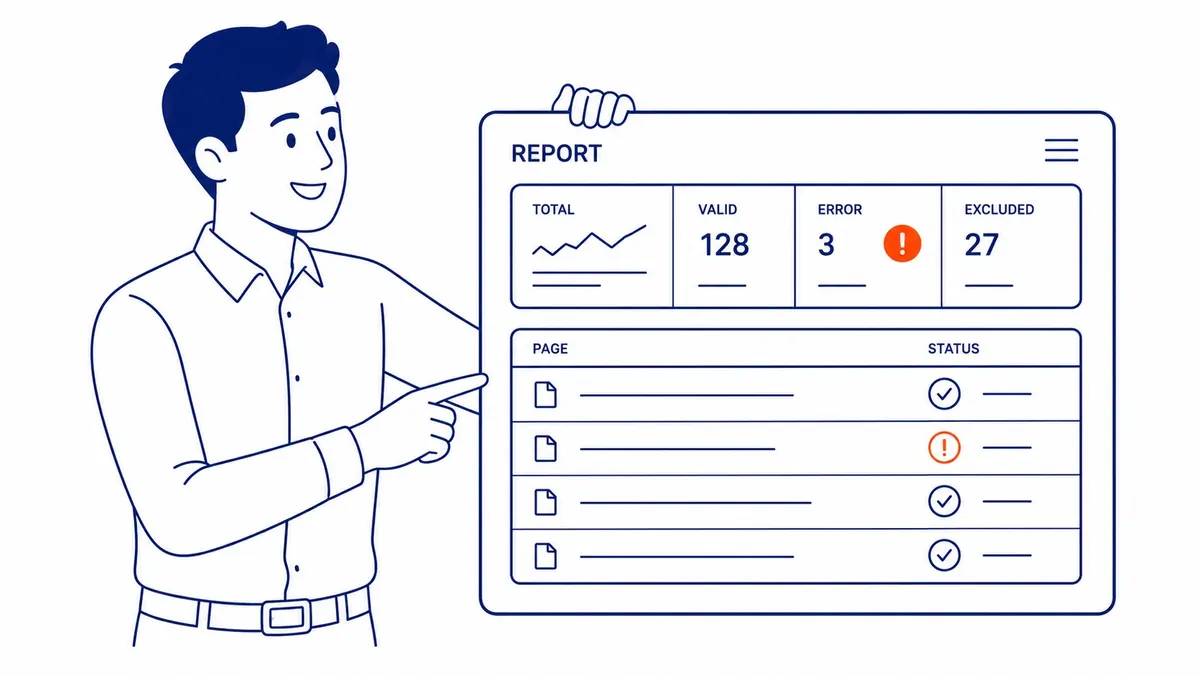
Google Search Console first. Free. No subscription required.
Average position. Impressions. CTR. Search Console shows all three for every query your site appears for. It is not a traditional search visibility score. Still the most direct signal available for your own site. Which queries generate impressions. How many pages actually earn clicks from those impressions. The coverage is limited to your own site, however. It does not show competitor positions.
For a true SEO visibility score with competitor comparison, SEMrush and Ahrefs both have position tracking dashboards. Set up a project. Add your target keywords. Let the tool calculate the score after a few weeks of data. The dashboard then shows your visibility trend alongside your competitors’ scores for the same keyword set.
Google Search Console is also the right starting point for spotting CTR problems. A page with many impressions and few clicks is flagging something. Usually the title tag or meta descriptions do not match what users expected from that query.
What Drives Your Visibility Score Up or Down
Three patterns repeat across every account we monitor.
Ranking losses on high-volume keywords hit the score hardest. One page dropping from position 3 to position 11 moves the score more than ten pages each gaining a single spot. The CTR cliff at position 10 versus 11 is where most score movement happens. Protecting top-10 positions on your highest-volume keywords matters more than chasing new rankings.
Technical issues suppress visibility before content work has a chance to matter. Crawl errors, slow page speed, poor mobile performance, indexing problems. Fix what search engines cannot properly read before adding more pages. A technically unhealthy site will not rank well regardless of content quality.
Competitor gains take from your score without any change to your site. Your rankings hold steady. A competitor’s content improves. Their positions climb past yours on two or three shared keywords. Your visibility score still drops. This is the variant that shows up unexpectedly on monthly reports. The site did nothing wrong. Your competitors just did something right. Competitor strength usually traces back to the basics of domain authority anyway. Ask what an SEO score is actually measuring before treating a monthly dip as a failure.
How to Improve a Low Visibility Score
Keyword research first. Content second. Technical work in parallel.
The fastest visibility gains come from keywords where your site already ranks on page two. Positions 11 through 20. These pages are one content refresh away from contributing meaningfully to your visibility score. Stronger internal links pointing to those pages signal their value to search engines. A small number of high-quality backlinks from relevant sources often provide the final push onto page one.
Long-tail keywords matter more than their individual search volumes suggest. Lower volume per term, but more of them. A cluster of long-tail terms your content covers well adds up to meaningful visibility. Good SEO keyword analysis surfaces clusters your competitors have not touched. That is where new ground gets taken.
The starting point for keyword research is what your actual audience types into search engines. Not what you assume they search for. Those two lists are often quite different. To-The-TOP! has been doing this work since 2007. The gap between assumed keywords and actual search behaviour is almost always larger than clients expect.
Internal links are underestimated. Connecting relevant pages to each other signals topical depth. Pages that should rank but do not often have no internal links pointing at them. A systematic internal link audit surfaces several of these orphaned pages quickly.
High-quality backlinks still matter. Not the count. The relevance and authority of the source. One link from a credible industry site does more for visibility than a hundred directory submissions.
Your content also needs to match search intent. Pages stuck at position 15 are often answering the wrong question. The content exists. It just does not align with what users at that keyword are actually looking for. Aligning content to search intent frequently moves those pages into the top 10.

Visibility Score vs. Other Metrics
Different questions need different numbers.
Organic traffic tells you how many people actually visited. Visibility score tells you how often your pages appeared across your tracked keywords. High visibility with low organic traffic usually signals a CTR problem. Your site shows up. Users do not click. Thin meta descriptions or title tags that do not match search intent are common causes.
Average position averages across all keywords at once. A site with one position 1 ranking and fifty position 40 rankings can show an average position of 22. That sounds acceptable. It is not.
CTR by keyword gives clearer signal. Which specific keywords generate impressions but not clicks. Those are the pages to fix first.
For businesses also running Google Ads management, visibility score data has a practical use beyond organic SEO. Keywords with strong organic visibility need less paid coverage. You are already capturing that traffic without the cost-per-click. Keywords where organic visibility is low but commercial intent is high are better candidates for paid search coverage.
We look at visibility score as one signal in a reporting set. Organic traffic trends. CTR by page. Ranking movement by keyword group. Visibility score sits alongside all three. For Calgary SEO clients, no single metric makes the full picture on its own. The combination tells the story.
AI Visibility: A New Layer to Track
Search results are changing. So is what “visible” actually means.
Google AI Overviews now appear at the top of many search results pages. ChatGPT answers questions with citations. Perplexity pulls sources and surfaces them to users who may never scroll to organic results below the answer box.
A site ranking at position 3 in organic search results might appear in those AI-generated answers, or might not appear at all. Traditional SEO visibility scores do not measure this. They track positions in organic search results only. AI citations are a different signal entirely.
Brand mentions in AI responses are worth monitoring separately. Some tools are building AI visibility tracking as a distinct metric. Methodology varies. The data is still inconsistent. Brands appearing regularly in ChatGPT and Perplexity answers appear to generate stronger CTR. Users click through to organic results for more depth afterward.
Content depth and brand mentions across authoritative sources seem to influence AI citations most. Structured data helps too. The fundamentals any search engine optimization company Calgary relies on still apply. AI citations layer on top of that work, not instead.
Track your AI visibility alongside your standard visibility score. Not as a replacement. The two measure different things. Both matter increasingly as AI-generated answers claim more of the page.
Frequently Asked Questions
What is a good SEO visibility score in SEMrush?
Depends on your keyword set and how competitive your niche is. For local or regional markets, a score in the 20% to 40% range represents meaningful traction. Fresh sites often sit well under 5% for the first several months. The comparison that matters is your score versus your competitors’ scores, not an abstract industry average. Your SEO services provider should benchmark your visibility score against the actual competitors ranking for your target keywords. Not a generic number pulled from a blog post.
Does a higher visibility score mean more traffic?
Not automatically. Visibility score measures how often your pages appear across your tracked keywords. Traffic depends on whether users click. A site ranking at position 8 for high-volume keywords can carry a solid visibility score while generating modest traffic. CTR is the link between visibility and actual visits. Check your Search Console CTR data alongside the score. That tells you whether the gap is a ranking problem or a click problem.
How often should you check your visibility score?
Monthly at minimum. Weekly checks are useful during active campaigns where rankings are moving. Daily checks introduce noise. Rankings shift by a position or two routinely for reasons outside your control. The 90-day trend tells more than any single week. Set a consistent review cadence. Compare month-over-month, not day-over-day.
Can competitors affect your visibility score?
They can. Your score changes when a competitor climbs past you on a shared keyword. Nothing on your end changed. Their page improved. Your percentage of possible clicks drops. This is why watching competitor ranking movement alongside your own is part of any serious ongoing search engine optimization engagement. A visibility score drop with no changes on your side almost always has one cause. Usually a competitor gained ground on one or more shared terms. Worth checking the keyword-level data before assuming something went wrong on your end.
Contact Calgary SEO Company To-The-TOP!
Questions about anything in this article, or about your own rankings? Talk to a Calgary SEO specialist directly.
Phone: (403) 308-5949
Address: 1509 14 Ave SW, Calgary, AB T3C 0W4
Hours:
Monday to Friday: 10:00 am – 7:00 pm
Saturday: 12:00 pm – 4:00 pm
Sunday: closed