
How to Find SEO Competitors and Why the Obvious Ones Are Often Wrong
Your SEO competitors are not necessarily your business competitors. That distinction trips up almost every business owner starting a competitive analysis. A local plumber’s real-world rival might not even show up in the top ten results for the plumber’s target keywords.
SEO competitors are whoever actually ranks for the terms that matter. Nothing more, nothing less.
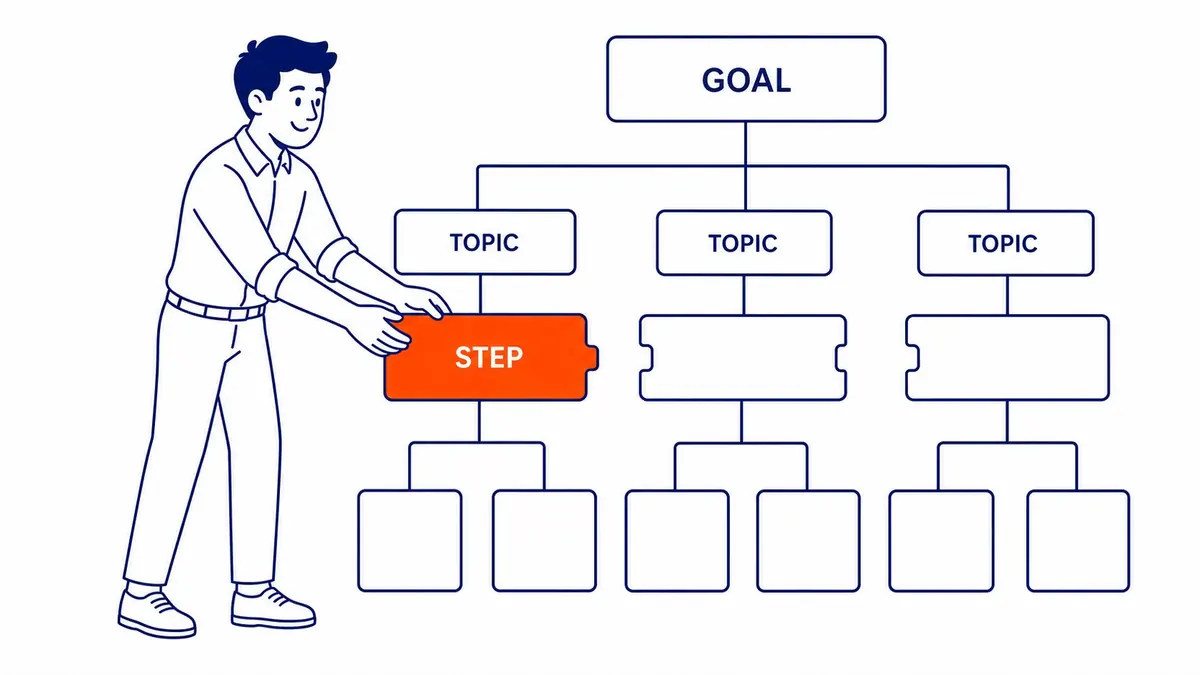
Why Business Competitors and SEO Competitors Differ
A boutique law firm might see three other boutique firms as business rivals. Search the firm’s actual target keywords, though. A national legal directory or a large multi-city firm often occupies those top spots instead. Different competitor set entirely.
Business size and reputation have nothing to do with who shows up. Search intent decides that. A small, hyper-focused site nailing exactly what a searcher wants beats a much bigger, more established name every time. Relevance and technical execution win here, not brand recognition.
This matters because studying the wrong competitors wastes real time. Analyzing a business rival who ranks poorly teaches nothing useful about what actually works in the search results. Begin with the sites that actually outrank you when doing competitor analysis. Two people can see two different competitor sets, which is how personalization affects SEO reporting.

Finding Competitors Through Google Search Directly
Search your target keyword and look at who occupies positions one through ten. That list is the real competitor set for that specific term. Repeat across every keyword a business actually wants to rank for.
Patterns start emerging fast. The same handful of domains show up across multiple related keywords. Those repeat names deserve the closest attention, since they’re clearly doing something right across a whole cluster of terms.
Incognito mode matters here. Personalized search results and location history both skew what Google shows a logged-in browser. A clean, logged-out search gives a more accurate read on what an average searcher actually sees.

Using SEO Tools to Identify Competitors at Scale
Dedicated competitor discovery features exist in both Ahrefs and Semrush, built specifically for this job. Enter a domain, and back comes a ranked list of overlapping sites, sorted by how much keyword overlap actually exists.
This method catches competitors a manual search might miss. Sites ranking well for dozens of related long-tail terms still represent real competitive pressure. Even without dominating the single obvious head term.
Look at organic keyword overlap specifically, not just domain authority or raw traffic numbers. A smaller site owning fifty relevant keywords can matter more than a massive site with only two or three overlapping terms. Overlap data feeds straight into how content gap analysis in SEO works.

Checking Local Competitors for Location-Based Searches
Local competition works differently than national competition. Google’s local pack runs on a separate ranking system entirely, distinct from the standard organic results below it.
Include the city name in the search term, then check both the map pack and the organic results underneath. Sometimes the same businesses dominate both. Often, the local pack and organic rankings feature completely different sets of competitors entirely.
For a Calgary SEO campaign, this distinction matters constantly. A business might already own strong local pack visibility while still losing meaningfully on organic rankings, or the exact reverse situation. Both need separate, distinct competitive analysis.

Identifying Emerging Competitors Before They Dominate
Established competitors are easy to spot. Sitting at position one or two for months, sometimes years. Far easier to miss, though. Emerging competitors matter just as much.
A single snapshot misses the real story. Track ranking movement over time instead. Position fifteen climbing to position six over three months signals real momentum. That trajectory flags a competitor about to become a serious problem, well before they reach the top.
Content velocity is a useful early signal here. Heavy investment in search visibility shows through weekly, well-structured content. That kind of investment pays off within a few months, often before current rankings reflect the effort behind it.
New domains occasionally jump straight to strong rankings too. Especially when backed by an established brand entering a new market with a dedicated content arm. These deserve early attention precisely because they lack the ranking history that usually gives competitors away.

What to Actually Analyze Once Competitors Are Identified
Content depth and structure come first. What questions does a competing page answer that your page doesn’t currently cover? Gaps here represent direct opportunities.
Backlink profiles matter next. Where are competitors earning links from? Those same sources often represent realistic, replicable link-building opportunities for a comparable business in the same space.
Technical factors round out the analysis. Page speed, mobile experience, schema markup usage. Pure technical execution sometimes explains a competitor beating you on rankings despite thinner content.
Frequently Asked Questions
How many SEO competitors should I track?
Somewhere between five and ten is reasonable for most businesses. Fewer than that misses useful patterns across a keyword cluster. More than ten gets difficult to track meaningfully without dedicated tooling and a lot of extra time.
Should I look at competitors outside my city for local SEO?
Rarely useful for direct comparison, though occasionally instructive. Content or technical strategies worth adapting sometimes come from a well-optimized competitor in a different city entirely. No direct competition for the same local searches needed. See the SEO blog for more on local versus national SEO differences.
Do I need paid tools to find SEO competitors?
Not strictly. Manual Google searches across target keywords reveal the core competitor set for free. Paid tools like Ahrefs or Semrush speed up the process significantly. Overlap patterns surface fast that manual searching alone would take far longer to uncover.
Contact Calgary SEO Company To-The-TOP!
Questions about anything in this article, or about your own rankings? Talk to a Calgary SEO specialist directly.
Phone: (403) 308-5949
Address: 1509 14 Ave SW, Calgary, AB T3C 0W4
Hours:
Monday to Friday: 10:00 am – 7:00 pm
Saturday: 12:00 pm – 4:00 pm
Sunday: closed