
How to Measure SEO ROI
Most SEO reports land on traffic and rankings. Neither is revenue. SEO ROI is the financial return on organic search investment, expressed as a percentage. Two numbers produce it. What you spent on the program. Revenue the organic channel generated. Whether the investment earned or lost money. The gap between those two numbers shows you.
Simple formula. Harder to populate accurately, especially without clean conversion tracking already in place.

What Is SEO ROI?
SEO ROI is the percentage return generated by organic search investment. Same logic as any other investment metric. What you spent versus what came back.
Revenue from SEO. Minus the cost of SEO. Divided by that cost. Multiplied by 100. That percentage is the SEO ROI figure. $40,000 invested in SEO. $200,000 in organic-attributed income. Formula outputs 400%. Every dollar spent returned five.
SEO ROI differs from paid search ROI in one structural way. Stop a Google Ads budget and the traffic stops that day. Organic traffic earned through SEO keeps generating conversions months or years after the investment that created it. The cost sits in one period. Revenue arrives in another. Early-campaign numbers chronically understate the eventual return. Spend sits in year one. Captured return arrives later. That gap is why.
Forty-nine percent of marketers put organic search first on channel ROI. Multi-year campaign surveys back that number. It reflects compounding rather than month-three performance. Firm size changes the arithmetic, and the ROI math for a consulting firm rarely looks like an e-commerce case. Agencies that communicate SEO ROI to clients well tend to lead with that gap.
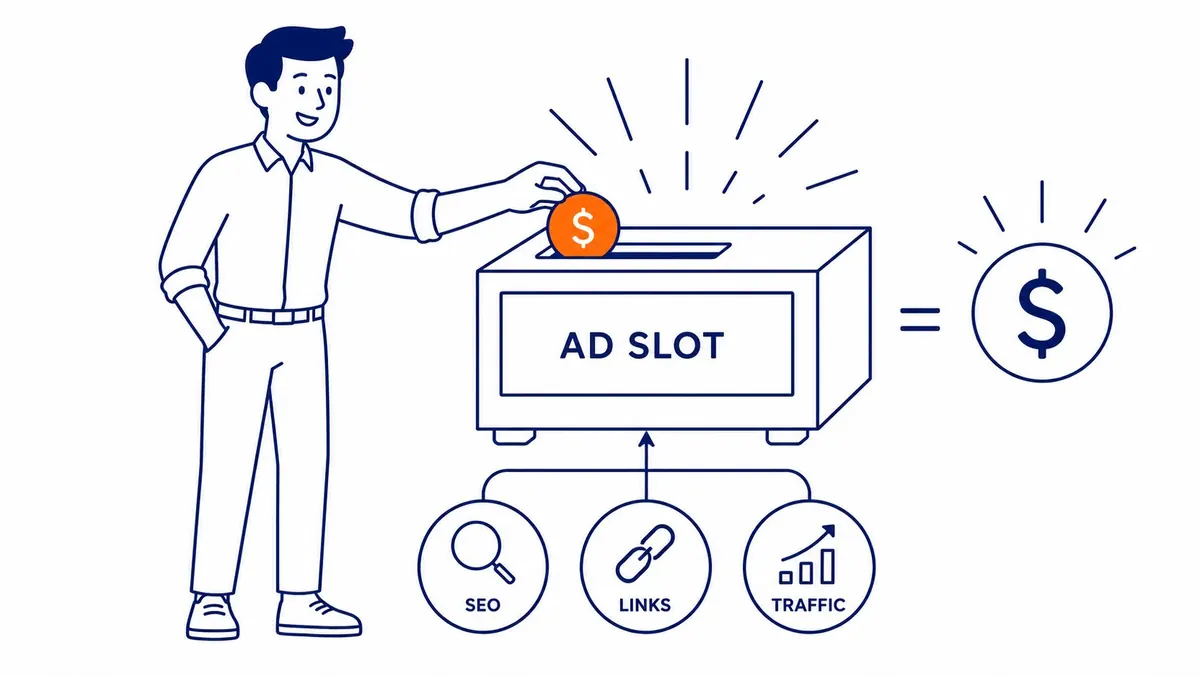
The SEO ROI Formula
Three inputs. One calculation.
Revenue from organic search minus the full cost of SEO, divided by the full cost, multiplied by 100. The output is a percentage. Negative in early months is common. Positive and climbing by year two is the expected pattern on a well-run campaign.
For ecommerce sites, the revenue side pulls directly from GA4 via Enhanced Ecommerce tracking. Filter to the organic channel. Transaction values are recorded at the order level. The number is there if the implementation is clean.
For lead generation businesses, one more step is needed. Organic revenue equals leads from organic search multiplied by the historical close rate, then multiplied by average customer lifetime value. Fifty organic leads per month. Close rate 20%. Average lifetime value $5,000. Monthly organic income works out to $50,000. The SEO ROI formula runs from that figure.
Full SEO investment is almost always higher than the agency invoice total. Both sides of the formula need accurate numbers or the SEO ROI output is meaningless. Many businesses discover this mid-calculation.
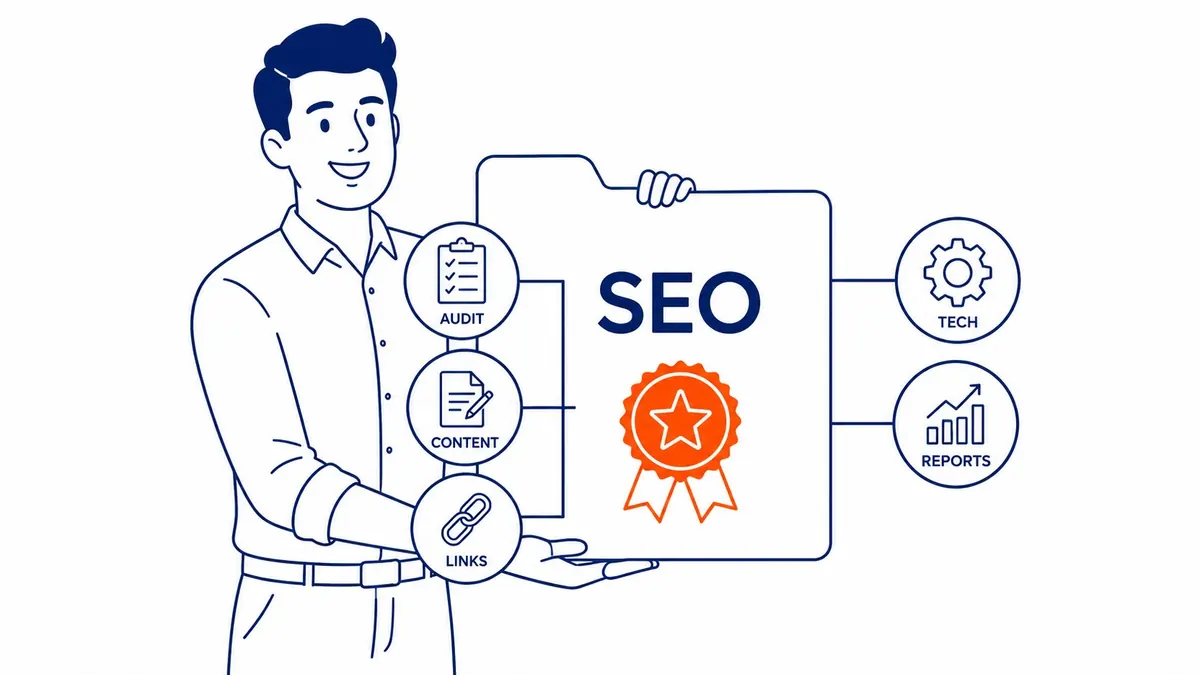
What Goes Into Your SEO Investment?
Five cost categories. Most businesses count two of them.
In-house staff time is the biggest undercount. An internal SEO specialist at $80,000 base salary costs closer to $100,000 fully loaded with benefits and overhead. Add the hours a developer spends on technical work. Also factor in the portion of a content writer’s time. Estimate hours spent, apply the loaded hourly rate, include the total.
Agency and freelancer fees are the one number most businesses do track. Monthly retainer plus any project fees. These show up in the invoices.
Tool subscriptions are often spread across departments and undercounted. Rank trackers, crawling tools, reporting platforms, keyword research software. Add them all.
Content production costs. Articles, photography, video where applicable. Content production runs $0.25 to $1.00 per word. Technical depth and writer expertise move the number.
Link building spend. Editorial link placements run $400 to $600 per link when accounted at full labour cost. Many campaigns ignore this line entirely.
A website audit at the start of an SEO engagement maps what the real investment looks like. Most clients find their true spend is 30 to 40% higher than the number they arrived with. Accurate cost figures are the only way to run a meaningful SEO ROI calculation.
How to Track Organic Conversions and Revenue
The income side of the formula requires tracking infrastructure. Nothing useful shows up if the setup is broken.
Both setups run through Google Analytics 4 (GA4). Ecommerce sites rely on Enhanced Ecommerce tracking to record transaction values at the order level. Filter to organic sessions and the total populates. That assumes a clean implementation. Missing GA4 events or broken tagging mean the number is understated before the calculation even begins.
For lead generation, assign monetary values to conversion events in GA4. Each form submission or phone call event gets a dollar value based on historical earnings contribution. Lead value equals average customer lifetime value multiplied by the historical close rate for that lead source. This converts non-transactional conversions into a dollar proxy the SEO ROI formula can use.
Attribution muddies the calculation. GA4 defaults to data-driven attribution (DDA). It distributes conversion credit across all the touchpoints a user hit before converting. A user who found the site through organic search, returned through a paid ad, then converted on a direct visit. DDA gives each touchpoint partial credit. Still, DDA requires hundreds of monthly conversions to produce reliable outputs. Smaller sites often get misleadingly clean numbers from a model fitting to insufficient data.
Assisted conversions are the second gap. First-visit organic search rarely converts directly. Multiple visits before the transaction. That is typical. Last-click models credit the final touchpoint. The organic introduction gets nothing. Multi-touch models or assisted conversion reports in GA4 surface the fuller picture. The keyword research driving organic traffic also has to target conversion-intent terms rather than pure volume terms. Informational searches drive visits. Purchase-intent and service-intent terms drive revenue.
Research suggests up to 60% of traffic labelled “direct” in GA4 is actually organic. Mobile traffic is the worst case. In-app browsers and dark social sharing strip UTM parameters before the session registers. SEO’s dollar contribution is structurally undercounted in any standard GA4 report. The real number is higher than what the tool shows.
Why SEO ROI Is Hard to Measure Accurately
Attribution is the core problem. No model captures it perfectly. Last-click underweights early-funnel channels, and organic search typically operates at the top of the funnel. Data-driven attribution requires conversion volume most sites never reach. Every model is an approximation. The practical question is whether the approximation is close enough to inform decisions.
Time lag is the second structural problem. SEO investment sits in year one. Returns from that investment accumulate in years two and three. Most quarterly ROI calculations catch only the early phase of a campaign. The returns that actually justify the spend keep arriving after the typical reporting window closes.
SEO also builds brand familiarity in ways no attribution model captures. Someone who reads five organic posts over three months, then buys through a branded search. Attribution codes that as direct. These halo effects are real and often material. Impossible to quantify precisely with standard analytics tools, but present in every long-run campaign.
First Page Sage data covers campaigns from 2021 to 2025. Median real estate SEO ROI sits at 1,389% over three years. Financial services reaches 1,031%. eCommerce averages 317% with a nine-month break-even. These are three-year figures. Compounding over that period does significant work in the final calculation.
Calgary SEO campaigns measured at month six consistently show a weaker ROI picture than the same campaigns measured at month eighteen. Returns are compounding in both cases. That six-month window just does not capture them yet. This is the most common misread of early-stage SEO performance. Get the steps to measure SEO right first, then judge the window you are reading.

How Long Before SEO ROI Turns Positive?
Four months to a year for meaningful results. Google engineer Maile Ohye put that range on record directly. Real-world campaign data broadly confirms it.
Technical SEO work reaches positive ROI fastest. Typically six months. Fixing crawl blockers and resolving indexation problems unlocks traffic that was already being held back. The infrastructure fix delivers returns faster than content campaigns because the audience already exists.
Thought leadership content campaigns break even around nine months. They build topical authority gradually. Traffic compounds but the initial ramp is slow by design.
Basic content marketing at scale takes fifteen months or longer to break even. High content volume targeting broad informational terms drives traffic. Still, conversion rates on informational pages are thin enough that the payback period stretches significantly.
Most established businesses run SEO and paid search in parallel. By year two, organic search is typically the higher-ROI channel on shared queries. Both channels running simultaneously generate more total traffic than either alone.
Paid search covers the gap while the organic channel builds. That is where Google Ads management fits best. Neither channel cannibalizes the other on shared queries.
A well-run SEO services engagement and paid search serve different stages of the buyer journey. Same queries. Different timelines and cost models.
Frequently Asked Questions
What Is a Good SEO ROI?
Industry medians at the three-year mark range from 317% for ecommerce to 1,389% for real estate. A commonly referenced realistic target for a focused two-year campaign with solid technical foundations is 400%. Negative ROI in the first six months on a competitive domain is normal. Positive but below 100% in year one is also common. Long-run figure is what counts. Not the early read. Year-three campaign data consistently produces ROI numbers that would have cleared the bar at year one. Simply not visible yet at that point.
How Do You Improve SEO ROI?
Three levers. Cost is one. Tool consolidation cuts spend fastest. A typical agency stack carries two or three overlapping rank trackers and a redundant crawl tool. Cutting those reduces the denominator in the ROI formula without reducing output. Tightening content production to conversion-intent terms also helps. Informational content drives traffic. It rarely drives revenue at the same rate.
Revenue is the second lever. Fix conversion rates on the organic landing pages. The same organic traffic through a 3% converting page returns triple the revenue of a 1% converting page. SEO ROI is a conversion rate problem as much as a traffic problem.
Timeline is the third lever. Start with technical SEO work. Crawl blockers removed in month one accelerate everything that follows. Fix the technical foundation first. Organic traffic compounds from there.
Is SEO Worth the Investment?
53% of all website traffic globally comes from organic search. No other single channel reaches that share. The question is not whether SEO works. Data on that is consistent. A business that needs revenue in 90 days should run paid search alongside SEO. One with an 18-month investment horizon and competitive keyword targets. SEO is the stronger long-term channel on a per-dollar basis. Most established businesses run both for that reason. Paid search handles the near-term gap. The organic channel compounds over time.
What Metrics Actually Reflect SEO Performance?
ROI is the summary metric. Organic traffic volume and ranking movement on conversion-intent terms are the first two drivers to watch. Conversion rate and cost per lead follow. Share of voice is also a useful leading indicator. It measures how often the domain surfaces versus competitors on the full target keyword set. Share of voice gains predict revenue growth 12 to 18 months out. The Google Analytics number arrives later.
Contact Calgary SEO Company To-The-TOP!
Questions about anything in this article, or about your own rankings? Talk to a Calgary SEO specialist directly.
Phone: (403) 308-5949
Address: 1509 14 Ave SW, Calgary, AB T3C 0W4
Hours:
Monday to Friday: 10:00 am – 7:00 pm
Saturday: 12:00 pm – 4:00 pm
Sunday: closed