
What to Do After Keyword Research and How to Turn a List Into a Real Content Plan
A spreadsheet full of keywords does nothing on its own for SEO. Most of the actual value shows up in what happens next. Organizing by topic, mapping, prioritizing, then finally writing.
Skip these steps and even great keyword research gets wasted on scattered, disorganized content that ignores good SEO topic structure entirely.
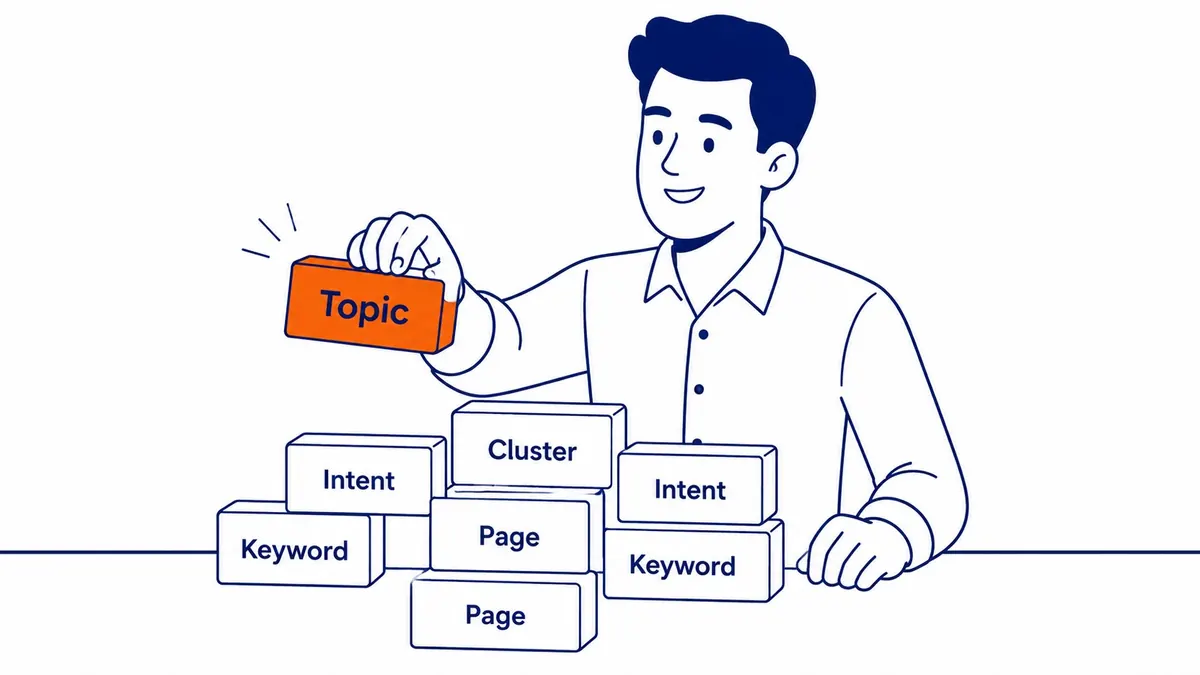
Group Keywords Into Topic Clusters
Raw keyword lists rarely map one keyword to one page. Similar search intent groups multiple keywords together naturally. “Best coffee maker” and “top coffee makers” both belong on the same page, not two separate ones.
Look for shared intent first, not just shared words. “How to make cold brew” and “cold brew recipe” cluster together easily. “Cold brew maker” belongs somewhere else entirely, since that searcher wants a product, not instructions.
Tools like Ahrefs and Semrush offer keyword clustering features that speed this process up considerably. Manual clustering works too for smaller keyword sets, just slower without the automation.

Build a Keyword Map
A keyword map assigns each cluster to a specific URL, existing or planned. This single document becomes the backbone of the entire content strategy going forward.
Existing pages get checked against the map first. Optimization, not a rewrite from scratch, is what a page already ranking reasonably well for its assigned cluster needs. Poor performance might call for a bigger overhaul, or possibly a full replacement.
Gaps become obvious once the map is built. Clusters with real search volume but no assigned page represent genuine content opportunities worth prioritizing. The map plus a priority order is keyword strategy explained without the jargon.

Prioritize by Business Value, Not Just Volume
High search volume alone means little without matching business value. Priority goes to a keyword with commercial intent, close to an actual purchase or a phone call. A similar-volume term stuck at pure information-gathering can wait.
Difficulty matters here too. Write the high-value, low-difficulty keyword before the high-value, high-difficulty one. Faster wins build momentum and early traffic while the harder terms take shape.
A simple scoring system helps. Multiply estimated volume by an intent score, then divide by difficulty. Highest-scoring terms get written first. Lowest-scoring ones wait, sometimes indefinitely.

Match Content Format to Search Intent
Different intent types call for genuinely different content formats. Informational searches want a genuinely useful guide. Commercial searches want comparison content or detailed product pages. Transactional searches want a clean, fast path straight to conversion.
Check the current top-ranking results for each keyword before committing to a format. Ten list-style articles dominating a SERP is a strong signal. Google wants list content there, not a single long-form essay fighting a completely different format.
For a Calgary SEO campaign, this step alone prevents a huge amount of wasted writing effort. Matching the format Google already rewards beats guessing at what feels right on a given topic. Formats aside, missing topics are what content gap analysis in SEO means in practice.

Set a Realistic Publishing Schedule
Rushing every keyword into content at once produces thin, rushed pages across the board. A steady, sustainable pace produces stronger individual pages and a healthier long-term strategy overall.
Prioritized clusters from the scoring step above should feed a realistic calendar. Two to four solid pages a month, sustained consistently, usually beats ten mediocre pages published in one frantic week.
Frequently Asked Questions
How many keywords should map to a single page?
Anywhere from a handful to dozens, depending on how closely related the intent behind them actually is. Whether one page can genuinely satisfy every keyword in the group is the real test. Two pages instead of one is likely the answer, if satisfying all of them requires splitting the content awkwardly.
Should I update old pages or write new ones after keyword research?
Depends entirely on what the keyword map reveals. Optimization usually fits a cluster already assigned to an existing, reasonably well-ranking page. Something new fits a genuine content gap instead, one with no page currently covering that cluster. See the SEO blog for more on balancing new content against updates to existing pages.
How often should a keyword map get revisited?
Every three to six months is a reasonable baseline for most sites. Search behavior shifts over that stretch. New keyword opportunities emerge. Rankings change too, enough that the map’s fit with reality is worth a fresh look.
Contact Calgary SEO Company To-The-TOP!
Questions about anything in this article, or about your own rankings? Talk to a Calgary SEO specialist directly.
Phone: (403) 308-5949
Address: 1509 14 Ave SW, Calgary, AB T3C 0W4
Hours:
Monday to Friday: 10:00 am – 7:00 pm
Saturday: 12:00 pm – 4:00 pm
Sunday: closed