
Can Lionbridge Work With My Local SEO Agency?
Yes. Lionbridge and a local SEO agency handle different jobs. One translates and localizes content at global scale. The other ranks your business in one specific market. Stack them wrong and the mess shows fast. Duplicated keyword lists. Contradictory title tags. Two invoices for the same work. Stack them right and each vendor stays in its lane.
This question comes up more than people expect. A business signs with Lionbridge for translated product pages, then hires a local SEO shop for Google rankings in their home city. Nobody explains how the two fit together. Here is the straight breakdown.
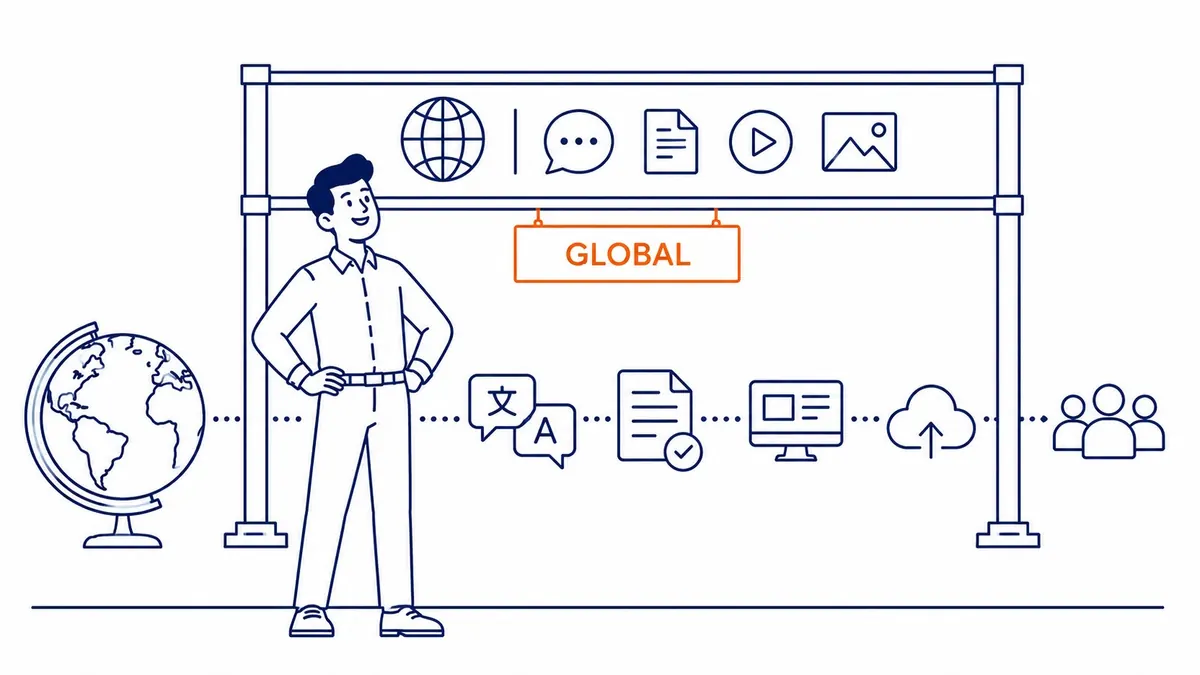
What Lionbridge Actually Does
Lionbridge is a large-scale localization and content operations company. Translation into dozens of languages. AI training data. Global site testing across markets and devices. Enterprise clients hire the company so one product page reads correctly across dozens of markets. Tokyo to São Paulo, no separate contract per country.
None of that touches Calgary keyword strategy. Chasing local rankings is not the job. Neither is managing a Google Business Profile. Content built for one city audience sits outside the scope too. That is not a criticism. It is simply outside the scope Lionbridge was built for.

What a Local SEO Agency Covers
A local SEO agency works the opposite end. Google Business Profile optimization. Citation consistency across directories. On-page keyword targeting for the neighbourhoods and cities that actually buy from you. That starts with keyword research tuned to one market, not a global term bank.
Nineteen years of doing this solo taught one thing clearly. Local ranking work moves slowly and stays specific. Market-by-market, not global. It rewards someone who knows the competitive set in your city, not a company managing hundreds of accounts at once. That is the reality of a local SEO company, whatever the pitch deck says. Selling into several countries changes the job entirely, and the short version of international SEO covers why.

Can Lionbridge and a Local SEO Agency Work Together? One Rule Applies
Assign keyword strategy ownership to exactly one party. Usually the local agency, since local intent keywords live inside the local market, not the global content operation. Lionbridge then executes translation and localization against that keyword direction, rather than generating its own competing keyword set.
Skip that step and both vendors independently research keywords. Two lists. Duplicate content plans follow close behind. Neither vendor knows what the other is doing. Google sees inconsistent signals when title tags get rewritten twice in one month on pages meant to read as one site. Keeping it to one vendor is part of the appeal of hiring a local SEO consultant.
Where the Overlap Actually Breaks Things
Three failure points show up again and again.
Contradictory meta titles. Lionbridge’s localization team optimizes a title tag for a translated market. The local agency optimizes the same page’s English title independently. Neither checks the other’s version.
Schema conflicts. Structured data added by one side gets overwritten by a deployment from the other. This happens more than clients realize, usually discovered during a routine website audit.
Duplicate hreflang tags. Two vendors touching international targeting tags without a shared source of truth creates conflicting signals Google has to guess through.
None of these are Lionbridge’s fault, or the local agency’s fault specifically. They are what happens when nobody owns the coordination.

How to Divide the Work Cleanly
The company handles translation and localization QA. Multi-market content consistency falls under that same umbrella. The local team handles Google Business Profile and local citations instead. On-page optimization for the home market lives there too, along with monthly ranking reports for that specific city.
A shared document listing target keywords per market prevents duplicate research. One person, usually whoever runs the local SEO side, signs off on schema and hreflang changes before either vendor pushes them live. That single checkpoint stops most of the conflicts above before they happen.

What This Looks Like in Practice
A Calgary manufacturer selling into the US and Germany asked this exact question last year. Their global content team already had a localization contract in place. What they needed on top of it was a small local SEO agency to handle the Calgary market specifically.
Nobody at the manufacturer owned the coordination piece. The global content team kept publishing its pages on its own schedule. Meanwhile, the local agency kept publishing Calgary-focused pages on a completely separate schedule. Google indexed both. Two different keyword strategies, pointed at overlapping pages. Rankings stalled for three months before anyone noticed.
The fix took one meeting. A single shared keyword sheet did the rest. One person signs off on structural changes now, before either side pushes live. Rankings recovered within six weeks once the two efforts stopped fighting each other.
That is the pattern To-The-TOP! sees most with clients running a global content operation alongside local search work. The local side rarely causes the conflict. Missing coordination does.

When You Don’t Need Both
Single-market, single-language business? Lionbridge is overkill. Its pricing and scope are built for companies operating across borders, not a Calgary plumber ranking in one metro. A local SEO agency alone covers that case completely.
The reverse holds too. Selling into fifteen countries does not require a local SEO specialist micromanaging every market either. Lionbridge’s global infrastructure fits that scale better than a solo consultant ever could. Match the provider to the actual footprint of the business, not the other way around.
FAQ
Does Lionbridge do local SEO?
Not really. Lionbridge focuses on translation and localization. Global content operations too. Local ranking work sits outside that scope. Google Business Profile management and city-specific keyword targeting do too.
Will running both vendors cost more than one?
Two invoices, yes. But the alternative is one vendor stretched outside its expertise. A Calgary business trying to get them to manage local citations wastes money on a mismatch, not savings.
Who should approve schema and hreflang changes?
One person. Usually whoever runs local SEO, since that person sees the ranking impact directly. Both sides should route structural changes through that single checkpoint.
How long before coordination issues show up?
Often within the first month, once both vendors start publishing independently. A quick audit at the 30-day mark catches duplicate title tags and conflicting schema before they compound.
What if my local agency already offers translation?
Some do, in a limited way. But full-scale localization across a dozen languages is a different service tier than a solo local SEO consultant typically provides. Check Google Ads management and SEO service scope directly before assuming overlap.
Contact Calgary SEO Company To-The-TOP!
Questions about anything in this article, or about your own rankings? Talk to a Calgary SEO specialist directly.
Phone: (403) 308-5949
Address: 1509 14 Ave SW, Calgary, AB T3C 0W4
Hours:
Monday to Friday: 10:00 am – 7:00 pm
Saturday: 12:00 pm – 4:00 pm
Sunday: closed