How to Get SEO Clients Without Cold Calling
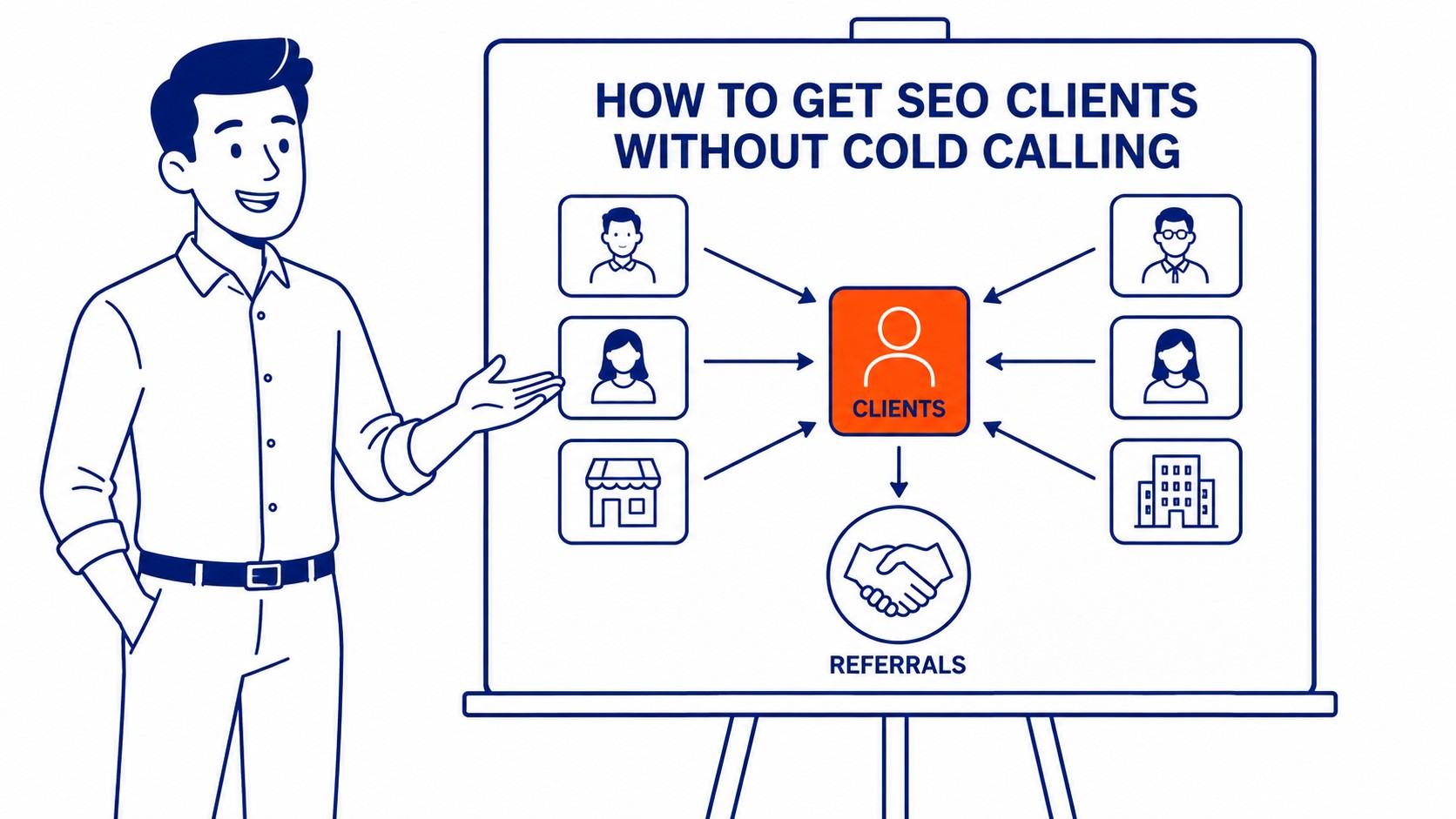
Cold calling has a low success rate for SEO services. People who are not actively looking for SEO rarely want to receive calls from people selling it. More effective approaches to client acquisition rely on demonstrating expertise in ways that attract people who are already looking, and on building relationships with sources who can refer clients who have already decided they need help.
The methods below do not produce instant results, but they compound over time in ways that cold calling does not. A referral from a satisfied client brings people who arrive with trust already established. Published content brings people who are actively searching. Warm outreach to business owners who have already shown interest — by visiting your website, attending an event, or engaging with your content — converts at far higher rates than unsolicited calls.
Build a Referral System
Most SEO practitioners underinvest in referrals. Satisfied clients are the highest-quality source of new business because they arrive with pre-established trust and with a specific need already confirmed. But referrals do not happen automatically — they require a system.
Tell current clients explicitly that you are taking on new clients and that you would appreciate introductions to business owners who might benefit from SEO. Many people who are happy with your work simply never think to refer you unless you ask. Asking does not feel as uncomfortable as it sounds when the relationship is strong.
Timing matters. The best moment to ask is after a clear win — a ranking breakthrough, a traffic spike, or a client who mentions that leads have improved. That is when enthusiasm is highest and when them passing your name on feels natural. Following up after delivering a good result, rather than at the start of the engagement when the relationship is new, converts far better.
Build in a lightweight thank-you for referrals. It does not need to be financial — even a personal note and public acknowledgment goes a long way. People who have referred once and felt appreciated refer again. Those who referred once and received no acknowledgment rarely do it a second time.
Publish Content That Attracts Clients
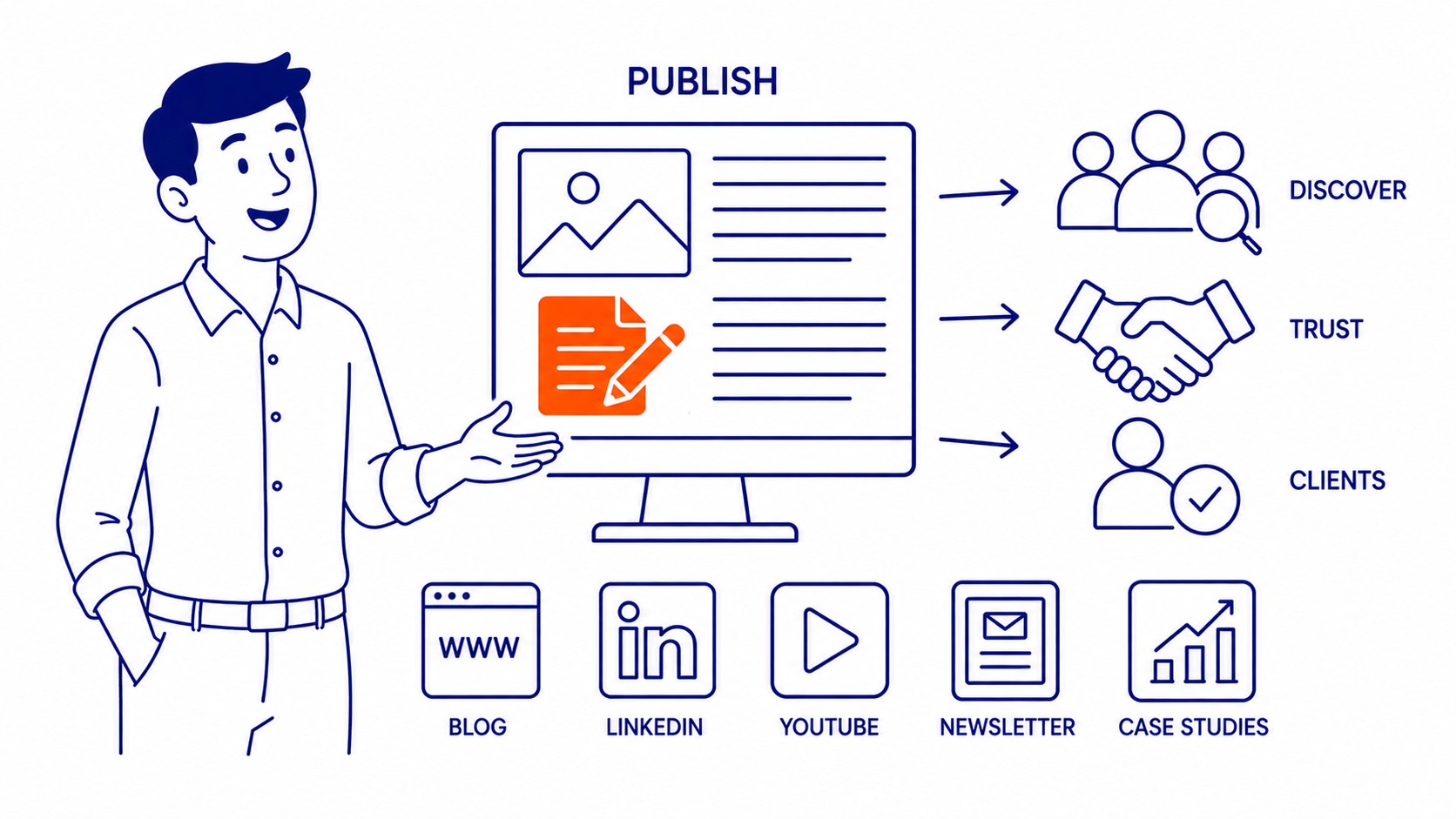
This is the most scalable inbound channel for SEO practitioners. Publishing content that ranks for terms your potential clients search positions you as a credible authority before they ever contact you. Who searches “how do I know if my SEO company is doing a good job”? Small business owners evaluating their current agency. Who searches “how much does SEO cost in Calgary”? Business owners who are actively looking to hire. These are the people you want to reach — and SEO keyword analysis identifies exactly which terms they are typing.
The content does not need to be primarily promotional. In fact, educational content — that genuinely helps business owners understand SEO — converts better than content that is primarily a sales pitch. Clients who read a detailed, useful piece you wrote trust that the expertise demonstrated in the content will apply to their project. They arrive having pre-qualified themselves.
A focused blog with ten or fifteen well-ranked posts on terms your ideal clients search produces far more leads than a hundred thin posts that never rank for anything. Depth over volume. What makes a piece rank is relevance, structure, and genuine usefulness — the same qualities that make leads who arrive from it easier to convert.
LinkedIn for SEO Client Acquisition
LinkedIn is the most effective social channel for B2B SEO client acquisition. Business owners and marketing managers who are your ideal clients are active on LinkedIn, and the platform’s targeting tools allow very specific outreach to people who match your ideal client profile.
What works on LinkedIn for SEO: posting about results (anonymised where necessary), sharing observations about SEO patterns you are seeing across your clients, and commenting on posts by business owners in your target industries. Them seeing you engaging in their circles over time builds familiarity before you ever send a direct message. When outreach does happen, it is to someone who already recognises your name rather than a stranger.
Direct message outreach on LinkedIn works better than cold calling for several reasons: people can respond when it is convenient, they can review your profile and content before deciding whether to engage, and the message can be brief enough that it is not intrusive. The key is personalisation — referencing something specific about their business or a post they made — rather than template messages who anyone can tell were sent to hundreds of people simultaneously. One genuinely personalised message converts better than fifty obvious templates.
Strategic Partnerships
Web designers and developers are the most valuable referral partners for SEO practitioners. Clients who hire a designer for a new website often need SEO shortly after — or simultaneously. A designer who trusts you to handle the SEO component of their clients’ projects sends referrals consistently without being asked each time because the arrangement benefits their clients and adds value to their own service.
Other strong partnerships: bookkeepers and accountants (who advise small business owners on growth), business coaches, PR firms (who complement rather than compete with SEO), and CRO specialists. The common thread: service providers whose clients need SEO but who do not offer it themselves. Identifying who already has relationships with your ideal clients and figuring out how you can add value to them is a faster path to clients than finding those clients directly.
Build partnerships with people whose work you respect. Mutual referrals require trust in both directions — you need to believe that what they deliver will reflect well on your recommendation, and they need the same confidence about you. Partnerships built on a genuine belief in the other party’s competence outlast those built on reciprocal self-interest alone.
Speak at Events and Contribute to Communities
Business owners who attend local Chamber of Commerce events, industry association meetings, and small business workshops are often evaluating their marketing options. Speaking on SEO topics at those events positions you as the expert in the room — which is a different starting position than being the vendor who paid for a booth.
You do not need to speak at large conferences to generate leads this way. A 20-minute presentation at a local business network about what local SEO is and how it works for service businesses can produce three or four qualified inquiries per event. The format is efficient: everyone in the room is a potential client, and the presentation structure lets you address their typical questions and concerns before they ask them.
Online communities work similarly. Answering SEO questions in Facebook groups for local business owners, Reddit threads, or industry forums positions you as someone who helps rather than sells. People who have seen you give useful, unprompted advice to strangers in public are far more likely to contact you when they need paid help than people who have only received a cold outreach from you. The work a Google Ads management agency does is worth discussing at these events alongside organic SEO — many business owners do not know the difference, and explaining both clearly demonstrates the depth of your expertise while expanding the scope of what you can offer.
Warm Outreach to Past Contacts
Cold calling is cold because the person has no existing relationship with you. Warm outreach — to former colleagues, previous employers, professional acquaintances, and past clients who have gone inactive — is a fundamentally different proposition. Those people already know what you are like to work with, already have a baseline of trust, and are far more likely to take a call or meeting.
Most people in professional networks have contacts who run businesses. A brief, direct note — “I have been doing SEO for the past three years and recently opened capacity for a couple of new clients. If you know any business owners who have been talking about improving their Google presence, I would appreciate an introduction” — is easy to respond to because it is specific, low-pressure, and tells them exactly what to do. What they hear is not a sales call; it is someone they know asking for help connecting with the right people.
A free website audit for SEO is a useful tool for warm outreach to business owners you know. Offering a no-obligation review of their current website gives them something of value before asking for anything in return. Many will take the audit out of curiosity, and some percentage will convert to clients when the audit reveals specific problems you can fix. The audit also gives you something concrete to mention in the outreach — “I can take a quick look at your site and tell you what’s actually holding your rankings back” is a more compelling offer than “I offer SEO services.” The approach To-The-TOP! has taken as an SEO company in Calgary since 2007 has been exactly this: demonstrating competence before asking for a commitment, which makes the eventual conversation about scope and pricing far easier for both sides.
Frequently Asked Questions
What is the 80 20 rule of SEO?
Roughly 80% of organic traffic comes from 20% of pages. In client acquisition terms, the same pattern holds: 20% of your marketing activities generate 80% of your leads. For SEO practitioners specifically, referrals and ranked content tend to be in the high-producing 20%, while activities like cold calling and social posting without a strategy tend to be in the 80% that produces little. Focusing time on the highest-leverage activities — building genuine referral relationships and publishing content that ranks — compounds significantly over time.
How do you get SEO clients fast?
Warm outreach to existing contacts produces results faster than most alternatives. Reach out to everyone in your professional network with a specific, direct ask: an introduction to a business owner who might need SEO. Offer a free audit to business owners who show interest. Partner with web designers who are actively building sites for clients who will need SEO. These channels can produce new clients within weeks rather than months, because they work with existing trust rather than trying to build it from scratch.
What is the 80/20 rule in cold calling?
In cold calling practice, 80% of calls end without meaningful engagement. Of the 20% who respond, a similar distribution applies — 80% of eventual sales often come from 20% of leads. The ratio exists because cold outreach targets people without established interest. The same effort applied to warm channels — referrals, inbound content, existing contacts — produces a far better return because who you are reaching has already demonstrated interest or familiarity.
How do you get clients for SEO?
The most reliable method over time is combining a strong referral system with inbound content. Ask satisfied clients for introductions. Publish content that ranks for terms your ideal clients search. Build partnerships with complementary service providers who already have your target clients. Show up consistently in communities where business owners discuss marketing. Each channel compounds — a ranked article keeps producing leads; a good client relationship keeps producing referrals. Cold outreach produces leads that end when you stop making calls.
