
How Automatic Bids and AI Are Changing PPC
Your cost per click went up. Nothing broke.
That is the part nobody explains. An advertiser switches on automatic bids, watches the CPC climb, then goes hunting for the fault. Tracking, maybe. Or a competitor with deeper pockets. Usually neither. The auction changed shape instead, and the change carried a price.
Here is the short version. Automatic bids and AI are price-discovery machines. They are very good at working out what a click is worth. So they keep erasing the advantages that used to come from somebody else guessing badly. That one sentence explains more about PPC right now than any feature announcement will.
A Manual Bid Was One Number for Thousands of Different People

Set a manual CPC of four dollars on a keyword. That number then applies to every auction the keyword enters.
A plumber searching at eleven at night with a flooded basement. The student writing an assignment. Same bid for both. A competitor checking your ad gets the same bid as well.
Your bid was an average. It had to be. No human sets a different number for each auction, thousands of times a day.
Averages leak in both directions. You overpaid on searches worth almost nothing. Then you underpaid on the ones worth a fortune. Across a month it settled into a number you could live with.
That was manual PPC for most of its history. A blunt instrument, used by everyone at once.
The Bargains Were Funded by Everyone Else’s Imprecision
Now the part worth sitting with.
Those underpriced wins were never skill. Ask where they actually came from. A search worth two hundred dollars to you cleared at four dollars. The reason sits with the other advertisers in that auction. They were bidding a flat number too. Their averages ran as blunt as yours. So the auction settled well below what the click was worth to whoever won it.
Nobody in that room knew which searches were the good ones. Not you. Nor them. Google itself knew far less than it does today. Ignorance was distributed evenly, and evenly distributed ignorance is what a bargain is made of.
You were not beating the market. Rather, you were harvesting the gap between what everybody bid and what the traffic was worth. Money left on the table by imprecision nobody could avoid.
Automatic bids close that gap. Smart Bidding reads signals about the individual auction, then prices it accordingly. Device. Hour of the day. Location. Whatever else Google holds. It pays nine dollars for the flooded basement and eighty cents for the assignment.
Run that on both sides of an auction and the settlement price drifts toward true value. Which is another way of saying the bargains stop turning up.
Somebody Will Say Just Switch Back to Manual CPC
Reasonable objection. It is also the fastest route to a worse account.
Think about who you are bidding against now. A flat bid in a room full of models does not restore the old prices. It hands you adverse selection.
Watch how that plays out. On the auctions genuinely worth ten dollars, the models bid ten and you bid four. You lose those. On the ones worth fifty cents, the models bid fifty cents and you bid four. You win those. Every single one.
So you end up owning exactly the traffic the machines declined to pay for. Your average CPC looks better on the report. Meanwhile your conversion rate quietly collapses.
The bargains have gone either way. Manual bidding cannot bring them back. It only changes which half of the auction pool you get stuck with.
That is the real case for automatic bids, and it has nothing to do with saving you time.
AI Writes Ads Now, So Ad Copy Is Converging Too
Bidding went first. Creative followed.
Asset generation reads your landing page, then produces headlines. Competent ones, usually. Better than most copy rushed out in-house on a Friday afternoon.
Then notice what else is true. It reads your competitor’s landing page too, with the same model, on the same day. Two businesses selling similar services in one city now receive similarly competent headlines from similarly competent software.
Ad copy used to be where a careful advertiser pulled ahead. It still is at the very top end. Yet the floor rose sharply, and the gap between adequate and average shrank to almost nothing.
Same pattern as the bidding, one layer up. Machines keep removing the advantages that depended on other people doing the work badly.
What the Machines Did Not Equalize
So what survives.
Everything the auction cannot see. Your margin on the job. The percentage of enquiries you close. How long a client stays. What the second sale is worth. None of that reaches Google, and none of it converges.
An advertiser running a forty percent margin can outbid one running at twelve. Indefinitely. No amount of AI on the other side repairs that difference. Close rate works the same way. Answer the phone inside a minute and you can afford clicks your slower competitor cannot.
Notice that none of those are marketing decisions at all. They are operational ones. PPC quietly turned into a business-numbers problem while everybody was still reading it as a settings problem.
Then there is the input everybody controls and few examine. What you told Google to count as a conversion. Get that wrong and every machine reading it optimizes toward the wrong customer, faithfully, for months. Worth a website audit before you touch a bidding strategy. So we usually start there rather than in the campaign settings.
Read Your Own Numbers Before Blaming the Machine
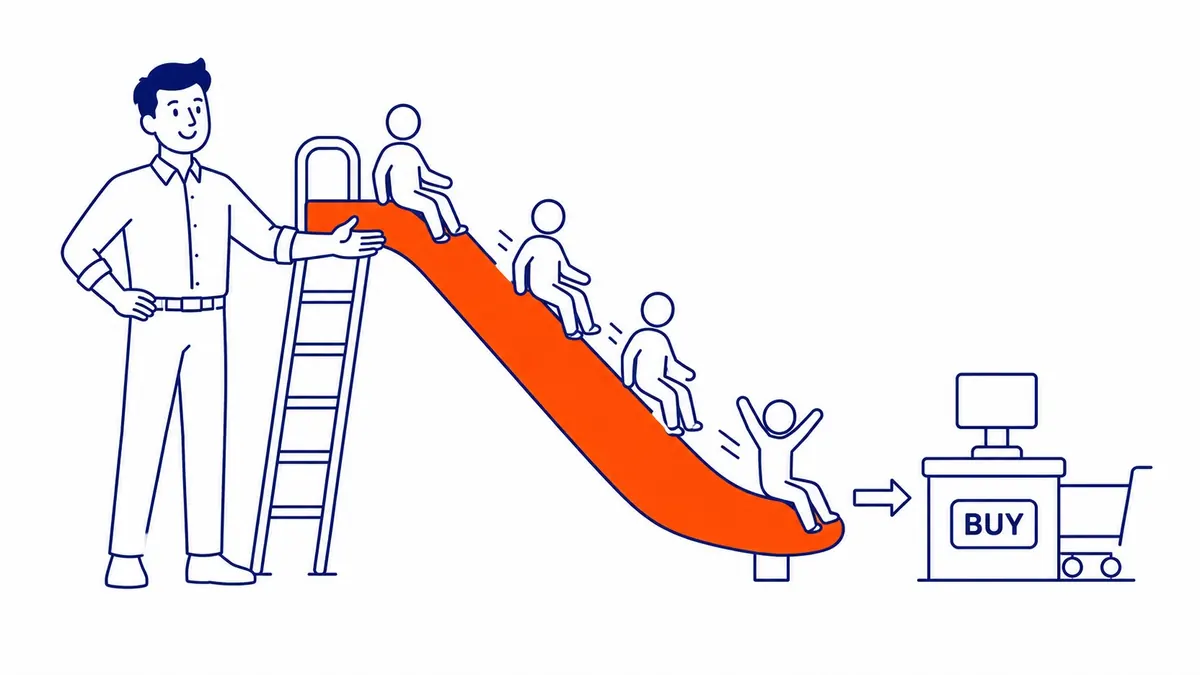
Take none of this on faith. Your own account will settle it.
Open Google Ads. Pull twelve months on one campaign that ran manual first and automatic later. Put average CPC beside cost per conversion for each stretch.
Two patterns are possible. CPC rose while cost per conversion held or fell. That is the machine buying better traffic at a higher unit price, exactly as it should. Or both numbers rose together. Now you have a genuine problem, and it usually sits in what you are counting rather than in the bidding.
Most Calgary accounts I open show the first pattern. The owner had only ever watched the CPC column.
Where This Argument Stops
Automatic bids need conversions to learn from. An account producing four a month gives the model almost nothing to work with. Below that line the theory holds and the practice does not, so manual CPC can stay the better call for a while.
Budget matters too. Very small daily budgets run dry before the model has seen enough auctions. Brand campaigns also behave oddly, since nearly everyone searching your own name converts anyway.
None of this resolves in a week. Expect six to eight weeks before an automated strategy on a modest account tells you anything you can trust. Anyone promising a verdict sooner is reading noise.
One more limit deserves naming. Everything above assumes a busy auction with several serious bidders in it. A thin niche still behaves like the old market. Two firms in Alberta advertising at all, say. Price discovery needs somebody to discover a price against. Rare, though. Few PPC categories in Calgary still look that quiet.
Automatic Bids and AI on Calgary PPC Accounts

SEO Company To-The-TOP! has been in business since 2007. Manual CPC came first. Then Smart Bidding arrived. Now AI writes assets on both sides of every auction.
The work changed. It did not shrink. Our Google Ads management service now spends more hours on conversion definitions than on bid adjustments. Margin figures too. That is where an account can still be moved.
Something similar happened to keyword research. Finding terms nobody else had spotted used to be most of the job. Now the job is working out which terms you can afford at their true price.
Solo practitioner here. You deal directly with the person doing the work at To-The-TOP!, never an account manager relaying instructions. That matters more when the questions concern your margins than it did when they concerned your bids.
The same principle drives how we approach Calgary SEO and search visibility generally. SEO and paid search now pose one underlying question. Work out what the machine cannot see. Then supply it.
Common Questions About Automatic Bids and AI in PPC
Do automatic bids raise my cost per click?
Often, yes. A rising CPC alongside steady or falling cost per conversion means the system is doing its job. Judge automatic bids on cost per conversion. Never on CPC alone.
Is manual CPC bidding dead?
Not dead. Still useful in thin accounts with too few conversions for a model to learn from, and on brand terms. For everything else, a flat bid competing against per-auction models loses the good auctions and wins the poor ones.
Will AI replace PPC managers?
It already replaced the arithmetic, which was most of the old job. What remains is deciding what to count. Then what a customer is actually worth. Last, what to offer them.
How long before automated bidding settles?
Separate two things here. The bid strategy itself settles in roughly two to four weeks of steady conditions. Reading a verdict you can trust takes longer on a modest account, nearer six or eight weeks. Changing budgets or targets midway restarts the process, so resist adjusting things weekly. Check the learning status Google Ads flags on the campaign itself before you draw any conclusion.
Should I let Google write my ad copy?
Test it against your own. AI assets give you a competent floor rather than a ceiling. An advertiser who knows the customer’s real objection still beats a model reading a landing page.
Contact Calgary SEO Company To-The-TOP!
Questions about anything in this article, or about your own rankings? Talk to a Calgary SEO specialist directly.
Phone: (403) 308-5949
Address: 1509 14 Ave SW, Calgary, AB T3C 0W4
Hours:
Monday to Friday: 10:00 am – 7:00 pm
Saturday: 12:00 pm – 4:00 pm
Sunday: closed