
How Do SEO Optimization Agencies Compare for Content Planning?
They compare badly. Three proposals arrive with three content plans inside, and the documents turn out to be nearly the same document.
So the difference sits somewhere the plan never prints. Not in the topics. In how much of the content planning depends on you answering an email in March.
The Rows Come Off the Same Results Page
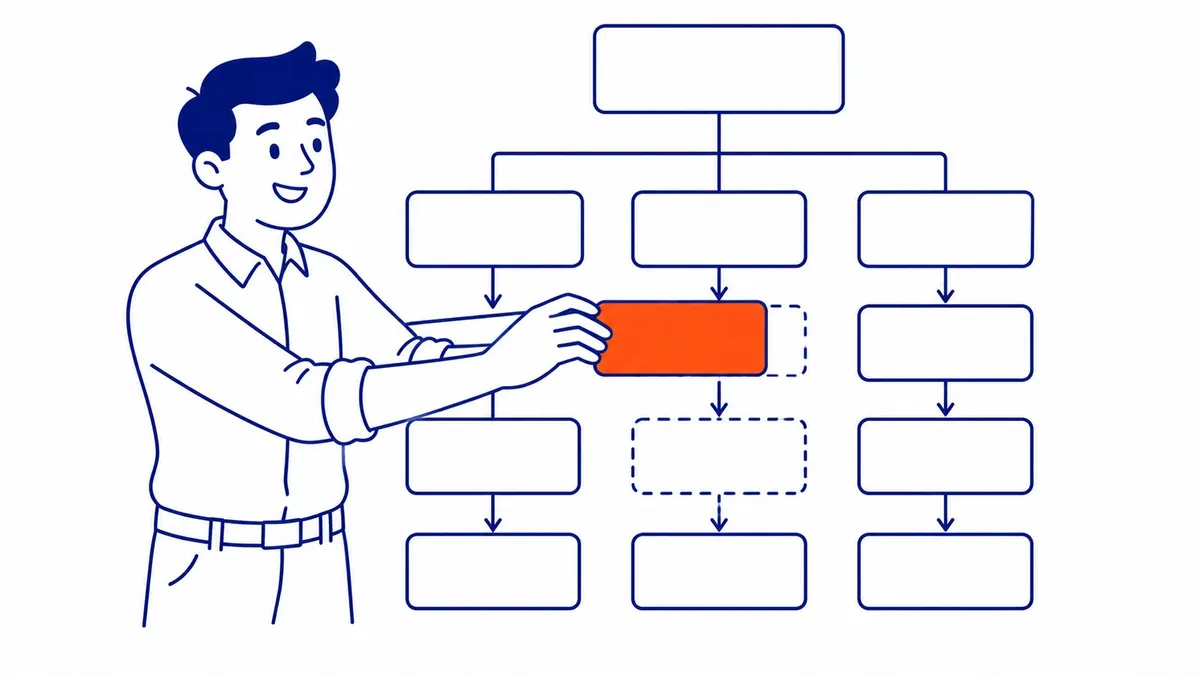
Put three plans side by side. Highlight every topic that shows up in at least two of them. Most of the page goes yellow.
That overlap is not laziness. Each agency built its list from the same public material. The search results for your main service. Questions Google prints underneath them. Whatever your three loudest competitors published last year.
None of that is proprietary. An agency in Calgary and an agency in Toronto read the same results page. Then they arrive at the same forty topics. So would you, given a free afternoon and a notepad.
Where the three plans disagree, look closely before scoring anybody. Usually the disagreement is volume. Eight posts a month against four. That is a budget line you set, not a planning skill somebody showed you.
Sometimes it is format. One agency wants long guides. Another wants short answer pages. Reasonable people differ there and neither one is wrong yet.
Genuine topic disagreement is rarer than owners expect. Rare enough that finding some is worth a follow-up question rather than a point on a scorecard.
Usually the answer is dull. One agency assumed you sell to homeowners. Another assumed contractors. That is a stated assumption rather than a research advantage. You can correct it in one sentence over the phone.
The One Deliverable You Have to Help Deliver

Something makes content planning different from every other line in an SEO proposal.
Technical fixes happen without you. Somebody edits a template on a Tuesday. Link work happens without you. Reporting certainly does.
A content plan hands you homework instead. Every row carries a buried request. What does this job actually cost. Which brands do you carry now. What did the technician find under that floor last winter. Can somebody sign this off by Thursday.
So the plan is a schedule for the agency. Then it is a queue for you. Two documents printed as one, and only one of them has your name on it.
Most agencies know this. Very few price it. Fewer still put the expectation in writing anywhere you can find it later.
Then the shortfall gets read as an agency problem when the invoice arrives. Sometimes it is one. Often the plan simply assumed access to somebody who never had an hour free.
Count the Rows That Need Something From You

Worth doing before signing anything. Take each plan and mark every row that cannot be written without a person from your company.
Plenty of rows need nothing. “What is a heat pump” gets written from public sources by anybody with a Saturday.
Other rows need forty minutes of somebody’s attention. Real pricing. A finished project with photos. The reason you dropped a product line in 2023.
Now count both piles. That ratio tells you more about the next twelve months than the topic list does.
A plan running at ninety percent zero-input rows will publish on time. Every month. Nobody has to chase anybody.
A plan sitting near half input-hungry will slip. That is not pessimism talking. It is the standing experience of most people who have run content for a working business. One with real customers and a phone that rings.
Somebody Will Say Just Hire the One That Needs Nothing

Fair objection. It lands in about five seconds. Pick the agency promising to handle everything, supply nothing yourself, read the report each month.
Follow it to the end though. A row needing nothing from you needs nothing from anybody. Which means your competitor’s agency can write that row too. Same sources. Reading off the same results page. Often the same week.
So zero input predicts zero difference. The effortless plan is the commodity plan, by construction. Not because those writers are weak. The material was public before either of you arrived.
Which flips the question worth asking in the meeting. Not who needs least from me. Instead, who has a working method for getting what only I know, inside a time budget I will actually honour.
The objection ends up confirming the split rather than closing it.
Compare the Extraction Method, Not the Topic List

Here is where an hour of vetting pays for itself.
Ask each agency how business-specific material reaches the writer. Then listen for whether a real answer exists at all.
Some hand over a brief template. You fill it in. Realistically you fill in two, and the third one sits open in a tab until December. A brief nobody completes is not a process.
Some book a recorded call. Forty minutes a quarter. One person asks questions, and the transcript afterward feeds nine articles.
Some ask to sit in on a sales call. Or to read the last thirty quotes your estimator sent out. That is the strongest version by a distance. It is also the one most owners refuse, which is fine, provided everybody understands what the refusal costs.
The weakest answer sounds the most cooperative. “Send us anything you think is relevant.” Nobody in the history of SEO has ever sent that email.
Notice what separates the strong methods from the weak one. The strong methods put the burden on the agency to ask. A weak method puts it on you to volunteer. Volunteering loses to whatever else is on your desk. Every single time. Goodwill does not fix it either.
Where Content Planning Actually Dies

Month three. Almost always month three.
Months one and two get written off the kickoff call. Everybody was in the room. Somebody took notes. The material was fresh and there was plenty of it.
Then month three shows up and the transcript is spent. Now somebody has to ask you a question. You are busy. The writer needs an answer by Tuesday and has a deadline that does not move.
What happens next separates the agencies more than anything in the pitch deck. One publishes a generic version quietly and says nothing about it. Another emails once, gets no reply, moves on. A third already has the next call booked for exactly this reason.
So ask what happens in month three. The answers vary wildly. Some agencies have clearly never been asked.
What the Plan Does With a Row That Failed

Every content plan contains predictions. A share of them will be wrong.
An article ranks nowhere after five months. Fine, that happens to everybody. The real question is whether next quarter’s plan knows it happened.
Ask to see how the second quarter gets built. Built from the original spreadsheet, and the plan is a production schedule wearing a strategy label. Rebuilt from the first quarter’s numbers, and you are looking at planning.
Then ask something harder. What share of next quarter goes to fixing pages already published? Zero is a warning sign. Publishing is easier to invoice than revising. Yet revising is usually where the traffic hides.
There is a tell in how the failure gets described, too. Some agencies report the miss and name a cause. Wrong intent, or a search results page full of national brands nobody local displaces. Others quietly replace the row and hope the report is skimmed. Watch which one you get in month six.
Where This Comparison Stops Working

Two cases, and both are common enough to name.
A brand-new business has nothing to extract yet. No pricing set. Nothing finished to point at. No stories from the field yet. Take the commodity plan and start moving. Extraction begins once there is something worth extracting.
Small local sites are the second case. A plumber with eleven pages does not need a content plan at all. Fixing the service pages and the Google Business Profile usually beats twelve blog posts. Any agency selling a content calendar into that situation is selling the wrong thing.
Neither case makes the input test wrong. Both narrow where it usefully applies.
Read the Content Plan You Already Have

Open the last plan an agency sent you. Do it before the next call, not during.
Mark every row that needed a fact only your company holds. Then check which of those rows got published at all. Now check which ones got published in a watered-down form because the fact never arrived.
That third pile is the number nobody puts in a monthly report.
How To-The-TOP! Handles Content Planning in Calgary

SEO Company To-The-TOP! has been planning content for Calgary businesses since 2007. The topic list was always the easy part. It still is.
What takes the time here is extraction. The questions get asked directly, by the person who will use the answers. Usually of the owner. Sometimes of the estimator, who often knows more.
One person does the planning and the asking. No junior handoff. Clients here never meet a rotating account team learning the business twice a year. Nineteen years of Calgary SEO work sits behind that arrangement.
Content planning starts after a website audit, then after keyword research. Plenty of proposed topics get cut right there. Ranking for something nobody buys is a slow way to spend a budget.
The paid side feeds the same process. Our Google Ads management work turns up language nobody guessed at. Phrases converting in a Google Ads account tend to be the topics worth writing about later. Paid data arrives in weeks. Organic answers take longer. So a client running both channels usually gets a sharper plan in quarter two than in quarter one.
Three to six months before a new article shows meaningful movement. That timeline holds regardless of who wrote the plan or how good the meeting felt.
Common Questions About Content Planning and SEO Agencies
How do SEO agencies compare for content planning?
Barely, on topics. Compare them instead on how business-specific material reaches the writer, and on what happens when it stops arriving. Ask each one what its process does in month three.
What should an SEO content plan contain?
Topics and target queries, obviously. Also the part most plans omit. Who supplies which fact for each row, and by when.
How many blog posts a month should an agency publish?
Whatever the budget buys, and the number matters less than owners hope. Four well-sourced pages usually beat twelve generic ones. Volume is a spending decision rather than a strategy.
Who writes the content, the agency or the client?
The agency writes. You supply the facts nobody outside your company holds. Pricing. Real jobs. Whatever your customers actually ask on the phone.
How long before a content plan produces traffic?
Three to six months for meaningful movement on most pages. Competitive search queries take longer still. Anybody promising faster is guessing.
Contact Calgary SEO Company To-The-TOP!
Questions about anything in this article, or about your own rankings? Talk to a Calgary SEO specialist directly.
Phone: (403) 308-5949
Address: 1509 14 Ave SW, Calgary, AB T3C 0W4
Hours:
Monday to Friday: 10:00 am – 7:00 pm
Saturday: 12:00 pm – 4:00 pm
Sunday: closed