
How to Analyze SERPs for Keyword Opportunities
Type the keyword. Read what comes back. Then put one question to every result on the page.
Was this page built for my query? Or does my query just happen to live somewhere inside it?
Count the answers. That count is your SERP analysis. Everything else people measure on a set of results sits around the edges of it.
The Analysis Everybody Runs First

Open a keyword tool. Look at the difficulty number. Then scan the domains and see who is already standing there.
Big names mean hard. Names you do not recognize mean soft.
Fair enough. That habit works often enough to keep.
Grant domain strength its due, too. Fifteen years of links behind a site counts for something. It outranks a newer site most days on the same words. Nobody serious pretends otherwise.
Yet the strength scan answers a question you did not ask. It tells you who is standing in the results. Never why Google let them stand there. So the opportunity stays hidden.
Strength Holds a Slot. Fit Earns One.

There are two ways to occupy a result.
A page can sit there because it is the right answer. Somebody wrote it for that exact search. The title names the query. Top to bottom, it does one job.
Or a page sits there because its domain carries enough weight. Google reached for it when nothing better turned up. Your query appears in a subheading. Maybe one paragraph. The page is really about something wider.
Both look identical on the SERP. Same blue link, same snippet underneath.
Still, one of them holds a slot it will keep. The other holds a slot on loan.
Loans get called in. Google keeps hunting for the better-matched page. Publish one and the loan ends.
Ask Each Result What It Was Made For

Click through. Do not analyze the SERP from the SERP. The tells sit inside the documents themselves.
Read the title first. Does it name your query? Or does it name a topic that happens to contain your query?
Then find where your keyword actually lives. Down in an H2 halfway through the article means it covers something larger. Up in the H1 means somebody built the page for it.
Check the URL too. A URL naming a different subject tells you the page was planned around that subject. Your query arrived afterward.
Look at the date next. Then look for signs anything has changed since. Some pages have sat untouched since 2019. They are not defending anything. Habit is what keeps them ranking.
One more tell. Read the opening. Two hundred words is plenty. Ask whether someone searching your exact phrase gets what they came for right there. Or whether they have to scroll past a broad introduction first.
Sort every result into one of two piles as you go. Built for it. Not built for it.
Read SERPs From the Bottom Up
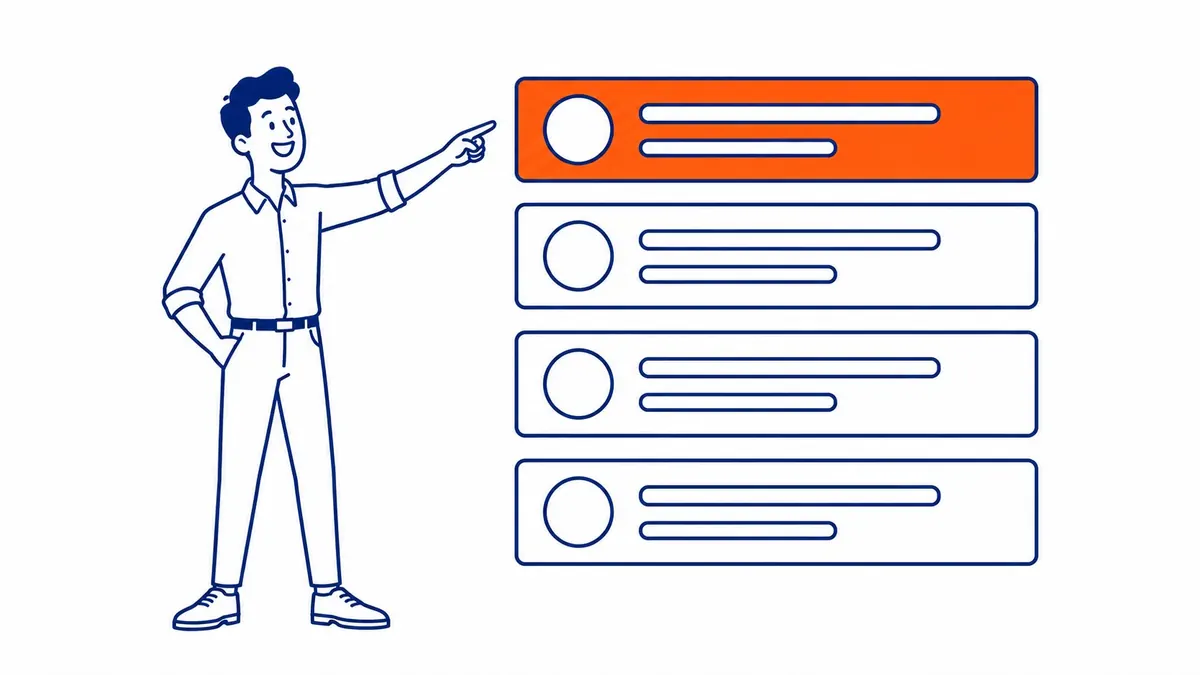
Start at position ten. Then work upward.
Borrowed relevance collects at the bottom of a SERP. Down there is where Google runs out of purpose-built pages and starts reaching. So the last three results tell you most of what you need.
All three built for the query? Stop clicking. That search is settled, and the pages above them will be settled too.
Two of the three reaching sideways? Keep going. Something is open here.
Reading a SERP bottom-up takes most of the clicking out of a long keyword list. It also stops you anchoring on the top result. That one is usually the strongest thing there. It tells you nothing about whether you can get in.
Somebody Will Say the Big Domain Wins Anyway

Here comes the obvious objection. A loose-fit page on a strong domain still beats a perfect-fit page on a weak one. That happens constantly.
True enough. It does happen. But look at what it actually tells you.
Think about what each kind of slot depends on. The purpose-built page holds its position because it fits the query. Nothing you publish changes that fit. You cannot make somebody else’s page less relevant.
The authority-held page depends on something else entirely. It sits there because Google has not yet found a better-matched option. That condition is temporary by definition. You are allowed to end it.
So the strong domain was never the obstacle. A strong domain with a page built for your query is the obstacle. Every other slot is waiting for a reason to move.
Give it months, mind you. Nothing about ranking is instant. Authority does not surrender on publication day.
Two SERPs, One Difficulty Score

Picture two sets of results. A tool scores both the same. Moderate. Middle of the range.
Eight of ten results on the first page were written for that query alone. Matched titles. Recent updates.
One result on the second page was built for the query. The others are category listings and long guides that mention it once. A forum thread from years back sits in the middle of them.
Same score. Different situation entirely.
That second SERP is nine slots of borrowed relevance. The first is a settled question. No difficulty score separates them, because a difficulty score reads each result on its own. It never asks what the ten results add up to.
Count the Dedicated Ones

Here is the whole output. Two columns and a number.
Left column holds the keyword. Right column holds how many of the top ten were built for it. Do that for every keyword on your list, then sort ascending by the right column.
Zero to two means an opening. Somebody has to publish the obvious page for that query and nobody has bothered.
Three to five is workable, provided your page is genuinely better.
Eight or more, leave it. That question has already been answered by people who meant to answer it.
The list reorders itself once you do this. Plenty of keywords your difficulty scores told you to skip start climbing toward the top. Real opportunities, hiding under bad numbers.
The Two Piles Are Not Always Obvious

Some results refuse to sort cleanly.
A hub page can be genuinely maintained for the query. Another page targets a near-synonym rather than your exact wording. A product page answers the question by accident and answers it well.
Break the tie with one question. Would the person who made this page be annoyed to lose the ranking?
A purpose-built page was made to win that search. Its owner watches it.
The sideways page does not know it ranks at all. Nobody over there is checking.
You can feel the difference while reading. Purpose shows up in small things. A matched title. One section answering the follow-up question. An update date that moved recently.
Count it as built for the query whenever you cannot tell. Pessimism costs you one keyword. Optimism costs you a page nobody reads.
Where This Way of Reading SERPs Stops

Some fair warnings about the edges.
The count says nothing about whether a keyword is worth having. Wide-open queries bring in plenty of visitors who will never buy anything. Fit analysis does not replace asking who is doing the searching.
It also weakens when Google fills the screen before the organic results begin. Ads at the top. A map pack under them. Reading ten blue links matters less when hardly anyone scrolls that far.
And a purpose-built page can still be poor. Built for the query does not mean well made. Sometimes you take the slot anyway.
Run It on a Keyword You Already Gave Up On

Pick a keyword you decided against last year. One where the difficulty number talked you out of it.
Search it now. Click all ten results. Sort them into the two piles.
Count the purpose-built ones. The number usually comes in under what the difficulty score implied. Three, sometimes two. The rest turn out to be large sites reaching sideways into a topic they cover in passing.
That is an opportunity you handed over on the strength of a number.
How We Read SERPs for Calgary Businesses

At SEO Company To-The-TOP! this is the slow part of keyword research. We have never found a shortcut around it. Somebody clicks the results and reads them. No tool sees purpose. Tools see strength, because strength is the part that arrives as a number.
That reading changes what we recommend. Ten purpose-built pages on a query? That one is often better handled through Google Ads management than an organic push. Paid buys the slot that fit will not hand over. To-The-TOP! runs both sides, so nobody has to pretend a settled SERP is winnable.
The rest of the list becomes the content plan. Our Calgary SEO work starts from that list. We read every SEO audit against it too, so the technical fixes land where something can actually move.
To-The-TOP! has been doing this since 2007. Nineteen years. Solo practitioner, so the person clicking those ten results is the person you hired. Our full SEO services in Calgary run on the same reading. No junior gets handed the search results to skim.
Ask about the SERP read before you sign anything with anybody. (403) 308-5949.
Common Questions About Analyzing SERPs for Keyword Opportunities
How many results should I check on a SERP?
Ten covers it. Most clicks land in the top handful anyway. Checking twenty adds work. It does not change the count that matters. Page two will not rescue a keyword whose first ten are all purpose-built.
Does a low difficulty score mean the SERP is open?
Not by itself. A low score means the domains are beatable. It does not mean the pages are. Weak sites with perfectly matched pages are harder to shift than strong sites reaching sideways. Check the fit before you trust the score.
What if every result was built for the query?
Then go narrower. Add a qualifier those ten purpose-built pages do not cover. A city. An industry. Some specific situation a broad guide skips. The wide query is settled. A narrower version of it usually is not.
How often should I re-run a SERP analysis?
Yearly is enough on your core keywords for most sites. Re-check sooner if a page you own drops in the rankings. Somebody may have just published the purpose-built page that was missing.
Contact Calgary SEO Company To-The-TOP!
Questions about anything in this article, or about your own rankings? Talk to a Calgary SEO specialist directly.
Phone: (403) 308-5949
Address: 1509 14 Ave SW, Calgary, AB T3C 0W4
Hours:
Monday to Friday: 10:00 am – 7:00 pm
Saturday: 12:00 pm – 4:00 pm
Sunday: closed