
How to Develop a Blog Strategy for Ecommerce SEO
Most blog plans for an ecommerce store open inside a keyword tool. Pull the informational terms. Sort by volume. Hand the top forty to a content calendar and start assigning deadlines.
Something has already happened by then, though. Your store published a few thousand pages on its own. Nobody approved any of them. They are already competing for part of that list.
Your Catalogue Publishes Without Asking You

Count your products. Say three hundred.
Now count your URLs. Every category. Each filter combination a shopper can click. Colour. Size. Price band. Brand. Sort order, tag archives, variant addresses, pagination running out to page nine.
Three hundred products routinely become several thousand indexable pages.
None of that came from a plan. The platform built it out of a database the moment somebody switched a filter on. Shopify does this. WooCommerce does this. So does every other cart worth running a store on.
Those generated pages carry titles. They carry headings lifted straight from the facet names. Which means they already point at queries, whether or not you pointed them anywhere.
An ecommerce blog strategy has to start there. Not with what you want to write.
Which Breaks the Intent Map Everyone Starts With

The standard rule sounds clean enough. Informational queries go to the blog. Commercial queries go to categories and product pages. Draw the line by intent and the strategy writes itself.
Then test it on something real. Running shoes for flat feet. Informational? Somebody typing that wants to hand over a credit card.
Your store may already own a page for it. A category filtered to arch support, generated last spring, sitting in the index under a title no human chose.
So you commission the blog post anyway. Now two of your own pages answer one query. Google picks between them. Not necessarily the one you would have picked.
Intent labels describe queries. They never describe your site. That map only works while one side of it stays under your control, and on a store it does not.
Read the Sitemap Before the Keyword Tool
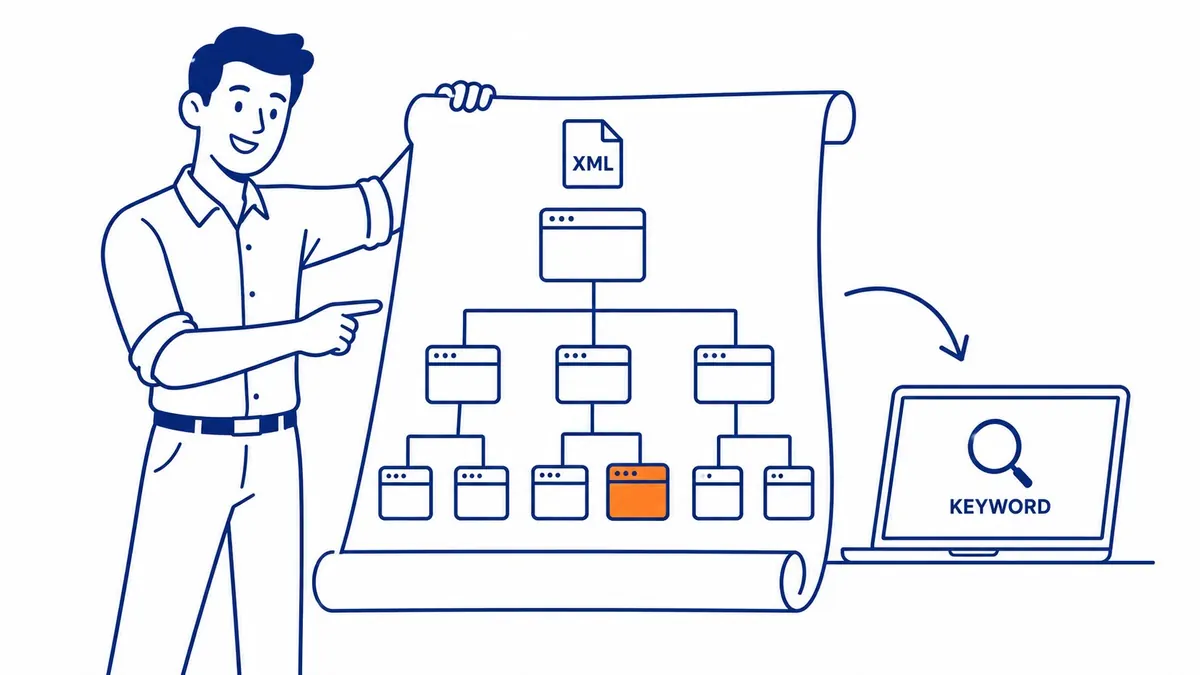
Open your XML sitemap. Scroll the category section slowly, all the way down.
That list is your blog’s real competition. Not other stores. Your own machinery.
Then open Search Console. Filter to category URLs only. Export every query those pages already pick up impressions for.
Two things fall out of that export. Terms you assumed needed a blog post, already covered by a filter. Also gaps, whole clusters of queries the catalogue never touches at any depth.
The gaps are your blog. That is the entire selection method.
One column decides most of it. Impressions rather than clicks. A category page parked at position thirty on some query still proves the catalogue reached for it. Sorting by clicks hides that reach completely.
Running it in that order costs an afternoon. Doing keyword research first costs a year of posts that lose quietly to your own filters. On a large catalogue a website audit pulls the same inventory faster than clicking through by hand.
Three Queries a Catalogue Cannot Answer

Some questions have no SKU sitting behind them. No filter combination produces the set. Those are the ones worth writing.
Cross-category decisions come first. Somebody furnishing a nursery needs a crib. Also a mattress that fits it. Plus a monitor. No single category holds that group. A blog post holds it comfortably.
Then the questions with no product as the answer. How to wash the thing. Which size actually fits. Whether part A mates with machine B. What happens when a return goes in after eight weeks.
Comparisons round it out. Two brands you stock, weighed against each other. Your filters can display both at once. They cannot argue between them.
Notice what those share. Each needs a sentence somebody wrote on purpose. Facets do not write sentences.
Somebody Will Say Blog Traffic Never Converts

Often true. Follow the objection to the end, though. It argues for the plan rather than against it.
Someone reading about mattress firmness tonight buys nothing tonight. Fair enough. Measure that post on revenue and it reads as a failure by Friday.
Wrong meter. Ask the other question instead. Which of your pages did Google hand that query to?
Two possibilities without the post. A filtered category ranked and greeted a researcher who was nowhere near buying. Or a competitor ranked and the shopper met their brand first.
So the post is not a conversion asset. It is a coverage decision. The post keeps one query away from a page that would waste it.
Somebody Will Say Just Noindex the Facets
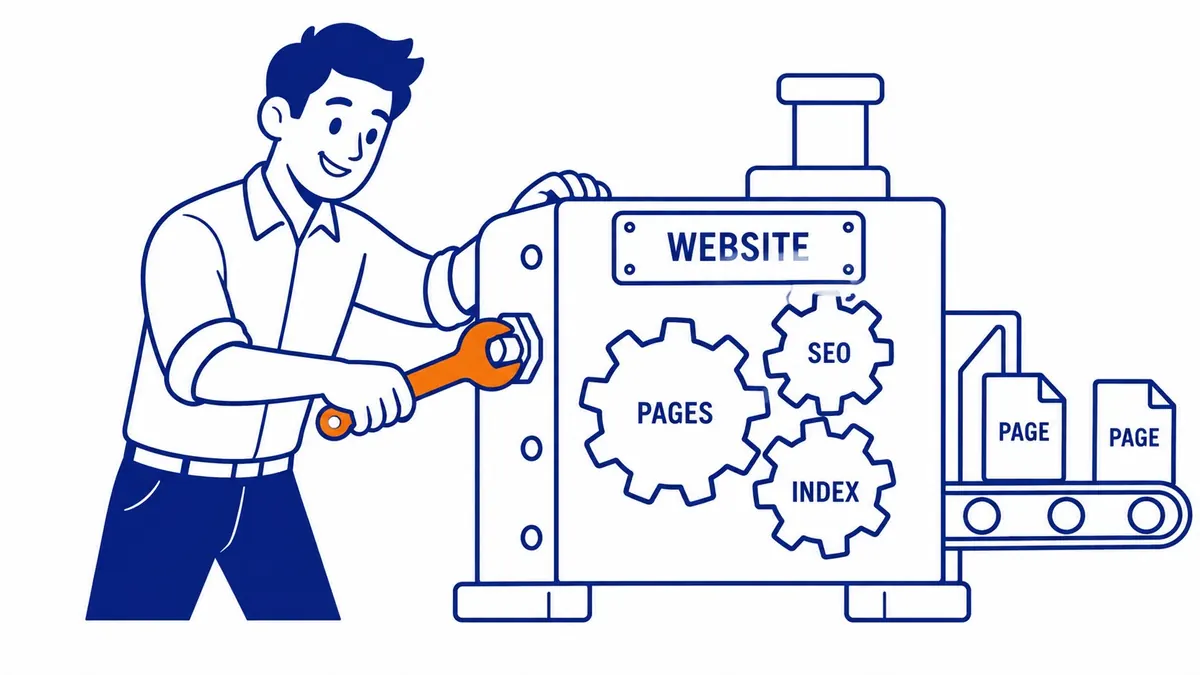
Reasonable enough. Do it, in fact. Most stores should have done it already.
Watch what the fix leaves behind. Noindex pulls the competing page out of search. It says nothing whatsoever about which blog post you write next month.
That boundary question survives every technical fix ever shipped. Which query belongs to a page a person authored? And which one does the database assemble instead?
Answer it once and the noindex rules follow on their own. Skip it and you spend the quarter tidying an index nobody planned.
Every Blog Post Has to Name Its Landing Place
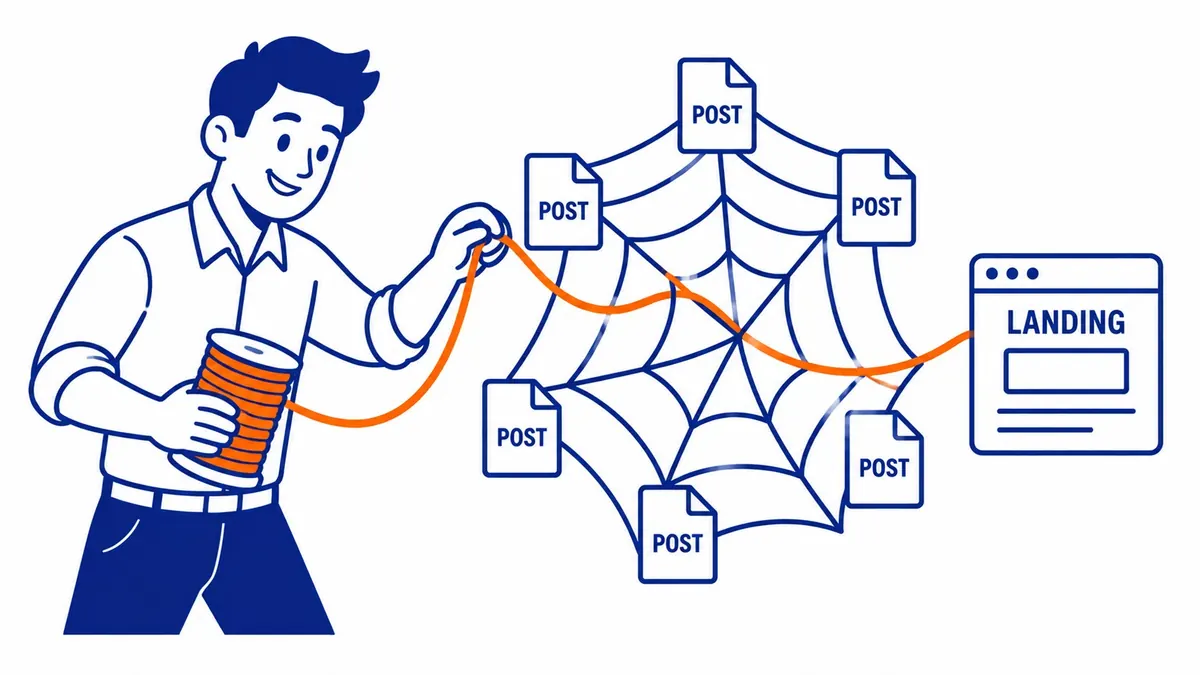
One test is worth applying before anybody drafts a word.
Name the category page the post will link to. A single URL. Say it out loud.
Cannot name one? The post sits outside your store’s structure entirely. It may still earn traffic. That traffic will not move anything you sell.
The nursery blog post points at cribs. Also at nursery furniture. Two links, both landing on pages that hold stock.
Links from posts into categories do the work most ecommerce owners expect from links into products. Categories persist. Individual products come and go.
Which is why a discontinued SKU should never be a post’s only destination. Stock turns over weekly. Your archive does not.
Cadence Comes Last, Not First
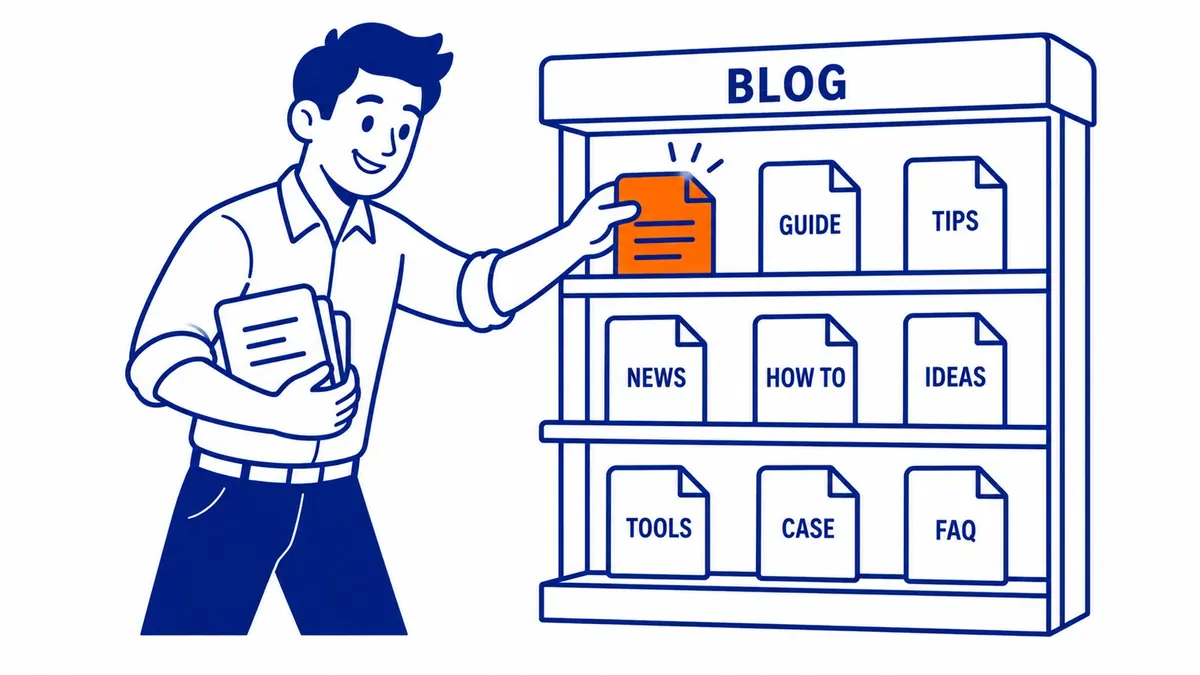
Publishing frequency is the piece everyone wants settled up front. A blog strategy settles it last. The number falls out of the gap list on its own.
An ecommerce store with forty SKUs might surface nine genuine gaps. Nine posts, then. Stop there and go improve the category pages instead.
A catalogue of twelve thousand parts throws off gaps faster than any writer clears them. That store needs a queue rather than a calendar.
Either way the timeline runs the same as everything else in search. Three to six months before rankings mean much. Longer in crowded categories. Anybody promising faster is selling you something.
Meanwhile Google Ads management covers those same queries on demand. Paid holds the shelf visible while the posts age into position.
Where the Blog Strategy Stops

Two situations this method does not fit.
Brand-new stores have no Search Console history to read. Nothing has ranked yet, so there is no export. Borrow the shape from a competitor’s sitemap and accept the guesswork for a while.
Very small catalogues barely generate anything. Four categories. No filters at all. Then the plain intent map works fine, because nothing on your own side is competing with you.
Marketplace sellers land in a third position. Amazon and Etsy listings rank on somebody else’s domain. Your own blog cannot pass much authority across to them. Topics worth owning still surface from the gap method, though the payoff arrives as brand searches instead of rankings.
The bigger the catalogue grows, the more the blog turns into a boundary problem rather than a writing problem.
Ecommerce Blog Planning for Calgary Stores
SEO Company To-The-TOP! has worked on search for Alberta and BC businesses since 2007. Solo work throughout. The person reading your sitemap is the person writing the plan afterwards.
Most engagements open on the inventory rather than a calendar. Keyword work on a store means separating what the catalogue already owns from what it never will own. Every Calgary SEO engagement runs on monthly position reporting. You get to watch which side of that boundary moves.
Broader SEO services sit alongside the content work when a store needs the technical side sorted too. White Hat only. No junior handoffs. Nineteen years of this. References available on request.
Common Questions About an Ecommerce Blog Strategy
How many blog posts does an ecommerce site need?
However many real gaps your catalogue leaves. Some small stores find under ten. Large catalogues generate more gaps than one writer can cover in a year. Counting posts is the wrong unit.
Should ecommerce blog posts link to products or categories?
Categories, mostly. Products go out of stock and get retired, which strands the link. A category outlives the individual SKUs inside it.
Can a blog post outrank my own category page?
Yes. It happens on stores with heavy filtering. Google chooses whichever page it reads as the better match. Deciding the boundary yourself beforehand is how you avoid the coin flip.
How long before ecommerce blog posts bring traffic?
Three to six months for most, longer in competitive categories. Posts that fill a genuine catalogue gap tend to move sooner, because nothing else on the site is splitting the signal.
Do I need a blog if my product pages already rank?
Not urgently. Ranking product pages means the commercial queries are handled. The blog earns its place on questions your catalogue structurally cannot answer, so check whether any of those exist before committing.
Contact Calgary SEO Company To-The-TOP!
Questions about anything in this article, or about your own rankings? Talk to a Calgary SEO specialist directly.
Phone: (403) 308-5949
Address: 1509 14 Ave SW, Calgary, AB T3C 0W4
Hours:
Monday to Friday: 10:00 am – 7:00 pm
Saturday: 12:00 pm – 4:00 pm
Sunday: closed