
Can You Steal Competitors’ Traffic on Organic Keywords?
Yes, you can steal competitors’ traffic on organic keywords, as long as “steal” means earning the ranking rather than copying anything. When your page becomes the better answer to a search a competitor currently wins, Google can rank you above them and the clicks move with the position. Their keywords are public and fair game. Their content is theirs, and Google’s spam policies say plainly that copying another site’s pages, or buying links that pass ranking credit, can get a site demoted or removed. What follows is how to find a competitor’s keywords, decide which ones you can actually win, and measure whether the traffic shifted.

What “stealing” competitor traffic means, and where the line is
Organic search is a set of positions, and every query has a page sitting in each one. A competitor in position two holds it because Google’s systems currently judge their page more relevant and helpful for that search than the pages below it. Nobody owns a ranking, so when a better page appears, the order changes and the visits follow, which is the whole of what people mean by stealing traffic. Your competitor does not vanish from the results; they just sit lower, and a lower position usually earns fewer clicks.
The line is drawn by Google’s spam policies, and it is clearer than most guides suggest. Researching a competitor’s keywords and writing a better page for the same searches is ordinary SEO. Taking their content and republishing it with small changes is what Google calls scraping, and its policies give copying content from other sites, modifying it only slightly and republishing it as an example of scraping abuse. Buying links that pass ranking credit, exchanging links at scale, or stuffing a page with a competitor’s phrases falls under link spam and keyword stuffing. Google’s guidance on people-first content adds that SEO can be helpful when it is applied to content made for people, which is a good test for any page built to beat a rival.

How to find the keywords your competitors rank for
Start with the right competitors. The businesses you compete with for customers are often different from the sites you compete with in search, because a Calgary renovation company may lose its key searches to a directory, a national magazine and a home-improvement retailer rather than to the shop down the road. Search your five or six most important terms from a Calgary location, write down who appears on page one, and treat the sites that keep showing up as your search competitors.
There is a free route and a paid one. On the free side, Google’s own Keyword Planner has a “Start with a website” option, and Google’s help page says you can “enter any website and Google will look for keywords related to the content on that site”, which includes a competitor’s homepage or a single service page. It sits inside a Google Ads account, and Google asks you to enter billing information before it shows keyword ideas, although no ad has to run and the planner itself costs nothing. It gives keyword ideas with search volume ranges, though not the competitor’s rankings. On the paid side, tools such as Semrush and Ahrefs estimate which keywords a domain ranks for, at what position and with roughly how much traffic. Those numbers are the tools’ own estimates, so use them to compare and prioritize, not as fact. A step-by-step walkthrough of how to find a competitor’s keywords in each tool is on a separate page.

The most useful output is the list of searches where competitors rank and you do not, which is usually called a keyword gap. It is worth remembering what Google Search Console can and cannot do here. Its Performance report shows the queries, clicks and positions for your own verified site only, so it will never show a competitor’s data. It is still essential, because it tells you which competitor terms you already appear for on page two or three, and those are often the cheapest wins.
A competitor list of a few hundred terms is normal, and most of them do not deserve your time. That filtering step is where professional keyword research earns its keep, because the value is in the shortlist rather than the export.
Which competitor keywords you can realistically win
Check search intent first. A term sending a competitor plenty of visits only matters if those visitors could become your customers, and an informational query like “what is a heat pump” brings readers, while “heat pump installation Calgary” brings buyers. Then open the page that ranks and judge it on its merits. A keyword difficulty score from a tool is a rough guide to how hard the term is across the whole results page, but the page you are trying to displace tells you far more.
| Competitor’s ranking page | Can a smaller business usually displace it? | Why |
|---|---|---|
| Thin service page with a few lines of text | Often | A complete, specific page answers the search better |
| Outdated article (old prices, retired features, past years) | Often | Current, accurate information is a clear improvement |
| Wrong format for the search (a blog post where people want a service page, or the reverse) | Often | Matching the format the results page rewards can move you past it |
| Directory or listing site holding a local term | Sometimes | Possible with a strong local page and a complete Google Business Profile, but directories carry a lot of authority |
| Large national publisher or brand with deep, current content | Rarely, at first | The gap is usually authority and links, which takes a long time to close |
| A competitor’s own brand name | Almost never organically | Google almost always ranks the brand’s own site first for its own name |
An illustrative example makes the filter concrete. Suppose a Calgary furnace repair company runs a competitor’s domain through a tool and gets 300 keywords. It drops the competitor’s brand terms, drops the general “how does a furnace work” articles because readers there are not buyers, and keeps three: “furnace repair northwest Calgary”, where the competitor ranks fifth with a short page; “furnace not igniting”, where the ranking article is several years old; and “emergency furnace repair Calgary”, where it already appears on page two. It rejects “furnace” on its own, because national retailers hold that page and the searchers are mixed. Those three terms look winnable and deserve a closer look before any budget goes in, which matters more than the volume next to them.
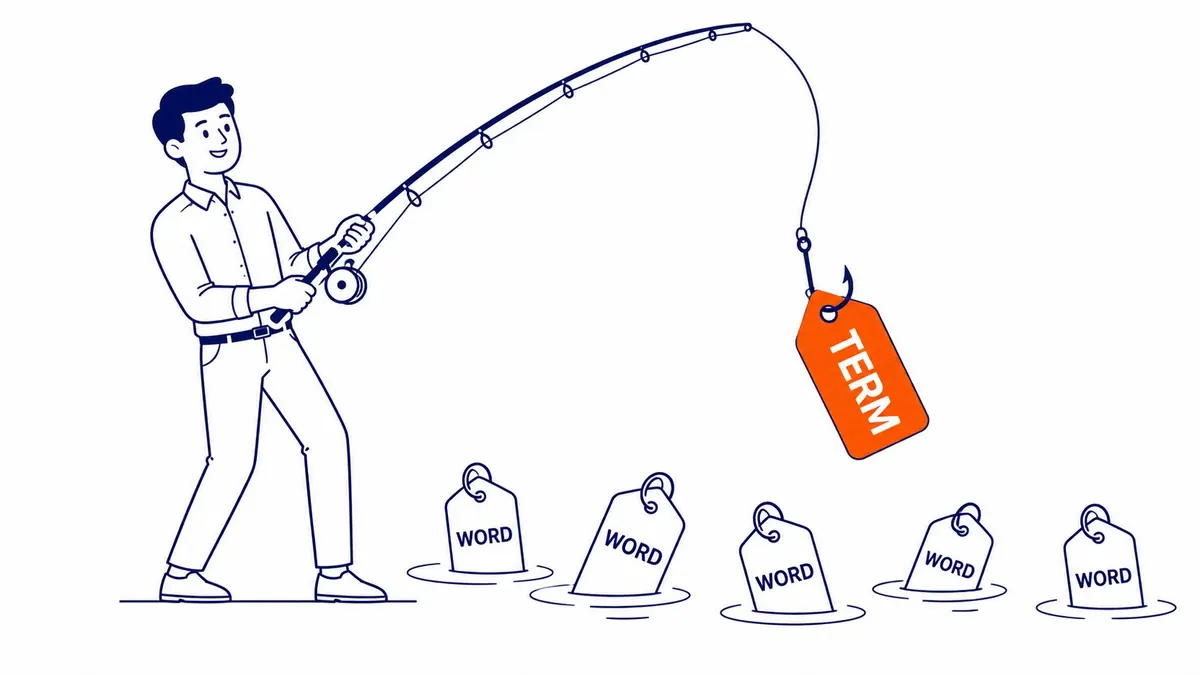
How to rank above a competitor on their own keywords
Read the ranking page as a customer would, then write down what it leaves out. Common gaps are missing local detail, no pricing guidance, no comparison of options, no answer to the obvious follow-up question, and no proof of who wrote it or why they know. Your page should answer the full search better than theirs does, in your own words and from your own experience, because that is both what Google’s helpful content guidance asks for and the only part a competitor cannot copy back from you overnight.
Look at their links next, although with care. A backlink tool will show where a competitor’s links come from, and some of those sources, such as a local business association, a supplier directory or a trade publication, may be open to you as well. Earning a mention on the same sites is fine, while buying links to pass ranking credit breaks Google’s spam policies and can lead to a manual action or to the links being ignored.
Strengthen the page from inside your own site. A new page has few internal links pointing at it, while a competitor’s established page may have dozens, so link to it from your relevant service pages and articles with natural anchor text. This is one of the few levers you control completely, and it costs nothing but time.

Fix the technical basics before you blame the content. Slow pages, pages that are blocked from crawling or not indexed, poor mobile rendering and duplicate versions of the same page can hold back a page that deserves to rank. A technical audit of the site usually surfaces these, and most are cheaper to fix than writing new content. Expect the whole process to take months rather than weeks, since Google has to recrawl and reassess the page and the competitor is not standing still.
How to tell whether the traffic actually moved
Measure the result in Search Console rather than in a tool’s traffic estimate. Before you change anything, note the target query’s impressions, average position and clicks for the last three months, then compare the same figures once the new page has been live for a few months. Rising impressions with a better position mean the page is gaining visibility; clicks follow once the position is high enough to be seen.
Check the actual results page as well, from a Calgary location if your customers are local, because an average position blends many searches and locations into one figure. If the competitor’s page is still above yours after several months and theirs is clearly stronger, move on to the next term on the shortlist rather than rewriting the same page again and again.
When paid search is the faster route
Some competitor traffic is out of organic reach for now, and paid search is the way to appear on those searches while organic work builds. With Google Ads, you can show an ad on a search where a competitor ranks first organically, and an approved campaign can start showing within days rather than months, budget and the auction permitting. The trade-off is that paid visibility stops when the budget stops, while an organic ranking keeps earning clicks for as long as the page holds its position.
Brand names follow their own rules. Google’s trademark policy says it will not restrict trademarks used as keywords, but after a complaint from the owner it will restrict a trademark used in an ad by a direct competitor. Whether a specific ad is lawful in Canada is a question for a lawyer rather than an SEO, and the details of bidding on a competitor’s brand name are covered separately.

Competitors’ paid keywords are worth a look even if you never run ads, because a company that keeps paying for a term is usually signalling that the term is worth something to it. That makes it a strong candidate for your organic shortlist. On searches where several ads sit above the organic results, however, even a top organic position gets fewer clicks, so weigh that before committing months of work to a term.
If you want a second opinion on which of your competitors’ keywords are worth chasing, SEO Company To-The-TOP! has worked on search for Calgary businesses since 2007, and one specialist does the work from research to reporting. To talk through your shortlist, call (403) 308-5949.
Contact Calgary SEO Company To-The-TOP!
Questions about anything in this article, or about your own rankings? Talk to a Calgary SEO specialist directly.
Phone: (403) 308-5949
Address: 1509 14 Ave SW, Calgary, AB T3C 0W4
Hours:
Monday to Friday: 10:00 am – 7:00 pm
Saturday: 12:00 pm – 4:00 pm
Sunday: closed