
Do Backlinks Help SEO?
Do backlinks help SEO? Yes, and Google documents how: a link from another site helps Google find your page, the words in the link tell Google what the page is about, and Google’s link analysis systems, including PageRank, use the pattern of links across the web to judge which pages might be most helpful for a search. How much backlinks help depends on the search itself. On a results page full of small business sites, a few relevant links can make a real difference, while a page competing with national publishers may not close the gap with content alone. Links also stop helping when the page has a problem a link cannot fix, such as a noindex tag that keeps it out of the index or not matching what searchers want.
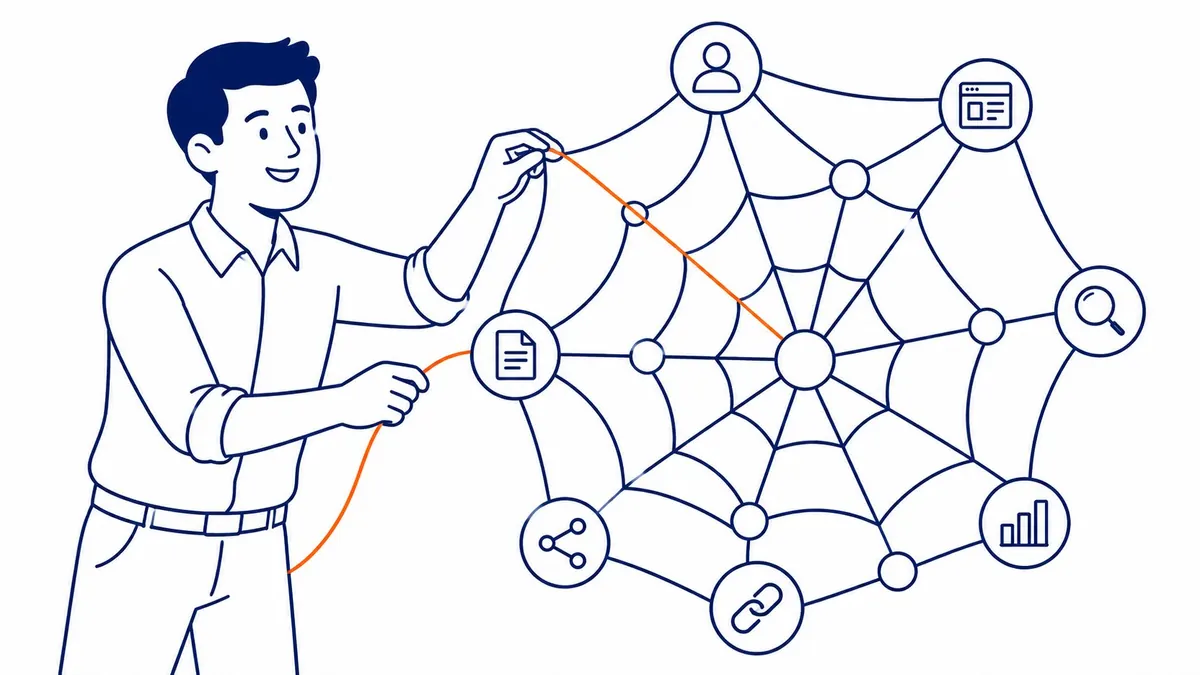
A backlink is simply a link on another website that points to yours. If you want the definition in more detail, along with what a backlink is and the main types, that has its own article. This one is about the practical question behind the search: will links help your page, how, and how to tell whether they are what is holding it back.
Three things a backlink does for a page
Google’s own documentation describes three separate jobs a link does, and it helps to keep them apart, because a link can do one without the others. The first is discovery. Google’s guide to how Search works explains that there is no central registry of web pages, so some pages are discovered “when Google extracts a link from a known page to a new page.” A link from a site Google already crawls is one of the ways a new page gets found, alongside sitemaps.
The second job is understanding. Google’s link best practices say that anchor text, the visible words of a link, “tells people and Google something about the page you’re linking to.” When a supplier links to a roofer with the words “roof repair in Calgary”, that link carries a description of the page as well as counting toward Google’s link analysis, if Google chooses to count it. The third job is judging importance. Google’s guide to its ranking systems says it has “various systems that understand how pages link to each other as a way to determine what pages are about and which might be most helpful in response to a query,” and that PageRank, one of its original systems, “has evolved a lot” and “continues to be part of our core ranking systems.”
Links matter for map results too. Google’s Business Profile Help page says local results are mainly based on relevance, distance and popularity, and it describes prominence as being based partly on “how many websites link to your business and how many reviews you have.” For a Calgary business that wants to appear in the map pack, links from local and industry sites therefore feed one of the signals Google names, sitting beside reviews and a complete profile.
What Google does not publish is a weighting. The ranking systems guide lists its systems without ranking them, so claims that backlinks are “one of the top three ranking factors” or account for a fixed share of rankings go beyond anything Google has documented. Links help, but nobody outside Google can say by how much in general, which is why the useful question is whether they would help a particular page.
What the research on links and rankings shows
The best-known large study is Backlinko’s analysis of 11.8 million Google search results by Brian Dean (page last updated April 2025). It found that a site’s overall link authority, measured with Ahrefs’ Domain Rating, correlated with higher first-page rankings, and that the number one result had on average 3.8 times more backlinks than the results in positions two to ten. It also found that the number of different referring domains appeared to matter, which fits the common advice that links from many relevant sites are worth more than many links from one site.

Those findings are correlations, and they need to be read as such. Pages that rank first get seen more, so they also attract more links, which means some of the gap is a result of ranking rather than a cause of it. Third-party scores such as Domain Rating are the tool vendor’s own metrics, not numbers Google uses. The study still supports the plain conclusion that strongly linked sites tend to rank well, but it cannot tell you how many links your page needs.
The other half of the evidence is about which links count. In 2019 Google said that nofollow, sponsored and ugc link attributes are treated as hints about which links to consider, rather than strict rules, and in its December 2022 link spam update it described using SpamBrain to detect and neutralize unnatural links. So “do backlinks help” really means “do the links Google chooses to count help”, and links bought to pass ranking credit or swapped in excessive link exchanges are the ones Google’s spam policies target. If you want the longer history of how that changed, the article on whether links are still important for SEO covers it.
When a backlink will not help
Most disappointment with link building comes from expecting links to fix a problem they cannot reach. A link adds discovery, description and importance to a page, but it cannot make Google index a page that carries a noindex tag or read a page that robots.txt blocks, and it cannot make a page answer a search it does not match. The table below sets out the common cases and what is worth fixing before anyone spends time on links.
| Situation | Will a new backlink help? | What to fix first |
|---|---|---|
| The page has a noindex tag | Not while noindex keeps it out of the index | Check the page in Search Console’s URL Inspection tool, and remove noindex if the page should rank |
| The page is blocked from crawling by robots.txt | Very little, because Google cannot read the page’s content, even though Google says a blocked URL can still be indexed if other sites link to it | Allow crawling of any page that should rank with its content |
| The page does not match what searchers want (a service page for an informational question, or the reverse) | Very little | Rewrite or retarget the page so its format and content match the results that rank |
| The link was paid for to pass ranking credit, came from an excessive link exchange, or was placed only for ranking purposes | Likely not, because Google works to neutralize these links, and its spam policies say violating sites may rank lower or not appear at all | Stop buying links meant to pass ranking credit; treat paid placements as advertising and mark them rel=”sponsored” or rel=”nofollow” |
| The link sits on a page Google rarely or never crawls | Little, because Google has to find the linking page first | Favour links on pages that are themselves indexed and linked to |
| A local map search where the searcher is far from the business | Links feed prominence, but distance is a separate factor links cannot change | Accept the distance limit; build relevance and reviews for the areas the business serves |
| The page already answers the search well and the competing pages have similar or weaker links | Possibly not needed | Check internal links and page quality before outside links |
Links also say nothing about whether a visitor will call or buy. A page that ranks after a good link still has to convert, which is a separate job from SEO.
How to tell whether your page needs more links
A short check, done in this order, usually shows whether links are the bottleneck. Start in Search Console with the URL Inspection tool and confirm the page is indexed. Then open the Performance report, filter to the page and look at the queries it already appears for and their average positions. As a rough rule of thumb, a page that is indexed, matches the search and sits on page two or the lower half of page one is often where links can help, while a page far down the results for its main query more often has a content or intent problem first.
Next, search the query yourself and look at who ranks. When the top results are national publishers, large brands and official documentation, a small site faces an authority gap that a better article alone often will not close. When they are small business sites, forums and modest blogs, the gap is smaller. The Calgary results for “do backlinks help seo” on 2026-11-14 are a good example of the second kind: small agency blogs, a Quora thread and two mid-size marketing sites, with no national SEO publisher on the page.
Finally, compare links rather than guessing. Search Console’s Links report shows which sites link to you most, which of your pages receive the most links and which link text is used, although Google notes that it shows a sample rather than every link. A third-party backlink tool can show a similar view for competing pages, drawn from its own index rather than Google’s. If the pages above yours are linked from relevant, recognizable sites in your industry or city and yours is not, links are a likely gap. An SEO audit works through the same checks across a whole site, so the pages that would gain most from links are found before any outreach starts.
An illustrative example from a Calgary service page
Take an illustrative case, with invented details, of a Calgary roofing company whose “roof repair” page is indexed and shows an average position of about 13 for “roof repair calgary” in Search Console. The page describes the service clearly, lists the areas served and has photos of real jobs, so it matches what searchers want. The top results are other local roofers and two directories, which means the results page is local and winnable rather than dominated by national brands.
Comparing links shows the difference. The three roofers ranking above it are linked from a shingle manufacturer’s installer directory, a Calgary home builders’ association member list and a local news story, while the company’s own page has no outside links at all. That is the pattern where links are the likely bottleneck, and the obvious places to start are the relationships the company already has: the manufacturer whose shingles it installs, the associations it belongs to and any community work it does.
What the example cannot tell you is how many positions those links would be worth or how quickly. Google does not publish that, and anyone who promises a specific ranking from a specific number of links is guessing. The check only tells you that links are the right thing to work on next for that page.
Which backlinks help a local business most
For a local business, the links that tend to help are the ones that would exist even if search engines did not. Suppliers and manufacturers often list their dealers or installers, trade and industry associations list members, chambers of commerce and business improvement areas have directories, and local news outlets link to businesses when there is a real story. These links are relevant to the business, come from sites Google already knows and are given for a reason, which is the kind of link Google’s link analysis is built to read.

Paid placements are a different matter. Sponsoring a community event or a local team can be good for the business, but if the link is part of what was paid for, Google’s spam policies expect it to carry rel=”sponsored” or rel=”nofollow”, and such a link should be valued as visibility rather than as a ranking tactic. Old spammy links worry many owners, yet Google’s disavow help page says that “in most cases, Google can assess which links to trust without additional guidance, so most sites will not need to use this tool.” The details of outreach, content that earns links and what to avoid are covered in the article on how link building works.
How long a backlink takes to help
Google does not publish a timeline for links, so any fixed number of weeks is a guess. What can be said is the order of events: Google has to crawl the page carrying the link and process the link, and its systems then have to reflect it in how the linked page ranks, and none of that happens on a set schedule. A link on a busy, frequently updated site is usually found sooner than one on a page Google seldom visits.

In practice, link work is measured in months, and the effect usually builds as more relevant sites link to a business over time, although no single link guarantees a gain. That is one reason many businesses run Google Ads for their most important services while organic rankings build, then adjust the paid budget as the organic results improve.
The short answer
Backlinks help SEO because Google uses links to find pages, understand them and judge which are most helpful, and because links are among the things Google says local map results are based on. They help most when a page is already indexed, matches the search and sits close to the top on a results page it can realistically win. They help least, or not at all, when the page has an indexing or intent problem, or when the links were bought or swapped to manipulate rankings.
SEO Company To-The-TOP! has worked on search rankings for Calgary businesses since 2007, with one specialist doing all of the client work and White Hat methods only. If you would like to find out whether links are what is holding your pages back, you can reach SEO Company To-The-TOP! at (403) 308-5949.
Contact Calgary SEO Company To-The-TOP!
Questions about anything in this article, or about your own rankings? Talk to a Calgary SEO specialist directly.
Phone: (403) 308-5949
Address: 1509 14 Ave SW, Calgary, AB T3C 0W4
Hours:
Monday to Friday: 10:00 am – 7:00 pm
Saturday: 12:00 pm – 4:00 pm
Sunday: closed