Does an SSL Certificate Help SEO?
We get this question a lot. It comes up almost every time we walk a new client through our website audit. Clients often expect the answer to unlock some major ranking opportunity. It does help. The direct SEO benefit is real but modest. Worth knowing what the absence of SSL actually costs your website, though.
The risk is not just a dropped ranking signal. Browser warnings, slower page loads, and lost user trust add up faster than most site owners expect.
A confirmed ranking signal since 2014
Small, but on record. Google confirmed HTTPS as a ranking signal in 2014. Described it then as a lightweight tiebreaker rather than a primary factor. Encryption became the standard across the web. So the signal carries more weight now. Most websites made the switch years ago. Any site still running HTTP faces a more visible gap now than it would have a decade ago.
What an SSL certificate actually does
Encryption is the function. An SSL certificate, technically now a TLS certificate, creates a secure connection between a visitor’s browser and your web server. Sensitive information in transit stays protected. Hackers also cannot read or intercept data passing through that encrypted channel. That is what SSL security provides. No certificate means no encryption. Chrome and most browsers flag unencrypted sites as “Not Secure” in the address bar. That label appears before a visitor reads a single word of content.
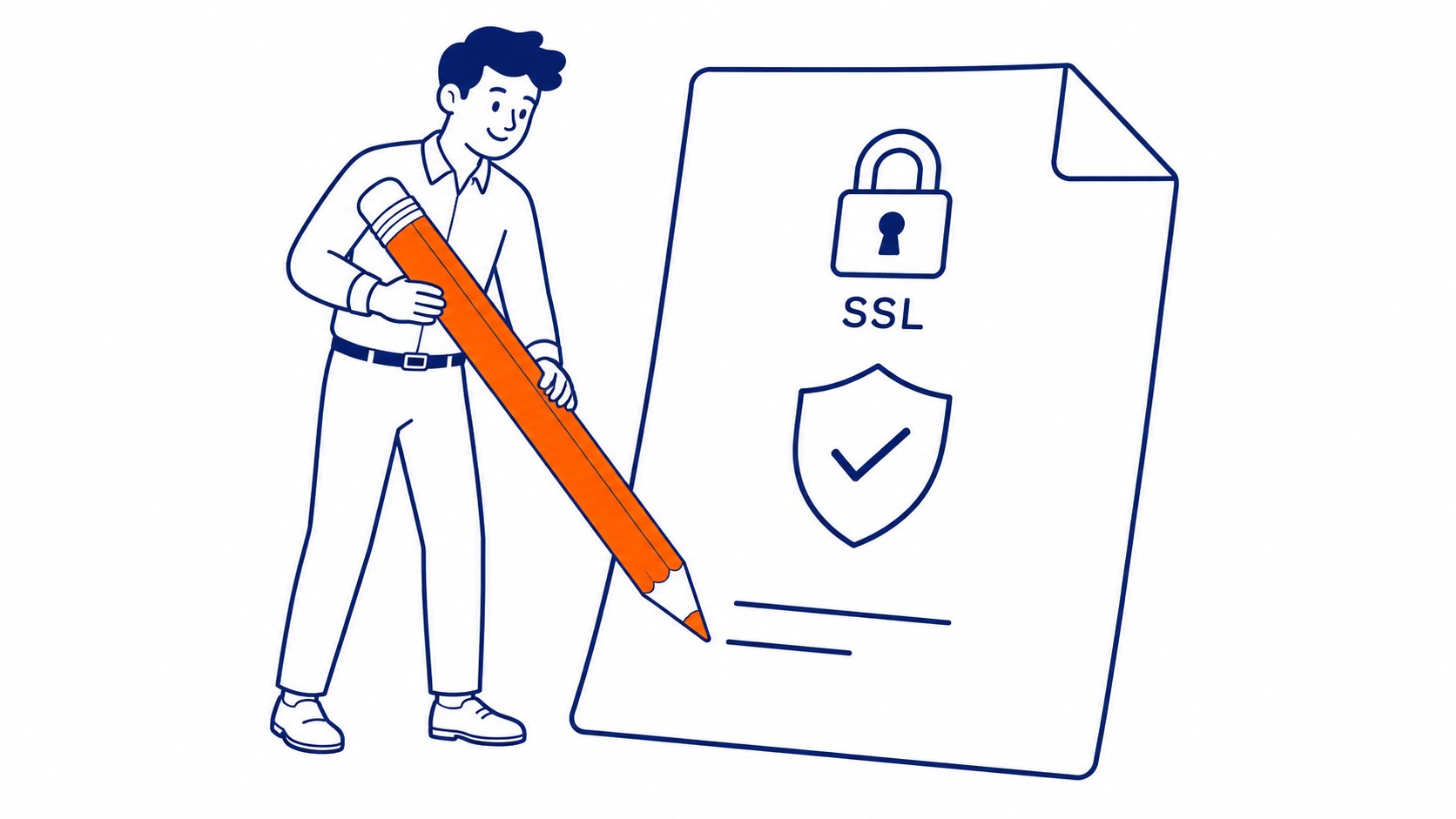
The indirect effects on SEO matter more
Bigger than the direct signal. Google built a direct HTTPS signal into its algorithm. The knock-on behaviour effects go deeper, however. Visitors who see the “Not Secure” warning leave faster. The padlock icon signals a safe connection to users. Without it, bounce rates climb. Those engagement signals also feed into how search engines assess user experience. User trust erodes. The effect shows up in search results over time.
Any serious investment in search engine optimization in Calgary needs a clean technical foundation. Calgary SEO services start with one technical strike already against them when the site is on HTTP. SSL also closes that gap. Certificates are one piece of a bigger checklist, which is technical SEO in plain terms.
HTTP/2 and page speed
Worth knowing before dismissing the certificate. HTTP/2 is the protocol behind faster load times. Connection multiplexing. Header compression. Both also enable the kind of speed gains that affect Core Web Vitals scores. Major browsers only run HTTP/2 over encrypted connections. No SSL certificate, and your site defaults to the older HTTP/1.1 protocol. Page speed is a confirmed ranking factor. This is also where skipping SSL starts costing real positions in the SERPs.

Getting the migration right
Straightforward to install. The SEO risk sits in the migration. SSL certificates are inexpensive; many are even free through Let’s Encrypt. Every URL on your website needs a 301 redirect from the HTTP version to HTTPS. Miss any. Search engines treat the two versions as separate pages. Duplicate content signals follow. Link equity gets split across both versions. A redirect audit before switching is worth the time. After the migration, Search Console needs to be reconfigured for the new HTTPS property. Backlinks pointing to old HTTP URLs still pass value. Catching edge cases early also prevents silent traffic leakage.
Does the certificate type affect your SEO?
No meaningful difference. DV. OV. EV. Three types, and all three enable HTTPS. Google has not yet confirmed any advantage between certificate types. EV certificates once displayed the company name beside the URL; Chrome removed that feature years ago. A free DV certificate and a paid extended validation certificate also produce the same HTTPS ranking signal for your website. Best practices also point to DV for most sites. Certificate choice matters less than the address itself, where creating SEO friendly URLs properly still pays.

The bottom line
Install it. The direct SEO benefit is modest. Indirect costs are not. Browser warnings. Visitor abandonment. No HTTP/2 access. Skipping SSL also trades away more than just a tiebreaker signal for your SEO. It is a baseline in the SEO work we do in this market. Any good provider will still flag it in the first technical pass. Whether the traffic coming in is organic or through Google Ads management, a website without SSL sends the wrong signals from the first page load.

Frequently Asked Questions
SSL vs HTTPS: what is the difference?
Different things. SSL, or Secure Sockets Layer, was the original protocol. TLS replaced it. HTTPS is what appears in the browser address bar once the TLS layer is active on a connection. The two terms get used interchangeably now. Technically, though, TLS is what runs underneath any modern certificate. One produces the other. Asking which is “better” misses the point entirely.
Why is SSL considered outdated?
The protocol had known vulnerabilities. SSL 2.0 and 3.0 were both deprecated around 2015. TLS replaced them. Support for the old SSL protocol was dropped across browsers around the same time. What people still call an SSL certificate is technically a TLS certificate. The original name just stuck through the transition. It also happens with technology terms more than people realize. SSL is one of the clearer examples.
Why are SSL certificates being limited to 47 days?
Shorter validity windows reduce exposure. The CA/Browser Forum voted to cut certificate lifespans to 47 days by 2027. A compromised certificate can only be used against a site for 47 days instead of the previous 398-day window.
What are the 3 C’s of SEO, and where does SSL fit?
Content. Credibility. Code. Three pillars. SSL sits in both the credibility and code columns. HTTPS signals to users and search engines that the site is trustworthy. Strong content still drives rankings. A credibility gap, however, undercuts strong content. SSL is one of the simpler gaps to close.
Contact Calgary SEO Company To-The-TOP!
Questions about anything in this article, or about your own rankings? Talk to a Calgary SEO specialist directly.
Phone: (403) 308-5949
Address: 1509 14 Ave SW, Calgary, AB T3C 0W4
Hours:
Monday to Friday: 10:00 am – 7:00 pm
Saturday: 12:00 pm – 4:00 pm
Sunday: closed
