How Long Does It Take for Google Ads to Work?
Every new account opened at To-The-TOP! brings the same question, and it usually arrives before the business has even settled on a Google Ads management agency: how long does it take for Google Ads to work? More to the point: when does your Google Ads spend start paying for itself? Clicks arrive within hours of ad approval. Conversions that make financial sense? Still, that takes longer. Three months is a realistic minimum. Some accounts, though, reach their stride in six.
That timeline frustrates advertisers who expected paid search to behave like a switch. It does not. The platform learns from every click, every impression, every conversion signal it receives. Until enough data accumulates, the algorithm is still guessing at who to show your ads to.
This guide also covers what actually happens across those first months, what slows results down, and what speeds them up. Perspective: a specialist who has been managing accounts since 2007. For those starting fresh, the PPC advertising primer covers the auction model and how paid search works before getting into timeline specifics.
What to Expect in the First 90 Days
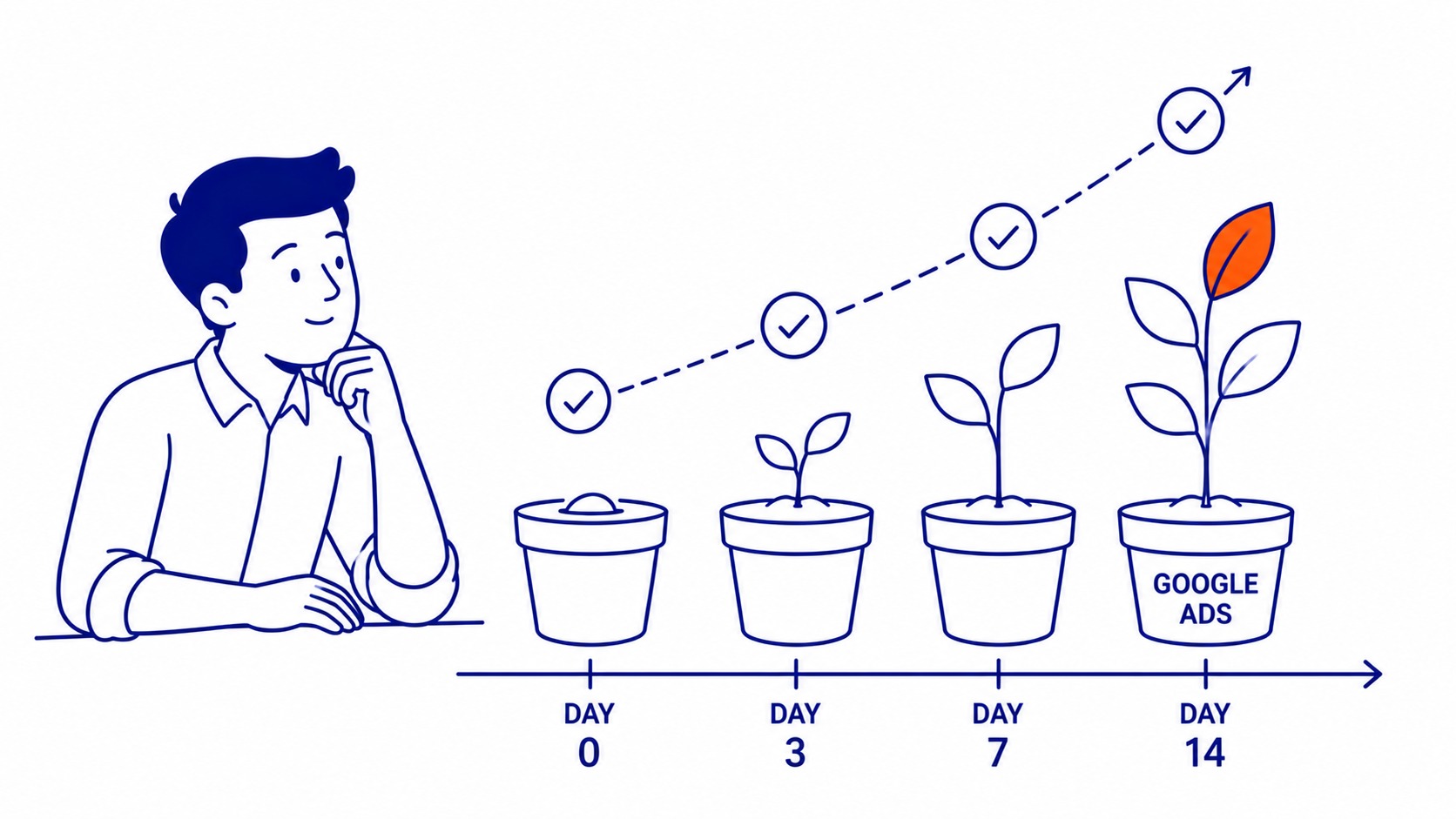
Three phases still define most campaigns.
Launch to 48 hours: ads enter review. Google checks ad copy, landing page content, and targeting settings against its policies. Most ads clear in a few hours, though occasionally one sits in review for a full day. No clicks arrive during this period.
Days two through thirty: the learning phase begins. Impressions start. Clicks trickle through. Your budget still gets spent. The algorithm is still collecting data. Conversion rates also look odd in this period. Do not make sweeping changes. Changing budget levels or bid strategies resets the process and costs another two to four weeks.
Month two onward: performance data accumulates. The algorithm also identifies which audiences convert and which keywords generate actual leads. Device and time-of-day patterns emerge. Campaigns set up correctly then start earning their spend. Setup decides most of that, right down to how many AdWords keywords per ad group. Month three is usually when a PPC audit starts paying for itself.
Google Ads Learning Phase: What It Is and Why It Matters
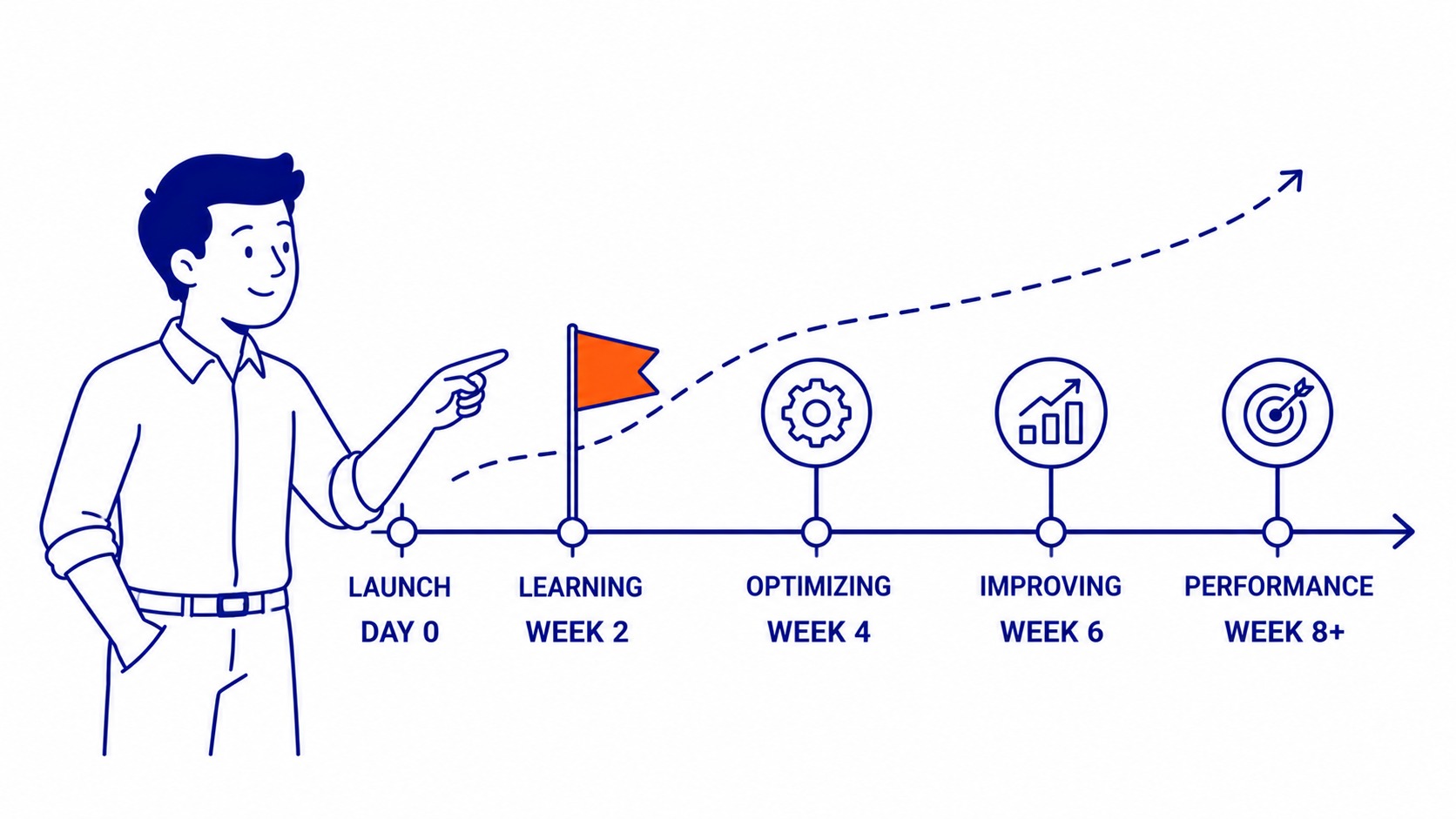
Every new Google Ads campaign enters a learning phase at launch. The algorithm tests ad delivery across different audiences and placements. It needs enough data to make smarter decisions about where your budget goes.
Roughly 50 conversions in 30 days: that is the threshold for exiting the learning phase under most Smart Bidding strategies. Service businesses, high-ticket products, niche markets: these typically stay in this phase for six to eight weeks rather than two or three.
The learning phase resets with every significant change. Raise your budget by more than 20 percent, swap your bid strategy, pause and re-enable an ad group: the clock resets. This is one of the most expensive patterns we see in accounts. Clients keep adjusting because results look slow. Each adjustment, however, sends them back to the start.
Still, patience through this period is not passive. Pull search term reports. Add negative keywords. Check impression share. None of those trigger a reset.
Factors Behind Your Google Ads Timeline
Several variables push the timeline shorter or longer. Competition is one. In high-auction industries, the cost per click runs high and the audience takes longer to convert. Legal services and financial products are the clearest examples. A smaller daily budget in that environment then generates fewer impressions per day. Fewer impressions also means the algorithm collects data more slowly.
Keyword selection also shapes the pace. Broad match keywords generate traffic fast. They also convert poorly. Phrase and exact match keywords build click volume more slowly. They still attract the audience most likely to act. The right balance depends on your goals and how competitive your market is.
Landing page quality matters as much as the ads themselves. Without conversion tracking in place, the algorithm has no signal about what is working. It also keeps spending across audiences without information about which clicks lead to customers.
Good keyword work at the start saves weeks of optimization time later, so it pays to have your keywords researched properly before the first ad ever runs. Accounts that launch with a clean keyword architecture, tight match types, and negative keywords already loaded exit this phase faster than accounts that launch without that groundwork. The Google Ads setup and strategy guide covers the pre-launch decisions that most accounts get wrong before spending starts. Bidding mechanics are the missing half, and the full picture on Google Ads includes them.
Budget and Bid Strategy
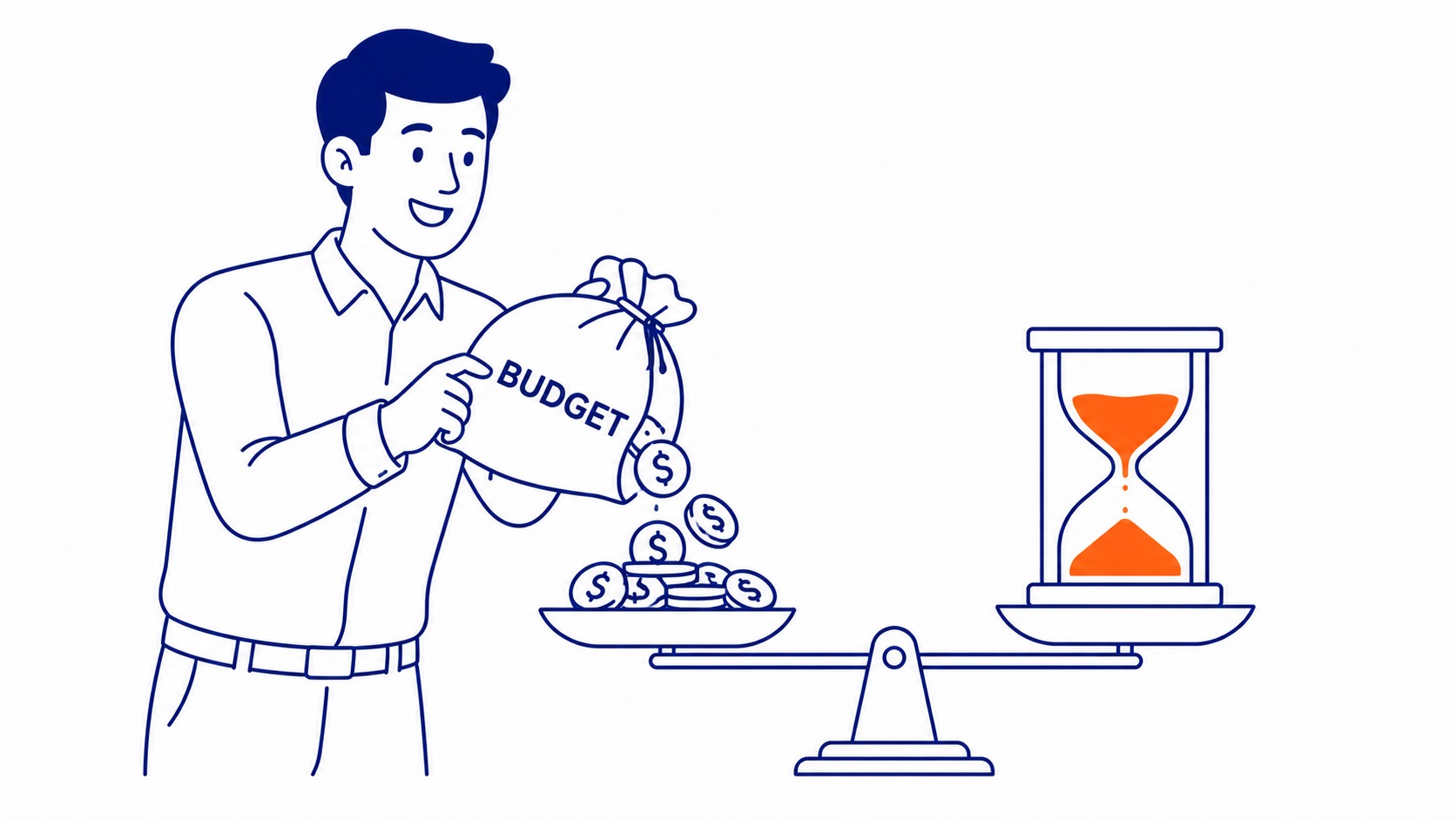
Daily budget determines how quickly your Google Ads campaign collects data. Fifty dollars a day in a market where clicks cost five dollars means roughly ten data points per day. That is simply not enough to establish statistical significance on any keyword within a reasonable timeline.
Accounts spending $500 per day accumulate data in days that lower-budget campaigns take months to collect. Faster data collection then means faster results. It also means faster exposure of problems. Campaigns built on poor keyword selection or weak landing pages fail more visibly at higher spend.
Smart Bidding strategies need sufficient conversion data to function. Target CPA requires roughly 30 to 50 conversions per month before the algorithm can optimise reliably. Below that threshold, manual or enhanced CPC bidding often outperforms automated strategies. Many advertisers switch to Smart Bidding too early, then wonder why performance declines.
Quality Score and Landing Page Experience
Quality Score (1 to 10) multiplies against the bid. With a strong Quality Score, you pay less per click and reach a higher position. Poor scores mean overpaying for every click.
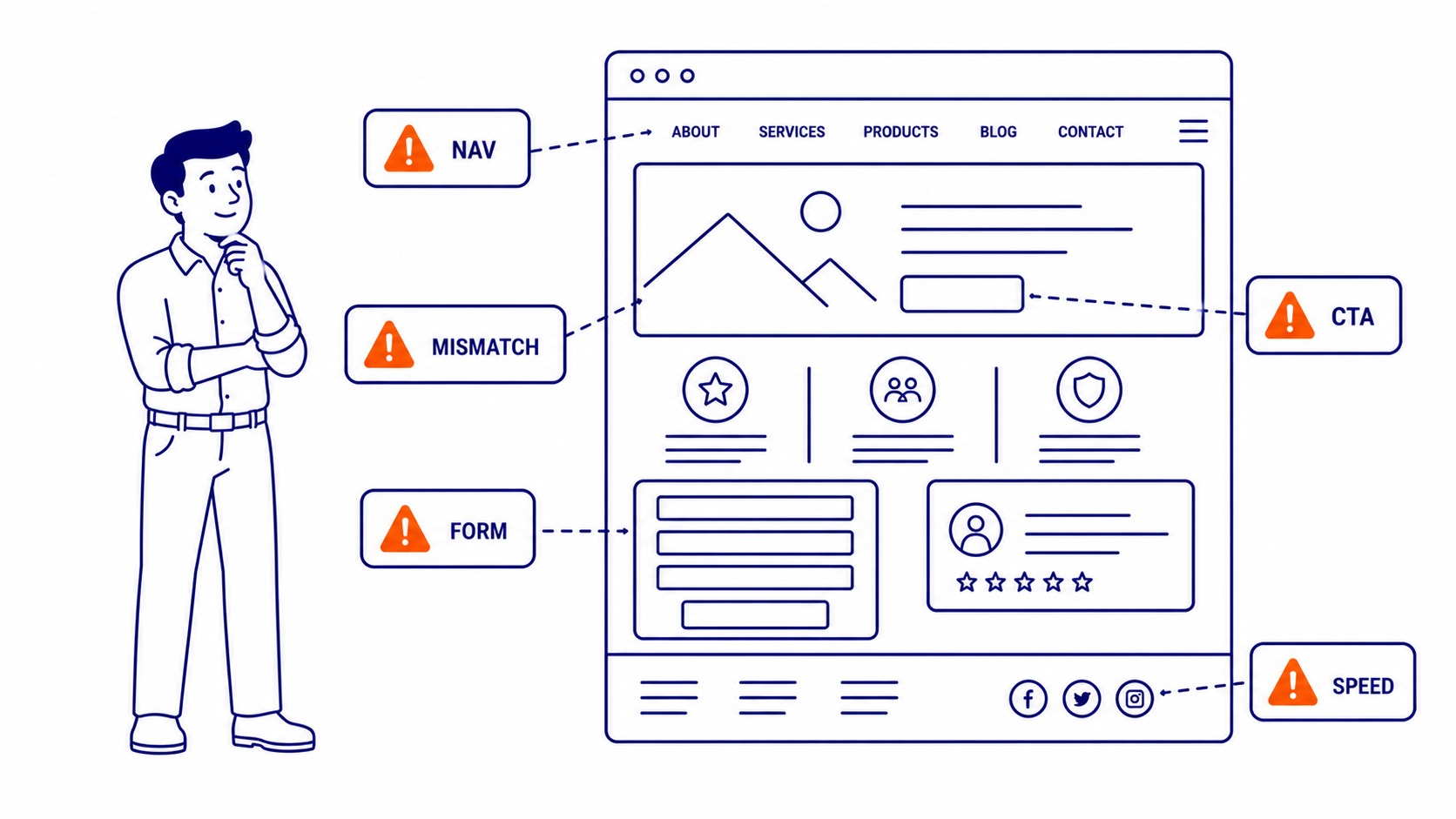
Three factors go into it: keyword-to-ad match, landing page fit, and historical CTR. Landing page experience is still the hardest to fix after a campaign goes live. Slow pages, content that does not match what the ad promised, poor mobile layout: these depress Quality Score across the entire account.
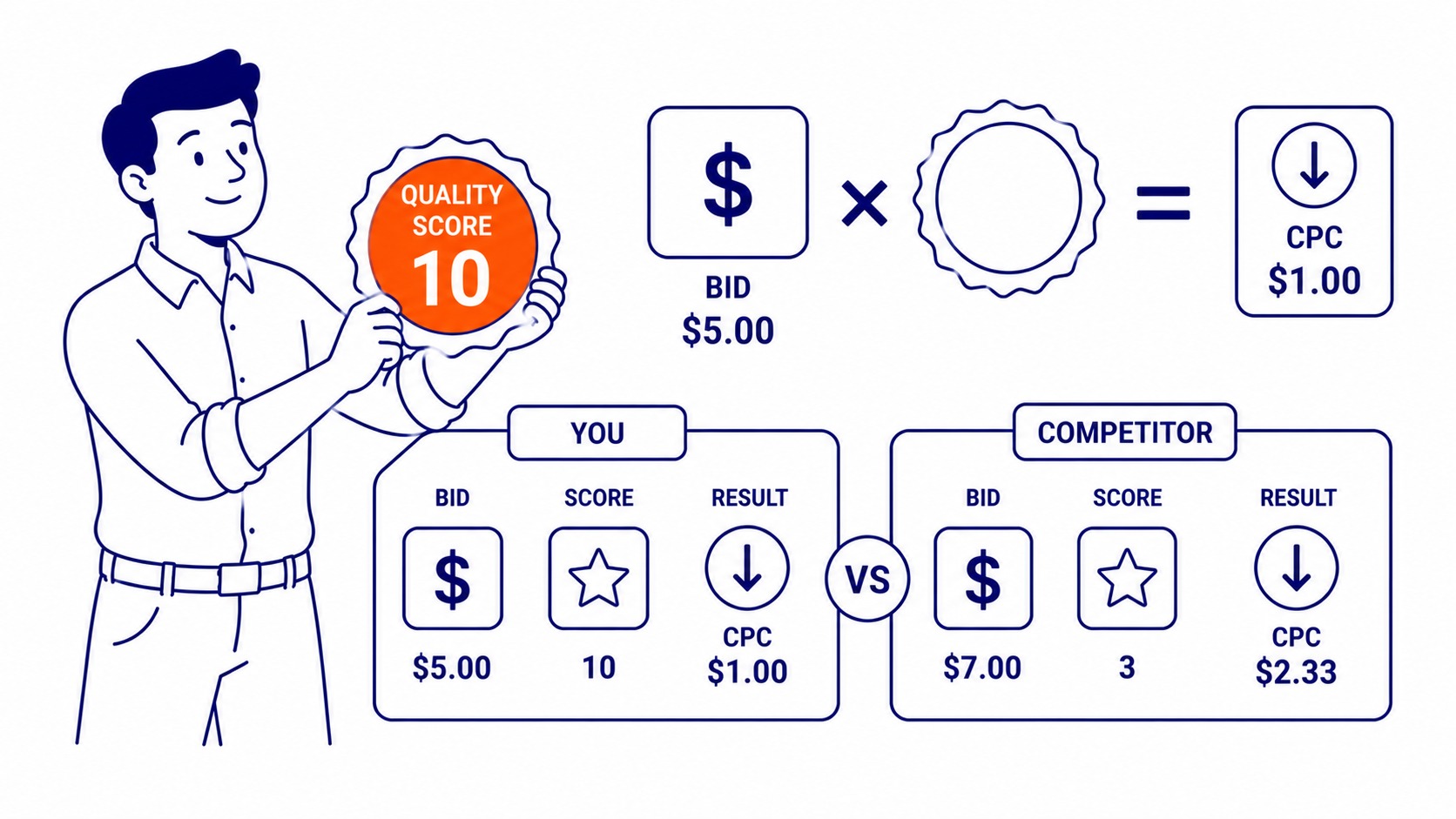
Running our website audit over speed, layout, and message match before launch finds the landing page issues that would otherwise quietly drain budget for months. Most advertisers, however, skip this step. It is also one of the highest-impact pre-launch actions we run at To-The-TOP!, since landing page quality shapes cost per click for the life of the account. Sort that out first, then have us manage your Google Ads from there.
When to Adjust and When to Wait
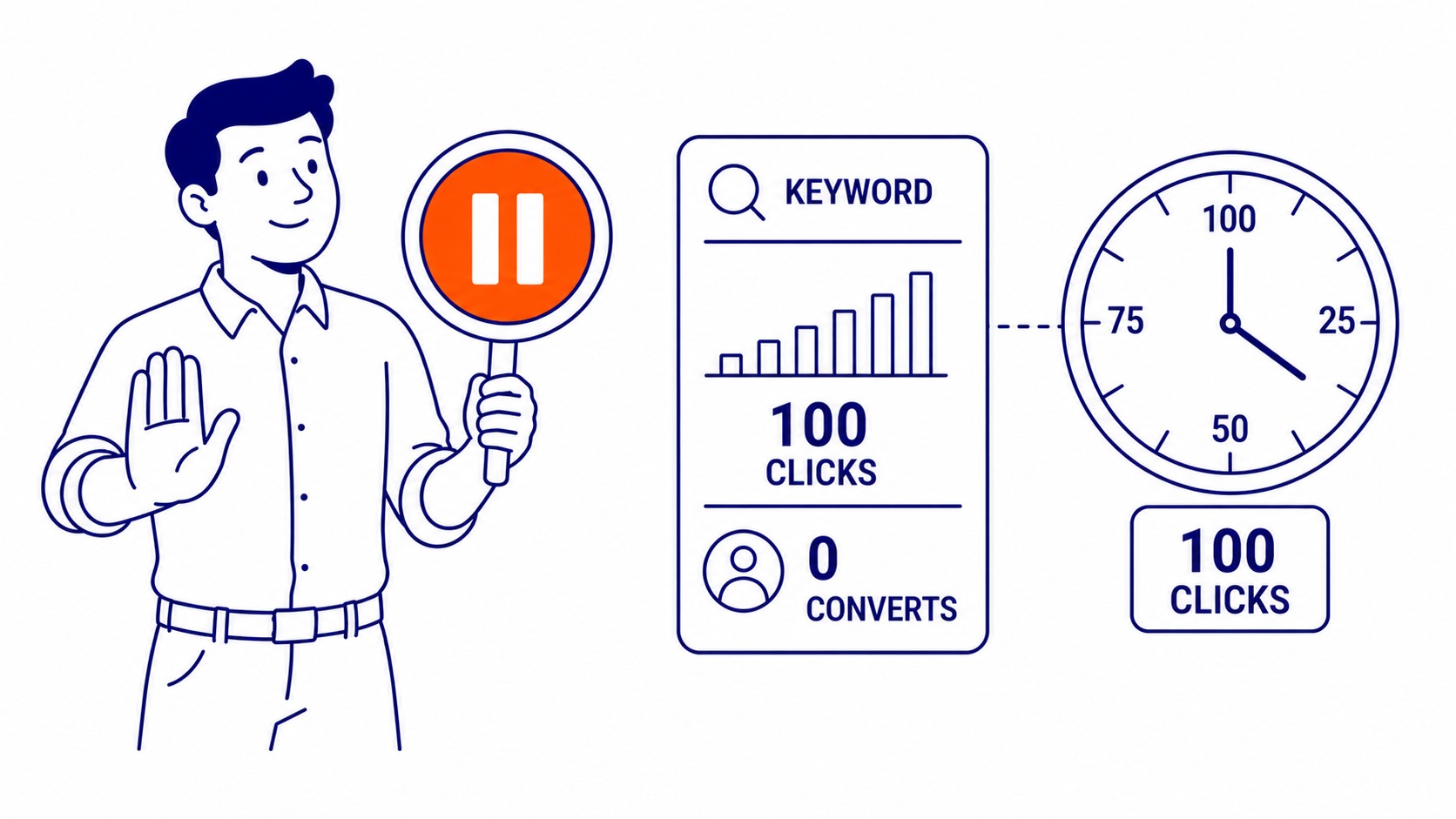
The urge to adjust is strongest during the learning phase. That is also exactly when adjustments cause the most damage. Two weeks of data is still not enough to draw conclusions about any keyword’s performance. A keyword with three clicks and no conversions is simply not a losing keyword. It has not had enough chances yet. Look at what your Google Ads data shows after 100 clicks before making a final judgment on any term.
Statistical significance takes time. The practical rule on most accounts: 100 clicks with no conversions is a strong signal to pause a keyword. Twenty is noise.
What does not trigger a reset: adding negative keywords, testing ad copy through responsive search ads, adjusting bids by device or location, layering audiences. These compound over time. An account that gets methodical attention through months two and three typically performs considerably better by month six.
Paid search delivers short-term traffic. In this business, SEO means search engine optimization of the pages themselves, and that work builds the foundation that reduces dependence on ad spend over time. Many clients at To-The-TOP! run both channels for that reason. The Calgary SEO specialists here pair organic work with paid search management, and it is designed to compound over 12 to 24 months, steadily reducing what you need to spend as organic authority builds.
Businesses in Devon, Diamond Valley, Didsbury, and Drayton Valley run Google Ads campaigns against larger competitors in the Edmonton and Calgary metro market, where the learning phase timeline still applies at any budget.
Frequently Asked Questions
Is $20 a Day Good for Google Ads?
Depends heavily on the market. At $20 per day in a niche where clicks cost $1 to $2, a campaign generates 10 to 20 clicks daily. That is enough to test, though slow to accumulate conversion data. In a competitive industry where clicks run $8 to $15, that still buys only two or three visits per day. That does not generate enough data to exit the learning phase in any reasonable timeframe. Budget has to be calibrated to the market, not picked at random.
How Long Before the Ads Start Converting?
Typically two to four weeks for the learning phase to complete for campaigns with sufficient conversion volume. Low-traffic accounts can stay in this phase for six to eight weeks, however. The threshold for most Smart Bidding strategies: roughly 50 conversions in 30 days. Below that, the algorithm continues testing without converging on a consistent delivery pattern.
Do Ads Work Right Away?
Traffic arrives within hours of ad approval. Profitable conversions, though, take longer. Expect a minimum of 60 to 90 days before drawing conclusions about a campaign’s viability. Most campaigns also show meaningful improvement between months two and three, not immediately after launch. The advertisers who see the best return typically stay consistent through the first 90 days without making significant structural changes.
What Slows Results the Most?
Frequent changes during the learning phase rank highest. Under-budget campaigns that collect data slowly come next. Poor landing page experience still suppresses Quality Score across the account. Conversion tracking that was never configured properly means the algorithm runs blind. Any one of these extends the timeline. Together, they can push realistic results out six months or longer. The biggest single fix in most accounts we audit is simply stopping the constant adjustments and letting the algorithm complete its learning phase.
Contact Calgary SEO Company To-The-TOP!
Questions about anything in this article, or about your own rankings? Talk to a Calgary SEO specialist directly.
Phone: (403) 308-5949
Address: 1509 14 Ave SW, Calgary, AB T3C 0W4
Hours:
Monday to Friday: 10:00 am – 7:00 pm
Saturday: 12:00 pm – 4:00 pm
Sunday: closed
