
How Machine Learning Helps SEO
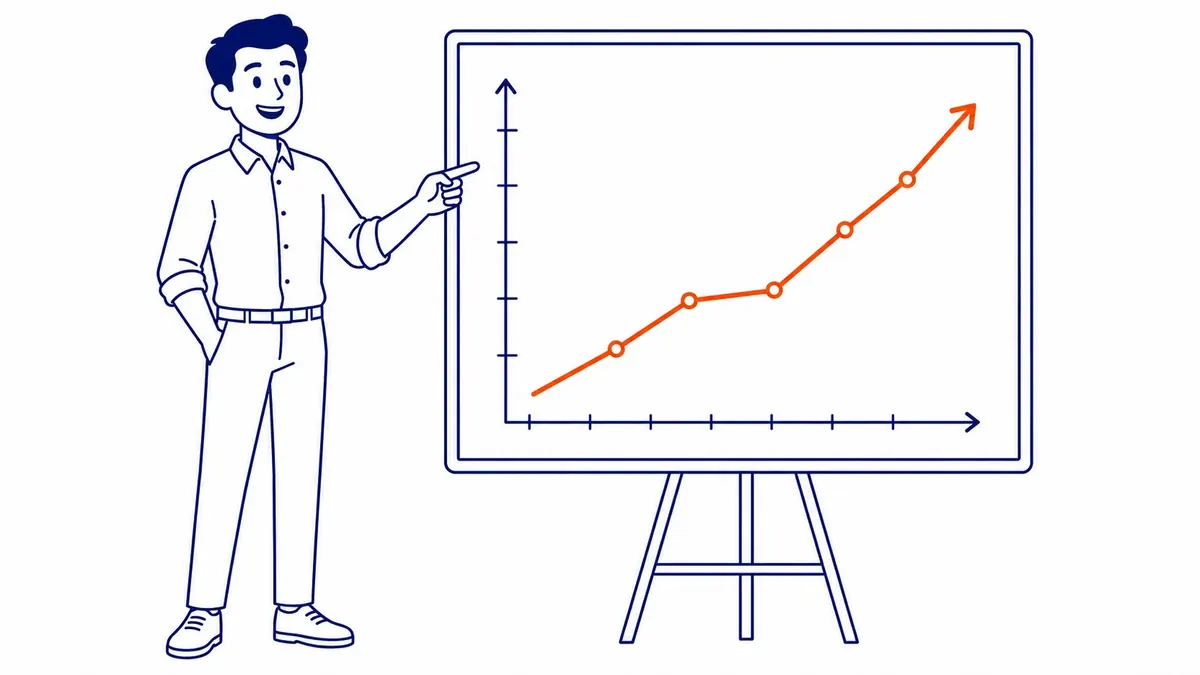
Machine learning helps SEO in two places. On Google’s side, systems such as RankBrain, neural matching, BERT and passage ranking help Google match a page to what a searcher means rather than to the exact words typed, and a system called SpamBrain helps Google detect spam. On your side, machine learning sits inside tools you may already use, such as anomaly alerts in Google Analytics and Smart Bidding in Google Ads, and it can sort large sets of keywords and queries far faster than a person can. What it does not do is reveal a ranking formula, or write a page worth ranking on your behalf.
That second half matters most for a small business. Many of the machine learning methods written about for SEO need thousands of rows of data before they say anything useful, and a local service site often has a few hundred. So this guide covers what Google’s systems do, what they change about planning a page, where machine learning genuinely saves time in the work, and when a sorted spreadsheet is the better tool.
Machine learning on Google’s side
Google’s guide to its ranking systems, last updated in December 2025, lists several systems it describes as AI systems, and they do different jobs. Most of them are about language: working out what a search means and which pages, or which parts of a page, answer it. The same guide names SpamBrain among its spam detection systems, which Google’s Webspam Report for 2021 calls AI-based. The table below uses Google’s own descriptions and the launch years Google gave in a February 2022 post on how AI powers its search results and, for SpamBrain, in its Webspam Report for 2021.
| System | Launched | What Google says it does |
|---|---|---|
| RankBrain | 2015 | Helps Google understand how words are related to concepts, so it can return relevant pages even when they do not contain every word in the search |
| Neural matching | 2018 | Understands representations of concepts in queries and pages and matches them to one another |
| BERT | 2019 | Understands how combinations of words express different meanings and intent |
| Passage ranking | Not stated | Identifies individual sections, or passages, of a page to judge how relevant the page is to a search |
| MUM | 2021 | Understands and generates language; Google says it is not currently used for general ranking, only for specific applications such as featured snippet callouts |
| SpamBrain | 2018 | Part of the spam detection systems that deal with content and behaviour that break Google’s spam policies |
Google publishes what each system is for, but not how much weight any of them carries on a given search or how they interact. A model trained on examples does not come with a sentence anyone could read back as the rule, which is why tools that offer a “content score” are measuring their own correlations rather than Google’s judgement. There is more on RankBrain and how Google describes it, including the often-quoted 2015 figures and why they are dated.

What it changes when you plan and write a page
Because Google matches meaning rather than strings of words, you no longer need a separate page for every way of phrasing the same need. A Calgary renovation company does not need one page for “basement development”, another for “basement finishing” and a third for “basement renovation” if the work and the answer are the same; one strong page that uses the words its customers use will be understood for all three. Separate pages make sense when the intent differs, for example a cost guide and a service page, because the searcher wants a different answer.
The same shift explains why repeating a keyword does nothing useful. Keyword stuffing is a named violation in Google’s spam policies, and its examples include blocks of city names a page is trying to rank for. Writing for the question in plain language, with the terms a customer would naturally use, is what the language systems were built to understand, while the stuffed version is exactly what the spam systems were built to catch.
Passage ranking adds a practical point about structure. Since Google can identify a relevant section within a longer page, a guide that gives each question its own clearly headed section can be found for a specific question even when the page as a whole is about something broader. That is a reason to write clear headings and keep each section on one topic, not a reason to break one subject into many thin pages.

Why shortcuts stopped lasting
Spam fighting is where machine learning has changed SEO tactics most directly. In its Webspam Report for 2021, Google said SpamBrain launched in 2018 and that in 2021 it identified nearly six times more spam sites than in 2020. Those are Google’s own figures from a single year, so they show direction rather than today’s numbers, but the direction is the point: patterns that a person once had to spot by hand, such as hacked pages or gibberish text on hosting platforms, both of which Google named in that report, can now be caught by a system that keeps learning.
For a business owner, the useful conclusion is about risk rather than technique. A tactic that works by imitating quality signals, such as mass-produced pages, bought links or text generated at scale with no review, is up against a detector that improves over time, so its useful life keeps getting shorter. Google’s helpful content guidance puts the alternative in three questions about any page: who created it, how it was created (including any use of automation or AI), and why. A page whose main reason for existing is to rank tends to fail the third question, however it was made.

Where machine learning helps the SEO work itself
On the practitioner’s side, machine learning is mostly a way of sorting and summarizing data that would take too long to read row by row. The question to ask of each use is what it needs as input, because the answer decides whether it is worth anything on a small site.
| SEO task | Machine learning method | What it needs | Worth it for a small local site? |
|---|---|---|---|
| Grouping keywords into pages | Clustering by meaning (text embeddings) or by shared search results | A few hundred keywords or more | Sometimes; a short list is faster to group by hand |
| Sorting Search Console queries by intent | Text classification | Queries exported from Search Console, plus someone to check the labels | Useful once queries run into the hundreds |
| Checking which topics a page covers | Entity analysis, for example Google Cloud’s Natural Language API, which returns the entities in a text with a salience score | The page text | As a second opinion only; it is not Google Search’s view of the page |
| Spotting unusual drops or spikes | Anomaly detection, built into Google Analytics 4 | Enough history: GA4 trains daily anomaly detection on 90 days | Yes; GA4 runs it automatically at no cost |
| Predicting who will buy | GA4 predictive metrics | At least 1,000 returning users who purchased and 1,000 who did not, over a seven-day period in the last 28 days | Rarely; few local service sites reach it |
| Drafting titles, descriptions and outlines | Generative language models | A clear brief and a person to check every line | Yes, with review |
The last row is where most people start now, and it is the one most likely to cause trouble if nobody checks the output. There is a separate guide to using AI tools in day-to-day SEO that covers which tasks to hand over and which to keep.

When a small business does not need a model
Machine learning finds patterns in volume, and Google’s own thresholds show how much volume it expects. GA4 will not even produce purchase predictions until a property has at least 1,000 returning buyers and 1,000 returning non-buyers in the window, and it also needs purchase events sent with a value and currency. An online store with steady sales can reach that. A Calgary trades business that books jobs by phone usually cannot, because its conversions are calls and form fills rather than purchases, and there are far fewer of them.
Take an illustrative example: a Calgary renovation company whose Search Console account shows about 300 queries over three months. Grouping those by intent is an afternoon’s work in a spreadsheet, sorted by impressions, and the person doing it will notice things a model would not, such as a neighbourhood name that keeps appearing or a service the company does not offer. A clustering script would produce much the same groups with more setup and less understanding. The same company’s 90 days of analytics history is enough for GA4’s anomaly alerts, though, so that part of the machinery is already working for it, and its alerts are worth reading.
The rule of thumb is to match the method to the number of rows. Below a few hundred, read the data yourself; in the thousands, a clustering or classification step starts to save real time; at the scale of a large store or publisher, it becomes the only practical way to see the whole picture. If you are wondering whether you need to learn programming for any of this, most small sites never reach the point where it pays.

Machine learning on the Google Ads side
Paid search is where a business meets machine learning most directly, and it works differently from organic ranking because it learns from your own account. Google describes Smart Bidding as bid strategies that use Google AI to optimize for conversions or conversion value in every auction, which it calls auction-time bidding. It sets each bid from signals about the person and their context, such as their device, their physical location and their location intent, along with other signals only Smart Bidding can use. Target CPA, Target ROAS, Maximize conversions and Maximize conversion value are all Smart Bidding strategies.
Because it learns from your conversions, it is only as good as your conversion tracking. If calls are not recorded, or a form is counted twice, the system optimizes toward the wrong thing with great efficiency. Google says a Learning status can show for up to seven days and that performance adjusts over your conversion cycle, and some strategies carry their own minimums, such as at least 15 conversions in the past 30 days for Target ROAS on Search. Broad match is now the default match type for new keywords, and Google presents it as a way to give Smart Bidding more queries to learn from, which also means more searches to watch in the search terms report.
That is the practical difference between the two sides. In organic search, Google’s systems judge your pages against everyone else’s, whereas in Ads a system that learns partly from your own results decides how to spend your budget. For Google Ads campaigns, the work that matters most before switching on automated bidding is clean conversion tracking and a realistic conversion goal.
What machine learning did not change
Machine learning changed how Google judges whether a page is a good answer. It left the mechanical half of SEO as checkable as ever. Whether Google can crawl a page, whether it is indexed, how fast it loads, whether its links work and whether its title describes it are all facts you can confirm today in Search Console or with a crawler, and none of them depends on a model’s judgement.
That split is a useful way to read any SEO advice. A number about the mechanics, such as a load time or a count of broken links, can be trusted and fixed, which is what a technical audit is for. A number that claims to measure the merit of your writing comes from somebody’s tool rather than from Google, and the better test is the one the language systems were built around: would a person who searched for this find the answer here and stop looking? Either way, nothing ranks until Google has found, crawled and indexed the page, which is why a rewrite like this one is followed by an indexing request rather than an overnight change.

Putting it to work
SEO Company To-The-TOP! has worked on search in Calgary since 2007, and it works White Hat only. The approach follows the same split this guide describes: make the mechanical side correct and measurable, write each page to answer its question better than the pages already ranking, and use automation for sorting data rather than for producing the content itself. If you would like a second opinion on how your site or your Google Ads account is set up, call (403) 308-5949.

Contact Calgary SEO Company To-The-TOP!
Questions about anything in this article, or about your own rankings? Talk to a Calgary SEO specialist directly.
Phone: (403) 308-5949
Address: 1509 14 Ave SW, Calgary, AB T3C 0W4
Hours:
Monday to Friday: 10:00 am – 7:00 pm
Saturday: 12:00 pm – 4:00 pm
Sunday: closed