
How SEO Helps Roofing Companies Win More Local Leads
SEO helps roofing companies win more local leads by putting them in front of homeowners at the moment they search for a roofer, in the Google map results and in the ordinary listings beneath them. Those searches come from people who already have a leak, a hail claim or a quote to collect, so being visible at that moment puts you in front of homeowners who are already comparing contractors. For most roofers the work runs in this order: a complete Google Business Profile, a steady flow of genuine reviews, one page for each roofing service and area, consistent business details across directories, and links from local sources.

Where roofing leads come from in search
A search such as “roof repair Calgary” or “roofer near me” usually shows paid ads at the top, then the map pack, a block of three businesses from Google Maps with their ratings and phone numbers, and then the organic results. The map pack is where many roofing calls start, because a homeowner can tap the phone number without ever visiting a website. The organic results matter more for researched jobs, such as a full replacement or a switch to metal, where the homeowner reads a few sites before asking for quotes.
Google is plain about how the map results are chosen. Its Business Profile help page says that local results “are mainly based on relevance, distance, and popularity”, and it describes prominence as how well known a business is, based partly on “how many websites link to your business and how many reviews you have.” It also states that “There’s no way to request or pay for a better local ranking on Google.” Distance is out of your hands, so roofing SEO is the work of strengthening relevance and popularity (which the same page calls prominence) through the profile, the website and the business’s reputation online.
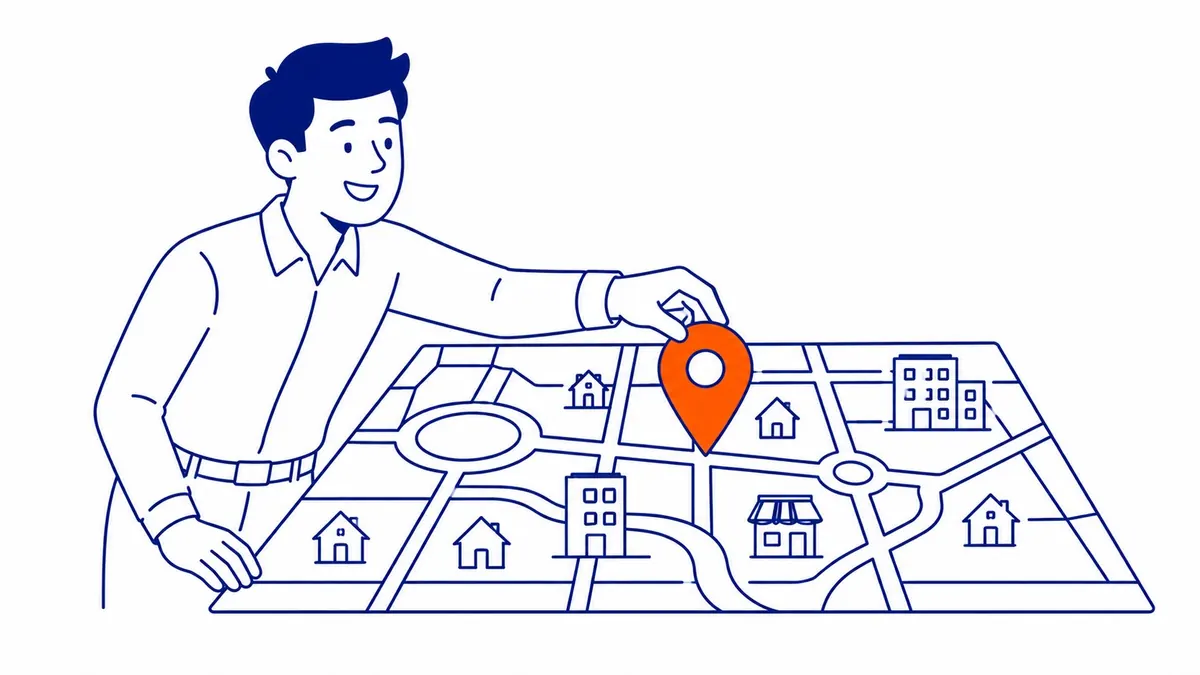
Start with the Google Business Profile
The Business Profile is the piece of local SEO a roofer controls most directly, and it is the one most often left half finished. Choose the primary category that describes the core of the business, which for most is “Roofing contractor”, add the services you actually sell, write the description in plain language, and upload real photos of your crews and finished roofs. Google’s guidance is that businesses with complete and accurate information are more likely to show up in local results, so gaps in hours, services or service areas make it harder for Google to match you to relevant searches.
Most roofers are service-area businesses, because they travel to the customer rather than receiving customers at a shop. Google’s guidelines say a service-area business should have one profile with a designated service area and should hide its address from customers, and they give the example of a plumber who runs the business from a home address and should clear that address from the profile. The same guidelines say the overall service area “shouldn’t extend farther than about 2 hours of driving time from where your business is based.” A Calgary roofer who lists every town from Red Deer to Lethbridge in the hope of ranking everywhere is working against those rules, and is better served by naming the areas the crews actually cover.

Choose keywords by job, not by trade
Many roofers assume their customers search “roofing company” and stop there. Some do, but the searches closest to a booked job usually name the problem or the material: emergency roof repair, hail damage roof inspection, shingle replacement, flat roof repair, metal roofing, eavestrough repair. Each of those reflects a different customer with a different budget and urgency, and a page that tries to answer all of them at once tends to rank for none of them well.
Good keyword research sorts these terms by how often they are searched in your area, how strong the competing pages are and how close each one is to a hiring decision. It also reveals the words local homeowners use, which are not always the words the trade uses. A homeowner may never type “re-roof”, but will type “how much is a new roof in Calgary”, and the page that answers that question in plain terms has a better chance of earning the call.
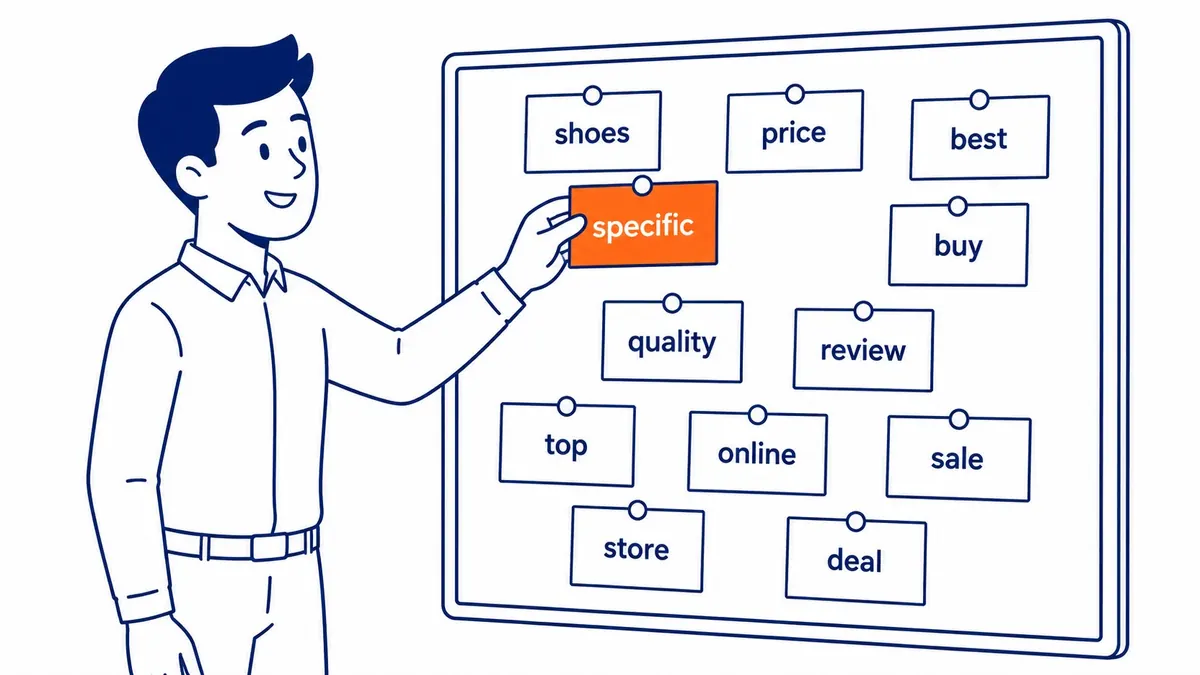
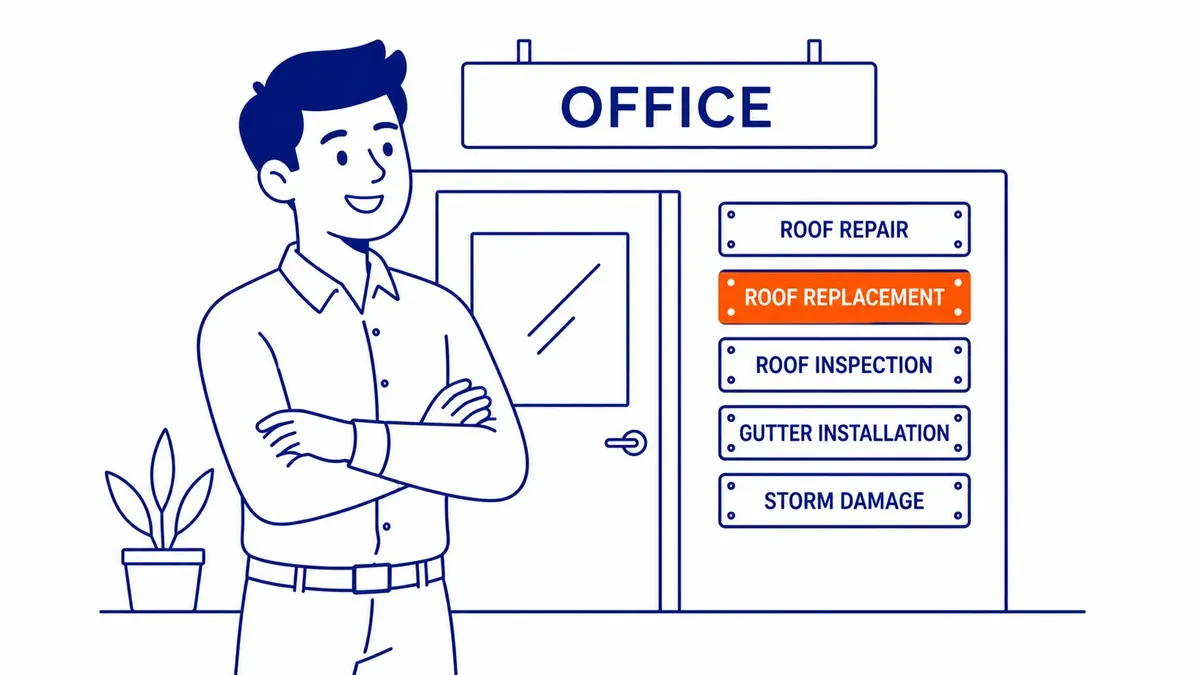
Give each service and area its own page
In the ordinary results Google ranks individual pages, so the website needs a page for each main service a customer might search for. A roof replacement page, a repair page, a hail and storm damage page and a commercial or flat roofing page, if you do that work, each give Google a clear match for one kind of search and give the homeowner the details they came for. Each page needs its own title, its own heading and text written for that job: what the work involves, which materials you install, what an inspection includes and how a customer books one.
Location pages work the same way, provided each one says something true about the area, such as the neighbourhoods you cover, the type of housing you see most or the projects you have completed there. A set of near-identical pages with only the town name swapped tends to add little value for the reader. Trust details belong on these pages too. If you sell residential roofing in Alberta, sign contracts at the customer’s home and take deposits before the work is finished, check the province’s prepaid contracting licence page. Alberta’s licensing page describes a prepaid contracting business as one that solicits, negotiates or concludes contracts in person away from its own place of business and accepts money before all the work is done, for work on private dwellings, and it exempts contracts for business or commercial buildings. Showing a valid licence on the site, where it applies, answers a question a careful homeowner may ask before calling.
Build reviews inside Google’s rules
Reviews do two jobs for a roofer. Google lists the number of reviews and positive ratings among the things that can help a business’s local ranking, and homeowners comparing two contractors read them to see who turns up on time, cleans the site and finishes without surprises on the invoice. There is more on how Google reviews affect rankings in a separate article, but for a roofer the practical point is that, for homeowners reading them, a steady flow of recent reviews says more than a large batch collected years ago.
The safest process is to ask every customer, in the same way, soon after the job is finished, with a direct link to your Google review form. Google’s Maps content policy says businesses may not “Offer incentives”, such as payment, discounts or free services, in exchange for a review, and may not “Discourage or prohibit negative reviews, or selectively solicit positive reviews from customers.” That second rule catches a common shortcut, where a roofer only sends the review link to customers who seemed happy, so it is worth building the request into the job close-out for everyone. Replying to reviews, including the critical ones, is something Google’s help pages recommend because it shows customers you value their feedback.

Keep your business details identical everywhere
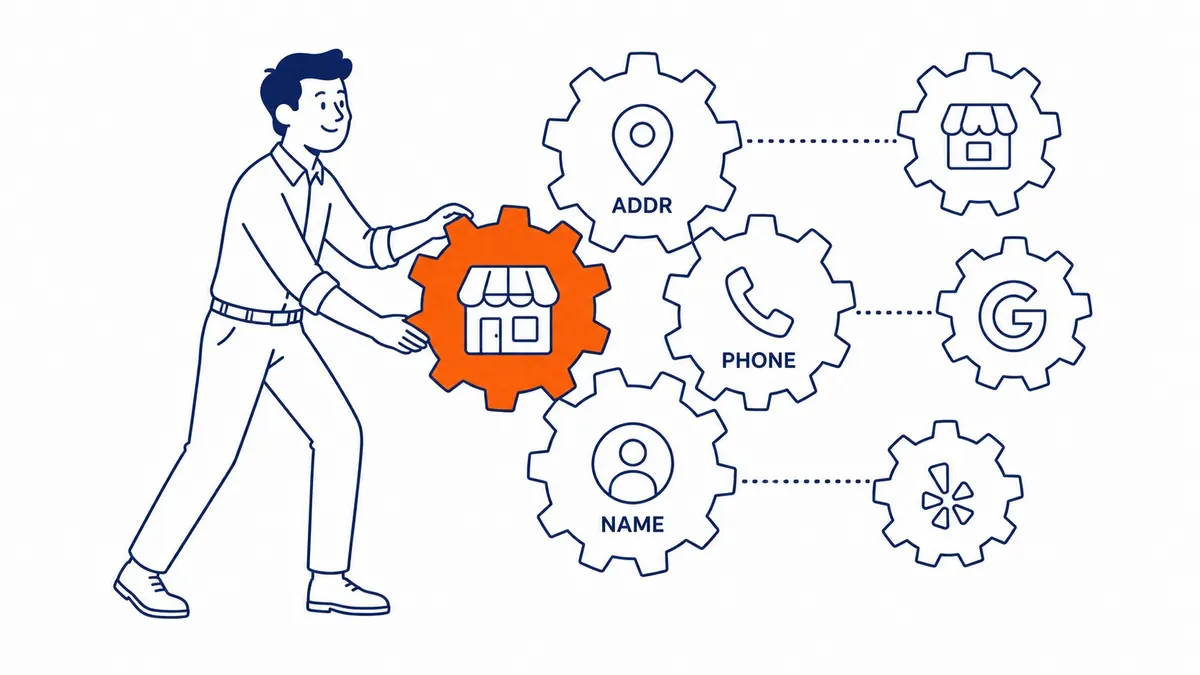
Your business name, address (or service area) and phone number appear on your website, your Business Profile and directories such as HomeStars, Yelp, the Better Business Bureau and your shingle manufacturer’s contractor locator. These listings are called citations, and their main value is consistency: when they all agree, there is less doubt about who you are and how to reach you. When they disagree, customers can end up calling an old number, which is a lost lead whatever it does to rankings.
Roofing companies collect inconsistencies over the years, through a move, a new phone line, a change of business name or an old listing created by a supplier. A cleanup starts with a search for your business name and old phone numbers, followed by correcting or claiming each listing so it matches the Business Profile exactly. It is unglamorous work, but it is finite, and once it is done it only needs checking when something about the business changes.
Earn links from real local relationships
Links from other websites are part of what Google calls prominence, and roofers have more natural sources than most trades. Manufacturer contractor directories, supplier pages, the local home builders’ or roofing association, a chamber of commerce membership, a community team you sponsor and a local news story about storm repairs can all mention and link to your site. Each of those reflects a real relationship, which is the kind of link worth having.
What to avoid is just as clear. Bought links, link packages and directories created only to sell listings carry risk and seldom produce leads. A roofer who adds a link request to every supplier relationship and sponsorship, and publishes useful local material such as a guide to inspecting a roof after hail, usually builds a better profile over a year than one who pays for a batch of links in a month.
Calgary hail: be ready before the storm
Calgary roofers work in one of the most hail-prone markets in the country. The Insurance Bureau of Canada reported that the hailstorm of 5 August 2024 caused nearly $2.8 billion in insured damage, based on initial CatIQ estimates, which made it the second-costliest insured event in Canadian history, and that almost one in five homes in Calgary was affected. The same release puts the 2020 and 2021 Calgary hailstorms at over $1.2 billion and $700 million in insured damage.
A storm like that creates urgent demand for inspections and repairs, and out-of-town contractors often follow it. SEO cannot be switched on in the week after a storm, because new pages and reviews take time to be found and trusted. Roofers are better placed when their hail damage page, inspection booking process and Business Profile are complete before the season starts, because that gives Google time to find the page and gives homeowners a ready way to book. A hail page that explains what an inspection includes, how insurance claims usually work and how to check a contractor’s licence and reviews helps both the ranking and the homeowner who is trying to avoid a storm chaser.
SEO, Google Ads and Local Services Ads
SEO is not the fastest way to get the phone ringing. Paid search ads can appear as soon as a campaign is approved, which is why many roofers run them during the months when organic rankings are still building. Good Google Ads management also means keeping paid and organic leads counted separately, so you can see what each channel is producing. Ads stop the moment the budget does, while a well-ranked service page keeps bringing in enquiries without a cost per click.
A third option, where it is available for roofing in your area, is Local Services Ads. They usually appear at the top of the results and charge for valid leads rather than clicks, and they draw on your reviews, so the review process described above supports them as well. Many roofers use more than one channel, so compare the leads and booked jobs from each before shifting budget.

How to tell whether SEO is producing leads
Rankings are a means, so judge the work by enquiries and booked jobs. The simplest approach is to record where each lead came from when it arrives, and to compare those sources month by month.
| Lead source | Where it shows up | How to count it |
|---|---|---|
| Business Profile calls | Business Profile performance: calls | Call-button taps in the profile (not answered calls), checked against “how did you find us?” |
| Map pack website visits and directions | Business Profile performance: website clicks, directions | Monthly totals in the profile |
| Organic website enquiries | Contact form and click-to-call on service pages | Form-submit and phone-link-click events attributed to organic search in Google Analytics, once those events are set up |
| Paid ads | Google Ads account | Conversions recorded in Google Ads, kept separate from organic |
| Referrals and repeat customers | Your job records | The “how did you find us?” answer |
If calls from the profile and enquiries through the service pages are rising over several months, that is a good sign SEO is working, even if a particular keyword moves up and down. Season, storms and ads also move these numbers, so compare each month against the same month last year. If rankings improve but enquiries do not, the problem is usually the page itself, such as a missing phone number on mobile, a slow site or a page that never says which areas you serve.
What to expect
Local SEO for a roofing company takes months rather than weeks. In practice, a roofer with an established site and a complete profile can see movement sooner than one starting with an unclaimed profile, a thin website and no reviews, and competition in your part of the city changes the picture again. There is more detail on how long local SEO usually takes elsewhere on this site, and Google itself gives no timeline.
SEO is the wrong first move when the calendar is already full for the season, or when the site cannot take a booking from a phone. In those cases, fix the website or the capacity first. For everyone else, the order above is the practical one: profile, reviews, service pages, consistent listings and then links, with paid ads covering the gap while the rest builds. If you would like a second opinion on where your roofing business stands in local search, SEO Company To-The-TOP! has worked on SEO in Calgary since 2007, and you can reach it at (403) 308-5949 or through the To-The-TOP! home page.
Contact Calgary SEO Company To-The-TOP!
Questions about anything in this article, or about your own rankings? Talk to a Calgary SEO specialist directly.
Phone: (403) 308-5949
Address: 1509 14 Ave SW, Calgary, AB T3C 0W4
Hours:
Monday to Friday: 10:00 am – 7:00 pm
Saturday: 12:00 pm – 4:00 pm
Sunday: closed