
How to Attribute Pipeline Growth to SEO
Stamp the source onto the record the day it opens. That one habit settles more SEO attribution arguments than any dashboard you could buy.
Most teams work the other way round. They wait for a deal to close, then go digging backwards through analytics for the first organic session. By then the session is gone.
Organic Pipeline Lives in the CRM, Not in Your Analytics Tool
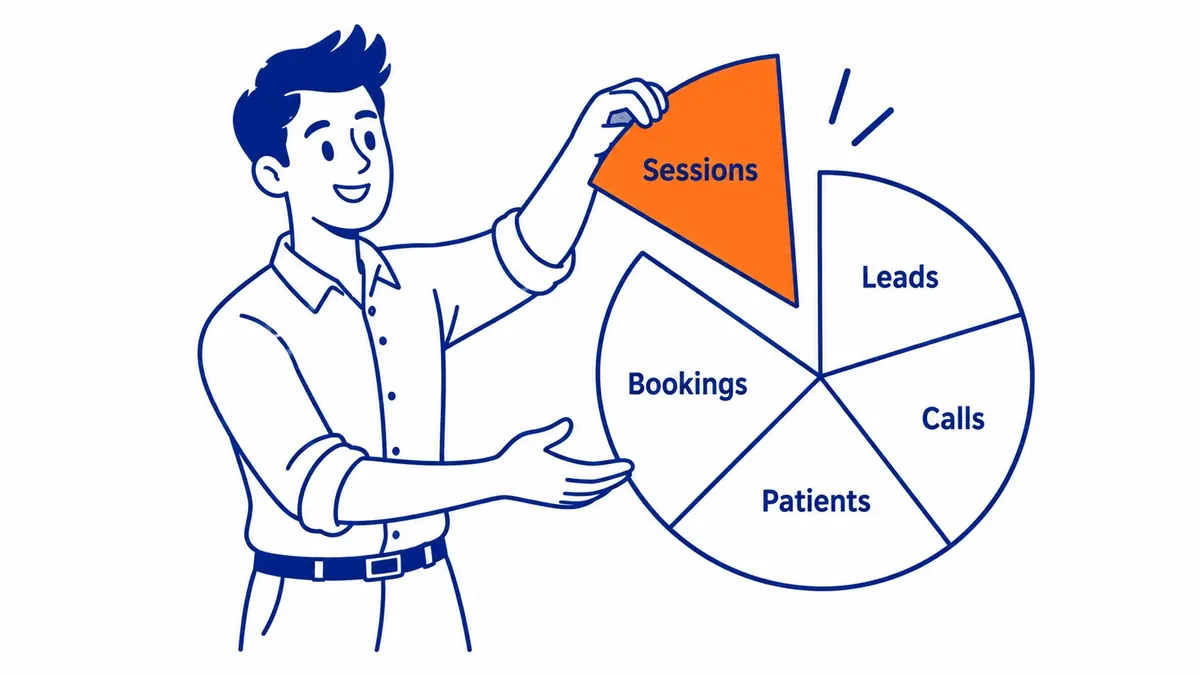
Analytics tools count sessions. Your pipeline is a column of dollars sitting on opportunity records. Two systems. Each running on its own clock, at its own speed.
Fourteen months. That is the ceiling on event data in a standard Google Analytics 4 property, unless somebody has already changed the setting. Google has moved those options before, so check your own property. Search Console holds sixteen. A B2B sales cycle plus a reporting lag can outrun both windows. Plenty of businesses do exactly that.
So the join has to happen while the visitor is still in front of you. Not afterwards, from memory.
Which is why the SEO fix here is a form field rather than a report. Attribution is not really a measurement problem here. It is a timing problem wearing a measurement costume.
Paid search has the gentler version of this. A click identifier travels with the visitor and lands in the CRM. So a well set up Google Ads account hands you that join for free. SEO gets no such courtesy. You have to build the join yourself.
Pipeline Attribution Starts With One Stamped Source Field

Add a hidden field to every form on the site. Have it record the first landing page and the referring source of that visit. Then write both into the CRM record at the moment the form submits.
Lock the field afterwards. Read-only, for everybody.
Reps overwrite source fields constantly. Not out of malice, either. A rep speaks to a prospect nine months later, hears “somebody recommended you”, and updates the field to referral. The organic visit that started the whole thing disappears from your reporting that same afternoon.
Also worth capturing, separately. Whatever the buyer says when you ask how they found you. Give that its own field. Self-reported answers are useful and unreliable at the same time, so never let one overwrite the stamped source.
Count Organic Pipeline Created, Never Pipeline Influenced

Two numbers both get called pipeline attribution. Only one of them survives a second question.
Pipeline created counts the opportunity dollars whose origin record was stamped organic. One deal, one source, one bucket. Nothing double counts.
Pipeline influenced counts every deal that ever loaded a blog post. Every channel then claims the same deal. Add the channels together and your total runs past the pipeline you actually have.
Marketing teams like the influenced number because it is larger. Some SEO reports lean on it for exactly that reason. Finance stops trusting the whole report as a result.
So lead with created. Then, if somebody genuinely wants influenced as a secondary line, label it plainly and never sum the two.
Somebody Will Say Multi-Touch Attribution Fixes All This

Fair objection. The software does exist, and plenty of SEO teams run it.
Still, fractional credit has a practical problem. Nobody hires against a third of a deal. Budget meetings do not approve a role off a decimal.
Then there are the weights. You pick the model. Then you pick what the first touch is worth against the last. The output hands back the assumption you fed it, dressed up as a finding. Sophisticated, and impossible to prove wrong.
A crude rule beats that. First stamped source takes the whole deal. Yes, the rule is wrong. It is wrong in the same direction every quarter, though. By roughly the same margin, too.
Which makes the change between quarters readable. That is the actual job. Comparability, not truth, because truth is a bonus nobody in marketing gets.
Date the Deal at Creation, Not at Close

Use the date the opportunity opened. Never the date it closed.
Date by close and SEO looks dead for three quarters. Then heroic in one month. Nobody plans a budget off a chart shaped like that.
Creation dates line up with when the work happened, too. Publish a page in February. A deal opens from it in May. That deal still belongs to February. Report it that way and the lag turns visible instead of confusing.
Then track the lag on purpose. Median days from first organic session through to opportunity created. That single figure ends most arguments about whether search engine optimization is working yet.
Growth Needs a Baseline, and Branded Search Is Not One

Growth is a delta. Deltas need something underneath them to subtract from.
So split organic into branded and non-branded before attributing anything at all. Search Console does it with one filter on your company name.
Branded organic pipeline is usually pipeline something else created. A trade show. Or a referral over coffee. Search merely routed the traffic to your door. Claim it as SEO growth and somebody in sales will correct you mid-meeting.
Non-branded organic pipeline created, measured quarter over quarter. That is the SEO number worth defending in a room full of skeptics.
Even so, branded volume deserves watching. Rising branded search after a content push suggests the content is doing something upstream of the form. Report it beside the pipeline figure. Never inside it.
The Pipeline Attribution Report That Survives a Finance Review

Four lines fit on one slide. Start with non-branded organic pipeline created this quarter, in dollars. Underneath, the same figure for the four quarters before it. Then the count of opportunities behind that dollar total. Last, the median lag from first session to opportunity.
Add a fifth line where deals run lumpy. Median deal size. One whale distorts a quarter, and the next meeting gets spent arguing about the whale rather than the trend.
Then a footnote nobody reads until they need it. Say which rule you used. Name the month you changed it. A rule that changed mid-year explains more strange numbers than any algorithm update ever will.
That footnote separates real SEO reporting from a screenshot of rankings. It also protects you the quarter something goes sideways, which it will. Keep the same rule through a bad quarter and the number stays believable. Quietly switch rules to rescue a bad quarter and you have spent the credibility you built.
How To-The-TOP! Handles Pipeline Attribution in Calgary

SEO Company To-The-TOP! has worked with lead-generation clients since 2007. Nineteen years, all of it handled by one person. No junior picks the account up halfway through a reporting cycle.
Setup on a new account starts at the form, not the dashboard. Hidden source fields first. Then a naming rule for organic that everybody signs off on before a single page gets written.
What the pipeline can even contain gets decided back during keyword research, so that work comes early too. Non-branded terms your buyers actually type. Not the vanity phrases that pull traffic without ever opening a deal.
Reporting runs monthly. Position movement sits right beside the pipeline lines, because rankings still explain why the pipeline number moved the way it did. Anybody weighing up SEO in Calgary can see the ranked keyword work in the SEO portfolio first. Petro Management Group Ltd. and Career-Holdings are both named references.
One question is worth asking any SEO provider before signing anything. Which field do they write the source into? Then ask who is allowed to edit it afterwards.
Common Questions About Pipeline Attribution and SEO
What counts as SEO-sourced pipeline?
An opportunity whose origin record was stamped organic at creation, before any rep touched it. Non-branded organic, ideally. Stamped later from memory, it counts as a guess.
How long before SEO shows up in pipeline?
Three to six months for the first opportunities in most markets. Longer where the sales cycle itself runs long. Nobody should promise pipeline in week two.
Can Google Analytics attribute pipeline on its own?
Not on its own. It knows sessions and conversions, never deal values or stages. Most businesses pair it with the CRM. That is where it turns useful.
Should branded organic count toward SEO pipeline?
Report it separately. Branded search usually reflects demand another channel created. Folding it into the SEO number inflates the result and invites a fight with sales.
What happens when two channels both touched the deal?
The first stamped source keeps the deal. Note the second touch on the record for context. Splitting the credit between them produces a figure nobody can act on.
Contact Calgary SEO Company To-The-TOP!
Questions about anything in this article, or about your own rankings? Talk to a Calgary SEO specialist directly.
Phone: (403) 308-5949
Address: 1509 14 Ave SW, Calgary, AB T3C 0W4
Hours:
Monday to Friday: 10:00 am – 7:00 pm
Saturday: 12:00 pm – 4:00 pm
Sunday: closed