
How to Create SEO Content That Delivers Marketing KPIs
Most SEO content gets written first and graded second. The KPI turns up afterwards, usually in a monthly report, usually as a disappointment nobody can explain.
Reverse that order and almost everything about the work changes. The KPI stops being a grade. It becomes a targeting decision made before anyone opens a blank document.
The KPI Is Decided at Keyword Selection

Pick the query and you have already picked the outcome. That is the part most SEO content plans skip straight past.
Somebody typing “what is schema markup” wants a definition. They are not buying anything today. No headline fixes that. Nor does a call to action, or a better offer sitting halfway down the page. You could write the finest page on schema markup in Canada. It would still deliver a traffic KPI.
Meanwhile somebody typing “seo agency calgary pricing” is shopping. Same hours spent writing. Completely different outcome available at the end.
So the query sets the ceiling on what any page can deliver. Your writing decides how close to that ceiling you land. Those are two separate jobs. Content underperforms most often when the second job gets blamed for a limit the first one created.
Ranking a page is not the same as ranking it usefully. Plenty of pages sit at position two on terms that will never produce a customer. The ranking is real. Nothing moves on the KPI, though.
What Each Marketing KPI Demands From a Query

Marketing KPIs are not interchangeable. Each wants a different sort of search behind it.
Lead volume needs commercial intent. Pricing. Cost. Near me. Best. Hire. The searcher already has a problem and wants somebody to handle it.
Pipeline quality needs narrower queries still. Fewer searches per month. Better ones. A page targeted at “industrial roof coating alberta” will never post an impressive traffic number. It posts the sort of enquiry a sales team answers on the first ring.
Organic traffic growth runs the opposite way. Broad informational queries. High volume, low purchase intent. Useful for a KPI about reach. Close to useless for a KPI about revenue this quarter.
Brand awareness sits somewhere else again. Measured in non-branded impressions first, then in branded search volume months later. Slow to prove. Real all the same.
Assisted conversions cover the middle ground. Someone reads a comparison page in March. They return through a branded search in June and buy. GA4 shows that route in its conversion paths report once the key events fire properly.
Notice what none of those KPIs share. There is no single query type that serves all five. Every SEO content plan claiming to hit all of them at once is really a plan with no KPI at all.
Somebody Will Say Content Cannot Deliver a KPI

Fair objection. Worth taking seriously instead of waving away.
The argument runs like this. A blog post cannot produce a conversion rate. Your offer does that. Pricing does it too. The form near the bottom of the page does that. Writing sits nowhere near the actual outcome.
All true. Follow the objection to the end anyway, since the ending confirms the point rather than knocking it over.
Suppose the copy really cannot lift the KPI by much. Then the KPI was mostly settled before the copy existed. Settled by whoever chose the query the page went after. That is a selection decision made in an afternoon, not a writing decision made across a week.
The refutation does not release you from the KPI. It moves the KPI upstream, into the hour somebody spent on keyword research.
One Topic, Three KPIs, Three Different Pages

Take a Calgary plumbing business. The topic is water heaters. Now watch the KPI rebuild the page underneath it.
Traffic KPI. The page becomes “how long do water heaters last”. Solid monthly volume. Purely informational. It earns sessions. Almost no phone calls, though.
Lead KPI. The page becomes “water heater replacement cost calgary”. Search volume drops by an order of magnitude. Calls start appearing. The content now spends its length on price ranges, on what pushes the number up, on what the visit involves.
Retention KPI. Now it is a maintenance guide targeted at existing customers, ranking quietly for a handful of terms. Nobody would call that a growth page. It still does the job it was targeted at.
Three pages. One topic. Nothing about the writing craft differs between them in any meaningful way. The keyword did the work.
That is also why “we need more content about water heaters” is not a brief. It names a subject. That leaves the only decision that matters unmade.
The Brief Is Where the KPI Stops Being an Opinion
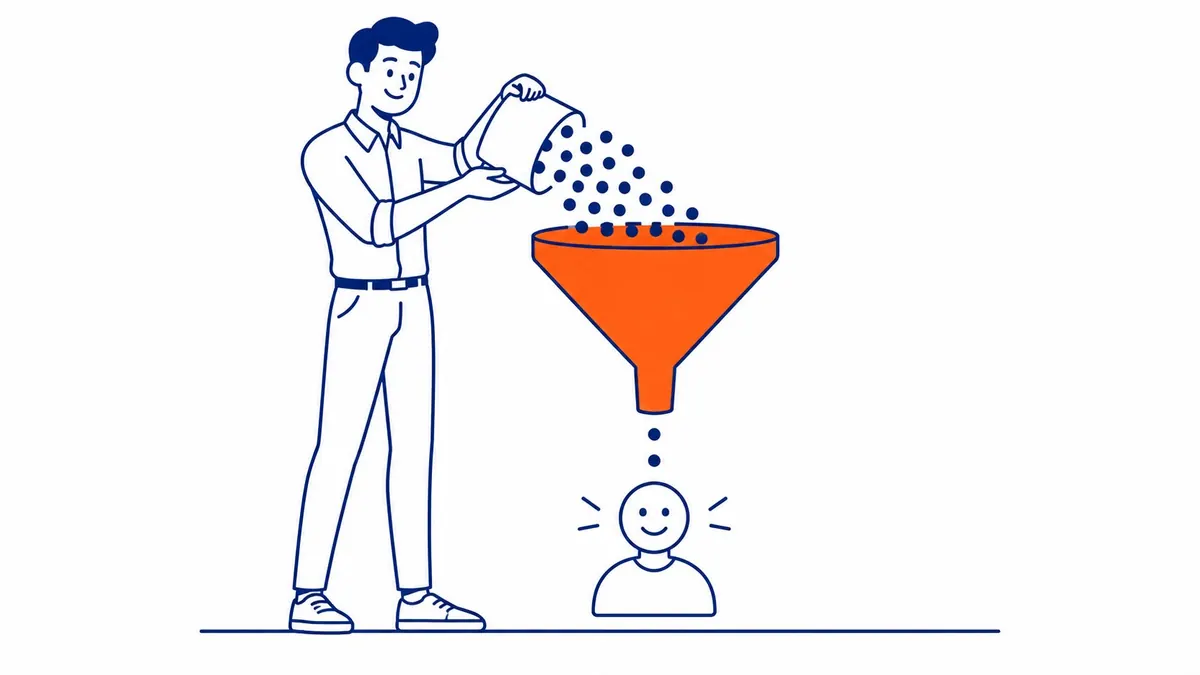
Write the KPI into the brief. First line, sitting above the keyword.
Then add the number the page is expected to move. Add a rough date too. Not a promise to anybody. A hypothesis somebody can check later.
Name the conversion action as well. A page written for leads needs a form within reach. It needs a phone number visible. Then an obvious next step. Skip those and you have a traffic page wearing a lead page’s brief.
Most SEO content briefs cover none of this. They handle audience, word count, tone, all of which matter, then leave the writer guessing what success would even look like. Guessing writers produce pages that read well and prove nothing.
Add one more line while you are there. What this page is allowed to fail at. A lead page permitted to lose a traffic contest will be written far more sharply than one asked to win both.
Set the Measurement Up Before You Publish

A KPI you cannot see is a KPI you will argue about. Sort the tracking first.
Segment branded search out of your organic reporting. Otherwise your own customers looking you up will inflate the number that was supposed to prove new reach.
Fire a real conversion event for the action that matters. Form submissions. Calls from the site. Quote requests. A page view is not a conversion, whatever the dashboard is willing to call one.
Tag the page against its KPI in whatever tracker you use. Six months on, you want to sort your library by intended outcome rather than by publish date. That single habit turns an SEO content archive into something you can actually audit.
Give it a fair window as well. Judging an organic page after three weeks tells you about crawl timing. Nothing else.
Writing Choices the KPI Owns

Some decisions belong to the keyword. Others belong to the KPI. Keeping the two apart saves a great deal of arguing later.
Length belongs to the query. Look at what already ranks. Match the depth rather than a word count somebody picked in a meeting.
Placement of the call to action belongs to the KPI. A lead page earns one early, one mid, one at the close. An awareness page carries a single soft one and stops there.
Internal linking belongs to the KPI too. Informational pages exist partly to hand visitors along to the pages that convert. Link them that way on purpose. A well-planned Calgary SEO program treats those handoffs as structure, not decoration.
Specificity belongs to the KPI as well. A page chasing qualified enquiry should name the price range, the timeline, the province it serves, the work it declines. Vagueness protects nobody. It filters nobody either.
Tone belongs to the audience, which the query already told you about. Somebody comparing vendors reads differently from somebody troubleshooting at eleven at night.
When the KPI and the Query Disagree

Sometimes no query exists for the KPI you were handed.
A new product category nobody searches for yet. Maybe a service the business names one way and customers name another. Or a B2B niche with forty searches a month across the whole country.
Say so early. SEO cannot manufacture demand that never reaches a search box.
That is usually where Google Ads earns its place in the plan. Paid search buys the handful of searches that do exist, starting today. Meanwhile the organic pages get built for demand that will exist in a year. Neither channel does the other one’s job well.
Three to six months before organic movement shows up in most markets. Longer where competition is heavy. A KPI due in eight weeks is not an SEO KPI, whatever the plan document says.
There is a quieter version of the same problem. The query exists. Volume looks fine too. Then the searchers behind it turn out to be the wrong people entirely. A website audit catches that faster than another quarter of publishing will.
How To-The-TOP! Ties SEO Content to Marketing KPIs

SEO Company To-The-TOP! has run this work out of Calgary since 2007. One practitioner handles every engagement. No junior handoff sits between the strategy and the draft, which matters more here than it sounds. The person choosing the keyword is the person writing to the KPI.
That sequence rarely changes. Agree the KPI first. Run keyword research against that KPI rather than against raw volume. Check what the site already ranks for during the audit. Then write something.
Monthly position reporting still goes out to clients. Positions never headline it, though. A ranking that moves no KPI is a fact rather than a result. Clients work that out quickly once a report is laid out plainly.
Common Questions About SEO Content and Marketing KPIs
Which marketing KPI should SEO content target first?
Whichever one the business genuinely needs. Lead volume for most service businesses. Revenue for stores. Pick a single primary KPI per page, since two of them make the keyword choice impossible.
How long before SEO content moves a marketing KPI?
Three to six months for early movement on most pages. Competitive markets run longer than that. Traffic KPIs move ahead of revenue KPIs in nearly every case.
Can one page serve two marketing KPIs?
Rarely well. One keyword rarely sits in two intent bands at once. A page can certainly assist a second KPI. It should still be built for one.
What if traffic grows and the KPI does not?
Then the keywords were chosen for volume. Check which queries brought the growth. Informational traffic climbing while enquiries sit flat is a selection problem, not a writing problem.
Do rankings still work as a marketing KPI?
As an early indicator, yes. Positions move months ahead of revenue. Just never let a position be the headline number in a report anybody reads.
Contact Calgary SEO Company To-The-TOP!
Questions about anything in this article, or about your own rankings? Talk to a Calgary SEO specialist directly.
Phone: (403) 308-5949
Address: 1509 14 Ave SW, Calgary, AB T3C 0W4
Hours:
Monday to Friday: 10:00 am – 7:00 pm
Saturday: 12:00 pm – 4:00 pm
Sunday: closed