How to Perform Effective Automotive SEO
Most dealership websites lose customers before a phone ever rings. A shopper searches “used trucks near me.” Three listings show up. The dealership isn’t one of them. That’s the entire problem automotive SEO exists to fix.
Effective automotive SEO is not one trick. A clean Google Business Profile. Inventory pages that actually describe the vehicle. Reviews that keep coming in. A site that loads fast on a phone in a parking lot with two bars of signal. None of it is glamorous. All of it compounds.
Google Business Profile Comes First
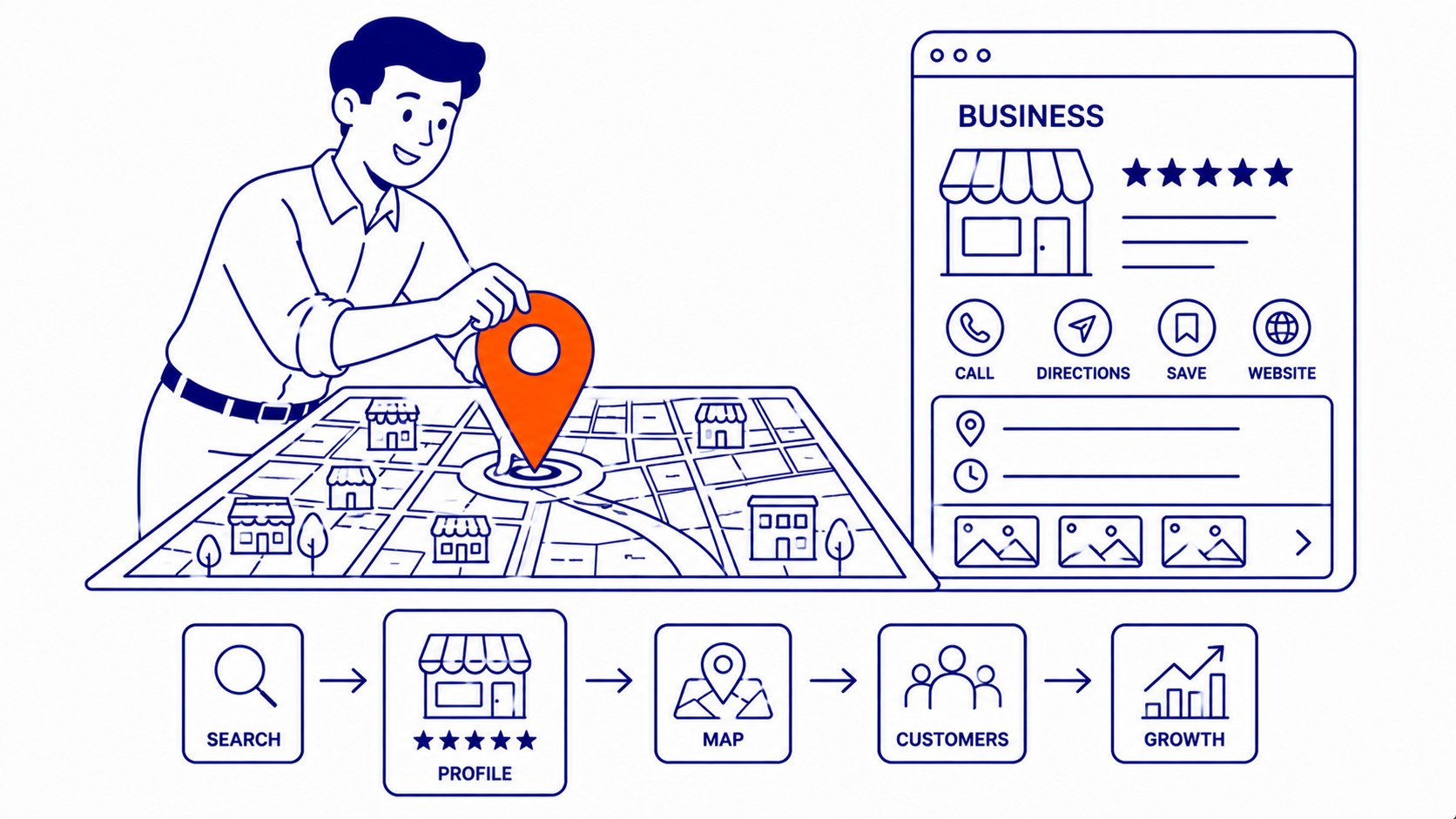
Local search runs through Google Business Profile before it runs through anything else. A dealership with an incomplete profile is invisible to half its potential buyers before the website even loads. Hours need updating. Holiday hours especially. Categories need to be filled out completely, not just “car dealer” when “used car dealer” and “auto repair shop” also apply.
Photos matter more than most owners assume. A profile with three stock photos reads as neglected. One shop client here went from three photos to sixty in about a week. Nothing else changed. Local pack visibility improved within two months, and calls followed the visibility.
Posts help too, but only if someone actually writes them. A weekly post keeps the profile active. Seasonal service reminders work. So does a new arrival or a community event. Google notices activity. So do the customers scrolling past it.
Inventory Pages Are Not Throwaway Content
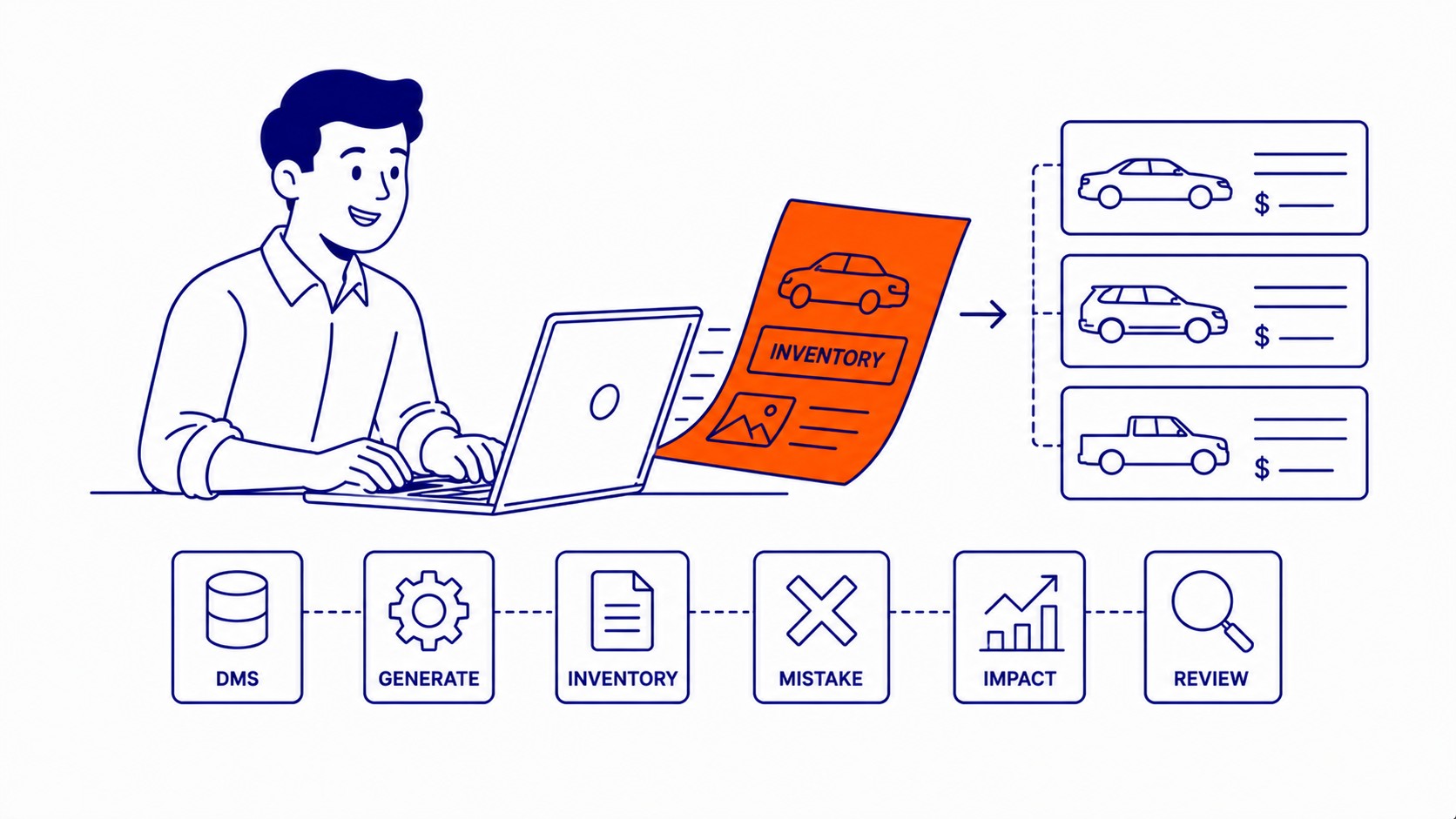
DMS-generated inventory pages are the most common mistake in the entire industry. Thin descriptions. No structured data. A URL that breaks the moment the vehicle sells. Most dealerships treat these pages as disposable, and Google treats them the same way in return.
Vehicle schema fixes half the problem. Search engines read the page this way, precisely. Every field lands in machine-readable form, from make and model down to price. The other half is content. A single paragraph describing trim level and condition beats a spec sheet copied from the manufacturer. Standout features deserve a mention too. Every other dealership in town copied that same spec sheet.
Sold vehicles need a plan too. A dead link where a listing used to be tells Google the page is worthless. Redirecting sold inventory to a similar in-stock model keeps that page’s earned authority. The relevant category page works too, instead of just throwing the authority away.
Local Content Beats Generic Content
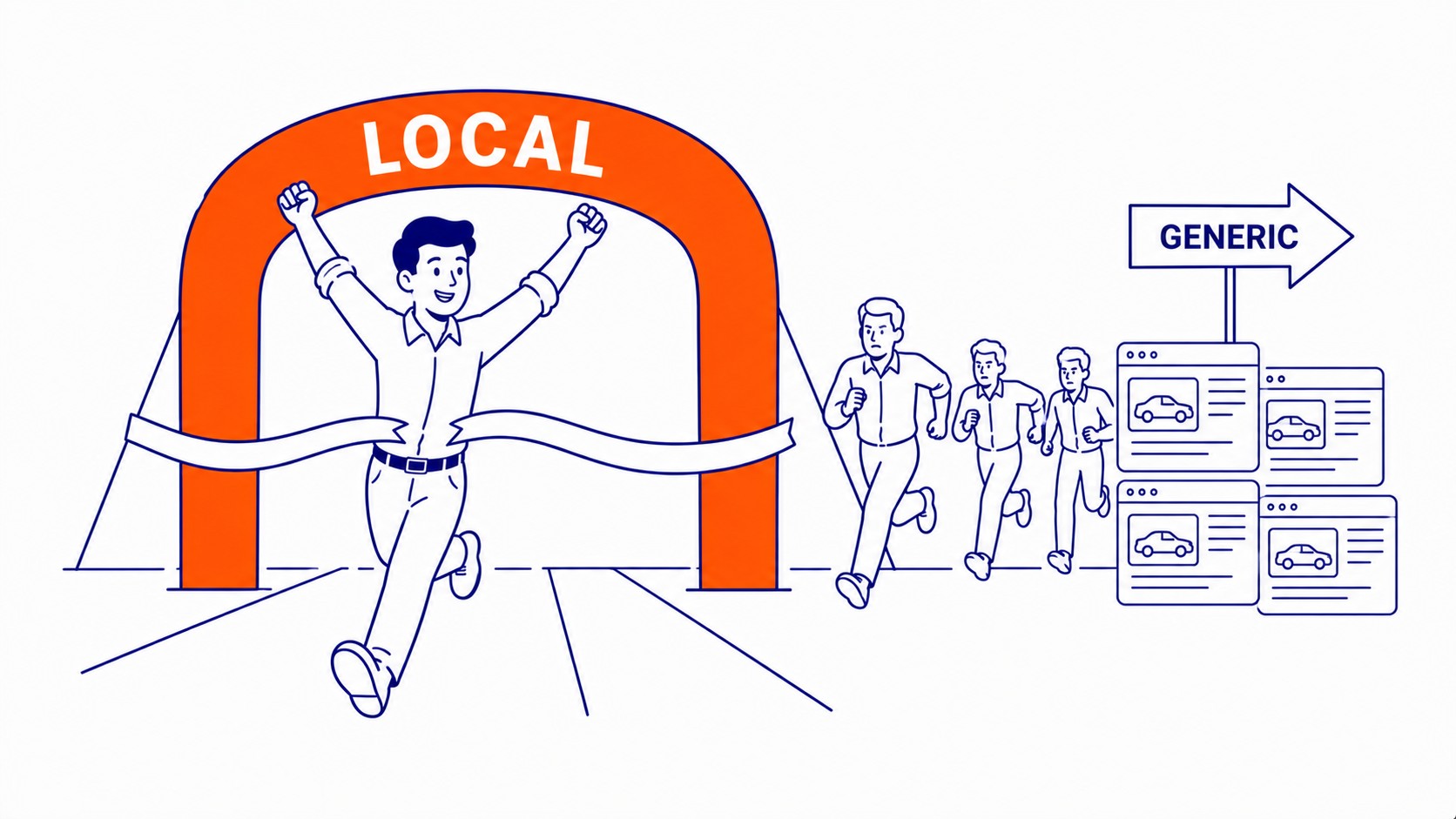
A generic title like “Tips for Buying a Car” gets used by thousands of near-identical blogs. Almost nothing else covers the ground a title like “What to Know Before Buying a Used Truck in Calgary” claims. Specificity wins here, every time.
Service-department content works the same way. Brake service. Oil changes. Tire rotations. Each earns its own page, with real local detail. A paragraph buried inside a general “our services” page falls short. Model-specific landing pages help too, particularly for high-volume models where local search demand is measurable and consistent.
Community content rounds it out. Sponsoring a local team. Supporting a school fundraiser. Showing up at a charity drive. These generate legitimate local backlinks and mentions that no amount of paid content can replicate. A single link from a real community organization does more for local trust than a dozen generic guest posts.
Local SEO Signals Beyond the Profile
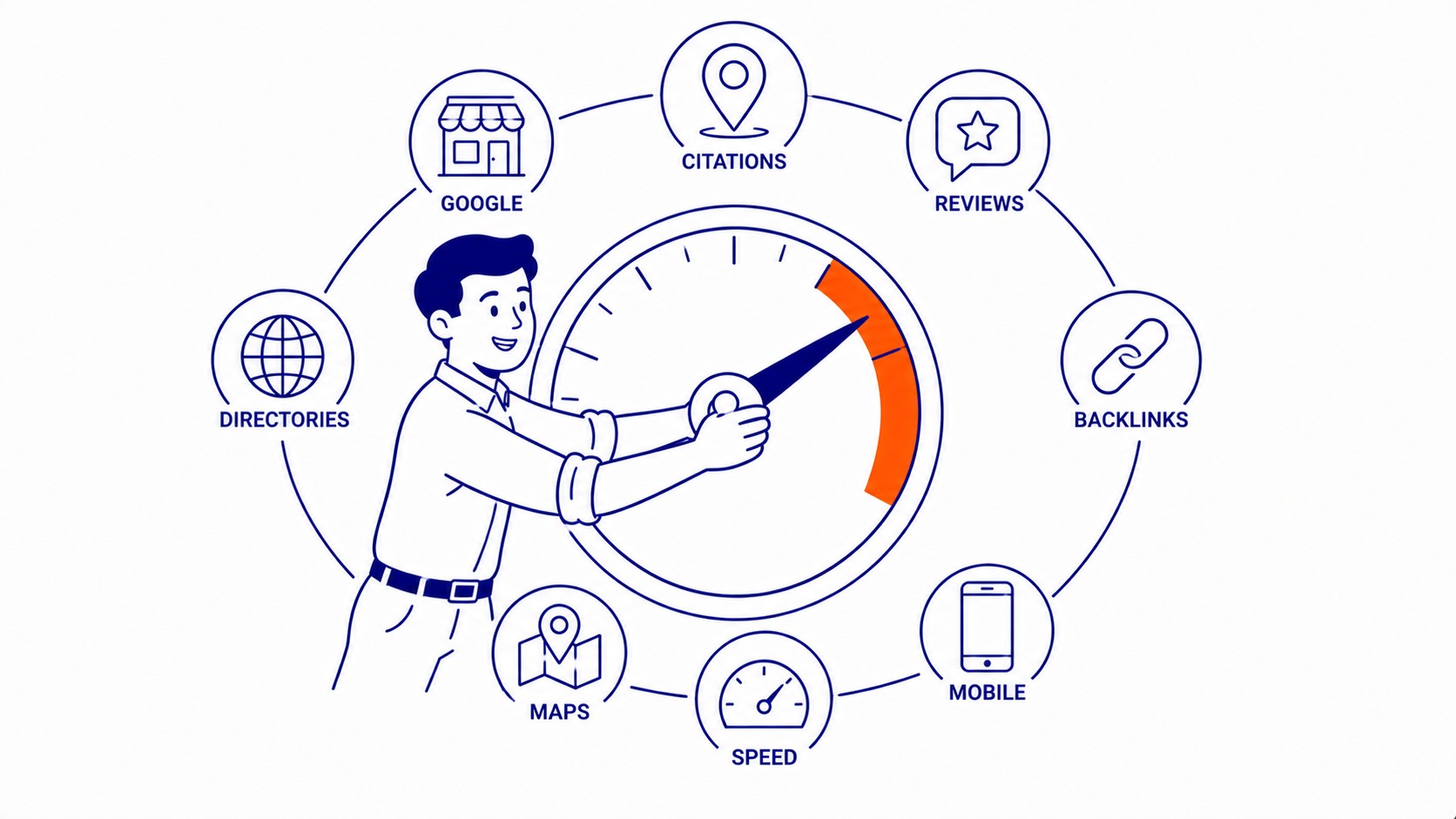
Local SEO runs on more than one profile page. Business directories, auto industry listings, chamber of commerce sites. Each one that lists the dealership’s name and address the same way reinforces the same signal to Google. Phone number formatting matters just as much. Inconsistent formatting across even a handful of listings creates confusion. A search engine has to resolve that confusion on its own, and it often resolves it by trusting the listing less.
A local landing page for each service area helps too. It needs to say something specific about that area. Swapping a city name into an otherwise identical template doesn’t count. Duplicate boilerplate across ten near-identical location pages reads as thin content no matter how the city name changes. One well-built local page beats five thin ones. Page depth is one piece of tuning a site for local search.
Reviews Carry More Weight Than Most Dealers Realize
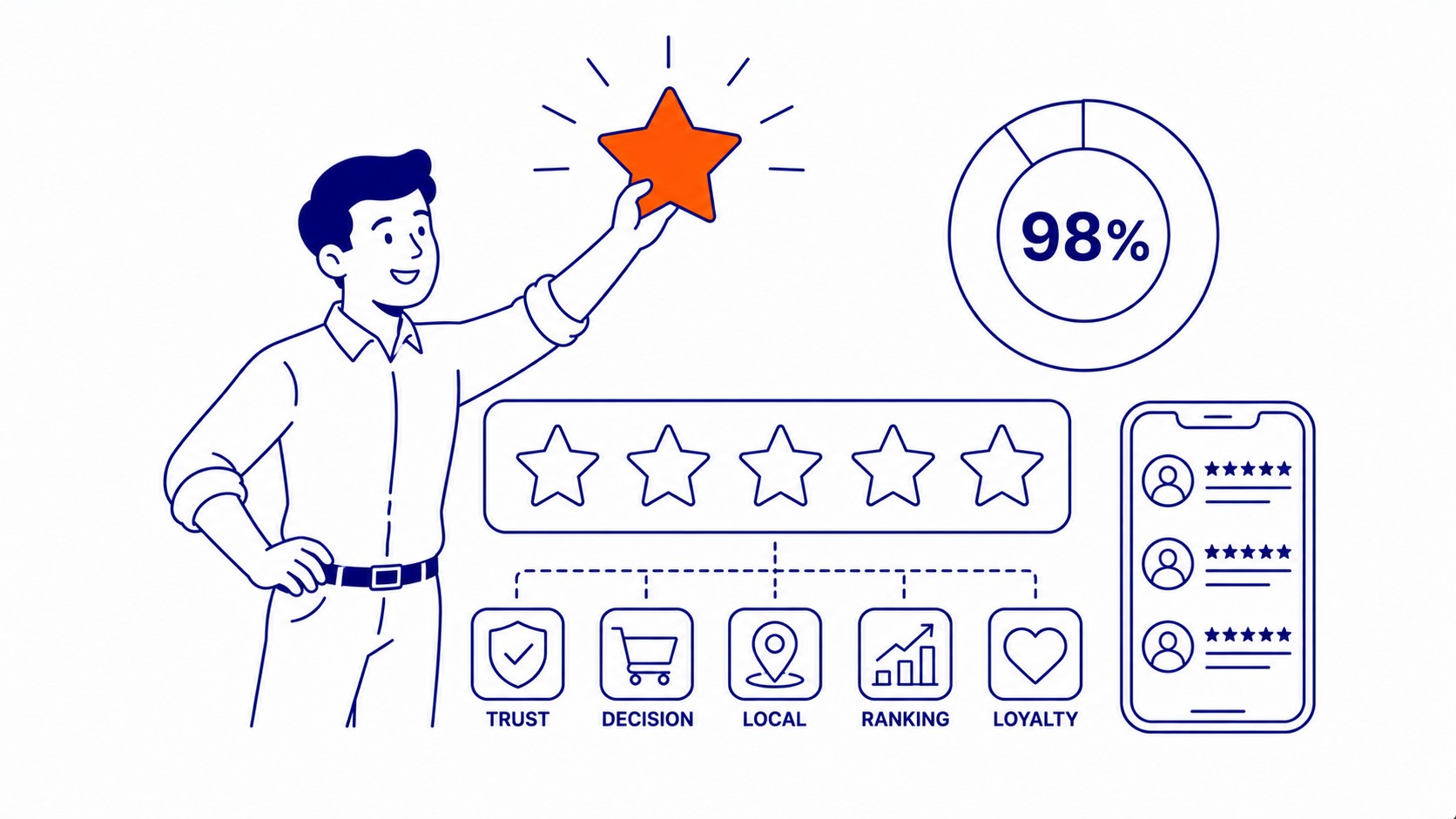
Roughly 98 percent of consumers read online reviews at least occasionally. Most of those readers are specifically hunting for local business reviews. That’s before they decide where to buy or where to get their oil changed. A dealership with forty reviews and a 3.8 average loses to a competitor with two hundred reviews and a 4.6. Even when the actual service is comparable.
Ask for reviews right after a sale or a service visit. Waiting weeks kills the response rate. Every review deserves a response, good or bad. That signals an active business. Silence on a bad review says the opposite. Buyers notice.
Technical SEO Still Matters
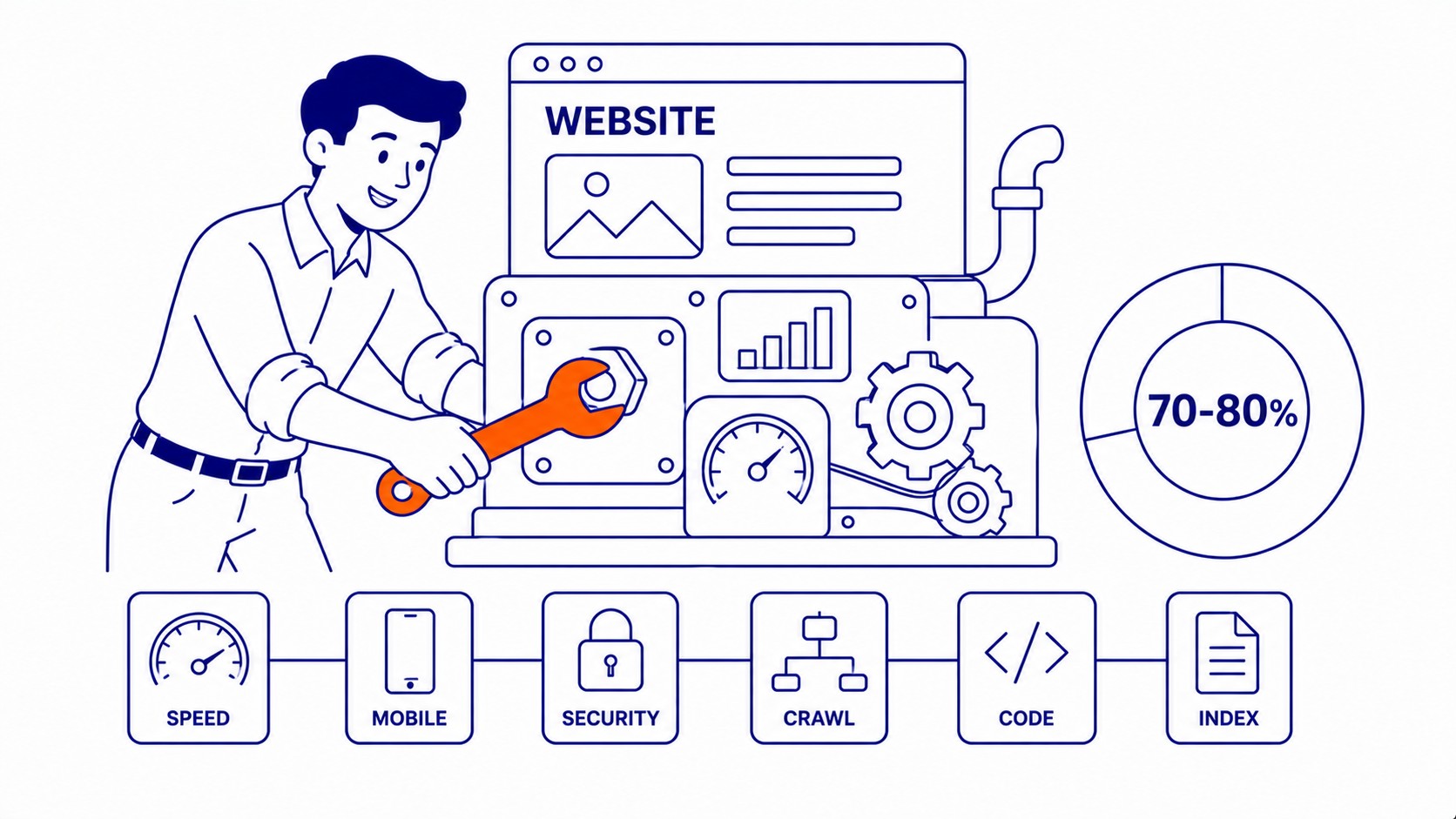
70 to 80 percent. That’s roughly how much dealership traffic now arrives on a phone. That visitor is already gone by the time a slow mobile site finishes loading the first image. Page speed is not optional here. Neither is a mobile layout that doesn’t require pinching and zooming to read a price.
Structured data extends past vehicle listings. FAQ schema markup, local business schema, review schema. Each one gives search engines a clearer read on what the page actually offers. Richer results in the search listings follow from there. Getting schema markup wrong is common. A missing required field, or a value that doesn’t match the visible page content, can get the whole block ignored.
A website audit catches most of this before it becomes a ranking problem. Broken redirects, duplicate inventory URLs, missing alt text on vehicle photos. Individually, these are small issues. Together, they cost trust with Google. Dealerships are not alone here, and a medical practice runs into the same technical debt. Technical is only one of the four types of SEO a dealership needs running at once.

SEO and Paid Search Work Together, Not Against Each Other
Organic rankings build slowly. In the meantime, Google Ads management fills that gap. A new model launch can’t wait four months for content to earn rankings. It needs visibility now. So does a seasonal sales event. Same with a service special. Paid search delivers that immediacy. Organic SEO delivers the long-term traffic that keeps costs down once the campaign budget runs out.
Keyword data from paid campaigns also feeds back into organic keyword research. Search terms that convert well in a Google Ads account are worth targeting organically too. The two channels inform each other more than most dealerships realize.
Measuring Results Beyond Rankings
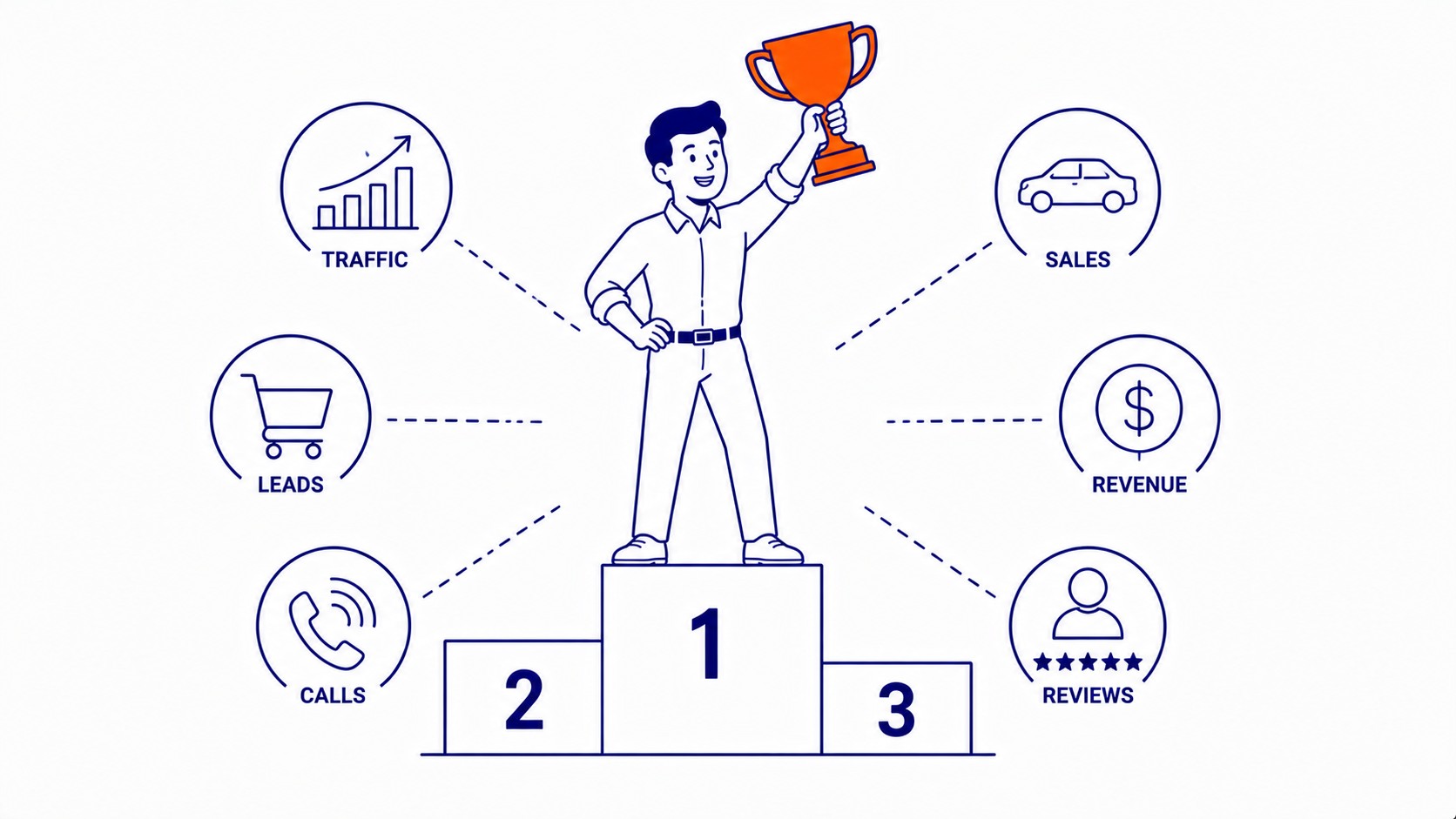
A ranking report alone doesn’t tell a dealership whether SEO is working. Organic leads matter more. Vehicle detail page views matter too. So do phone calls tracked from the website and service appointment form fills. A page can sit on page one and still generate nothing if nobody clicks through. Page two can outperform it, if the click-through and the offer are strong enough.
Call tracking on organic traffic separates real automotive SEO performance from vanity movement in a rank tracker. Most dealerships skip this step entirely and end up guessing at what’s actually working.
What Effective Automotive SEO Actually Looks Like Over Time
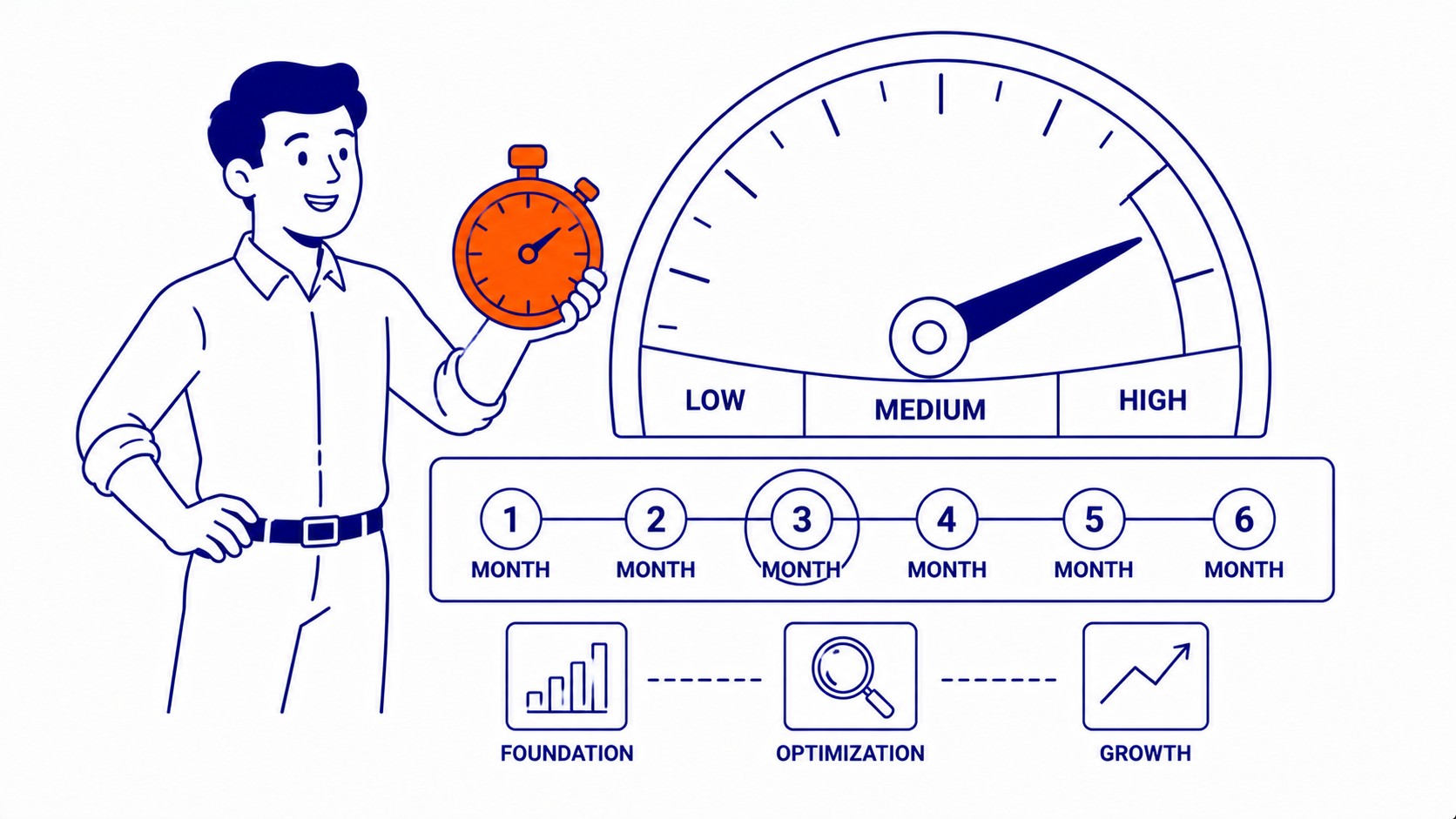
Three to six months before meaningful movement shows up in rankings. That’s the real timeline for most automotive SEO work. Any promise of faster results deserves a second look. Inventory pages rank faster than competitive service-category pages. Local pack visibility often moves before organic rankings do. Nothing about this happens overnight, and nothing here gets guaranteed.
Calgary SEO work for automotive businesses follows the same fundamentals SEO Company To-The-TOP! applies everywhere else. Fix the technical foundation first. Build local signals second. Content specific to the actual market comes third. Automotive just adds inventory schema and review volume to the usual list.
Frequently Asked Questions
How soon does automotive SEO start showing results?
Three to six months. That’s typically how long before meaningful ranking movement shows up. Inventory pages and local pack visibility often move faster than competitive service-category content.
Does Google Business Profile matter more than the website itself?
For local, near-me searches, often more. A complete, active profile drives a large share of dealership discovery before a shopper ever clicks through to the site.
Should a dealership fix inventory pages or blog content first?
Inventory pages first. Thin, duplicate vehicle listings hurt the whole site’s credibility with search engines. Content strategy matters, but it works better once the foundation is solid.
Can a small independent auto shop compete with big dealership groups on SEO?
Local search tilts the odds in the small shop’s favor, more than most owners expect. One well-optimized location often beats a franchise site running on a generic template. Strong reviews and content built for the actual market make the difference.
Contact Calgary SEO Company To-The-TOP!
Questions about anything in this article, or about your own rankings? Talk to a Calgary SEO specialist directly.
Phone: (403) 308-5949
Address: 1509 14 Ave SW, Calgary, AB T3C 0W4
Hours:
Monday to Friday: 10:00 am – 7:00 pm
Saturday: 12:00 pm – 4:00 pm
Sunday: closed
