
What Are Impressions on Google Ads?
First campaign we ever built for a Calgary flooring company, the client called us after day three. “It says 9,000 impressions. Is that good?” That question comes up on almost every account we manage. The answer is simpler than most guides make it.
One showing means your advertisement appeared in front of your target audience once. Someone searched a term that matched your keyword. Your ad entered the auction. It won. The results page showed it. That is one showing. They do not need to click. No scroll required. That is the count.
Your advertisement also picks up showings outside search. The Google Display Network places your ad across millions of partner websites. News sites, blogs, apps. YouTube pre-roll also counts one appearance when your ad runs before a video. Gmail promotions count on eligible opens. Every one of those appearances adds to your total showing count.

Why the Raw Count Tells You Very Little
Worth knowing before you read the number.
We have seen campaigns burning budget with 200,000 ad views and nothing to show for it. Tightly targeted campaigns at a few thousand ad views per week have also driven consistent leads for a Calgary SEO company. Volume is not the metric. Context is. At To-The-TOP!, our SEO services help businesses read these numbers correctly, whether the traffic is paid or organic.

Impressions measure exposure. They do not measure desire. Your ad appeared in front of your target audience. Whether they engaged is a question clicks answer, not raw view counts.
High ad views with low clicks usually points to one of two things. Targeting that pulls your ad in front of people who were never buyers. Or keywords that pull queries with no real buying intent. Both are fixable, however. Neither shows up in the raw count alone. Clicks against views is the ratio that matters, and CTR benchmarks for Google Ads put it in context. Digging past the raw count is the work behind PPC campaign management.
Impressions vs Clicks: Where the Gap Lives
That gap is what click-through rate measures.
CTR is clicks divided by total showings, expressed as a percentage. Your ad showed to your target audience 1,000 times. Thirty people clicked. CTR is 3%. In search campaigns, 3–6% is a common range, though competitive sectors and strong offers push it higher.
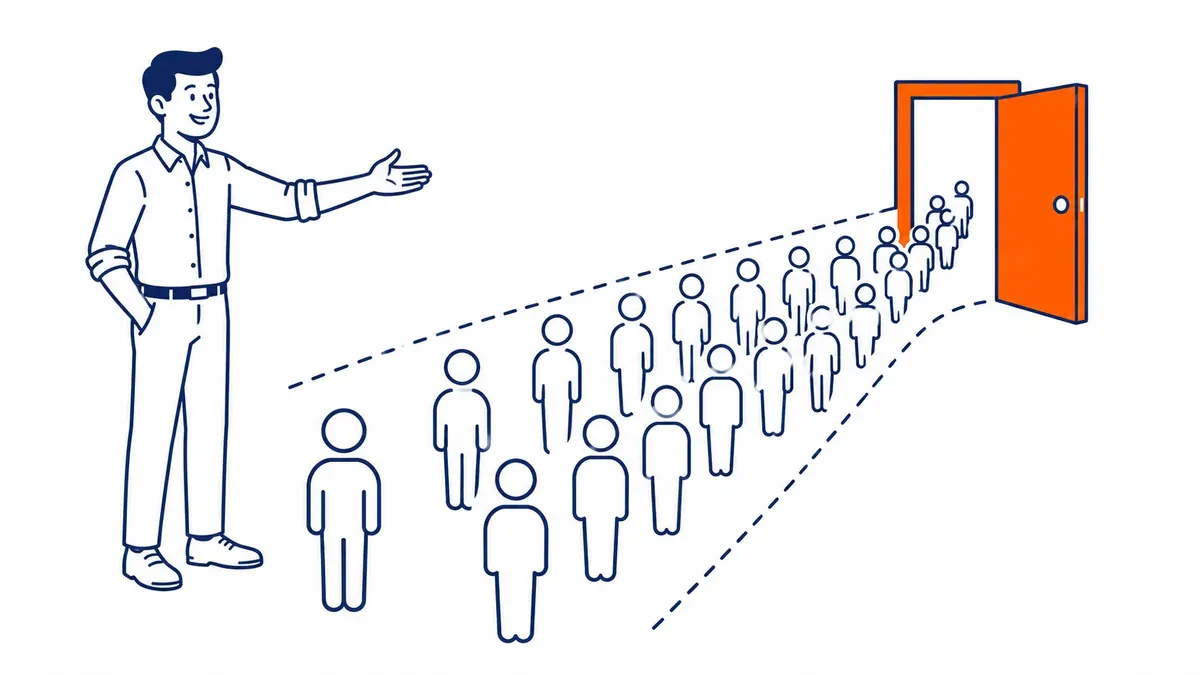
Display campaigns run lower CTR by design, however. Someone from your target audience sees your advertisement on a news site, does not click, but your brand still registers. That counts as one showing toward reach. The goal in display is often awareness, not immediate traffic.
Search is a different matter. A 0.5% CTR on a tightly targeted keyword means 99.5% of your target audience who saw the ad kept scrolling. That usually points to several issues at once. A headline that does not stand out. An offer that blends in. Or keywords that pull queries with no real buying intent. Worth investigating, however, before scaling daily spend. A good CPC counts for nothing if the ad nobody clicks keeps winning the auction.
What Drives Impression Volume?
Several levers at play here.
Our keyword research determines which searches your ad qualifies for. Bid levels affect whether you win those auctions. Quality Score shapes both position and cost per click. Keyword relevance to the ad. Landing page fit. Historical click-through rate. Those three factors still build the score. Better scores earn more ad showings at lower cost. The platform rewards relevance.

Ad scheduling and geographic targeting also set firm limits. Your ads run during certain hours in certain cities. Outside those windows, no showings accumulate. Audience layers add further refinement. Devices, demographics, in-market signals. Each one shapes how well your ads reach your target audience and how often.
The Google Display Network adds scale quickly. A display advertisement targeting qualified users across partner websites generates large showing volumes fast. YouTube pre-roll advertisements add more. Gmail promotions add more still. The account dashboard pulls all of them into the same count column.
Impression Share: The Number Behind the Number
That percentage matters more than raw volume.
Impression share is the portion of eligible auctions your ads actually won. A 55% rate means you reached your target audience in just over half the auctions you could have entered. The other 45%, however, went to competitors or passed without contest.
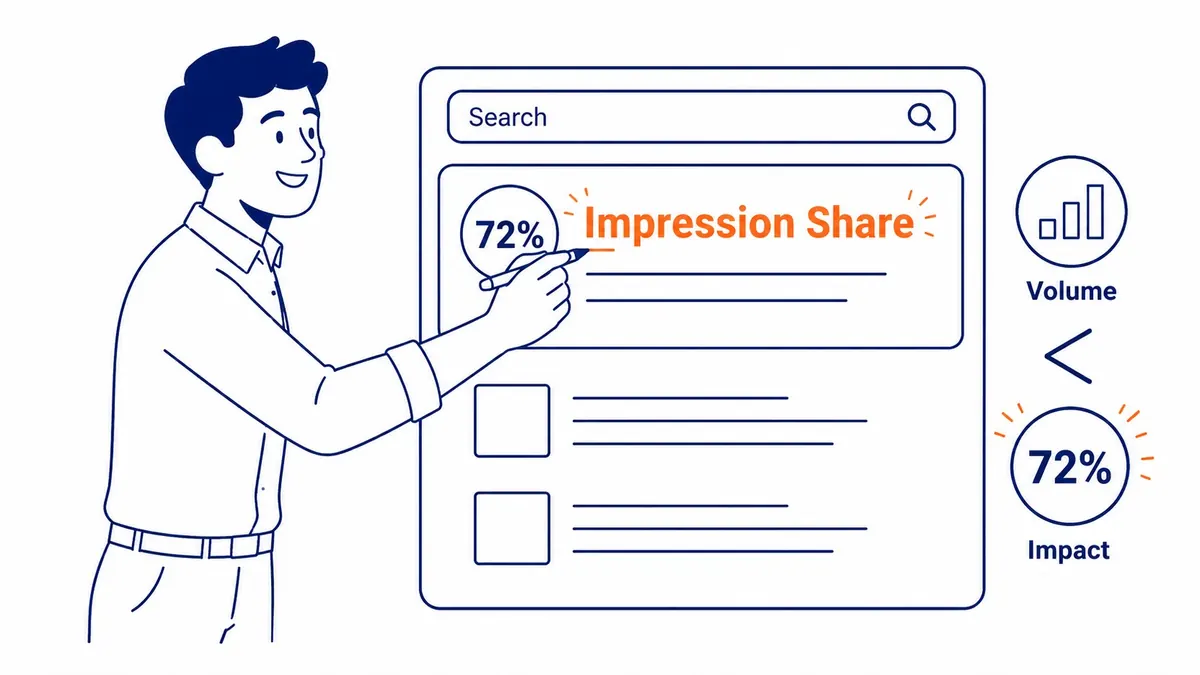
That lost share splits into two categories. Budget losses happen when the daily spend cap hits before the day’s searches finish. Ads go dark until the next day. Rank losses occur when Quality Score or bid level is not competitive enough to win. Both appear as separate columns in the account. Our Google Ads management makes that diagnosis straightforward.
Budget losses usually point to daily cap increases or smarter bid strategies. Rank losses still point to ad quality improvements, landing page relevance, or keyword-level bid adjustments. Knowing which category holds the loss tells you what to fix first.
Frequently Asked Questions
What does 7 impressions mean?
Seven appearances. Your ad showed up seven times in front of users who matched your targeting. Not necessarily seven unique people. The same user can still trigger multiple showings across different searches in one session or over several return visits.
How many impressions are good?
Depends on audience size and campaign goal. A local Calgary business running tight geo-targeting might see 600 ad views per week and still book consistent calls and form fills. National brands need far more than that, however. Match the benchmark to your target audience size, not an arbitrary number.
What is more important, impressions or clicks?
Goal-dependent. Brand awareness campaigns also track impressions as a primary metric. Direct response campaigns, the type built to drive calls, form fills, and conversions, weigh responses and measurable engagement far more heavily. Many impressions with few clicks on a direct response campaign is spend without result.
Is 3,000 impressions good?
On a niche keyword with tight targeting, yes. Broad keywords with a large potential audience tell a different story. Three thousand ad views there usually signals budget limits or low auction share. Pull that report, therefore, before drawing conclusions from the volume alone. That one column often tells the real story.
Contact Calgary SEO Company To-The-TOP!
Questions about anything in this article, or about your own rankings? Talk to a Calgary SEO specialist directly.
Phone: (403) 308-5949
Address: 1509 14 Ave SW, Calgary, AB T3C 0W4
Hours:
Monday to Friday: 10:00 am – 7:00 pm
Saturday: 12:00 pm – 4:00 pm
Sunday: closed