Where Do Google Ads Appear?
Placement is the first question that comes up in almost every intro call. Business owners still assume the platform means the top of a Google search page. It does, though that is one surface out of several it touches.
SEO Company To-The-TOP! has been running paid campaigns since 2007. Calgary businesses, Edmonton accounts, some in Vancouver. Most advertisers launch with search, then eventually ask what else is available.
On Google Search
Sponsored results at the top of a Google search page are Google search ads. Up to four placements above organic listings. Sometimes two or three below them as well. The Sponsored label is the identifier.
Two inputs run this auction: keywords the searcher typed and Quality Score. That score, rated 1 to 10, then multiplies against the bid. Outbidding competitors is not sufficient on its own. Relevance to the query also matters. Landing page quality still factors in.
When intent is clear, search ads match it precisely. Someone typing emergency plumber Calgary has already moved past the consideration stage. That is also why search ads convert at higher rates than most other placement types. Product searches behave differently, as Google shopping ads explained lays out.
The Google Display Network
Millions of websites and mobile apps carry Google Display Network inventory. News sites, blogs, forums, recipe pages, tool reviews. AdSense publishers feed inventory into the network.
The explainer on what is PPC covers how the Google Ads auction works and what determines which placements your ads are eligible for.
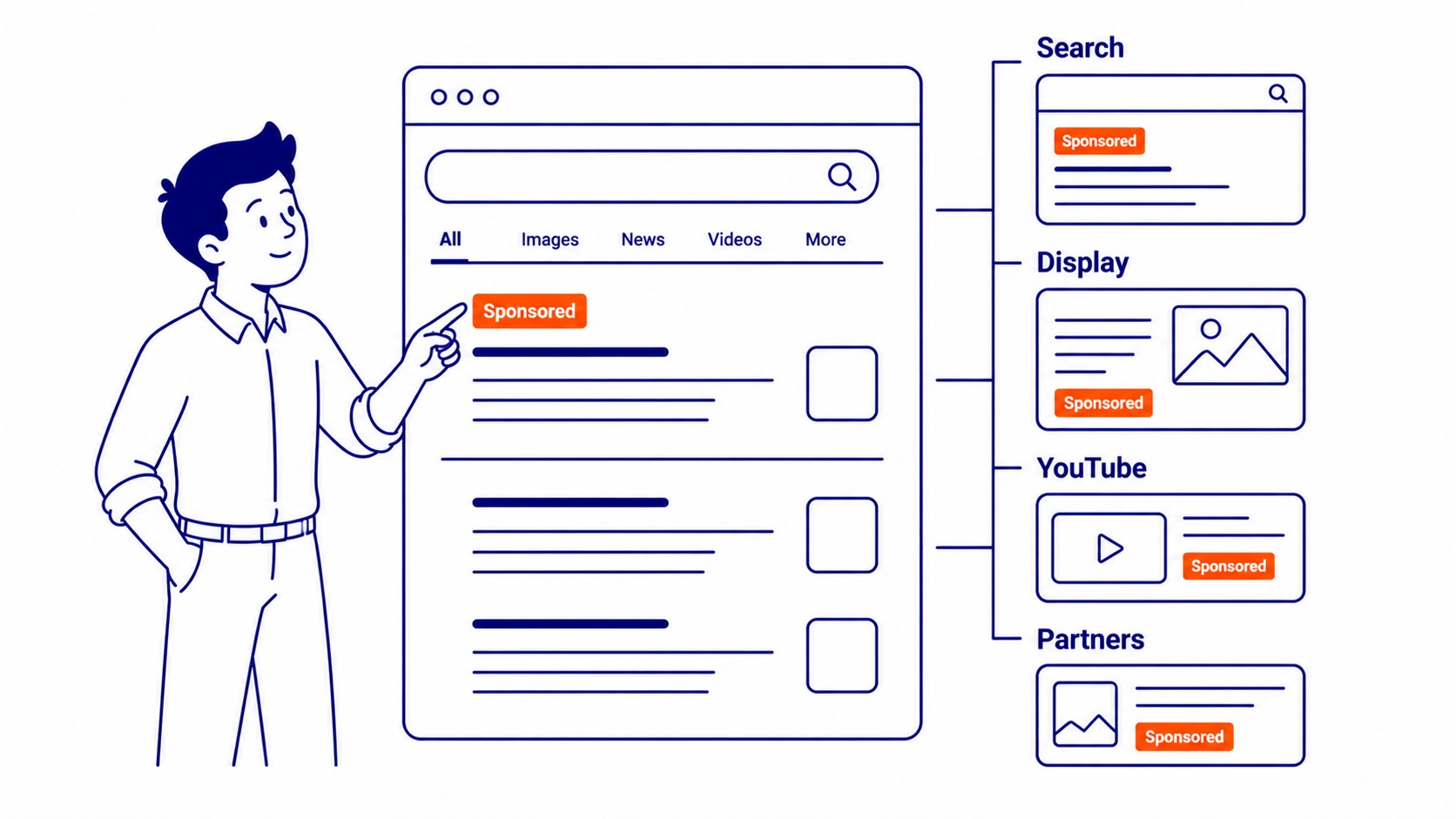
Banner ads on news sites. Sidebar placements on blogs. Interstitials inside mobile apps. Display ads show across all three. Remarketing works like this: the flooring shopper from Tuesday sees your banner on a news site three days later. Still running through the same account as search campaigns.
Display ads target audiences rather than search intent. Search ads target what a person is looking for right now. Treating both channels the same way still leads to poor budget allocation and unclear attribution.
YouTube
Pre-roll before a video starts. Mid-roll during longer content. Sidebar thumbnails beside search results inside YouTube itself. Three distinct placements, all managed through one account.
The guide on what is SERP in SEO covers the full layout of a Google results page, including where paid placements appear alongside organic listings.
Video ads on YouTube cost less per impression than most search placements. Brand-awareness work still runs well here. The relevant metric is views and completion rate, not clicks to a landing page. Campaign structure follows the metric. Different objective, different structure.
Gmail and Google Maps
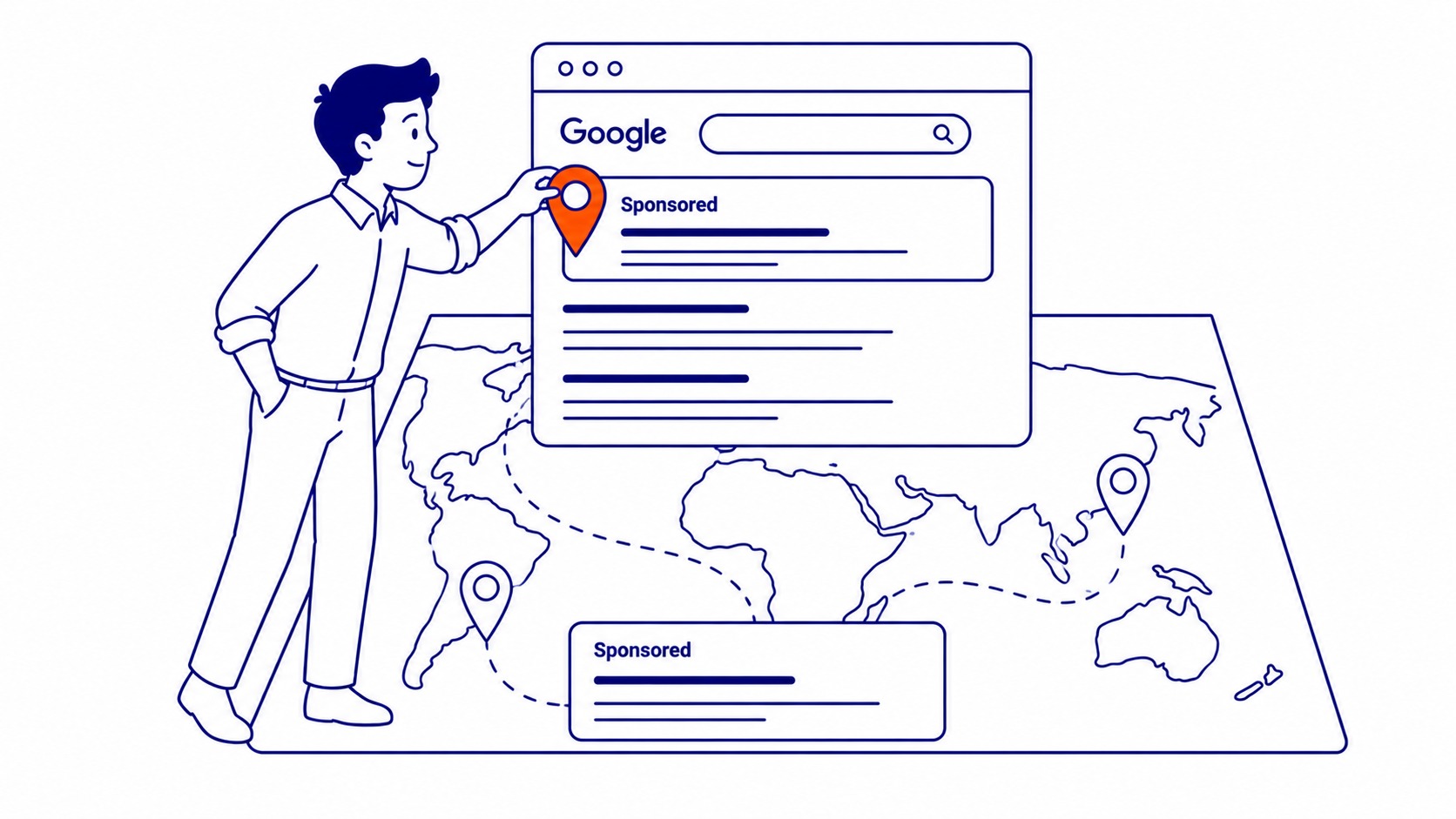
Promotions tab is where Gmail ads land, still formatted as an email before a user taps to open them. Sponsored pins sit above the organic map pack.
Local businesses in Calgary should check this specifically. A competitor could already be showing as a sponsored pin above your organic listing. Worth auditing before assuming the map pack shows only organic results.
Shopping Ads
Product images with prices at the top of search results are Shopping ads. These run through Google Merchant Center connected to your account. Retailers and e-commerce businesses are the primary users.
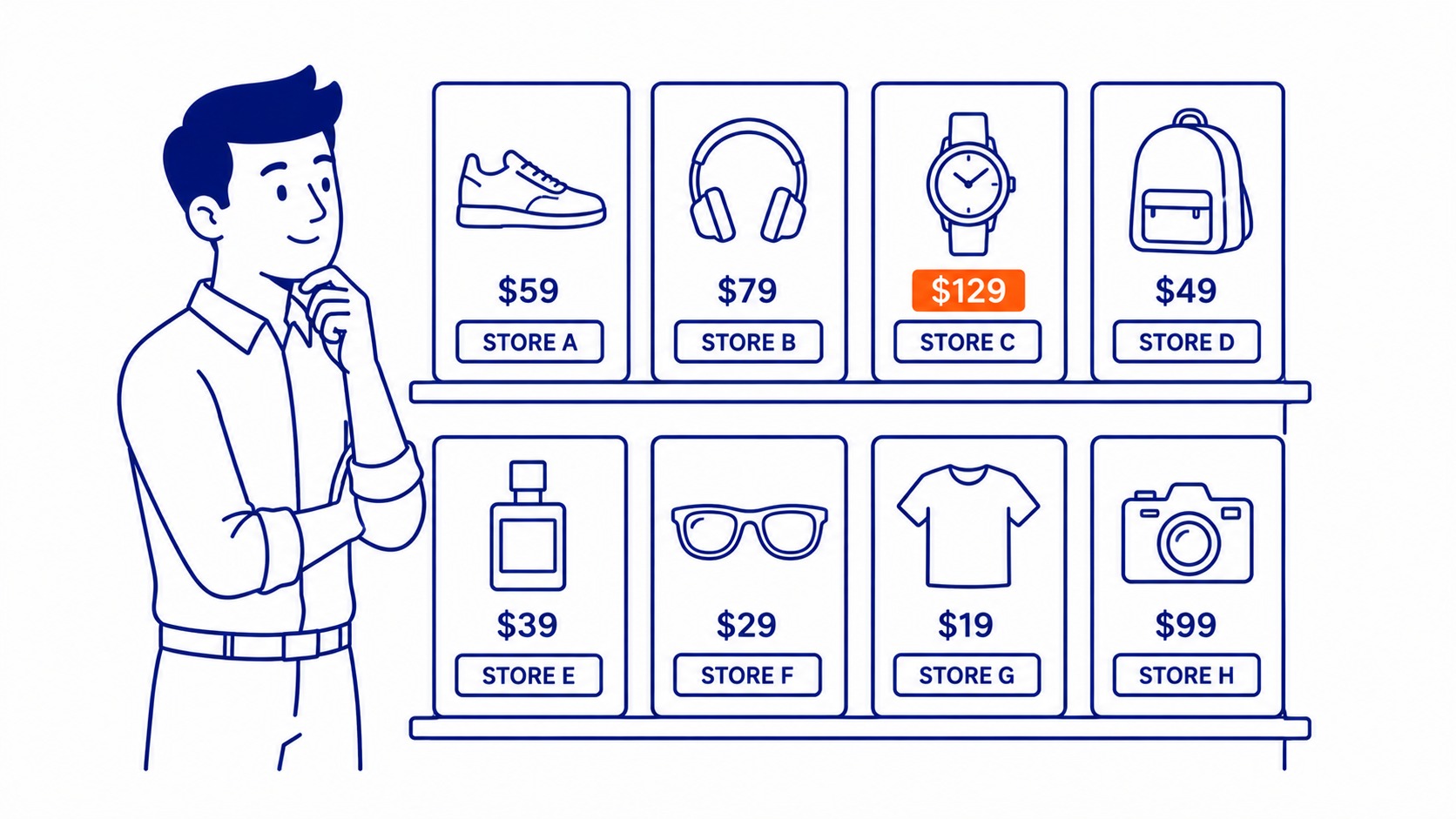
Shopping ads, however, pull from a product feed rather than from keyword bids directly. Product images, prices, and store name all show before the click. Pre-qualifying the traffic is a concrete benefit: a searcher already knows your price before landing on your product page. Feeds, search, video, display; different types of Google Ads campaigns each place ads somewhere else. Price and image both show before the click, which is one more wrinkle in the anatomy of a Google ad.
Choosing the Right Placement
Service businesses in Calgary: start with search. High intent, lower volume, but conversion rates hold up in the competitive trade and professional service categories we manage.
E-commerce operations: Shopping campaigns and Display remarketing together. Retailers running both consistently outperform single-placement accounts, based on accounts we have reviewed.
Brand campaigns, product launches, or markets where search costs have already climbed: YouTube and Display extend the budget further per impression. The trade-off is a longer attribution window and a different success metric.
Mixing placements without a clear objective dilutes budget. Attribution becomes guesswork. Separate campaign types for separate goals is the standard structure. It is one of the first things our Google Ads management puts in place on a new account.
Paid search also feeds useful data into any search engine optimization service over time. Businesses running both channels develop a clearer picture of which terms actually convert. That data directly informs keyword research on the SEO side.
Clients working with an SEO agency Calgary businesses trust alongside paid search often see conversion data from Google Ads sharpen their organic targeting within a few months. The two channels share more signal than most advertisers expect. Running the SEO work we do alongside a paid campaign is a different conversation than running either one alone.
Businesses in St. Paul SEO, Stony Plain SEO, and Strathmore SEO see their ads show up across Search, Display, and Maps depending on campaign type and targeting.
Frequently Asked Questions
Where do Google Ads get displayed?
Search results pages. The Google Display Network. Gmail promotions. Google Maps listings. Separate bidding, targeting, and reporting for each.
Where do Google Ads appear in apps?
App campaigns distribute across Google Search, YouTube, Google Play, and Display Network partner apps. One campaign type feeds all four placements automatically, optimising bids toward installs or in-app engagement.
Where does a Google ad show up?
Depends on the campaign type. Search campaigns show in Google search results. Display campaigns show on websites and inside mobile apps. Shopping campaigns appear in product search results with product images.
Where do I see my Google Ads?
Inside the Google Ads dashboard under Campaigns: impressions, clicks, and cost by campaign type. Placement reports under Targeting show the specific sites and apps where Display campaigns have served.
Contact Calgary SEO Company To-The-TOP!
Questions about anything in this article, or about your own rankings? Talk to a Calgary SEO specialist directly.
Phone: (403) 308-5949
Address: 1509 14 Ave SW, Calgary, AB T3C 0W4
Hours:
Monday to Friday: 10:00 am – 7:00 pm
Saturday: 12:00 pm – 4:00 pm
Sunday: closed
