
What Are SEO Services?
SEO services are the paid work an agency or consultant does to help a website earn more visibility in Google’s unpaid (organic) search results. Most of that work falls into a handful of types: an audit and technical fixes, keyword research, on-page optimization, content, links and authority, local SEO for businesses with a physical presence or service area, and reporting. A provider may sell all of them as one monthly service or sell each one separately, which is why two quotes for “SEO services” can describe very different work.

This guide explains what each type of service involves, what you should receive from it, which ones different businesses actually need, and what a legitimate SEO service never includes. It finishes with a short way to read an SEO proposal before you sign one.
What Google says an SEO provides
The most neutral description of SEO services comes from Google itself. Its Search Central page Do you need an SEO? says that many SEOs, agencies and consultants “provide useful services for website owners”, and it lists them: a review of your site content or structure, technical advice on website development (hosting, redirects, error pages and the use of JavaScript are its examples), content development, management of online business development campaigns, keyword research, SEO training, expertise in specific markets and geographies, and optimizing for generative AI.

The same page makes two points that are worth knowing before you talk to any provider. Advertising with Google has no effect on a site’s presence in Google’s search results, and Google says it never accepts money to include or rank sites in them, so appearing in organic results costs nothing. What you pay an SEO for is the time and judgement needed to make your site easier to crawl, easier to understand and more useful than the pages it competes with. Google also says that a small local business can probably do much of this work itself, starting with its SEO Starter Guide, and that knowing the basics helps you notice when an SEO proposes something Google discourages.
The main types of SEO services
Every provider packages its work differently, but the services below are what most proposals are built from. The table shows the deliverable a client should be able to see for each one, because a service you cannot see is hard to judge.
| Service | What the work is | What you should receive |
|---|---|---|
| Audit and technical SEO | Checking that pages can be crawled, indexed and loaded properly | A prioritized list of problems, each with a fix and the pages affected |
| Keyword research | Finding the searches your customers use and how competitive they are | A keyword list grouped by topic and intent, with the page each group belongs to |
| On-page optimization | Titles, headings, copy, internal links and images on existing pages | The changes made, page by page, so you can check them on the site |
| Content | New or rewritten pages that answer searches the site does not yet cover | Published pages tied to the keyword groups above |
| Links and authority | Earning mentions and links from relevant sites | A list of the links or mentions earned, with where each one came from |
| Local SEO | Google Business Profile, local pages and consistent business details | The profile changes made and the local pages created or improved |
| Reporting | Tracking positions, traffic and enquiries over time | A regular report that explains what changed and what is planned next |
Audits and technical SEO
An audit is usually where good SEO work begins, because nothing else matters if Google cannot crawl or index the pages. A technical review looks at how the site is built and served: whether important pages are indexed, whether redirects and error pages behave properly, whether duplicate URLs are confusing Google about which version to show, how the site performs on phones, and whether any structured data is valid. A useful SEO audit ends with a short, ranked list of fixes rather than a long export from a tool, so the developer knows what to change first.

Structured data is a common line item, so it helps to know what Google actually says about it. Google’s introduction to structured data explains that the markup helps it understand a page and that a page must include all the required properties to be eligible for enhanced display in Search. Being eligible is not the same as being shown, because Google decides when an enhanced result appears, so be wary of a proposal that sells schema as a traffic driver on its own.
Keyword research and on-page optimization
Keyword research decides what the rest of the work aims at. It finds the words customers actually type, groups those that share an intent so one page can serve them, and separates the searches worth targeting now from the ones that need more authority first. For a Calgary business the difference often lies in the modifiers: “furnace repair Calgary” and “furnace repair cost” lead to different pages, and a search like “emergency furnace repair near me” tells you the person is ready to call.
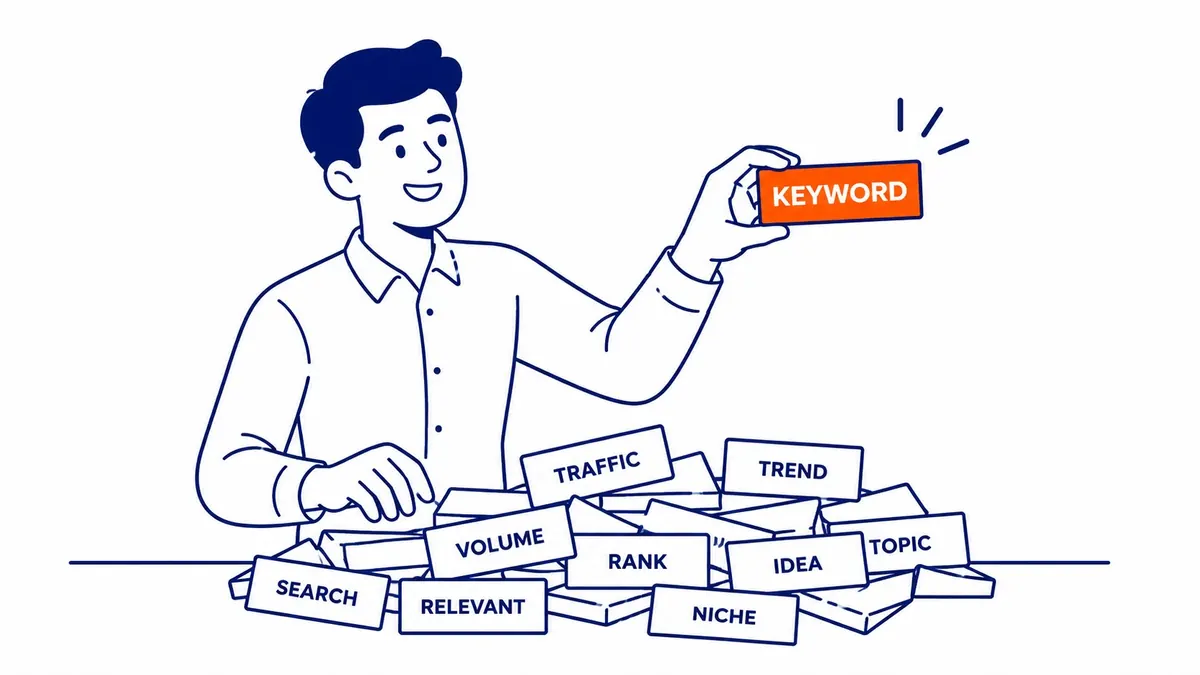
On-page optimization applies that research to the pages themselves. It covers title links and meta descriptions, headings that say what each section is about, copy that answers the search clearly, descriptive image alt text, and internal links that connect related pages so both readers and Google can find them. The SEO Starter Guide notes that Google’s language matching systems can understand how a page relates to many queries even without the exact terms, so good on-page work is about covering the topic a searcher needs, not repeating a phrase as many times as possible.

Content
Content services produce the pages a site is missing: a service page for work you do but never described, a guide that answers a question customers keep asking, or a rewrite of a page that is thin or out of date. Content works best when it is planned from the keyword research and linked into the site, because a blog post on its own, with no clear search behind it and no links pointing to it, rarely moves anything. Google’s guidance on helpful, people-first content is a good standard to hold it to: written for a reader first, accurate, and offering more than the pages already in the results.

Links and authority
Links from other relevant websites still help Google understand which sites are trusted on a subject, and earning them is usually the slowest part of SEO. Legitimate link work looks like getting listed by industry associations and suppliers, being mentioned by local media or trade publications, and publishing something other sites want to cite. Google’s spam policies define link spam as creating links “primarily for the purpose of manipulating search rankings”, and the first example they give is buying or selling links for ranking purposes, which is why it is fair to ask any provider exactly where its links come from.


Local SEO
Local SEO matters to any business that serves customers in a specific area, which in Alberta and British Columbia covers most trades, clinics, law offices and shops. The core is a complete and accurate Google Business Profile, local pages on the website, consistent business details across directories, and a steady flow of genuine reviews. Google’s local ranking help page says local results are “mainly based on relevance, distance, and popularity”, and adds that prominence is based partly on how many websites link to the business and how many reviews it has.

Distance is the part no SEO can change. A plumber based in the northeast of Calgary will usually find it easier to appear in the map results for nearby searches than for searches made in the far southwest, and a good local SEO service will say so plainly rather than promising citywide map positions. What it can do is make sure Google has the correct business name, address, phone number, categories and hours everywhere they appear, and that the website gives Google a clear page for each service and area the business really serves.

E-commerce and specialist SEO
Online stores need some services a service business never will. Category structure, product page templates, filtered and sorted URLs that create near-duplicate pages, product structured data, and handling items that go out of stock all affect how a store is crawled and shown. Other specialist services include multilingual or multi-country SEO, YouTube and video SEO, and SEO training for an in-house team, which Google lists among the services an SEO can provide.

Reporting
Reporting is how you find out whether the other services are working. A useful report shows positions for the keywords that matter, organic traffic and enquiries from Google Analytics, and the queries and pages Search Console shows impressions and clicks for, with a sentence or two on what changed and what comes next. Expect to wait before judging it: the SEO Starter Guide says some changes take effect in a few hours while others could take several months, and suggests waiting a few weeks to assess whether a change helped.

Many providers now also mention AI search, meaning Google’s AI Overviews and AI Mode. Google’s page on AI features and your website says the best practices for SEO remain relevant for them and that there are “no additional requirements” or special optimizations needed to appear. In practice that means the same services listed above, done well, are what AI search rewards, so a separately priced “AI optimization” package deserves a close look at what it adds.

Which SEO services does your business need?
Few businesses need everything on the list, and the right mix depends on how customers find you. The table below is a starting point for deciding what to ask for.
| Business | Usually needs | Usually does not need |
|---|---|---|
| Calgary or Edmonton service-area business (trades, clinics, professional services) | Local SEO and Google Business Profile, keyword research, service and area pages, a technical check | International SEO, product structured data |
| Online store | Technical SEO for categories and filters, product and category page optimization, product structured data | City-by-city pages unless there is a real local presence |
| National or B2B company | Keyword research by buyer stage, content, links and authority | Map-pack work, unless there are physical offices |
| Any business planning a new site or redesign | A technical and content review before launch, redirects from old URLs | Months of link building before the new site exists |
The last row reflects Google’s own advice: its “Do you need an SEO?” page says a great time to hire is when you are considering a site redesign or planning to launch a new site, so the site can be built search-friendly from the start. In practice, a redesign is also when costly problems tend to appear, such as old URLs disappearing without redirects and pages that used to rank being dropped.
What SEO services do not include
Some things are never part of a legitimate SEO service, and they are useful warning signs. Google’s page says plainly that no one can guarantee a #1 ranking on Google, and it warns against SEOs that claim to guarantee rankings, allege a “special relationship” with Google, or advertise a “priority submit” to Google. Paid inclusion does not exist either, since Google does not accept money to rank sites organically, and buying links for rankings breaks its spam policies.

SEO also does not include paid ads. Ads on Google are bought through Google Ads and stop when the budget stops, while SEO builds visibility that does not charge per click, so the two are often run side by side for different timelines. If a quote bundles them, ask for the SEO work, any ad management fee and the ad spend paid to Google as separate numbers. Finally, an audit should not require handing over control of your accounts: Google advises giving an SEO only read access to Search Console at the audit stage, not write access.
How to read an SEO proposal
A proposal for SEO services should let you match every line to a deliverable from the table above. If it lists only “monthly SEO” with a price, ask what will be done in the first three months, what you will see in each report, and how links will be earned. A separate post covers what a marketing company should offer for SEO in more detail, including a checklist for comparing providers.

Google’s page also suggests questions to put to any SEO, including whether they follow Google Search Essentials, what results they expect and in what timeframe, how they measure success, and what experience they have in your industry and your country or city. For price context, a review of the prices Calgary agencies publish found that, as published in August 2026, the monthly figures agencies print ran from $750, the low end of one agency’s published range, to $30,000 or more, the top of another agency’s statement about what its clients spend. Canadian buyers should also ask whether a quote includes GST and whether the agreement has a minimum term, because those two details change the real cost of comparing offers.
Getting the right SEO services for your business
So, what are SEO services in practice? They are a set of separate jobs, from technical fixes and keyword research to content, links, local SEO and reporting, and a good provider will tell you which of them your site needs now and which can wait. Knowing what each one should deliver makes it much easier to compare proposals and to tell real work from a monthly invoice.
Since 2007, SEO Company To-The-TOP! has provided White Hat SEO for businesses in Calgary, Edmonton, Vancouver and across Alberta and British Columbia, with one expert doing the client work from the first review to the monthly position reports. To-The-TOP! is a solo practice, so the person who prices the work is the person who does it; to ask what your project would cost, call (403) 308-5949.
Contact Calgary SEO Company To-The-TOP!
Questions about anything in this article, or about your own rankings? Talk to a Calgary SEO specialist directly.
Phone: (403) 308-5949
Address: 1509 14 Ave SW, Calgary, AB T3C 0W4
Hours:
Monday to Friday: 10:00 am – 7:00 pm
Saturday: 12:00 pm – 4:00 pm
Sunday: closed